In April 2024, the Department of Biotechnology announced that the Genome India Project (GIP) had completed whole-genome sequencing of 10,000 Indians from across 99 population groups. For the first time, a high-resolution genetic map of India's extraordinarily diverse population exists — a reference that could transform how Indian patients are diagnosed, how Indian crops are bred, and how Indian ancestry is understood.
Genome sequencing is a high-frequency UPSC GS III theme because it sits at the meeting point of biotechnology, health, agriculture, data protection and ethics.
What is a Genome
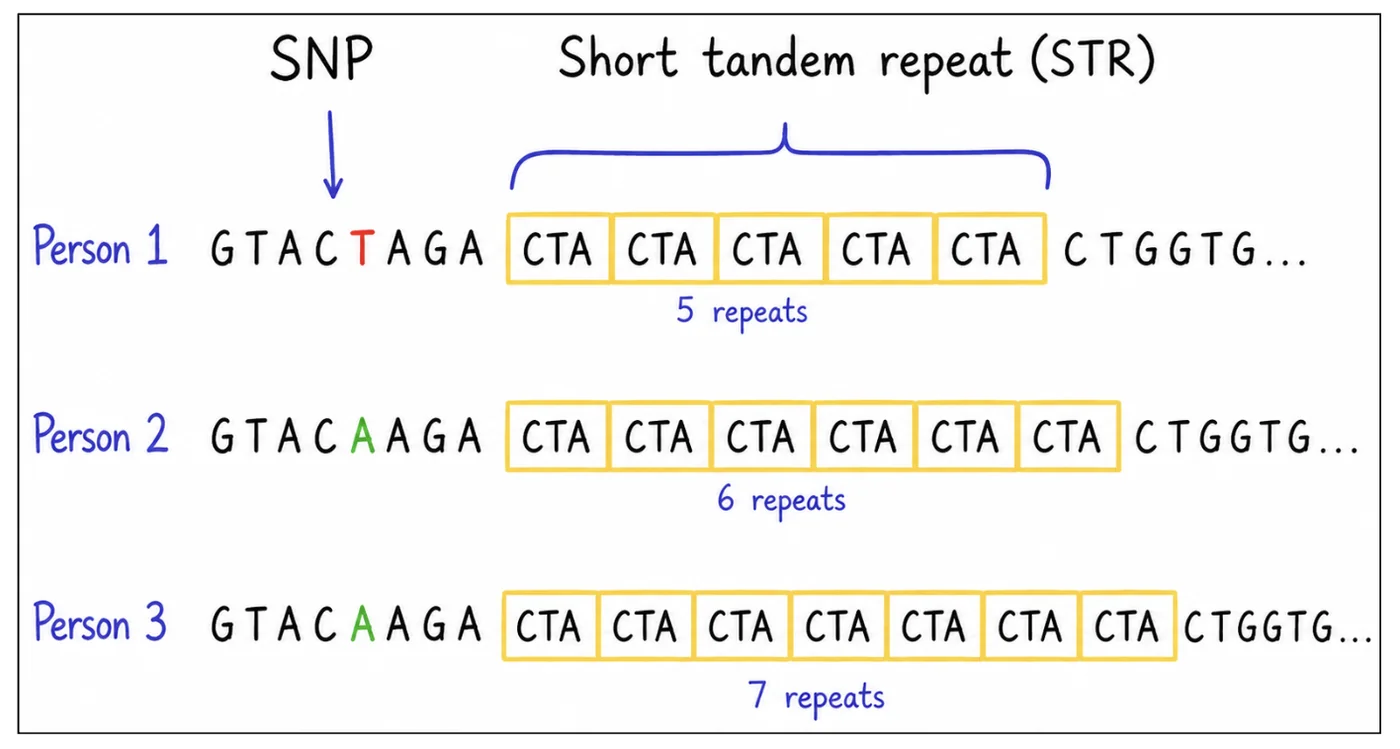
- Every human cell carries 23 pairs of chromosomes, containing about 3 billion base pairs of DNA.
- DNA is built from four nucleotide bases: Adenine (A), Thymine (T), Guanine (G), Cytosine (C).
- Sequences of bases form genes — roughly 20,000 in the human genome.
- Genes code for proteins through transcription (DNA → mRNA) and translation (mRNA → protein).
- Genotype = genetic code; phenotype = observable expression.
What is Genome Sequencing
Genome sequencing determines the exact order of all 3 billion base pairs in an organism's DNA. It is like reading the entire recipe book, letter by letter, to find spelling mistakes.
Types
- Whole Genome Sequencing (WGS) — Reads every base pair including non-coding regions.
- Whole Exome Sequencing (WES) — Reads only the ~1% of DNA that codes for proteins.
- Targeted sequencing — Reads specific genes or regions.
Non-coding regions regulate gene expression; WGS is needed to catch mutations outside exons.
Applications
Medicine
- Rare disease diagnosis — Many undiagnosed conditions have genetic causes.
- Cancer genomics — Identifying driver mutations for targeted therapy.
- Personalised medicine — Drug dosing based on genotype.
- Pharmacogenomics — Predicting drug response and side effects.
- Prenatal screening — Detecting genetic disorders in the foetus.
- Carrier screening — Premarital, preconception testing.
- Vaccine design — Faster development (used during COVID).
- Infectious disease surveillance — Pathogen genome sequencing (INSACOG during COVID).
Agriculture
- Marker-assisted selection for drought, pest resistance.
- Hybrid breeding acceleration.
- Livestock improvement.
- Crop variety protection (DUS testing).
Forensics
- Suspect identification.
- Paternity and disputed parentage.
- Mass disaster victim identification.
Evolution and Ancestry
- Tracing migration patterns.
- Understanding species evolution.
- Population genetics studies.
Environmental
- Metagenomics of soil, ocean, air microbes.
- Biodiversity monitoring via environmental DNA (eDNA).
Key Programmes
Human Genome Project (HGP, 1990-2003)
- First international effort to sequence the entire human genome.
- Coordinated by NIH (US) and Department of Energy.
- Revealed ~20,000 human genes.
- Found humans share 99.9% of DNA with each other.
- Cost: ~$3 billion. Today WGS costs under $200.
IndiGen Programme (2019)
- CSIR-Institute of Genomics and Integrative Biology (IGIB), funded by CSIR.
- Whole-genome sequencing of 1,008 Indian individuals from diverse ethnic groups.
- Found 32% genetic variations unique to Indian genomes compared to global references.
- Created a pilot dataset for carrier screening and precision medicine.
Genome India Project (GIP, 2020-2024)
- Led by Department of Biotechnology (DBT), coordinated by IISc Bengaluru.
- Sequenced 10,000 Indian genomes across 99 ethnic groups.
- Completed April 2024; dataset released as a digital public good.
- Stored at Indian Biological Data Centre (IBDC), Faridabad.
- Implications — New disease-risk alleles unique to Indian populations; foundation for Indian drug development.
Genome Mapping in the Indian Ocean (2021)
- CSIR-National Institute of Oceanography (NIO), Goa.
- Focus on microbial genomes in the Indian Ocean.
- Objectives: nutrient cycling, climate change response, pollution effects, trace metal distribution.
INSACOG (2020-present)
- Indian SARS-CoV-2 Genomics Consortium — Multi-lab pandemic surveillance.
- Monitored variants: Delta, Omicron, JN.1.
- Model for future pathogen surveillance under One Health.
India-Specific Genetic Insights
- MYBPC3 mutation — Cardiac myosin binding protein mutation leading to early-age cardiac arrest; found in ~4.5% of Indians but rare globally.
- Thalassemia carrier frequency high in certain communities.
- Sickle cell anaemia endemic in tribal populations.
- Pharmacogenomic variants — Warfarin and clopidogrel metabolism.
- Unique ancestry signals — Andamanese, Nishi, Jarwa, Toda, Siddi populations.
Cost and Technology Trend
- 2003 Human Genome Project: $3 billion.
- 2010: $10,000 per genome.
- 2020: $1,000.
- 2024: Under $200 with nanopore sequencing.
- Oxford Nanopore MinION — Portable sequencer in use at Indian labs.
- Illumina NovaSeq — High-throughput short-read sequencing.
- PacBio HiFi — Long-read high-accuracy sequencing.
Concerns
- Privacy — Genetic data is the most personal data humans have.
- DPDP Act 2023 gap — Genetic data classified under sensitive personal data; consent rules tightened.
- Discrimination risk — In insurance, employment, marriage; India has no genetic non-discrimination law.
- Ethics — Embryo editing, eugenics risk.
- Data sovereignty — Indian genomes shared with foreign consortia risk colonial biobanking.
- Consent models — Group consent in tribal communities still evolving.
- Quality standards — Commercial DTC tests (23andMe, MyHeritage) vary widely in accuracy.
- Cost of follow-up — Sequencing is cheap; clinical interpretation and therapy are expensive.
Institutional Framework
- Department of Biotechnology (DBT) — Nodal.
- IISc Bengaluru — GIP lead.
- CSIR-IGIB — IndiGen lead.
- Indian Biological Data Centre (IBDC) — Data repository.
- ICMR-NIBMG Kalyani — Clinical genomics.
- NIRRH Mumbai — Reproductive genomics.
- DBT-BRIC — Interdisciplinary biosciences.
Latest Developments (2024-26)
- Genome India Project completion (April 2024) — 10,000 genomes.
- BioE3 Policy (August 2024) — Lists precision biotherapeutics as priority.
- India's first indigenous CAR-T therapy (Nexcar19) — Approved 2023 based partly on Indian genomic insights.
- Indigenous sickle cell gene editing trials (2024-25).
- National Quantum Mission (2023) — Quantum computing for genome analysis.
- AI policy (IndiaAI Mission, 2024) — Genomic AI use cases funded.
- India Semiconductor Mission — Biosensor chips for next-gen sequencing on DLI priority list.
- DPDP Act 2023 — Genetic data = sensitive personal data.
- Genome India Phase-II — 1 lakh genomes target by 2030.
- Chandrayaan-4 payload — Space genomics experiments planned.
- Gaganyaan bio-experiments — Astronaut microbiome sequencing.
- INSACOG as model — New Indian Pathogen Genomics Consortium for TB, dengue, avian flu.
UPSC Relevance
Prelims angles
- Human Genome Project: 1990-2003; 3 billion base pairs; 20,000 genes.
- IndiGen (CSIR, 2019) — 1,008 genomes.
- Genome India Project (DBT, 2020-24) — 10,000 genomes.
- INSACOG — COVID variant surveillance.
- Indian Biological Data Centre, Faridabad.
- Base pairs: A-T, G-C.
- Mitochondrial DNA.
Mains angles
- GS III — Biotechnology: "Analyse the Genome India Project's significance for Indian medicine and precision healthcare."
- GS III — Ethics: "Discuss the ethical and privacy challenges of genetic data."
- GS II — Governance: "Do we need a genetic non-discrimination law in India?"
Essay angles
- "Reading ourselves — India's genome story."
- "Code of life, code of ethics."
Practice question — "Genome sequencing is transformative but ethically fraught. Discuss with reference to Indian initiatives."
A decade ago, sequencing an Indian genome was a billion-dollar academic question; today it is a research tool, a public-health asset and a commercial product. The challenge now is building the ethical, legal and clinical infrastructure to use it well.
Tell Google you want more of this.
Add Anantam IAS as a preferred sourceOne tap, and this site shows up more often in your own Top Stories, AI Overviews and AI Mode. Remove it any time.