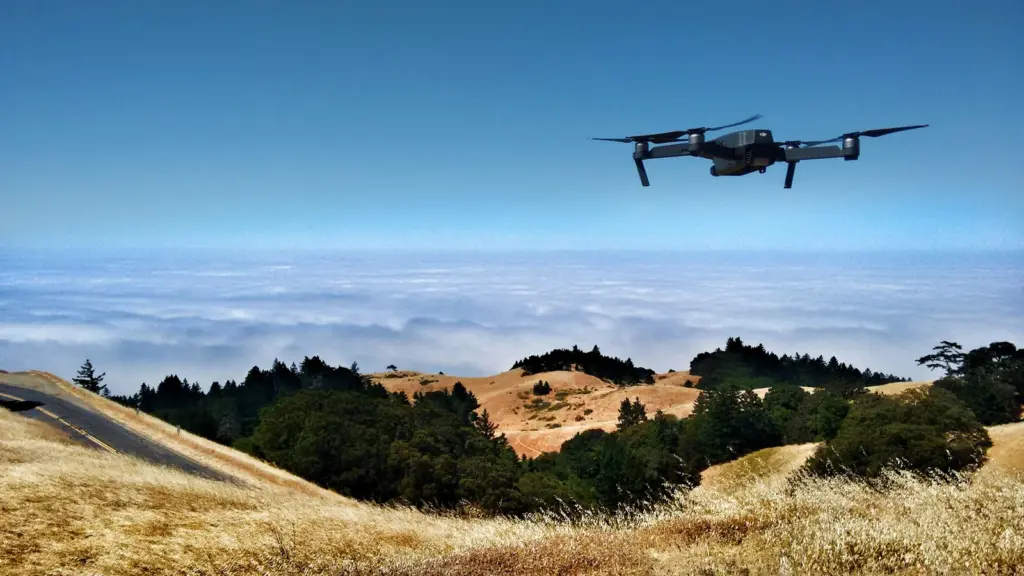
For most of the twentieth century, striking a target from the air required an air force: aircraft, pilots, bases, and a state wealthy enough to maintain all three. Drone warfare removed that requirement. A modified commercial drone costing a few hundred dollars can now damage an aircraft, a radar, a fuel depot or an ammunition store worth millions.
That inversion, cheap attacker against expensive defender, is the strategic problem. Everything else follows from it.
Why Drones Are an Asymmetric Threat
Low cost, high impact. A small commercial or modified drone may cost a few hundred or a few thousand dollars, and can destroy assets worth millions.
Difficult detection. Small drones have low radar cross-section, low acoustic signature and low thermal visibility, and fly low, slow and close to terrain. Traditional air-defence radars were built for the opposite target profile.
Swarms. Multiple drones operating together overwhelm defences. Even if most are destroyed, a few penetrate. Swarms clutter radar, exhaust interceptor ammunition and confuse command systems.
Mobility and surprise. Attacks can launch from trucks, rooftops, boats, forests or border areas. Operation Spider’s Web demonstrated that drones concealed in civilian-looking trucks can strike strategic airbases from close range, which collapses the notion of a defended rear area.
Dual-use components. Motors, batteries, sensors, cameras, GPS modules and software are commercially available. There is no supply chokepoint to interdict.
AI and autonomy. AI-enabled drones identify targets, avoid obstacles, coordinate with each other and continue a mission after losing operator contact, which directly degrades jamming as a defence.
Fibre-optic control. Drones flown over a physical cable have no radio link to jam, defeating the entire category of electronic-warfare counter-drone systems.
The Threat Taxonomy
| Type | Role |
|---|---|
| Surveillance drones | Reconnaissance, artillery spotting, border observation, target identification |
| Armed drones | Carry bombs, grenades or missiles |
| Loitering munitions | Kamikaze drones that loiter and then crash into targets |
| Swarm drones | Multiple platforms overwhelming defences together |
| FPV drones | First-person-view drones for low-cost precision attack |
| Maritime drones | Unmanned surface or underwater systems against ships, ports and offshore infrastructure |
| Decoy drones | Confuse air defences and force expenditure of expensive missiles |
The decoy category deserves attention because it weaponises the cost asymmetry directly. A cheap decoy that provokes the launch of an expensive interceptor wins economically even when it is destroyed.
What Recent Conflicts Showed
Ukraine-Russia. Drones attacked tanks, artillery, trenches, ships, airbases, energy infrastructure and strategic bombers. Operation Spider’s Web showed cheap drones threatening expensive strategic aircraft deep inside enemy territory.
Operation Sindoor. India’s operation highlighted the interaction of drone warfare, electronic warfare and layered air defence, with attempted drone and missile attacks on multiple military targets across northern and western India intercepted.
The Defender’s Dilemma
Counter-drone doctrine has rested on three layers: detect, jam, intercept. Each is now under pressure.
Detection fails against small, low, slow platforms and is saturated by swarms. Jamming fails against autonomous drones that complete missions without a link, and entirely against fibre-optic control. Interception works but loses on economics, because a missile costing lakhs destroying a drone costing thousands is a losing exchange repeated at scale.
That points to a specific conclusion: the answer cannot be a better version of the current approach. It requires cost-symmetric defences, which means directed-energy weapons, gun-based close-in systems, netting and counter-drone drones, rather than more interceptor missiles.
The Way Forward
- Invest in cost-symmetric defence. Directed-energy and gun-based systems change the exchange ratio; missiles do not.
- Harden dispersal and shelters. If aircraft cannot be reliably defended in the open, they must not be parked in the open.
- Build layered detection combining acoustic, optical and radar sensing, since no single modality detects small drones reliably.
- Regulate at the operator, not the component. Dual-use supply chains cannot be interdicted, so registration, geofencing and flight authorisation are the practical levers.
- Develop indigenous counter-drone and swarm capability, because this is a domain where India’s software and low-cost manufacturing strengths align with the requirement.
The reframe worth keeping: drone warfare has not made air power more lethal. It has made it cheap, and cheap changes who can use it.
Frequently Asked Questions
Why are drones described as an asymmetric weapon?
Because a low-cost platform can impose high military, economic and psychological costs on a far stronger adversary. A small commercial or modified drone costing a few hundred or thousand dollars can damage aircraft, fuel depots, radar systems, ammunition stores, power grids or military vehicles worth millions.
Why are small drones hard to detect?
They have a low radar cross-section, low acoustic signature and low thermal visibility, and they fly low, slow and close to terrain. Traditional air-defence radars are optimised for fast, high-flying, metallic targets, which is close to the opposite profile.
What is a drone swarm?
Multiple drones operating together to overwhelm defences. Even if most are shot down, a few may penetrate. Swarms also clutter radar pictures, exhaust interceptor ammunition and confuse command systems, so the defender loses on cost even when the engagement succeeds.
What is a loitering munition?
Also called a kamikaze or suicide drone, it loiters over an area waiting for a target and then crashes into it. It combines surveillance and strike in a single expendable platform, which removes the separation between finding a target and engaging it.
Why does the dual-use nature of drones complicate regulation?
Because motors, batteries, sensors, cameras, GPS modules and software are all commercially available for civilian purposes. There is no chokepoint at which military drone components can be interdicted without disrupting legitimate commerce.
How does artificial intelligence change the drone threat?
AI-enabled drones can identify targets, avoid obstacles, coordinate with other drones and continue a mission after losing contact with the operator. That last capability directly reduces the effectiveness of jamming, which has been the primary counter-drone method.
What are fibre-optic drones?
Drones controlled through a physical fibre-optic cable rather than radio frequency. Because there is no RF link to jam, they defeat electronic warfare-based counter-drone systems entirely and force militaries to rethink their counter-drone approach.
What did recent conflicts demonstrate?
The Ukraine-Russia war showed drones attacking tanks, artillery, trenches, ships, airbases, energy infrastructure and strategic bombers, with Operation Spider’s Web showing cheap drones threatening expensive aircraft deep inside enemy territory. India’s Operation Sindoor demonstrated the interaction of drone warfare, electronic warfare and layered air defence.
Practice Questions
Prelims MCQs
- A loitering munition is best described as
(a) A surveillance-only platform
(b) A drone that loiters over an area and crashes into a target
(c) A ground-launched cruise missile
(d) A decoy system
Answer: (b) Also called a kamikaze or suicide drone, it combines search and strike in one expendable platform. - Small drones evade conventional air-defence radar chiefly because of
(a) High speed
(b) Low radar cross-section and low, slow flight profiles
(c) Stealth coatings
(d) Operation above 30,000 feet
Answer: (b) Radars optimised for fast, high, metallic targets struggle with small, slow, low-flying platforms. - Fibre-optic drones are significant because they
(a) Fly faster than RF-controlled drones
(b) Cannot be jammed by radio-frequency electronic warfare
(c) Carry heavier payloads
(d) Require no operator
Answer: (b) A physical control cable removes the RF link that jamming targets. - Operation Spider's Web is associated with
(a) Indian counter-drone operations
(b) Ukrainian drone strikes on strategic aircraft
(c) A NATO exercise
(d) Chinese swarm testing
Answer: (b) It demonstrated that cheap drones concealed in civilian-looking vehicles could strike strategic airbases deep in enemy territory. - The main defensive problem posed by drone swarms is
(a) Their speed
(b) Cost exchange: interceptors cost far more than the drones
(c) Their altitude
(d) Their range
Answer: (b) Even successful engagements are economically unfavourable when a costly interceptor destroys a cheap drone, and swarms exhaust magazines.
Mains Questions
- Drone warfare has democratised air power and inverted the cost logic of modern conflict. Examine the implications for India's defence posture. (250 words)
- Counter-drone strategy based on electronic warfare is being outpaced by technological change. Discuss. (250 words)
- Assess the challenges that the dual-use nature of drone technology poses for regulation and interdiction. (150 words)
- Recent conflicts have shown drones threatening high-value strategic assets. Discuss the lessons for India's airbase and infrastructure protection. (250 words)
- Discuss the ethical and legal questions raised by autonomous target selection in drone warfare. (150 words)
Tell Google you want more of this.
Add Anantam IAS as a preferred sourceOne tap, and this site shows up more often in your own Top Stories, AI Overviews and AI Mode. Remove it any time.