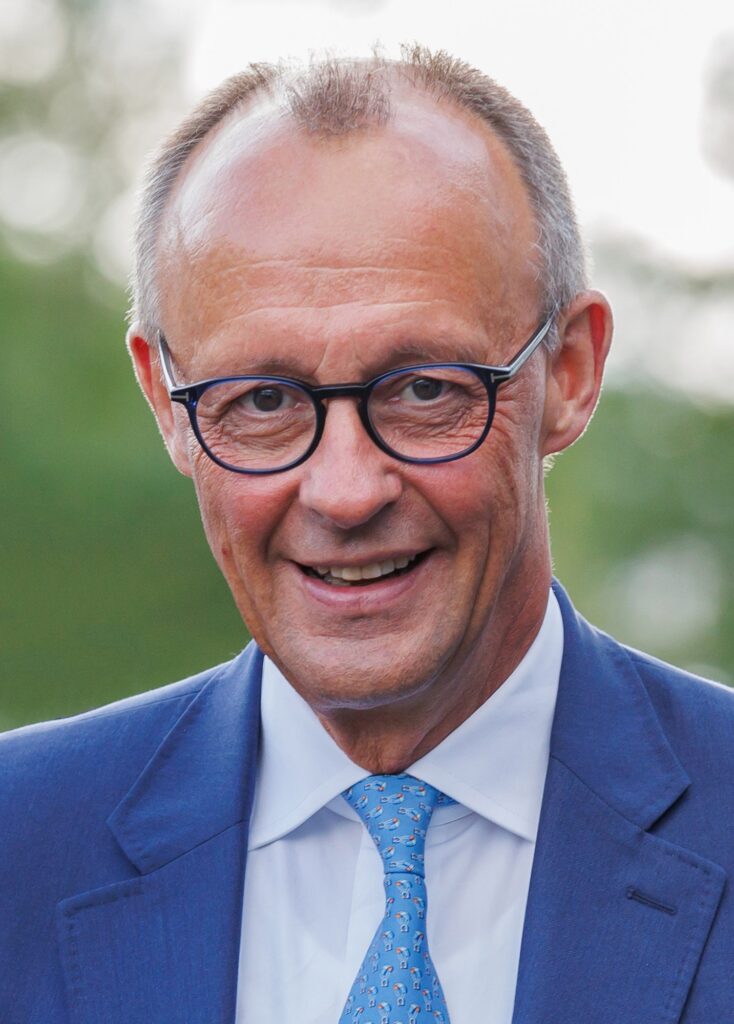
Friedrich Merz, the Federal Chancellor of the Federal Republic of Germany, visited India on 12-13 January 2026 at the invitation of Prime Minister Narendra Modi. It was Merz’s first official visit to India since taking office as Chancellor in May 2025, and his first trip to any Asian country in that capacity. The visit was structured around Modi’s home state of Gujarat, with the Chancellor and Prime Minister meeting in Ahmedabad on 12 January before substantive bilateral engagements in New Delhi on 13 January.
The visit’s headline outcomes recast the India-Germany strategic partnership to centre on technology, supply-chain resilience, defence, and the Indo-Pacific.
Schedule and format
12 January 2026 — Chancellor Merz arrived in Ahmedabad and met PM Modi at the Sabarmati Riverfront. The two leaders held informal discussions and participated in a CEO interaction with leading Indian and German business heads.
13 January 2026 — Formal bilateral meetings in New Delhi. Delegation-level talks at Hyderabad House. The Joint Statement was issued the same evening.
The Chancellor was accompanied by a high-level delegation including German Foreign Minister, Federal Ministers, senior officials, and 23 leading German CEOs and industry leaders drawn from the automotive, defence, pharma, biotech, chemicals, shipbuilding, smart infrastructure, and energy sectors.
The Joint Statement: substantive areas
The India-Germany Joint Statement of 13 January 2026 identified the following priority areas for the recast strategic partnership.
Semiconductors and critical minerals
A new bilateral working group on semiconductor cooperation. Germany — through Bosch, Infineon, ZF — has substantial design and equipment expertise that complements India Semiconductor Mission ambitions. Critical minerals cooperation was identified as a parallel track, with Indian engagement in German-led European critical mineral initiatives.
Defence cooperation
A bilateral defence dialogue mechanism, joint production prospects (the Type 214 submarine deal involving Thyssenkrupp Marine Systems and Mazagon Dock was discussed but not concluded during the visit), and exchanges on emerging defence technologies.
Green hydrogen and climate
Continuation of the Indo-German Green Hydrogen Task Force, scaled-up cooperation on hydrogen value chains, and complementary commitments on net-zero pathways. Germany committed to additional climate finance under existing bilateral instruments.
Migration and Mobility Partnership Agreement (MMPA)
Operationalisation of the MMPA signed in December 2022, with expanded skilled-labour quotas. Germany faces acute skilled-worker shortages and India is a primary source country. A bilateral coordination mechanism on labour mobility was activated.
Indo-Pacific dialogue mechanism
A new bilateral dialogue mechanism on the Indo-Pacific was announced, reflecting Germany’s 2020 Indo-Pacific Guidelines and India’s centrality to its Asian engagement. This was one of the more notable institutional outcomes of the visit.
Indo-German CEO Forum
A Joint Declaration of Intent on strengthening bilateral economic cooperation through the Indo-German CEO Forum was signed. The Forum’s mandate is investment facilitation, regulatory dialogue, and supply-chain integration.
Science, technology, and AI
Cooperation on artificial intelligence — both countries are signatories to the AI Impact Summit 2026 New Delhi Declaration — and quantum technologies. Joint research initiatives in genomics and clean energy.
Specific MoUs signed
The visit saw several MoUs signed alongside the Joint Statement, including:
- An MoU between the All India Institute of Ayurveda and the University of Hamburg on traditional medicine research
- An MoU on Youth Hockey Development between Hockey India and the German Hockey Federation
- Multiple business-to-business agreements signed under the CEO Forum framework
Strategic context
Three factors shape Merz’s outreach to India.
Reducing dependence on China
The CDU/CSU-SPD coalition under Merz has committed to a “China risk reduction” doctrine in industrial policy, especially in critical raw materials, semiconductors, and pharmaceuticals. India is a central element of this diversification, both as a market and as a manufacturing partner.
Indo-Pacific salience for Germany
Germany’s 2020 Indo-Pacific Guidelines elevated the region to a strategic priority. The bilateral dialogue mechanism on the Indo-Pacific announced during this visit institutionalises that priority for India in particular.
Skilled workforce
Germany’s acute labour shortage — especially in healthcare, engineering, and IT — has made India a target country for skilled migration. The operationalisation of the MMPA quotas during this visit is a substantive labour-mobility instrument.
What the visit did NOT include
Despite circulating speculation, the visit did *not* announce:
- The opening of an Honorary Consul of Germany in Lucknow (no such announcement was part of the Joint Statement)
- A finalised submarine deal (discussions are at MoU stage)
- A free-trade agreement (India-EU FTA negotiations remain ongoing but were not concluded bilaterally)
These remain on the bilateral agenda for subsequent engagements.
India-Germany trade snapshot
Bilateral trade in 2024-25 was approximately €30 billion, with Germany as one of India’s largest European trading partners and the second-largest source of European foreign direct investment in India after the Netherlands. German FDI stock in India exceeded €18 billion, with Volkswagen, Siemens, Bosch, BASF, and SAP among the largest investors.
The broader India-Europe context
Merz’s visit was part of a sequence of high-level European engagements with India: the EU-India Strategic Partnership review, the visit of European Commission President Ursula von der Leyen earlier in 2024-25, and the resumption of the India-EU Free Trade Agreement negotiations. India’s positioning as a strategic anchor for European engagement in the Indo-Pacific has strengthened markedly through these visits.
FAQs
When did Chancellor Merz visit India?
12-13 January 2026, at the invitation of PM Modi. It was Merz’s first official visit to India as Chancellor.
What were the headline outcomes?
A new bilateral dialogue mechanism on the Indo-Pacific; an Indo-German CEO Forum Declaration of Intent; expanded cooperation on semiconductors, critical minerals, defence, green hydrogen, AI, and migration; MoUs in Ayurveda research and youth hockey development.
Was the Indo-Pacific dialogue mechanism new?
Yes. While Germany and India had engaged on Indo-Pacific issues bilaterally before, the formal bilateral dialogue mechanism on the Indo-Pacific was announced for the first time during this visit.
Did the visit conclude a submarine deal?
No. The Type 214 submarine cooperation between Thyssenkrupp Marine Systems and Mazagon Dock was discussed but not concluded during the visit. It remains an open negotiation.
What MoUs were signed?
Multiple, including the AIIA-University of Hamburg traditional medicine MoU, the Hockey India-German Hockey Federation Youth Hockey MoU, and several business-to-business agreements under the CEO Forum framework.
How many CEOs accompanied the Chancellor?
Twenty-three German CEOs and industry leaders, drawn from automotive, defence, pharma, biotech, chemicals, shipbuilding, smart infrastructure, and energy sectors.
What is the Migration and Mobility Partnership Agreement?
A bilateral agreement signed between India and Germany in December 2022, providing a framework for legal migration, skilled-worker recognition, and return arrangements. The Merz visit operationalised expanded skilled-labour quotas under this framework.
How much trade does India have with Germany?
Approximately €30 billion in 2024-25. Germany is India’s largest trading partner within the EU and one of the top sources of foreign direct investment in India from Europe.
Tell Google you want more of this.
Add Anantam IAS as a preferred sourceOne tap, and this site shows up more often in your own Top Stories, AI Overviews and AI Mode. Remove it any time.