
Translation carries 40 marks in the UPSC Hindi Compulsory paper — 20 for English-to-Hindi and 20 for Hindi-to-English. This is the section where aspirants from English-medium backgrounds lose the most marks, and where simple technique can yield big gains.
A good translation is not a word-for-word mirror. It conveys the same meaning, tone, and register in the target language. Here is how to do it under exam conditions.
The Two Translation Tasks
| Task | Source | Target | Marks |
|---|---|---|---|
| Task 1 | English passage (~100 words) | Hindi | 20 |
| Task 2 | Hindi passage (~100 words) | English | 20 |
Core Translation Principles
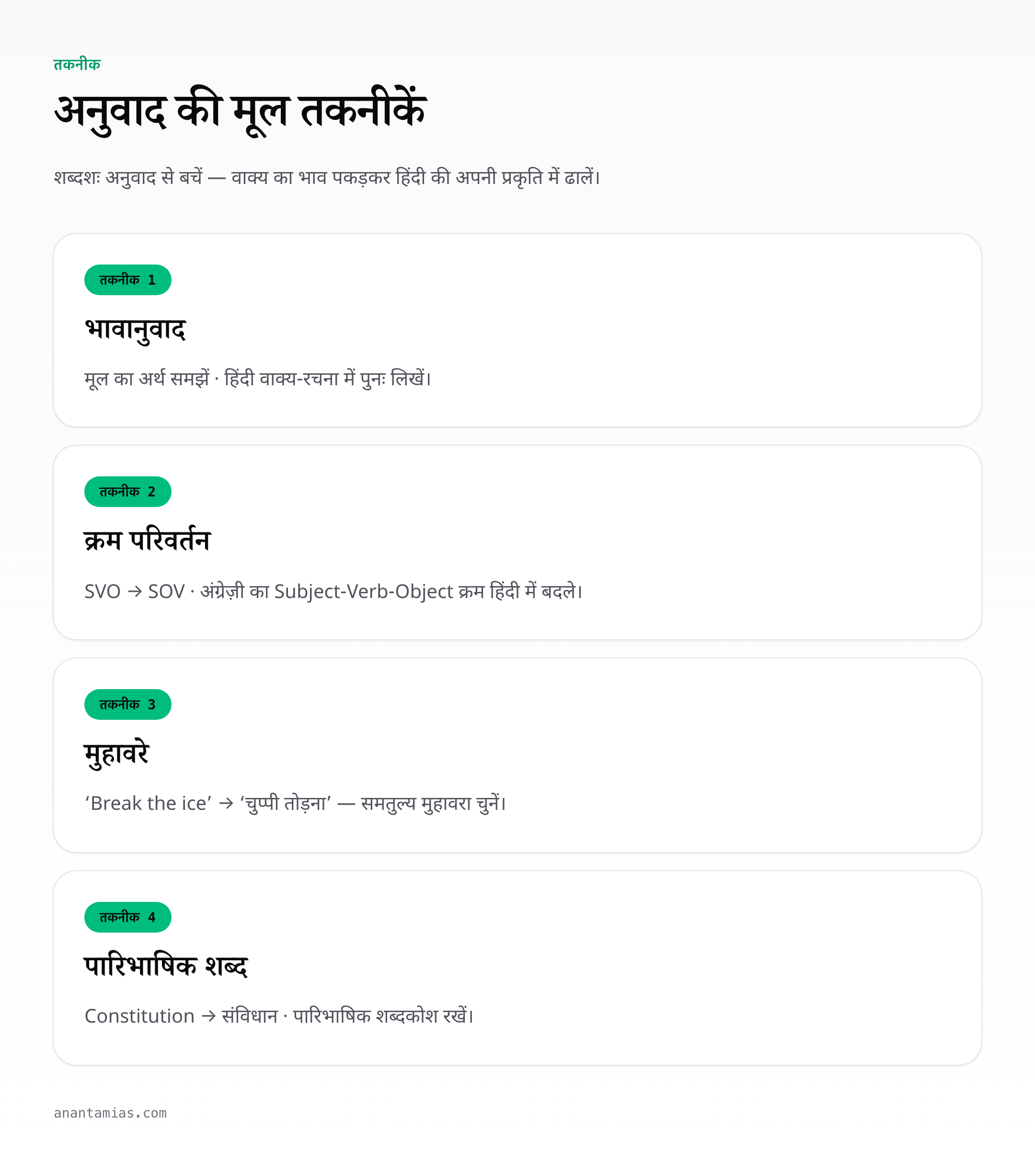
- Translate meaning, not individual words.
- Maintain the register — formal passages stay formal in Hindi too.
- Do not skip any sentence; every line in source must appear in target.
- Keep Hindi and English sentence structures natural, not mirrored.
- When stuck, translate the idea into the simplest possible target sentence.
English to Hindi: Sample 1
Source (English):
India is a country of great cultural diversity. People from different religions, languages, and regions live together in harmony. This unity in diversity has been the strength of our nation for centuries. Our constitution guarantees equal rights to every citizen regardless of caste, creed, or gender.
Translation (Hindi):
भारत महान सांस्कृतिक विविधता का देश है। विभिन्न धर्मों, भाषाओं और क्षेत्रों के लोग यहाँ सामंजस्य के साथ रहते हैं। विविधता में यह एकता सदियों से हमारे राष्ट्र की शक्ति रही है। हमारा संविधान प्रत्येक नागरिक को जाति, पंथ या लिंग से परे समान अधिकार प्रदान करता है।
Hindi to English: Sample 1
Source (Hindi):
शिक्षा किसी भी समाज की रीढ़ होती है। एक शिक्षित नागरिक न केवल अपना विकास करता है, बल्कि देश के विकास में भी योगदान देता है। इसलिए सरकार का यह कर्तव्य है कि वह प्रत्येक बच्चे को गुणवत्तापूर्ण शिक्षा उपलब्ध कराए।
Translation (English):
Education is the backbone of any society. An educated citizen not only develops himself but also contributes to the development of the country. Therefore, it is the duty of the government to provide quality education to every child.
High-Frequency Vocabulary
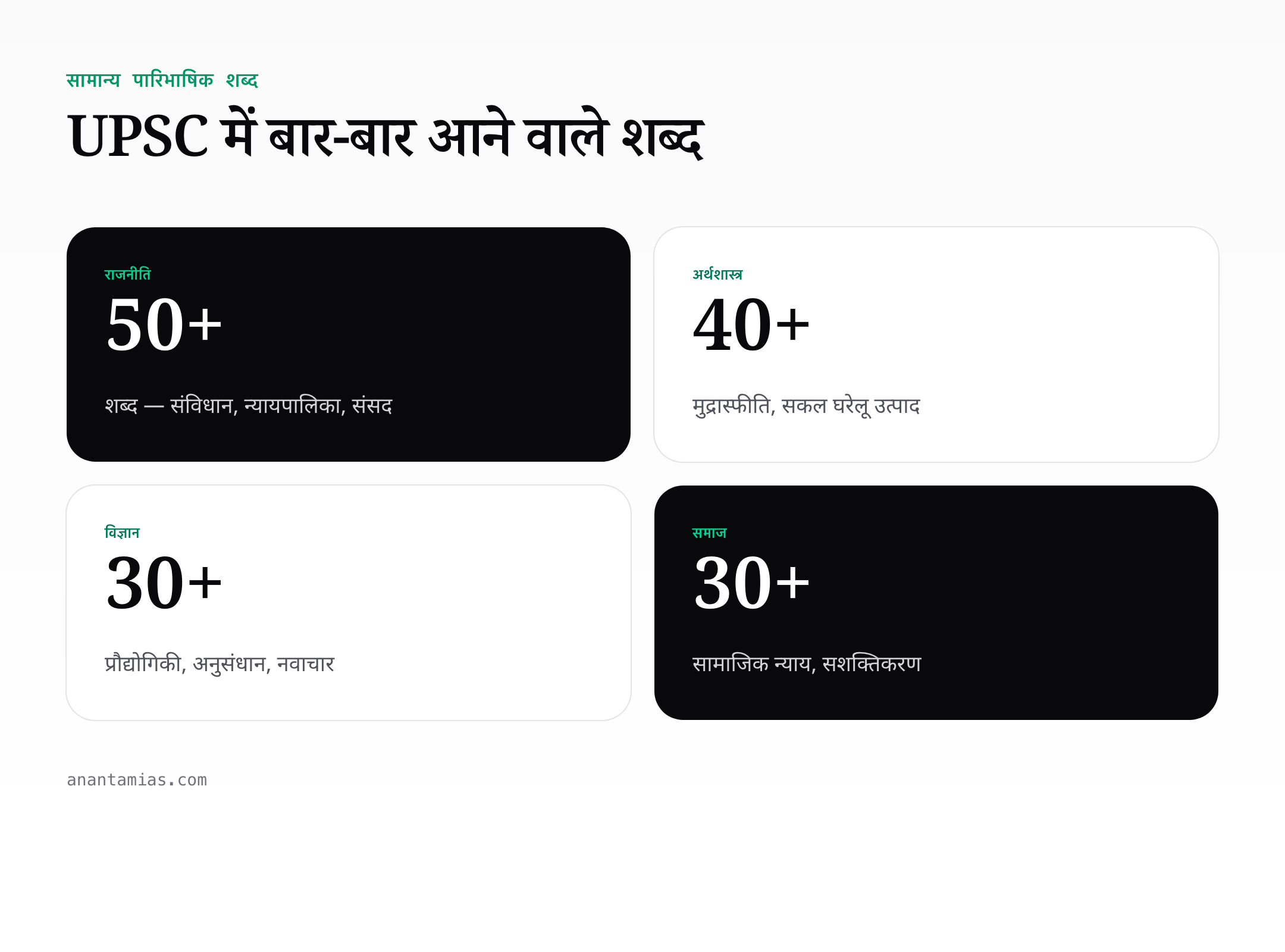
| English | Hindi |
|---|---|
| Government | सरकार |
| Policy | नीति |
| Development | विकास |
| Citizen | नागरिक |
| Responsibility | उत्तरदायित्व / ज़िम्मेदारी |
| Constitution | संविधान |
| Equality | समानता |
| Justice | न्याय |
| Democracy | लोकतंत्र |
| Environment | पर्यावरण |
| Agriculture | कृषि |
| Industry | उद्योग |
| Education | शिक्षा |
| Employment | रोज़गार |
| Poverty | गरीबी |
Tricky English Phrases in Hindi
| English Phrase | Natural Hindi |
|---|---|
| In the long run | दीर्घकाल में |
| On the other hand | दूसरी ओर |
| As a matter of fact | वस्तुतः |
| In spite of | के बावजूद |
| Due to | के कारण |
| With regard to | के संबंध में |
| It is noteworthy | यह उल्लेखनीय है |
| The need of the hour | समय की माँग |
Common Pitfalls
- Literal translation: ‘It is raining cats and dogs’ → do not translate as बिल्ली-कुत्ते बरस रहे हैं। Use मूसलाधार वर्षा हो रही है।
- Wrong gender: लड़का जा रहा है (not जा रही है)।
- Missing post-positions: किताब मेज़ पर है (not किताब मेज़ है)।
- Over-Sanskritised Hindi: keep it simple and understandable.
- Changing meaning to sound natural: stay faithful to the source.
Idioms You Should Know
| English Idiom | Hindi Equivalent |
|---|---|
| To let the cat out of the bag | राज़ खोल देना |
| A drop in the ocean | ऊँट के मुँह में ज़ीरा |
| Once in a blue moon | कभी-कभार |
| To cry over spilt milk | अब पछताए होत क्या |
| To burn the midnight oil | रात-दिन मेहनत करना |
5-Step Translation Process in Exam
- Read the source twice — first for meaning, then for tone.
- Identify tough words/phrases and think of target-language equivalents.
- Draft sentence-by-sentence on rough side.
- Read the draft aloud (mentally) — does it sound natural?
- Transfer to answer sheet, final-check for gender, number, and agreement.
Time Budget
Allocate 20 minutes total — 10 minutes for each direction. Anything more steals from the essay or precis.
Daily Practice Drill
- Pick a 100-word editorial paragraph from The Hindu or Indian Express.
- Translate it to Hindi in 10 minutes.
- Pick a 100-word editorial from Dainik Jagran.
- Translate it to English in 10 minutes.
- Compare with published translations if available.
Red Flags Examiners Catch
- Skipping a sentence entirely.
- Adding information not in the source.
- Grammatical gender mistakes in Hindi.
- Tense inconsistency in English.
- Using Roman script for Hindi translation.
Translation rewards discipline. The aspirant who translates every sentence, gets tenses and gender right, and uses natural target-language phrasing walks away with 30+ out of 40 — a huge buffer toward the 75-mark qualifying threshold.
Frequently Asked Questions
What is the word limit for translation in UPSC Hindi Compulsory?
There is no explicit word limit — just translate the given passage (about 100 words). Your translation should naturally land at a similar length, give or take 10 words.
Should I translate word-for-word?
No. Word-for-word translation sounds unnatural and loses marks. Translate meaning while keeping tone and register intact.
Can I skip a difficult sentence?
Never. Skipping a sentence means direct loss of those marks. If stuck, translate the core idea in the simplest possible target-language sentence.
How do I practise translation daily?
Translate one 100-word passage each way (English↔Hindi) daily. Use editorials from The Hindu, Indian Express, or Dainik Jagran for quality source material.
Do idioms need to be translated literally?
No. Use the equivalent idiom in the target language. ‘A drop in the ocean’ becomes ऊँट के मुँह में ज़ीरा, not a literal rendering.
Tell Google you want more of this.
Add Anantam IAS as a preferred sourceOne tap, and this site shows up more often in your own Top Stories, AI Overviews and AI Mode. Remove it any time.