भारत manufacturing output को subsidy देने की कोशिश कर रहा है, लेकिन उसी manufacturing में लगने वाले inputs पर tax लगा रहा है। देश के नए industrial policy instrumentsका यही मूल तनाव है। Incentive का design कितना भी अच्छा हो, यह तनाव दूर नहीं होता, क्योंकि दोनों नीतियाँ उलटी दिशाओं में खींच रही हैं।
सरकार domestic manufacturing बढ़ाने, value addition करने और import dependence घटाने के लिए industrial policy interventions पर लगातार ज़्यादा भरोसा कर रही है। ये instruments अपने-आप में ठीक बनाए गए हैं। दिक़्क़त यह है कि trade policy के साथ इनका मेल नहीं बैठता।
मुख्य instruments
Production Linked Incentive scheme। eligible sectors में base year के ऊपर होने वाली incremental sales पर लगभग 4 से 6 percent incentive मिलता है। इसका मक़सद investment खींचना और manufacturing capacity बढ़ाना है। इसकी अहम बात यह है कि पैसा investment पर नहीं, output पर मिलता है। यानी कोई firm plant बना ले लेकिन बेच कुछ न पाए, तो उसे कुछ नहीं मिलेगा।
Design Linked Incentive scheme। यह indigenous semiconductor design को बढ़ावा देती है। eligible expenditure के 50 percent तक financial support मिलता है, जिसकी एक cap है। इसके अलावा designed chips की net sales पर 4 से 6 percent incentive मिलता है। यह India Semiconductor Mission का पूरक है और ecosystem के उस हिस्से को मज़बूत करता है जहाँ capital से ज़्यादा talent की ज़रूरत है।
Tariff protection। domestic producers को बचाने के लिए intermediate और final goods पर इसका इस्तेमाल बढ़ा है।
जहाँ instruments एक-दूसरे के ख़िलाफ़ काम करते हैं
PLI के तहत industrial policy, trade policy से जुड़ी हुई नहीं है। Intermediate goods पर ऊँचे tariffs production cost बढ़ाते हैं और domestic manufacturers को कम competitive बनाते हैं।
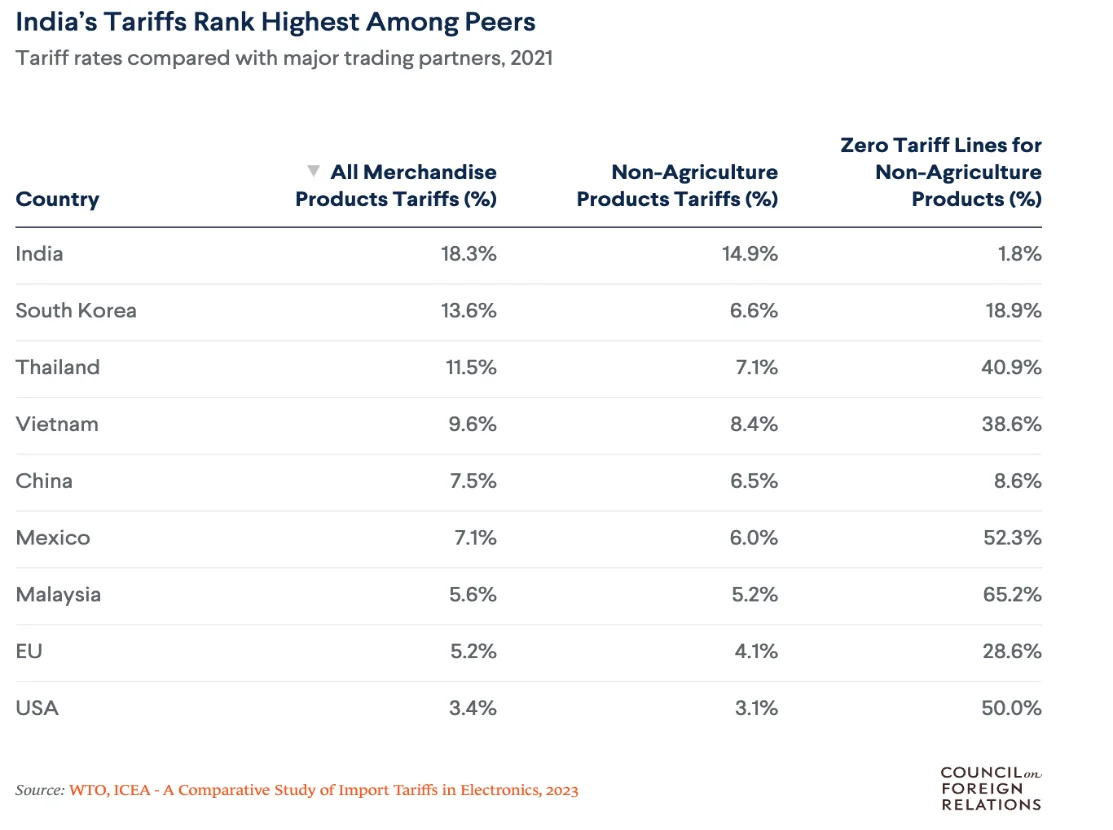
आँकड़े बात साफ़ कर देते हैं। WTO data के अनुसार भारत का average industrial import tariff 2014 के 9.7 percent से बढ़कर 2022 में 14.7 percent हो गया। सभी merchandise पर simple average tariff लगभग 18.3 percent है, non-agriculture tariffs लगभग 14.9 percent हैं, और non-agriculture tariff lines में सिर्फ़ करीब 1.8 percent पर zero duty है।
दूसरे देशों से तुलना भारत के पक्ष में नहीं जाती।
- South Korea: non-agriculture tariffs लगभग 6.6 percent और zero-duty lines लगभग 18.9 percent
- Thailand: लगभग 7.1 percent tariffs और करीब 40.9 percent zero-duty lines
- Vietnam: लगभग 8.4 percent tariffs और करीब 38.6 percent zero-duty lines
- Mexico: लगभग 6.0 percent tariffs और करीब 52.3 percent zero-duty lines
- Malaysia: लगभग 5.2 percent tariffs और करीब 65.2 percent zero-duty lines
India जिस manufacturing capacity को अपने यहाँ लाने के लिए इन सभी अर्थव्यवस्थाओं से compete करता है, वे अपने components भारत से सस्ते में import कर लेती हैं। Incremental sales पर 4 से 6 percent subsidy, structurally महँगे inputs की भरपाई नहीं कर सकती।
Free trade agreements में rules of origin कड़े होने से दूसरी मुश्किल पैदा होती है। Globally sourced inputs इस्तेमाल करने वाले manufacturers के लिए compliance और documentation cost बढ़ जाती है।
PLI के भीतर design के जोखिम
rent-seeking और subsidy dependence। Firm-specific incentives firms को productivity, innovation और technological upgradation के बजाय eligibility conditions पूरी करने पर ध्यान देने के लिए उकसा सकते हैं। Subsidy पर लगातार निर्भरता उस market discipline को कमज़ोर करती है, जो investment के बाद आनी चाहिए थी।
one-size-fits-all design। अलग-अलग sectors की binding constraints अलग होती हैं। Electronics को research और technology support चाहिए। Labour-intensive industries को skilling और export facilitation चाहिए। Production incentive इनमें से किसी समस्या को सीधे हल नहीं करता। वह सिर्फ़ volume को address करता है, और volume हमेशा असली constraint नहीं होता।
base year के साथ खेल। हर incremental-sales scheme base year को अपने हिसाब से manage करने का incentive बनाती है। Output-linked support में यह एक सामान्य समस्या है।
ईमानदार आकलन
PLI ने mobile phone assembly और pharmaceuticals में capacity सचमुच बढ़ाई है। Output-linked incentive का design उससे पहले दी जाने वाली capital subsidies से बेहतर है, क्योंकि इसमें पैसा सिर्फ़ result आने पर मिलता है।
लेकिन assembly और value addition एक ही चीज़ नहीं हैं। Components पर high import tariffs और final sales पर incentive मिलकर ठीक वही नतीजा देते हैं जिसे यह structure reward करता है: parts import करो, उन्हें यहाँ assemble करो और incentive ले लो। Value chain को गहरा करने के लिए उलटी tariff structure चाहिए, यानी inputs पर कम duty। ऐसा अभी नहीं हुआ है।
आगे का रास्ता
- trade policy को industrial policy के साथ मिलाइए। उन intermediate और capital goods पर duty घटाइए जिन्हें domestic industry competitive ढंग से नहीं बना रही है।
- sunset clauses प्रकाशित कीजिए। हर incentive के साथ उसे वापस लेने का साफ़ रास्ता होना चाहिए, ताकि dependence स्थायी विकल्प न बन जाए।
- sector के हिसाब से instruments अलग कीजिए। हर जगह एक ही production incentive देने के बजाय electronics और deep tech के लिए research support, तथा labour-intensive sectors के लिए skilling और logistics support दीजिए।
- output नहीं, value addition नापिए। Metric domestic content share होना चाहिए, क्योंकि असली policy objective यही है।
- rules of origin की compliance आसान कीजिएक्योंकि अभी यह उन firms को सबसे ज़्यादा नुकसान पहुँचाती है जो global supply chains में सबसे गहराई से जुड़ी हैं।
दिक़्क़त instruments में नहीं है। दिक़्क़त उनके बीच के contradiction में है।
सामान्य प्रश्न
भारत में नए industrial policy instruments कौन-से हैं?
Production Linked Incentive scheme, semiconductors के लिए Design Linked Incentive scheme, tariff protection, industrial corridors और cluster development, तथा public procurement preference। इनका इस्तेमाल domestic manufacturing बढ़ाने, value addition करने और import dependence घटाने के लिए साथ-साथ किया जाता है।
Production Linked Incentive scheme कैसे काम करती है?
PLI eligible sectors और eligible firms के लिए base year के ऊपर incremental sales पर लगभग 4 से 6 percent incentive देती है। यह investment के बजाय output को reward करती है। यानी firm तभी support पाएगी जब वह सचमुच ज़्यादा produce और sell करे।
Design Linked Incentive scheme क्या है?
DLI indigenous semiconductor design को बढ़ावा देती है। इसमें eligible expenditure के 50 percent तक financial support मिलता है, जिसकी cap है। Designed chips की net sales पर 4 से 6 percent incentive भी मिलता है। यह सिर्फ़ fabrication नहीं, बल्कि ecosystem के design end को मज़बूत करके India Semiconductor Mission का पूरक बनती है।
भारतीय industrial policy में tariff contradiction क्या है?
PLI की industrial policy, trade policy से पूरी तरह नहीं मिलती। Intermediate goods पर ऊँचे tariffs production cost बढ़ाते और domestic manufacturers को कम competitive बनाते हैं। WTO data के अनुसार average industrial import tariff 2014 के 9.7 percent से बढ़कर 2022 में 14.7 percent हो गया। यानी राज्य output को subsidy देता है, लेकिन उसे बनाने वाले inputs पर tax लगाता है।
भारत के tariffs की तुलना दूसरे देशों से कैसे होती है?
भारत का सभी merchandise पर simple average tariff लगभग 18.3 percent था। Non-agriculture tariffs लगभग 14.9 percent थे और non-agriculture tariff lines में करीब 1.8 percent पर zero duty थी। South Korea, Vietnam, Thailand, Mexico और Malaysia सभी के non-agriculture tariffs कम और zero-duty lines की हिस्सेदारी बहुत ज़्यादा है।
Firm-specific incentives में rent-seeking का जोखिम क्या है?
Firm-specific incentives firms को productivity, innovation और technological upgradation के बजाय eligibility conditions पूरी करने पर ध्यान देने के लिए उकसा सकते हैं। Subsidy पर लगातार निर्भरता market-driven efficiency को कम कर सकती है। इसलिए सवाल सिर्फ़ यह नहीं है कि support कैसे दिया जाए, बल्कि यह भी है कि उसे कैसे वापस लिया जाए।
One-size-fits-all incentive design समस्या क्यों है?
क्योंकि अलग-अलग sectors की binding constraints अलग होती हैं। Electronics को research और technology support चाहिए, जबकि labour-intensive industries को skilling और export facilitation। Production incentives अकेले उन bottlenecks को हल नहीं कर सकते जिनका संबंध output के volume से नहीं है।
Rules of origin manufacturers को कैसे प्रभावित करते हैं?
Free trade agreements में कड़े rules of origin manufacturers से यह साबित करने को कहते हैं कि उनके product में एक न्यूनतम domestic value addition है, तभी preferential tariff treatment मिलेगा। इससे compliance और documentation cost बढ़ती है, ख़ासकर उन firms के लिए जो globally sourced components इस्तेमाल करती हैं।
अभ्यास प्रश्न
प्रीलिम्स MCQ
- Production Linked Incentive scheme में लगभग कितना incentive मिलता है?
(a) कुल sales पर 1 से 2 percent
(b) base year के ऊपर incremental sales पर 4 से 6 percent
(c) capital investment पर 10 percent
(d) export earnings पर 20 percent
उत्तर: (b) PLI base year के ऊपर incremental sales पर लगभग 4 से 6 percent देता है। इसलिए यह investment-linked नहीं, output-linked subsidy है। - Design Linked Incentive scheme किससे जुड़ी है?
(a) Textile design
(b) Semiconductor design
(c) Automobile styling
(d) Pharmaceutical formulation
उत्तर: (b) DLI indigenous semiconductor design को support करती है और India Semiconductor Mission का पूरक है। - Policy discussion में दिए WTO data के अनुसार भारत का average industrial import tariff 2014 के 9.7 percent से बढ़कर 2022 में कितना हो गया?
(a) 2022 में 8.2 percent
(b) 2022 में 11.1 percent
(c) 2022 में 14.7 percent
(d) 2022 में 21.5 percent
उत्तर: (c) 14.7 percent तक की यह बढ़ोतरी इस दलील का आधार है कि trade policy, industrial policy के ख़िलाफ़ काम कर रही है। - भारत में zero-duty non-agriculture tariff lines की हिस्सेदारी लगभग कितनी है?
(a) 1.8 percent
(b) 18.9 percent
(c) 38.6 percent
(d) 65.2 percent
उत्तर: (a) भारत की लगभग 1.8 percent हिस्सेदारी, Malaysia के करीब 65 percent और Mexico के करीब 52 percent से बहुत कम है। - Free trade agreements में rules of origin मुख्य रूप से क्या तय करते हैं?
(a) सभी imports पर लागू tariff rate
(b) domestic value addition के आधार पर किसी good को preferential treatment मिलेगा या नहीं
(c) invoicing की currency
(d) entry का port
उत्तर: (b) वे FTA के तहत preferential tariff treatment लेने के लिए ज़रूरी domestic value addition तय करते हैं।
मुख्य परीक्षा प्रश्न
- भारत में industrial policy और trade policy एक-दूसरे के ख़िलाफ़ काम कर रही हैं। PLI और tariff structure के संदर्भ में आलोचनात्मक जाँच कीजिए। (250 शब्द)
- Production Linked Incentive scheme को industrial policy के instrument के रूप में परखिए। ऐसी schemes की सफलता किन बातों पर निर्भर करती है? (250 शब्द)
- Sector-specific bottlenecks को एक uniform production incentive से हल नहीं किया जा सकता। चर्चा कीजिए। (150 शब्द)
- Firm-specific industrial incentives में subsidy dependence के जोखिम पर चर्चा कीजिए और safeguards सुझाइए। (150 शब्द)
- Intermediate goods पर ऊँचे tariffs domestic manufacturing पर tax की तरह काम करते हैं। भारतीय संदर्भ में इस दावे की जाँच कीजिए। (250 शब्द)