2020 के UPSC भूगोल वैकल्पिक के दोनों पेपर नीचे पूरे हैं, सवाल-दर-सवाल, हर सवाल के नंबर और सिलेबस यूनिट के साथ। पेपर I और पेपर II दोनों में 8 सवाल छपते हैं, कुल 400 नंबर के; आपको 5 करने होते हैं, 250 नंबर के लिए। हर पेपर की साफ़, खोजी जा सकने वाली PDF ऊपर दी गई है।
सवालों का पाठ अंग्रेज़ी में वैसा ही रखा गया है जैसा प्रश्न-पत्र में छपा था। UPSC का असली पेपर द्विभाषी होता है, और उसका हिंदी पाठ आयोग के शब्दों में ही मान्य है, इसलिए हमने उसका अनुवाद करके बदल देना ठीक नहीं समझा। विश्लेषण, यूनिट और वेटेज हिंदी में हैं।
भूगोल वैकल्पिक 2020 पेपर I
डाउनलोड: भूगोल वैकल्पिक 2020 पेपर I (PDF, खोजी जा सकने वाली)। समय तीन घंटे, अधिकतम अंक 250।
खंड A
| प्र. | सवाल | अंक | यूनिट |
|---|---|---|---|
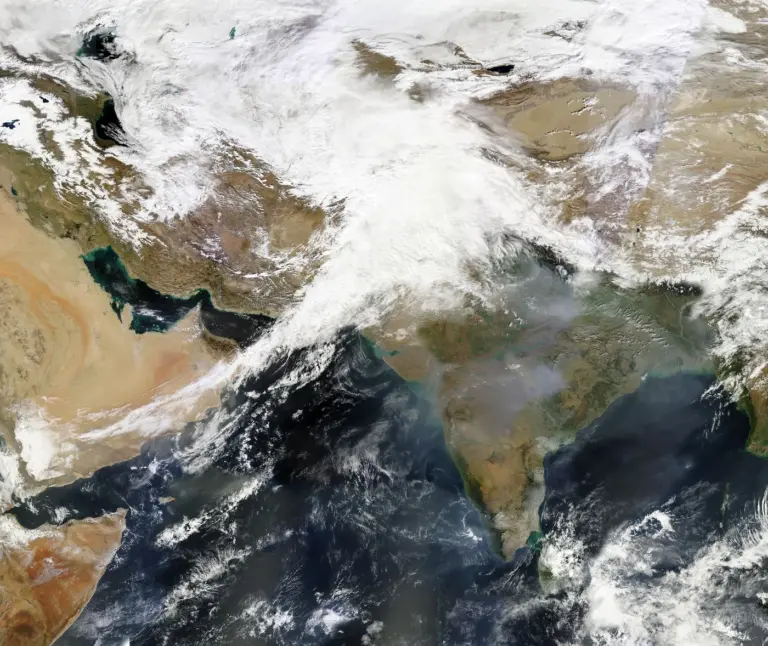
| 1(a) | Write a geographical note on Halloween Storm. | 10 | जलवायु विज्ञान |
| 1(b) | Why is mapping important for analysing geo-hydrological investigations? Explain with relevant examples. | 10 | मानव भूगोल के दृष्टिकोण |
| 1(c) | Marine resources are economically very significant. Discuss citing suitable examples. | 10 | समुद्र विज्ञान |
| 1(d) | Which factors influence the growth of wild plants in India? Discuss their economic significance. | 10 | जैव भूगोल |
| 1(e) | Discuss the problems associated with the living environment in million plus cities in India. How can these be managed? | 10 | पर्यावरण भूगोल |
| 2(a) | Write an essay on the evolution of continents and oceans using various theories and models. | 20 | समुद्र विज्ञान |
| 2(b) | Discuss the concept of coral bleaching, its recovery and macroalgal regime shifts due to this process. | 15 | समुद्र विज्ञान |
| 2(c) | Explain the currents of the North Atlantic Ocean and their significant role in the climate of Western Europe. | 15 | जलवायु विज्ञान |
| 3(a) | Explain how various factors influence the origin and development of the Indian monsoon system. | 20 | जलवायु विज्ञान |
| 3(b) | Explain the effects and causes of deforestation, and its impact on the pattern of agriculture in India. | 15 | जैव भूगोल |
| 3(c) | Explain the characteristic features of Frontogenesis and Frontolysis. | 15 | जलवायु विज्ञान |
| 4(a) | Discuss the problems of erosional surfaces and explain the different methods to identify them with suitable diagrams. | 20 | भू-आकृति विज्ञान |
| 4(b) | Land use / Land cover and soil types influence forage quantity and quality in semi-arid regions of the world. Discuss with relevant examples. | 15 | पर्यावरण भूगोल |
| 4(c) | Discuss the human response to and management of hazards and disasters in India. | 15 | पर्यावरण भूगोल |
खंड B
| प्र. | सवाल | अंक | यूनिट |
|---|---|---|---|
| 5(a) | Analyse India’s food security in the context of population growth. | 10 | आर्थिक भूगोल |
| 5(b) | Identify the causes and effects of energy crisis, and suggest suitable measures to solve the problem. | 10 | आर्थिक भूगोल |
| 5(c) | Distinguish between mobility and migration. What are the causes and consequences of rural to urban migration in India? | 10 | जनसंख्या और अधिवास भूगोल |
| 5(d) | “Where economic growth is sustained over long time periods, its incidence works towards a progressive integration of the space economy.” Elucidate. | 10 | प्रादेशिक नियोजन |
| 5(e) | Write a note on the relevance of von Thünen’s agricultural location theory in the present context. | 10 | आर्थिक भूगोल |
| 6(a) | Compare and contrast the Malthusian and Neo-Malthusian perspectives in the context of population growth, resource use and environmental impact. | 20 | जनसंख्या और अधिवास भूगोल |
| 6(b) | “Land degradation is a threat to productivity and sustainable resource management.” Explain with suitable examples from India. | 15 | पर्यावरण भूगोल |
| 6(c) | In the modern world, most of the frontiers have been replaced by boundaries. Explain the reasons. | 15 | मॉडल, सिद्धांत और नियम |
| 7(a) | Discuss the concept of urban resilience in the context of planning for sustainable development with reference to towns and cities of India. | 20 | जनसंख्या और अधिवास भूगोल |
| 7(b) | Analyse the dynamics of industrial location in the metropolitan cities of India. | 15 | आर्थिक भूगोल |
| 7(c) | Write an essay on gender equity and equality in India in the context of balanced human development. | 15 | प्रादेशिक नियोजन |
| 8(a) | Discuss how and why Mackinder modified his concept of Pivot Area after the World Wars. | 20 | मॉडल, सिद्धांत और नियम |
| 8(b) | Provide an account of world population transition in the context of fertility decline and socio-economic development. | 15 | जनसंख्या और अधिवास भूगोल |
| 8(c) | “Human ecology is the study of mutual relationship of people and their environment both natural and social.” Discuss in detail using ecological concepts. | 15 | पर्यावरण भूगोल |
2020 पेपर I: नंबर कहाँ रहे
| यूनिट | अंक | पेपर में हिस्सा |
|---|---|---|
| पर्यावरण भूगोल | 70 | 17.5% |
| जनसंख्या और अधिवास भूगोल | 65 | 16.2% |
| जलवायु विज्ञान | 60 | 15.0% |
| समुद्र विज्ञान | 45 | 11.2% |
| आर्थिक भूगोल | 45 | 11.2% |
| मॉडल, सिद्धांत और नियम | 35 | 8.8% |
| जैव भूगोल | 25 | 6.2% |
| प्रादेशिक नियोजन | 25 | 6.2% |
| भू-आकृति विज्ञान | 20 | 5.0% |
| मानव भूगोल के दृष्टिकोण | 10 | 2.5% |
भूगोल वैकल्पिक 2020 पेपर II
डाउनलोड: भूगोल वैकल्पिक 2020 पेपर II (PDF, खोजी जा सकने वाली)। समय तीन घंटे, अधिकतम अंक 250।
खंड A
| प्र. | सवाल | अंक | यूनिट |
|---|---|---|---|
| 1(a) | On the outline map of India provided to you, mark the location of all of the following. Write in your QCA Booklet the significance of these locations whether physical / commercial / economic / ecological / environmental / cultural, in not more than 30 words for each entry: (i) Vadhawan (ii) Salkhan (iii) Coorg (iv) Mhow (v) Umroi (vi) Thoothukudi (vii) Bargarh (viii) Atal Tunnel (ix) Gurushikhar (x) Bum La | 20 | सांस्कृतिक स्वरूप |
| 1(b) | Climate change has unsettled the rhythm of seasons. Comment with examples and empirical evidences. | 10 | भौतिक स्वरूप |
| 1(c) | Discuss the methods of crop residue management in rural India to reduce pollution. | 10 | कृषि |
| 1(d) | Has the regional aspiration of the people of Jammu and Kashmir been addressed through re-organisation of the state? Make an assessment. | 10 | राजनीतिक पक्ष |
| 2(a) | Identifying areas covered under tribal sub-plan, discuss the programmes initiated to address their problems. | 20 | सांस्कृतिक स्वरूप |
| 2(b) | Soil types in India, classified on the basis of colour, possess specific chemical and mineral characteristics. Discuss. | 15 | भौतिक स्वरूप |
| 2(c) | The pharmaceutical industry in India depends on the import of raw materials. Evaluate this statement in view of the Indo-Chinese relationship. | 15 | उद्योग |
| 3(a) | India has opened-up its space to private sector for satellite based activities. Critically examine its implications indicating the major security concerns. | 20 | उद्योग |
| 3(b) | Identify oilseeds producing areas in India and discuss the measures to promote edible oil industry. | 15 | कृषि |
| 3(c) | Give a reasoned geographical account of changing rural folk houses in India. | 15 | सांस्कृतिक स्वरूप |
| 4(a) | Border area development is an important national priority. What are the resilient steps needed for peaceful borders? | 20 | राजनीतिक पक्ष |
| 4(b) | Stunting and wasting among children are major consequences of food insecurity. Discuss various schemes of Government of India to address these problems and their achievements. | 15 | कृषि |
| 4(c) | The Essential Commodities (Amendment) Bill 2020 aims to deregulate the production, supply and distribution of farm produce. Critically examine its spatial consequences. | 15 | कृषि |
खंड B
| प्र. | सवाल | अंक | यूनिट |
|---|---|---|---|
| 5(a) | The success of Panchayati Raj depends upon meaningful participation of people at grassroot level. Examine. | 10 | सांस्कृतिक स्वरूप |
| 5(b) | Elucidate the benefits of neem coated urea scheme for Indian agriculture. | 10 | कृषि |
| 5(c) | Canal irrigation has led to monocropping in India. Explain with suitable examples. | 10 | कृषि |
| 5(d) | The pattern of growing ecological foot-prints is uneven in nature. Analyse with reference to land resources in India. | 10 | संसाधन |
| 5(e) | Identify challenges faced by generative and parasitic towns in India and their possible remedies. | 10 | अधिवास |
| 6(a) | Digital Divide in India needs quick redressal to reduce regional disparity in development. Elaborate with suitable examples. | 20 | परिवहन, संचार और व्यापार |
| 6(b) | Avalanche is a major hazard in the Himalayas. What are its causes and mitigation measures? | 15 | भौतिक स्वरूप |
| 6(c) | The process of demographic transition is not uniform in India. Examine this statement in the context of demographic transition theory. | 15 | सांस्कृतिक स्वरूप |
| 7(a) | Demarcating the seismic zones of India, suggest suitable interventions required in most sensitive seismic zones for sustainable human settlements. | 20 | भौतिक स्वरूप |
| 7(b) | What are the characteristics of Blue Flag certified beaches? Discuss their significance for beach tourism in India. | 15 | समकालीन मुद्दे |
| 7(c) | Urban sprawl around planned cities evolve leading to emergence of squatter settlements. Discuss the advantages and disadvantages of such outgrowth. | 15 | अधिवास |
| 8(a) | Analyse the changing nature of workforce composition vis-à-vis rural-urban divide in India. | 20 | अधिवास |
| 8(b) | Describe the economic, maritime and strategic interests of India in South China Sea. | 15 | राजनीतिक पक्ष |
| 8(c) | What kind of skill promotion programmes have been initiated for job deficient regions in India? Explain. | 15 | प्रादेशिक विकास और नियोजन |
2020 पेपर II: नंबर कहाँ रहे
| यूनिट | अंक | पेपर में हिस्सा |
|---|---|---|
| सांस्कृतिक स्वरूप | 80 | 20.0% |
| कृषि | 75 | 18.8% |
| भौतिक स्वरूप | 60 | 15.0% |
| राजनीतिक पक्ष | 45 | 11.2% |
| अधिवास | 45 | 11.2% |
| उद्योग | 35 | 8.8% |
| परिवहन, संचार और व्यापार | 20 | 5.0% |
| समकालीन मुद्दे | 15 | 3.8% |
| प्रादेशिक विकास और नियोजन | 15 | 3.8% |
| संसाधन | 10 | 2.5% |
2020 और ग्यारह साल का पैटर्न
ऊपर का बँटवारा एक साल का सबूत है। 2016 से 2026 तक के सभी 605 छपे सवालों की पूरी वेटेज और बाकी हर पेपर के लिए भूगोल वैकल्पिक प्रश्न-पत्र संग्रह देखिए।
विषय अभी तय नहीं किया है तो पहले UPSC भूगोल वैकल्पिक विषय की पूरी गाइड पढ़िए, और सिलेबस यूनिट-दर-यूनिट देखिए।