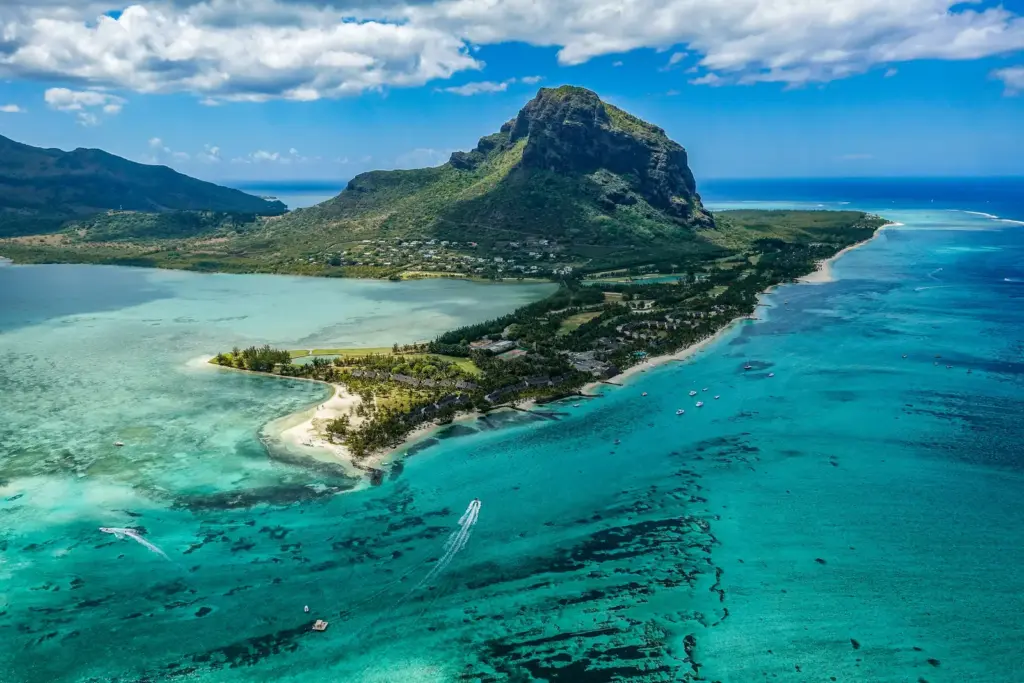
Four small island states, a combined population smaller than a mid-sized Indian city, and a maritime area larger than the Indian subcontinent. That disproportion is why Mauritius, Seychelles, Madagascar and Comoros matter far more to Indian strategy than their size suggests, and India-Mauritius relations anchor the whole arrangement.
The bilateral relationship has been elevated to an Enhanced Strategic Partnership alongside the launch of the MAHASAGAR vision, which widens SAGAR from a regional security doctrine into a global framework for the Global South.
Why the Western Indian Ocean Islands Matter
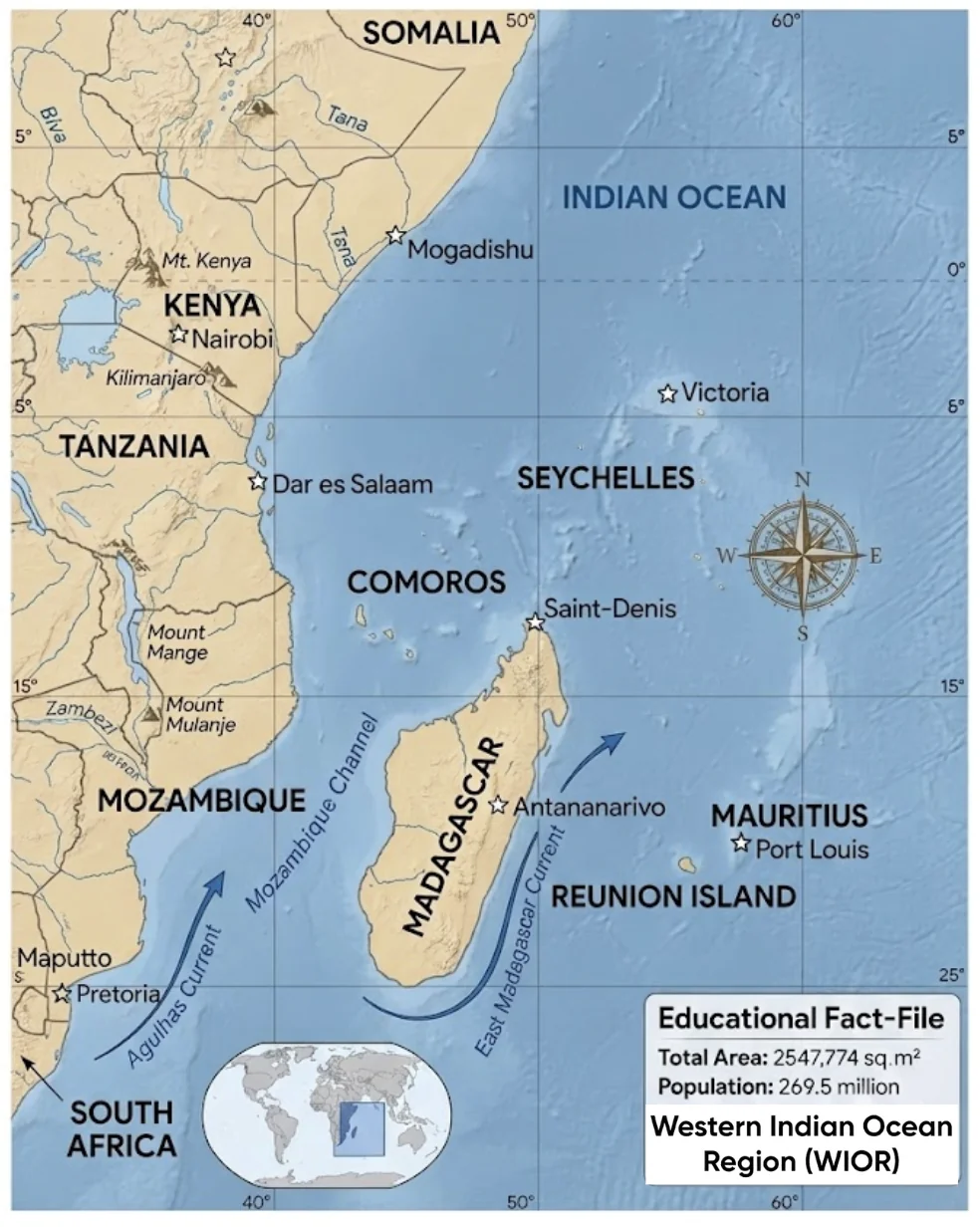
- Chokepoint security and sea lanes. They sit astride the corridors connecting the Arabian Sea to the Cape of Good Hope, the Mozambique Channel and Atlantic commerce, which carry India’s energy and trade.
- Net security provider and first responder. They extend India’s maritime domain awareness and disaster response across vast exclusive economic zones, against piracy, trafficking and illegal fishing.
- Gateway to Africa. Mauritius’s accession to the African Continental Free Trade Area and its financial infrastructure let Indian firms use the island as a commercial springboard into the continent.
- Countering extra-regional assertiveness. They balance an expanding Chinese footprint, including naval presence, infrastructure funding and the base at Djibouti, through transparent, demand-driven partnerships.
Maritime Security and Infrastructure
Agalega. India and Mauritius jointly inaugurated a full-length airfield, jetty and staging facilities on the island, enhancing naval surveillance, logistics and disaster relief readiness in a stretch of ocean with almost no other infrastructure.
Joint surveillance. Coastal radar chains, hydrographic survey support, naval training and operational links with India’s Information Fusion Centre-Indian Ocean Region.
Seychelles. The SESEL joint strategic vision covers maritime security, coastal radar integration and fast patrol craft supply.
Agalega is often discussed as though it were a base. It is more accurate and more useful to describe it as infrastructure: an airfield and jetty that make surveillance, resupply and disaster response possible where distance previously made them impractical.
The Development Model
This is where India’s approach genuinely differs, and it is worth stating precisely.
Indian assistance is demand-driven and grant-heavy rather than commercial-debt based. In Mauritius it has funded the Metro Express, the New Supreme Court building, an ENT hospital, social housing and civil service training capacity. Lines of credit extend to Madagascar and Comoros for agriculture, water security, health infrastructure and renewable energy.
The distinction matters politically. Projects requested locally and financed by grant do not produce the debt-sustainability disputes that have followed some alternative infrastructure models in the region. It is slower and smaller, and it is more durable.
Trade, Finance and Digital
CECPA. The Comprehensive Economic Cooperation and Partnership Agreement of 2021 with Mauritius, India’s first trade agreement with an African country, covering goods, services and investment.
Digital public infrastructure and fintech. Local currency settlement mechanisms and DPI deployment, extending India’s most exportable capability into the region.
Multilateral alignment. Coordination through the Indian Ocean Rim Association, the Colombo Security Conclave, the Indian Ocean Commission where India is an Observer, and the Coalition for Disaster Resilient Infrastructure.
The Honest Constraints
- Delivery pace. Indian project execution has historically lagged commitment, and in small states a delayed project is highly visible.
- Domestic political volatility. Changes of government in island states can reopen settled arrangements, including questions about foreign infrastructure.
- Capacity limits. India’s naval and financial bandwidth is finite, and MAHASAGAR widens the geography without widening the fleet.
- Climate exposure. These are among the states most existentially threatened by sea-level rise, which makes climate finance, not security cooperation, their first-order concern.
That last point deserves weight. For a small island developing state, an Indian coastal radar is welcome and a credible answer on climate adaptation finance is essential. A partnership that leads with security and follows with climate is answering the second question first.
The Way Forward
- Deliver committed projects on schedule, since reliability is the currency in small states.
- Lead with climate resilience and adaptation finance, which is what these partners most need.
- Institutionalise the Colombo Security Conclave with permanent operational protocols.
- Extend CECPA-style agreements to other island economies to convert diplomacy into trade.
- Use Mauritius deliberately as the AfCFTA gateway, which is currently under-exploited by Indian firms.
Frequently Asked Questions
Which countries make up India’s Western Indian Ocean island engagement?
Mauritius, Seychelles, Madagascar and Comoros. Together they sit at the intersection of the Neighbourhood First Policy, India’s Africa outreach and Global South diplomacy, and they command the sea lanes between the Arabian Sea and the Cape of Good Hope.
What is the current status of India-Mauritius relations?
An Enhanced Strategic Partnership, elevated alongside the launch of the MAHASAGAR vision, which stands for Mutual and Holistic Advancement for Security and Growth Across Regions.
How does MAHASAGAR differ from SAGAR?
SAGAR, articulated in 2015, was regional and security-centric for the Indian Ocean. MAHASAGAR upgrades it into a global, holistic framework integrating economic diplomacy, maritime domain awareness, digital connectivity and climate resilience across the Global South.
What is the significance of Agalega?
India and Mauritius jointly inaugurated a full-length airfield, jetty and staging facilities on Mauritius’s Agalega Island. These enhance Indian Ocean naval surveillance, logistics and humanitarian assistance and disaster relief readiness across a vast maritime area with little other infrastructure.
What is CECPA?
The Comprehensive Economic Cooperation and Partnership Agreement with Mauritius, signed in 2021. It was India’s first trade agreement with an African country, covering trade in goods, services and investment flows.
How does India’s development assistance model differ from China’s in the region?
Indian assistance is demand-driven and grant-heavy rather than commercial-debt based. Projects such as the Metro Express, the New Supreme Court building, an ENT hospital, social housing and civil service training in Mauritius were requested locally and largely grant-financed, which avoids the debt-sustainability criticism attached to some alternative models.
Why is Mauritius described as a gateway to Africa?
Because its accession to the African Continental Free Trade Area, combined with its financial and legal infrastructure, allows Indian firms to use the island as a commercial springboard for investment into the African continent.
What is the SESEL vision?
The joint India-Seychelles strategic vision, focused on maritime security, coastal radar integration and supply of fast patrol craft. It sits alongside similar coastal radar and hydrographic support extended across the Western Indian Ocean island states.
Practice Questions
Prelims MCQs
- MAHASAGAR stands for
(a) Maritime Advancement for Security and Growth Across Regions
(b) Mutual and Holistic Advancement for Security and Growth Across Regions
(c) Maritime Harmony and Sustainable Growth Across Regions
(d) Mutual Assistance for Security and Growth in the Arabian Region
Answer: (b) It expands SAGAR from a regional security doctrine into a global, holistic Global South framework. - Agalega Island belongs to
(a) Seychelles
(b) Mauritius
(c) Madagascar
(d) Comoros
Answer: (b) Agalega is Mauritian territory, where India and Mauritius jointly inaugurated an airfield and jetty. - CECPA with Mauritius, signed in 2021, was significant because it was
(a) India's first trade agreement with an island state
(b) India's first trade agreement with an African country
(c) India's first services-only agreement
(d) India's first agreement covering digital trade
Answer: (b) It was India's first trade agreement with a country in Africa. - Mauritius offers Indian firms a springboard into Africa mainly because of
(a) Its oil reserves
(b) Its accession to AfCFTA and its financial infrastructure
(c) Its large domestic market
(d) Its manufacturing base
Answer: (b) AfCFTA membership plus financial and legal infrastructure make it a commercial gateway rather than a market in itself. - The Indian Ocean Commission, in which India participates as an Observer, is a grouping of
(a) South Asian littoral states
(b) Western Indian Ocean island states
(c) ASEAN maritime states
(d) Gulf Cooperation Council members
Answer: (b) The IOC brings together the Western Indian Ocean island states, with India as an Observer.
Mains Questions
- India's engagement with the Western Indian Ocean islands sits at the intersection of Neighbourhood First, Africa outreach and Global South diplomacy. Examine. (250 words)
- India's development assistance model in the Indian Ocean is grant-led rather than debt-led. Evaluate its effectiveness against alternative models. (250 words)
- Discuss the strategic significance of maritime infrastructure in small island states for India's net security provider role. (150 words)
- Assess the shift from SAGAR to MAHASAGAR in India's maritime doctrine. (150 words)
- Small island developing states face existential climate risk. Discuss India's role in supporting their resilience. (250 words)
Tell Google you want more of this.
Add Anantam IAS as a preferred sourceOne tap, and this site shows up more often in your own Top Stories, AI Overviews and AI Mode. Remove it any time.