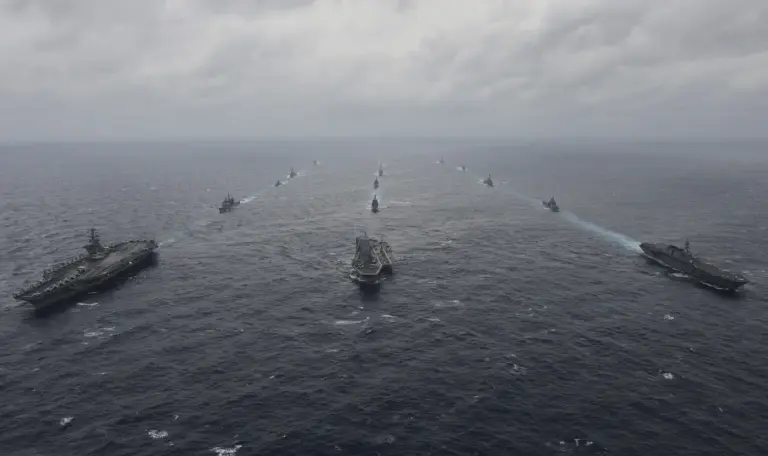
India gifted Vietnam a missile corvette, financed twelve high-speed guard boats, extended three separate defence lines of credit and agreed to supply BrahMos. Defence is not one pillar among several in India-Vietnam relations. It is the operational core, and everything else has been built around it.
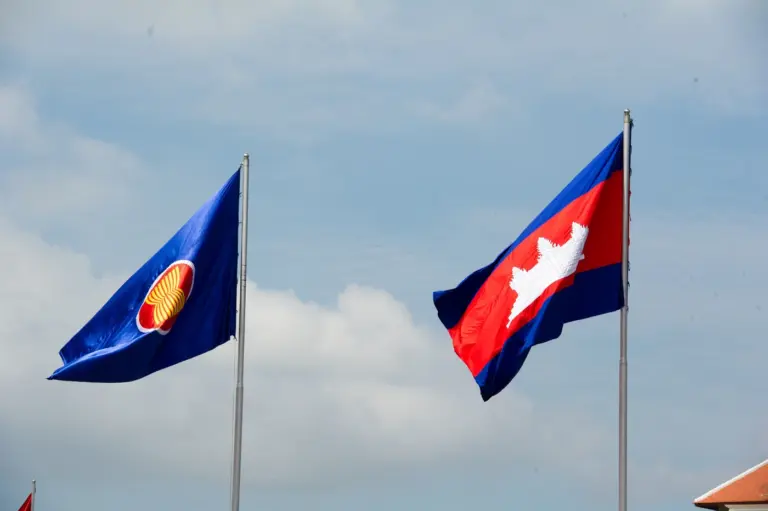
The relationship is now an Enhanced Comprehensive Strategic Partnership, building on the Comprehensive Strategic Partnership of 2016 and the Plan of Action 2024-2028, anchored in mutual strategic trust, ASEAN centrality and a shared commitment to a rules-based Indo-Pacific order.
Why Vietnam Matters
- Pivot of Act East. Vietnam is India’s primary strategic anchor within ASEAN, the entry point for economic and security integration across Southeast Asia.
- South China Sea and UNCLOS. As a major littoral state along vital sea lines of communication, Vietnam aligns with India’s position on freedom of navigation, overflight and unimpeded commerce under UNCLOS 1982.
- Strategic counter-balance. Both gain diplomatic leverage against regional asymmetry without forming a rigid anti-China military bloc, which is a distinction both governments maintain deliberately.
- Energy security in contested waters. Joint hydrocarbon exploration off the Vietnamese coast asserts international maritime rights in non-demarcated zones.
That last point is frequently misread as a commercial venture. The blocks are not large by global standards. Their value is that continued Indian presence constitutes a standing legal position on the validity of Vietnam’s maritime claims.
Defence: From Capacity Building to Export Diplomacy
The shift over the last decade has been from training and capacity building to actual strategic exports.
- Twelve high-speed guard boats under a USD 100 million line of credit
- Additional defence lines of credit of USD 120 million and USD 180 million
- The gifting of the missile corvette INS Kirpan
- Agreed supply of BrahMos supersonic cruise missiles for coastal defence
- A Joint Vision Statement on Defence Partnership towards 2030 and a Mutual Logistics Support MoU
- A Vietnamese liaison officer deployed at India’s Information Fusion Centre-Indian Ocean Region, with alignment to the Indo-Pacific Oceans Initiative
BrahMos to Vietnam is the most consequential item. It establishes India as a supplier of a top-tier strike system to a Southeast Asian state, which changes how the region reads Indian capability, and it gives Vietnam a genuine coastal denial capacity.
Trade and Supply Chains
Bilateral trade stands at about USD 16 billion, with a mutual target of USD 25 billion by 2030. India exports engineering goods, pharmaceuticals and agricultural products; it imports electronics, machinery and coffee.
The imbalance is real: Indian exports of about USD 6.11 billion against imports of about USD 10.35 billion. Vietnam has built an electronics manufacturing base that India is still constructing, so the deficit reflects a capability gap rather than a policy failure.
Industrial alignment is now focused on supply-chain diversification across semiconductors, electronics, renewable energy and textiles, supported by the ongoing review of the ASEAN-India Trade in Goods Agreement.
Development Assistance and Technology
Over 66 Quick Impact Projects across Vietnamese provinces under the Mekong-Ganga Cooperation framework, plus the Army Software Park at Nha Trang, a Centre for Excellence in Software Development in Ho Chi Minh City, and cyber forensic laboratories. Digital cooperation spans fintech, cyber policy, artificial intelligence in healthcare and satellite and space applications.
Civilisational Links
Cultural ties rooted in Cham heritage, the exposition of Buddha’s holy relics in Vietnam, and Indian support for structural restoration at the UNESCO World Heritage My Son sanctuary. These are not decorative in this relationship: My Son restoration is Indian archaeological expertise applied to Vietnamese heritage, and it is remembered.
The Honest Constraints
- Structural trade deficit, reflecting India’s weaker electronics manufacturing base
- Execution gaps, with bureaucratic delays slowing full deployment of defence lines of credit and the maintenance ecosystems that make delivered equipment usable
- Chinese friction over Indian exploration blocks, which imposes a diplomatic cost India has chosen to absorb
- Modest private investment, well behind South Korea, Japan and Singapore
- Connectivity deficit, with limited direct links constraining trade and tourism
The maintenance point deserves attention. Supplying equipment without a sustainment ecosystem produces goodwill followed by frustration, and India has repeated that pattern in several defence export relationships.
The Way Forward
- Build maintenance and spares ecosystems alongside every export, not after it.
- Convert lines of credit into delivered platforms faster, since execution speed is what buyers actually judge.
- Push private Indian investment into Vietnamese manufacturing, where India is conspicuously absent.
- Use the AITIGA review to correct rules of origin that currently disadvantage Indian exporters.
- Keep hydrocarbon exploration going regardless of commercial return, because its value is legal and strategic.
Frequently Asked Questions
What is the current status of India-Vietnam relations?
An Enhanced Comprehensive Strategic Partnership, building on the Comprehensive Strategic Partnership of 2016 and the Plan of Action 2024-2028. It is anchored in mutual strategic trust, ASEAN centrality and a shared vision of a rules-based Indo-Pacific order.
What are the guiding frameworks?
The India-Vietnam Joint Vision for Peace, Prosperity and People, and the Joint Vision Statement on India-Vietnam Defence Partnership towards 2030. Institutional mechanisms include Joint Commission Meetings, a Defence Policy Dialogue, a Maritime Security Dialogue, a Cyber Policy Dialogue and a proposed Strategic Diplomacy-Defence 2+2 Dialogue.
What defence equipment has India supplied to Vietnam?
Twelve high-speed guard boats under a 100 million dollar line of credit, with additional defence lines of credit of 120 million and 180 million dollars, the gifting of the missile corvette INS Kirpan, and agreed supply of BrahMos supersonic cruise missiles to strengthen Vietnamese coastal defence.
Why does the South China Sea matter to India-Vietnam ties?
Vietnam is a major littoral state along vital sea lines of communication and aligns with India’s emphasis on freedom of navigation, overflight and unimpeded commerce under UNCLOS 1982. Indian joint hydrocarbon exploration off the Vietnamese coast asserts maritime rights in non-demarcated contested zones, which is why China objects to it.
How large is India-Vietnam trade?
About USD 16 billion, with a mutual target of USD 25 billion by 2030. India exports engineering goods, pharmaceuticals and agricultural products, and imports electronics, machinery and coffee. India runs a deficit, with exports of roughly USD 6.11 billion against imports of about USD 10.35 billion.
What is the Mekong-Ganga Cooperation framework?
A regional mechanism under which India has implemented over 66 Quick Impact Projects across Vietnamese provinces, alongside institutional support such as the Army Software Park at Nha Trang, a Centre for Excellence in Software Development in Ho Chi Minh City, and cyber forensic laboratories.
What is the Mutual Logistics Support MoU?
An arrangement allowing reciprocal access to each other’s logistics facilities, which improves operational reach and interoperability. Combined with the deployment of a Vietnamese liaison officer at India’s Information Fusion Centre-Indian Ocean Region, it moves the relationship from equipment supply towards operational partnership.
What are the main challenges?
A structural trade deficit for India; bureaucratic delays in deploying defence lines of credit and maintenance ecosystems; Chinese opposition to Indian oil exploration blocks in the South China Sea; modest private Indian investment compared with South Korea, Japan and Singapore; and limited direct connectivity.
Practice Questions
Prelims MCQs
- INS Kirpan, gifted by India to Vietnam, is a
(a) Submarine
(b) Missile corvette
(c) Frigate
(d) Patrol aircraft
Answer: (b) The gifting of the missile corvette INS Kirpan was a notable step in defence cooperation. - India-Vietnam bilateral trade is approximately, with a 2030 target of
(a) USD 8 billion, target USD 15 billion
(b) USD 16 billion, target USD 25 billion
(c) USD 25 billion, target USD 50 billion
(d) USD 30 billion, target USD 60 billion
Answer: (b) Trade stands at about USD 16 billion with a mutual target of USD 25 billion by 2030. - Quick Impact Projects in Vietnam are implemented under which framework?
(a) BIMSTEC
(b) Mekong-Ganga Cooperation
(c) ASEAN-India Trade in Goods Agreement
(d) Indo-Pacific Oceans Initiative
Answer: (b) Over 66 Quick Impact Projects have been implemented under the Mekong-Ganga Cooperation framework. - Indian hydrocarbon exploration off Vietnam is strategically significant because it
(a) Guarantees India's oil supply
(b) Asserts maritime rights under UNCLOS in contested waters
(c) Reduces Vietnam's dependence on Russia
(d) Fulfils an ASEAN obligation
Answer: (b) The exploration blocks assert international maritime rights in non-demarcated contested zones, which is why they draw Chinese objection. - India runs a trade deficit with Vietnam of approximately
(a) USD 1 billion
(b) USD 4 billion
(c) USD 8 billion
(d) USD 12 billion
Answer: (b) Exports of about USD 6.11 billion against imports of about USD 10.35 billion leaves a deficit of roughly USD 4 billion.
Mains Questions
- Vietnam is described as the anchor of India's Act East Policy. Examine the basis for this claim. (250 words)
- Defence exports have become an instrument of Indian foreign policy. Discuss with reference to Vietnam. (250 words)
- India's hydrocarbon exploration in the South China Sea is a legal position as much as a commercial venture. Comment. (150 words)
- Evaluate the challenges limiting India-Vietnam economic engagement despite strong strategic convergence. (250 words)
- Discuss the significance of mutual logistics arrangements in India's Indo-Pacific partnerships. (150 words)
Tell Google you want more of this.
Add Anantam IAS as a preferred sourceOne tap, and this site shows up more often in your own Top Stories, AI Overviews and AI Mode. Remove it any time.