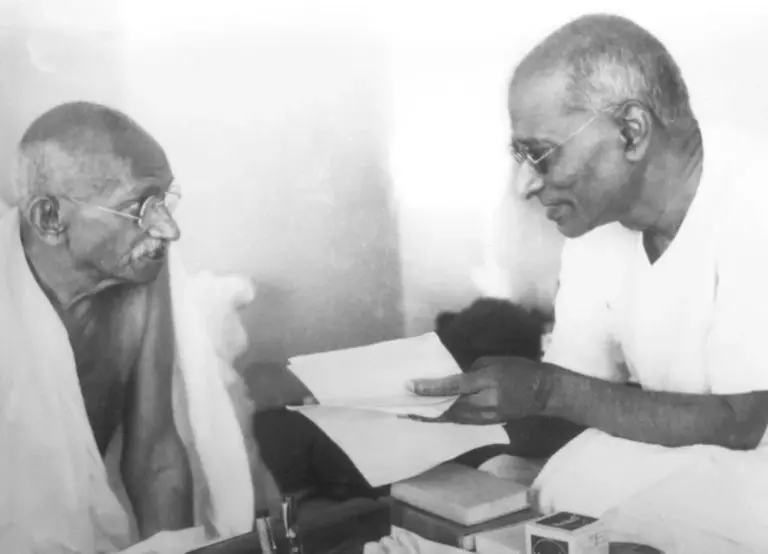
The Montagu-Chelmsford Reforms 1919, enacted as the Government of India Act 1919, were the most ambitious constitutional reorganisation attempted by the British in India before the Government of India Act 1935. Named after Edwin Montagu, Secretary of State for India, and Lord Chelmsford, Viceroy of India, the Montagu-Chelmsford Reforms 1919 introduced dyarchy in the provinces — splitting subjects into “reserved” and “transferred” categories — established a bicameral central legislature (Council of State and Legislative Assembly), extended communal representation, set up a Public Service Commission, and contained a statutory promise of a review commission ten years later. That promise produced the Simon Commission of 1927-30. The Montagu-Chelmsford Reforms 1919 marked the first declaration by the British Parliament that responsible government in India was an objective of British policy — the celebrated “August Declaration” of 1917. Indian nationalists rejected the reforms as inadequate; the period that followed saw the Rowlatt Act, the Jallianwala Bagh Massacre, the Khilafat and Non-Cooperation Movements, and the Chauri Chaura Incident.
Background: The August Declaration of 1917
The Montagu-Chelmsford Reforms 1919 grew out of war-time political pressure and a remarkable change of British declared policy.
Indian War Contribution
Between 1914 and 1918 India contributed approximately 1.3 million soldiers and labourers to the British war effort, fighting in France, East Africa, Mesopotamia, Gallipoli and Palestine. India also contributed £146 million to the British exchequer and underwent severe wartime inflation. The political price of this contribution was an expectation of constitutional advance.
Home Rule Movement
Annie Besant‘s Home Rule League (founded September 1916) and Bal Gangadhar Tilak‘s parallel Home Rule League (April 1916) brought the demand for self-government to a mass audience. Besant was interned by the Madras government in June 1917 — provoking national outrage that contributed to the August Declaration.
Lucknow Pact 1916
In December 1916 the Indian National Congress and the All-India Muslim League concluded the Lucknow Pact under the leadership of Tilak and Muhammad Ali Jinnah. The Pact accepted separate electorates for Muslims (continuing the principle of the Morley-Minto Reforms 1909) and set out a joint demand for elected majorities in legislative councils and an Indian-elected executive responsible to the legislature.
August Declaration 20 August 1917
On 20 August 1917 Edwin Montagu, the new Secretary of State for India, made a historic declaration in the House of Commons: the policy of His Majesty’s Government was “the increasing association of Indians in every branch of the administration and the gradual development of self-governing institutions with a view to the progressive realisation of responsible government in India as an integral part of the British Empire”. This was the first time the British Parliament had committed itself to responsible government in India as a stated policy objective.
Montagu’s Tour and Report
Between November 1917 and April 1918 Montagu travelled across India with Viceroy Lord Chelmsford and consulted Indian leaders, princes and officials. The Montagu-Chelmsford Report was published in July 1918. After parliamentary scrutiny the proposals were enacted as the Government of India Act 1919, which received royal assent on 23 December 1919.
Key Provisions of the Montagu-Chelmsford Reforms 1919
The Government of India Act 1919 reorganised the centre, the provinces, the franchise and the public services.
Dyarchy in Provinces
The central feature of the Montagu-Chelmsford Reforms 1919 was dyarchy in the provinces — the division of provincial subjects into two categories:
- Reserved subjects — administered by the Governor and his Executive Council, not responsible to the legislature. Included: law and order, police, justice, land revenue, irrigation, forests, factories and labour.
- Transferred subjects — administered by ministers chosen from the elected members of the legislature, in theory responsible to it. Included: education, public health, local self-government, agriculture, cooperative societies, public works (excluding irrigation), excise (in some provinces).
The Governor could overrule his ministers on transferred subjects in the name of “safeguarding” public peace, financial stability, or the interests of the services and minorities. He retained complete power on reserved subjects. He could also “certify” Bills as essential and treat them as passed even if the legislature rejected them. In practice the most important “nation-building” subjects were transferred but were starved of revenue, since revenue-yielding heads (land revenue, irrigation, forests) remained reserved. The transferred ministers had responsibility without resources.
Bicameralism at the Centre
The Montagu-Chelmsford Reforms 1919 replaced the single Imperial Legislative Council of the Morley-Minto Reforms 1909 with a bicameral central legislature:
- Council of State — 60 members (33 elected, 27 nominated), upper house, five-year term.
- Legislative Assembly — 145 members (104 elected, 41 nominated), lower house, three-year term.
Both houses had a substantial elected majority. But the Governor-General retained:
- Power to summon, prorogue and dissolve either house.
- Power to certify Bills rejected by the legislature as essential for the safety, tranquillity or interests of British India.
- Power to issue ordinances in emergencies.
- Three “reserved” departments at the centre — foreign affairs and political relations, defence, and ecclesiastical — over which there was no Indian responsibility whatever.
No dyarchy was introduced at the centre by the Government of India Act 1919; that experiment was reserved for the (never-enacted) federal portion of the Government of India Act 1935.
Direct Elections and Franchise
For the first time the Montagu-Chelmsford Reforms 1919 introduced direct elections to legislative bodies. The Indirect electoral colleges of 1909 were abolished. The franchise was widened — to about 5.5 million voters in provincial assemblies and 1 million in the central legislature, based on property, taxation and educational qualifications. This was still under 3% of the population.
Extension of Communal Representation
The principle of separate electorates introduced by the Morley-Minto Reforms 1909 was retained and extended. Separate electorates were now provided for:
- Muslims (already from 1909)
- Sikhs (in Punjab) — new
- Indian Christians, Anglo-Indians and Europeans — new
Class constituencies were continued for landholders and chambers of commerce. The widening of communal categories was sharply criticised by the Congress and would be carried further by the Communal Award of 1932.
Statutory Public Service Commission
Section 96-C of the Government of India Act 1919 provided for a statutory Public Service Commission. The Lee Commission of 1924 recommended its detailed structure, and the Royal Commission on the Public Services in India (1924) recommended Indianisation of the services in stages. The Public Service Commission was constituted on 1 October 1926 with Sir Ross Barker as the first chairman. This is the institutional ancestor of the Union Public Service Commission established under Article 315 of the Constitution.
Separation of Provincial and Central Subjects
The Montagu-Chelmsford Reforms 1919 attempted to separate provincial from central revenue heads — a first step towards the federal distribution of powers that would be embodied in the three lists of the Government of India Act 1935.
Statutory Commission Promise
Section 84-A of the Act required a Statutory Commission to be appointed within ten years to review the working of the reforms and recommend the next stage of constitutional advance. This was the statutory basis for the Simon Commission of 1927-30 — appointed two years early by Lord Birkenhead in 1927.
Office of High Commissioner
The Act created the office of High Commissioner for India in London (1920), separating commercial and administrative functions previously combined in the Secretary of State’s office. This is the ancestor of the post-Independence High Commissioner of India to the United Kingdom.
Working of the Montagu-Chelmsford Reforms 1919
The Government of India Act 1919 came into operation in 1921. The first elections were held in November-December 1920.
Non-Cooperation and Boycott
The Indian National Congress, at its Special Calcutta Session of September 1920 and its Nagpur Session of December 1920, decided under Gandhi’s leadership to boycott the first elections as part of the Non-Cooperation Movement. The boycott meant that the elected component of the new legislatures was dominated by Moderates, Liberals and Independents. The Liberal leader Tej Bahadur Sapru became the first Law Member; V. S. Srinivasa Sastri served as the first Indian member of the Council of State; and Surendranath Banerjee became the first minister in Bengal under dyarchy.
Swaraj Party
After the Chauri Chaura Incident of February 1922 and the suspension of the Non-Cooperation Movement, Motilal Nehru and Chittaranjan Das formed the Swaraj Party in December 1922 to contest the elections of 1923 on a programme of “wrecking the reforms from within”. The Swarajists won 42 of 105 elected seats in the Central Legislative Assembly in 1923 and 38 of 145 in 1926. They obstructed the Government, defeated finance Bills, and forced their certification by the Viceroy.
Dyarchy in Practice
Dyarchy worked badly. Ministers on transferred subjects found themselves blocked by reserved-side civil servants and by the Governor’s veto. Resignations were frequent. The Muddiman Committee Report of 1925 noted the difficulties but recommended only modest changes. By 1927 it was generally accepted that dyarchy was a failure and that the next round of reforms would have to abolish it — as the Government of India Act 1935 did.
Defects and Indian Reaction
The Indian National Congress, at its Special Bombay Session of August 1918 and its Delhi Session of December 1918, declared the Montagu-Chelmsford Reforms 1919 “disappointing and unsatisfactory” and demanded early self-government. The principal defects identified were:
- Dyarchy was unworkable in practice — divided authority, divided responsibility.
- Governors retained extensive override, certification and ordinance powers.
- The franchise was confined to 3% of adults — universal adult suffrage was not contemplated.
- Defence, foreign affairs and political relations were withheld at the centre.
- Communal electorates were extended rather than curtailed.
- The Indian Civil Service remained overwhelmingly British.
Rowlatt Act and the Hartal of 1919
Even as the Montagu-Chelmsford Bill was being debated, the Government of India enacted the Rowlatt Act (March 1919) on the recommendation of the Sedition Committee Report, extending wartime emergency powers indefinitely. The Rowlatt Satyagraha called by Gandhi on 6 April 1919 was answered by the Jallianwala Bagh Massacre on 13 April 1919 — the same year as the Montagu-Chelmsford Reforms 1919. The juxtaposition discredited the reforms before they took effect.
Failure to Match the August Declaration
The August Declaration of 1917 had promised “progressive realisation of responsible government”. The reforms delivered dyarchy — explicitly described in the Montagu-Chelmsford Report as a “transitional” device. Nationalists saw the gap between the promise and the delivery as a betrayal.
Significance for Indian Constitutional Development
Despite their defects the Montagu-Chelmsford Reforms 1919 left a substantial mark on the Indian constitutional landscape.
First Statutory Promise of Responsible Government
The Act recorded in statute the British commitment to responsible government as a policy aim. Every subsequent constitutional debate — Simon Commission, Round Table Conferences, the Government of India Act 1935, Cripps Mission, Cabinet Mission — proceeded on that premise.
Direct Elections
The direct election of members of provincial legislatures, established in 1919, was the foundation on which adult franchise would later be built under the Indian Constitution.
Public Service Commission
The statutory Public Service Commission of 1919 became the Federal Public Service Commission under the Government of India Act 1935 and the Union Public Service Commission under Article 315.
Federal Separation of Powers
The separation of central and provincial subjects in 1919 was a first attempt at the federal distribution of powers later completed by the three lists of the Government of India Act 1935 and the Seventh Schedule of the Constitution.
Chain of Constitutional Statutes
The Montagu-Chelmsford Reforms 1919 belong in the chronological chain of constitutional acts running from the Regulating Act 1773, through the Charter Acts, the Government of India Act 1858, the Indian Councils Acts of 1861, 1892 and 1909 (Morley-Minto Reforms 1909), the Government of India Act 1935, and the Indian Independence Act 1947.
UPSC Relevance
For UPSC Civil Services aspirants the Montagu-Chelmsford Reforms 1919 are an indispensable topic in both Prelims and Mains.
Prelims
Common prelims questions test: the name of the statute (Government of India Act 1919), the date of the August Declaration (20 August 1917), the meaning of dyarchy, examples of reserved and transferred subjects, the bicameral structure at the centre (Council of State + Legislative Assembly), the statutory commission promise (Section 84-A), and the year the Public Service Commission was constituted (1926).
Mains GS-I
Under “Modern Indian History” the Montagu-Chelmsford Reforms 1919 are studied alongside the Rowlatt Act, the Jallianwala Bagh Massacre, the Khilafat and Non-Cooperation Movements and the Chauri Chaura Incident of 1922. Aspirants should be able to explain why a reform promising “responsible government” was rejected by the Congress as inadequate.
Mains GS-II
Under “evolution of the Indian Constitution” the Montagu-Chelmsford Reforms 1919 sit between the Morley-Minto Reforms 1909 and the Government of India Act 1935. A frequent mains question asks aspirants to evaluate dyarchy as a constitutional device — its theory, working and reasons for failure.
Frequently Asked Questions
What were the Montagu-Chelmsford Reforms 1919?
The Montagu-Chelmsford Reforms 1919 were the constitutional changes enacted by the British Parliament as the Government of India Act 1919. They introduced dyarchy in the provinces, established a bicameral central legislature, extended communal representation, set up a Public Service Commission, and committed Britain to u0022progressive realisation of responsible governmentu0022 in India.
Who were Montagu and Chelmsford?
Edwin Montagu was the Secretary of State for India (1917-22) who made the August Declaration of 1917 in the House of Commons. Lord Chelmsford was the Viceroy of India (1916-21). Together they toured India in 1917-18 and authored the Montagu-Chelmsford Report (July 1918) which became the basis of the Government of India Act 1919.
What was dyarchy in the provinces under the Montagu-Chelmsford Reforms 1919?
Dyarchy was the division of provincial subjects into two categories: reserved subjects (law and order, police, justice, land revenue, irrigation) administered by the Governor and his Executive Council, and transferred subjects (education, public health, local self-government, agriculture) administered by Indian ministers responsible to the legislature. The Governor retained override powers even on transferred subjects.
What was the August Declaration of 1917?
The August Declaration of 20 August 1917 was Edwin Montagu’s statement in the House of Commons that British policy in India was u0022the gradual development of self-governing institutions with a view to the progressive realisation of responsible government in India as an integral part of the British Empireu0022. It was the first formal British commitment to responsible government in India.
What was the bicameral central legislature created by the Government of India Act 1919?
The Act replaced the single Imperial Legislative Council with two houses — the Council of State (60 members, 33 elected, five-year term) and the Legislative Assembly (145 members, 104 elected, three-year term). Both had elected majorities but the Governor-General retained certification, ordinance and reserved-departments powers.
What was the Simon Commission and what was its connection to the Montagu-Chelmsford Reforms 1919?
Section 84-A of the Government of India Act 1919 required a statutory commission within ten years to review the reforms. Lord Birkenhead appointed the Simon Commission in 1927 — two years early. The Commission was boycotted because it had no Indian member; its 1930 report recommended the abolition of dyarchy in provinces and led ultimately to the Government of India Act 1935.
Why did the Indian National Congress reject the Montagu-Chelmsford Reforms 1919?
The Congress at its Bombay Special Session of August 1918 and Delhi Session of December 1918 declared the reforms u0022disappointing and unsatisfactoryu0022. The principal objections were the unworkability of dyarchy, the retention of override and certification powers by Governors, the narrow franchise (under 3% of adults), the exclusion of defence and foreign affairs from any Indian voice, and the extension of communal electorates. The simultaneous enactment of the Rowlatt Act and the Jallianwala Bagh Massacre discredited the reforms further.
Did the Montagu-Chelmsford Reforms 1919 introduce direct elections in India?
Yes. The Government of India Act 1919 abolished the indirect electoral colleges of the Morley-Minto Reforms 1909 and provided for the direct election of members of the provincial legislatures and the Legislative Assembly at the centre. This was the first introduction of direct election in Indian constitutional history.
Tell Google you want more of this.
Add Anantam IAS as a preferred sourceOne tap, and this site shows up more often in your own Top Stories, AI Overviews and AI Mode. Remove it any time.