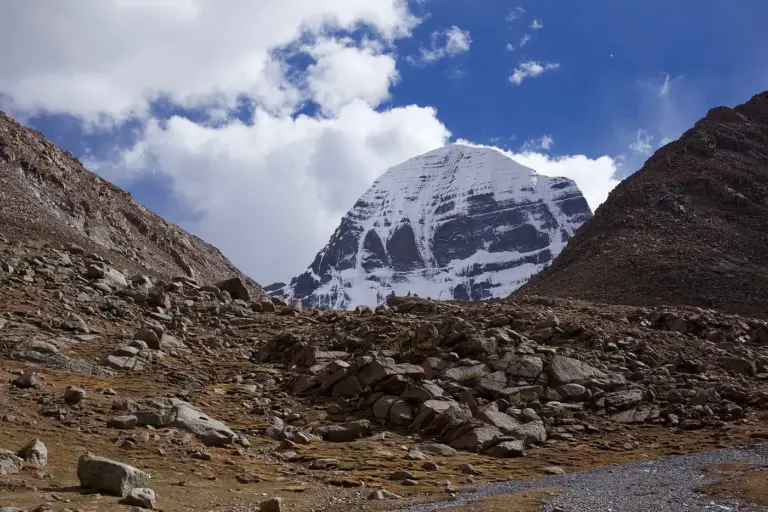

The Pakistan India war history is one of the most consequential rivalries in post-World War II Asia. Since Partition in 1947, India and Pakistan have fought four full-scale wars (1947–48, 1965, 1971, 1999) and several limited conflicts, alongside decades of low-intensity hostilities along the Line of Control (LoC). These confrontations have shaped South Asian geopolitics, the nuclear doctrines of both states, the creation of Bangladesh, and the enduring Kashmir dispute. For UPSC aspirants, understanding Indo-Pak wars is essential for General Studies Paper I (post-Independence history) and GS-II (India and its neighbourhood).
Historical Roots of the Conflict
The partition of British India in 1947 created two dominions along communal lines, producing one of the largest human migrations in recorded history and leaving unresolved questions around princely states, particularly Jammu and Kashmir. Pakistan's territorial claim on Kashmir, India's integrationist position after the Instrument of Accession signed by Maharaja Hari Singh, and the ideological divergence between a secular republic and an Islamic state set the stage for recurring conflict.
1. The First Kashmir War (1947–1948)
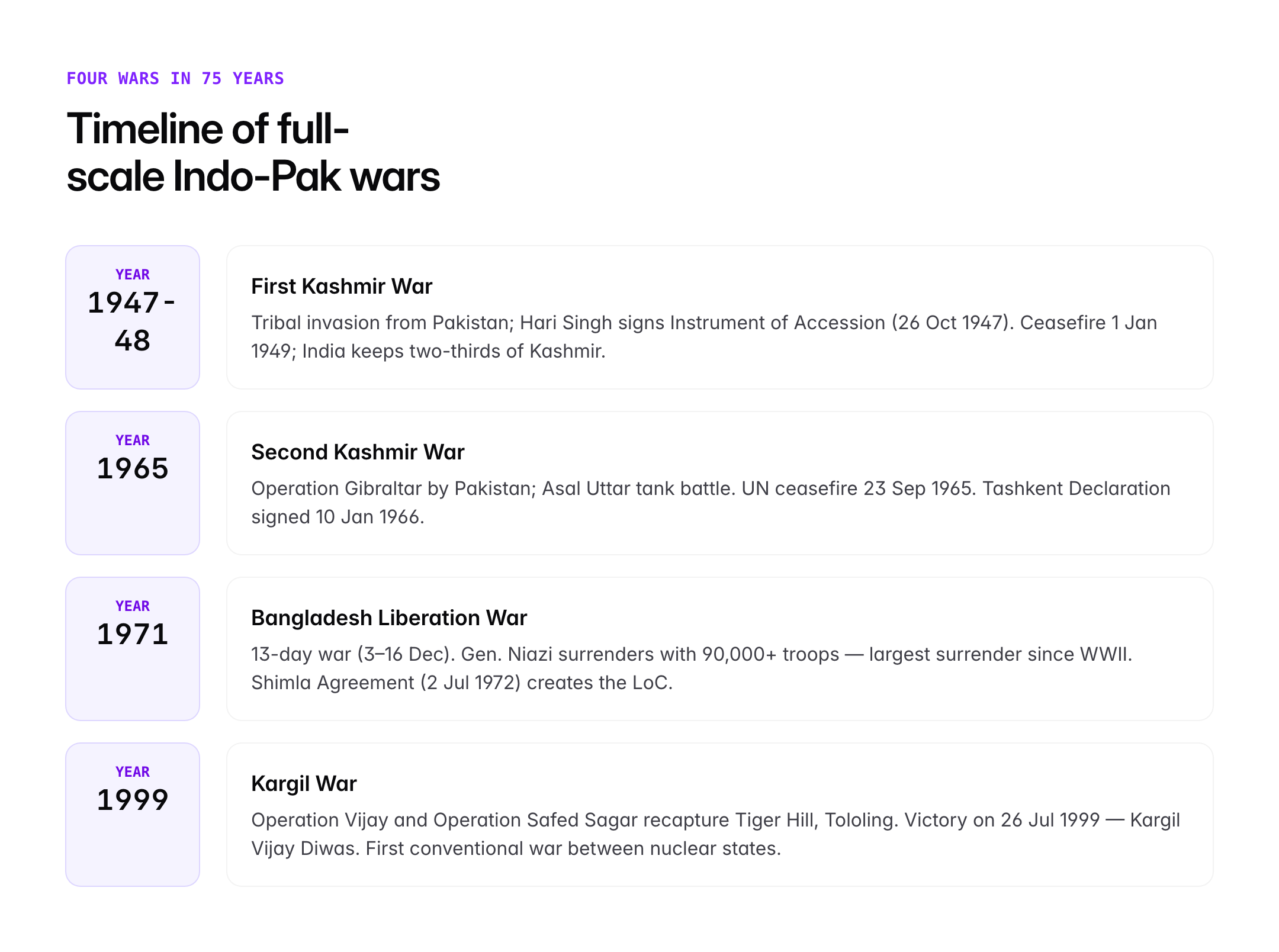
Soon after independence, Pakistan-backed tribal raiders from the North-West Frontier invaded Kashmir in October 1947. Maharaja Hari Singh signed the Instrument of Accession on 26 October 1947, after which Indian forces were airlifted to Srinagar.
- Duration: October 1947 to January 1949
- Trigger: Tribal invasion (Operation Gulmarg) from Pakistan
- UN intervention: India approached the UN in January 1948
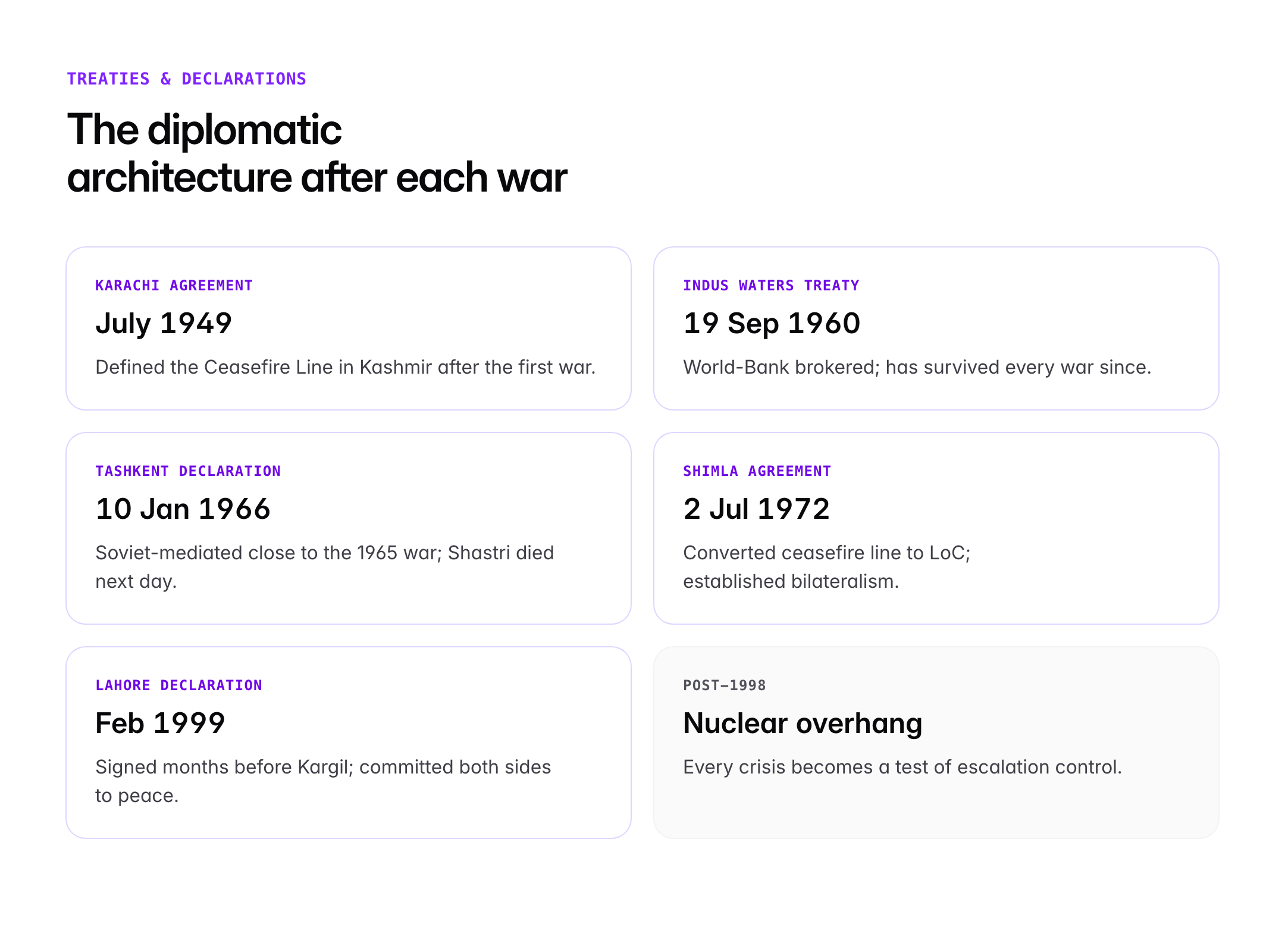
- Outcome: Ceasefire at 23:59 on 1 January 1949 along what became the Ceasefire Line (later the LoC after 1972)
- Territorial split: India retained roughly two-thirds of Kashmir; Pakistan controlled one-third (today's PoK and Gilgit-Baltistan)
2. The Second Kashmir War (1965)
In April–September 1965, Pakistan launched Operation Gibraltar, sending irregulars into Jammu and Kashmir to spark insurrection. India responded by crossing the international border, opening fronts in Punjab and Rajasthan.
- Major battles: Asal Uttar (tank battle in Khemkaran), Haji Pir Pass, Chhamb
- Leaders: Prime Minister Lal Bahadur Shastri (India), President Ayub Khan (Pakistan)
- Outcome: UN-brokered ceasefire on 23 September 1965; India held the upper hand militarily
- Treaty: Tashkent Declaration (10 January 1966), mediated by the Soviet Union; Shastri died in Tashkent the next day
3. The Bangladesh Liberation War (1971)
The 1971 war was the most decisive Indo-Pak conflict, triggered by the suppression of Bengali nationalism in East Pakistan and a refugee inflow of nearly 10 million people into India. Operation Searchlight by the Pakistani Army prompted Indian intervention.
- Duration: Full-scale war from 3 to 16 December 1971 (just 13 days)
- Indian leadership: PM Indira Gandhi; COAS Gen. Sam Manekshaw
- Key milestones: Liberation of Dhaka, creation of Bangladesh
- Surrender: On 16 December 1971, Lt. Gen. A.A.K. Niazi surrendered with more than 90,000 Pakistani troops — the largest surrender since WWII
- Treaty: Shimla Agreement (2 July 1972) converted the ceasefire line into the Line of Control (LoC) and established bilateralism
4. The Kargil War (1999)
In May 1999, Pakistani soldiers and militants crossed the LoC and occupied heights overlooking the Srinagar-Leh highway near Kargil.
- Operation Vijay: India's ground and air campaign to recapture peaks
- Key battles: Tiger Hill, Tololing, Point 4875
- Air power: Operation Safed Sagar by the Indian Air Force
- Outcome: India regained all occupied positions by 26 July 1999 (observed as Kargil Vijay Diwas)
- International context: Both countries had conducted nuclear tests a year earlier (1998), making Kargil the first conventional war between two nuclear states
- Diplomatic fallout: US pressure forced Pakistani PM Nawaz Sharif to order withdrawal; subsequent military coup by Gen. Pervez Musharraf
Timeline Summary
| Year | Conflict | Trigger | Outcome |
|---|---|---|---|
| 1947-48 | First Kashmir War | Tribal invasion | Ceasefire Line; two-thirds to India |
| 1965 | Second Kashmir War | Operation Gibraltar | Tashkent Declaration |
| 1971 | Bangladesh War | Genocide in East Pakistan | Creation of Bangladesh; Shimla Agreement |
| 1999 | Kargil War | LoC infiltration | Indian victory; Kargil Vijay Diwas |
Limited Conflicts and Crises
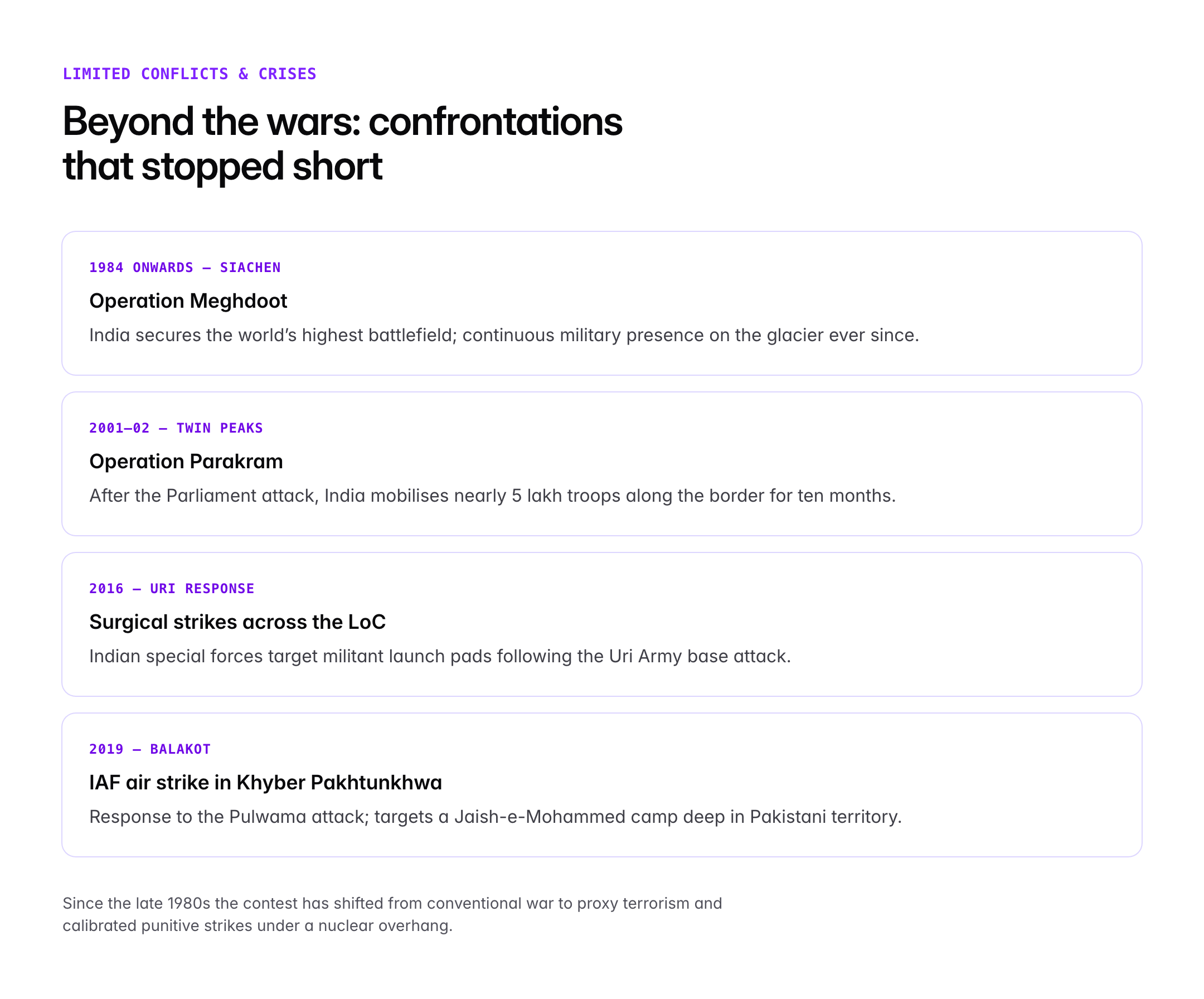
Beyond full wars, several crises have stopped short of declared conflict:
- Siachen (1984 onwards): India's Operation Meghdoot secured the world's highest battlefield.
- Twin Peaks Crisis / Operation Parakram (2001–02): Following the Parliament attack, India mobilised nearly 5 lakh troops along the border.
- Uri Surgical Strikes (2016): Cross-LoC special forces operation after the Uri Army base attack.
- Balakot Air Strike (2019): Indian Air Force strike on a Jaish-e-Mohammed camp in Khyber Pakhtunkhwa following the Pulwama attack.
Strategic and Diplomatic Lessons
Nuclear overhang: Since 1998, both states possess nuclear weapons, turning every crisis into a test of escalation control.
Bilateralism vs internationalisation: India has since Shimla insisted on bilateral resolution of disputes; Pakistan has periodically sought third-party mediation.
Indus Waters Treaty (1960): Brokered by the World Bank, it has survived every war; the treaty is repeatedly cited as a rare example of successful water diplomacy but has come under strain post-2016.
Asymmetric warfare: Pakistan's reliance on non-state actors has shifted the conflict from conventional wars to proxy terrorism since the late 1980s.
UPSC Relevance
Prelims focus
- Dates of wars, operations (Gibraltar, Searchlight, Meghdoot, Parakram, Vijay, Safed Sagar, Bandar)
- Treaties: Tashkent Declaration, Shimla Agreement, Indus Waters Treaty, Lahore Declaration (1999)
- Leaders and war heroes (Param Vir Chakra recipients)
Mains GS-I angle
- Post-Independence consolidation, partition aftermath, creation of Bangladesh
Mains GS-II angle
- India and its neighbourhood, bilateral relations, SAARC dysfunction
- Effect of policies of developed/developing countries on India's interests
Mains GS-III angle
- Linkages between development and extremism; cross-border terrorism and internal security
Sample PYQ-style question
"The India-Pakistan rivalry has evolved from conventional wars to nuclear-shadowed, sub-conventional conflict. Analyse this transition with reference to major wars and post-1998 crises." (GS-II, 15 marks)
Watch on YouTube
Related video from the Anantam IAS YouTube channel.
Tell Google you want more of this.
Add Anantam IAS as a preferred sourceOne tap, and this site shows up more often in your own Top Stories, AI Overviews and AI Mode. Remove it any time.