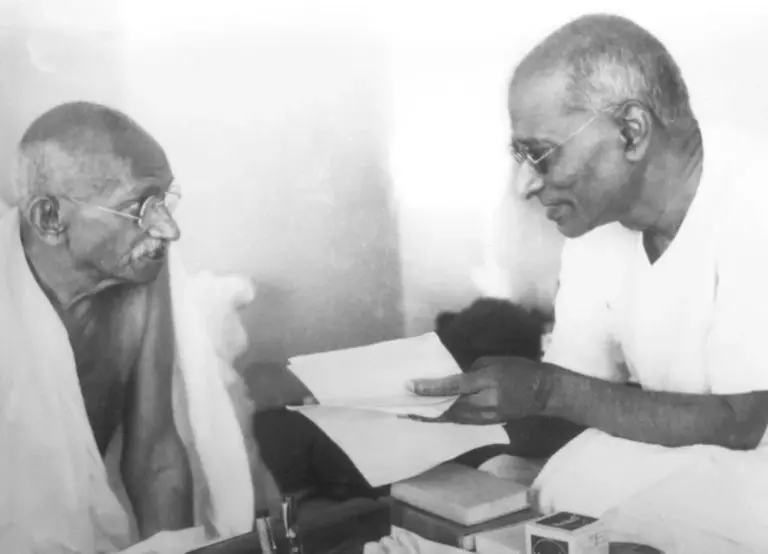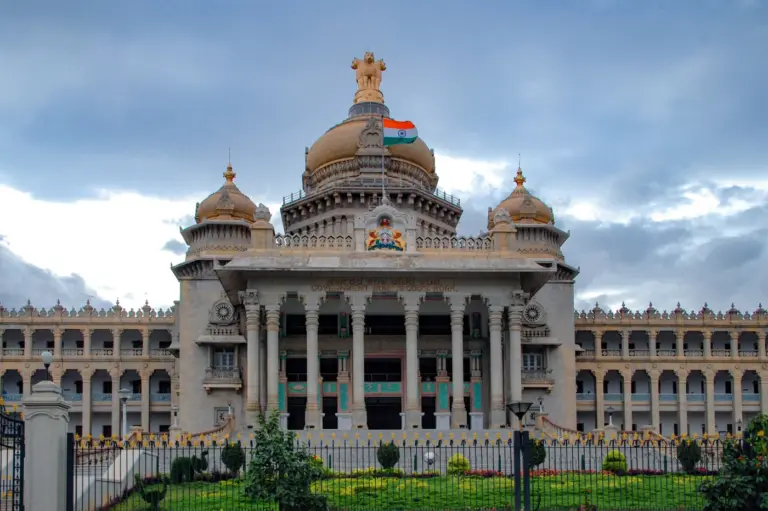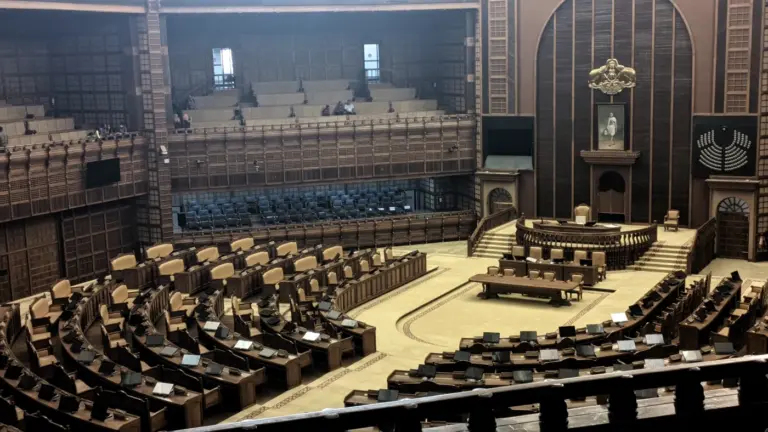
"The system of democracy at the top cannot be successful unless one builds on it the foundation from below." — Jawaharlal Nehru
Panchayati Raj Institutions (PRIs) are the third tier of Indian federalism — the elected local self-governments through which roughly 3.1 million representatives govern villages and rural blocks across India. PRIs received constitutional status through the 73rd Constitutional Amendment Act, 1992, which inserted Part IX (Articles 243 to 243-O) and the Eleventh Schedule into the Constitution. More than three decades on, PRIs are simultaneously celebrated as the world's largest experiment in grassroots democracy and criticised for thin devolution of funds, functions and functionaries (3Fs). For UPSC, this topic spans GS II governance, GS III rural development, and the essay paper's perennial themes of decentralisation and participation.
Evolution Before the 73rd Amendment
The journey to constitutional status was uneven.
| Year | Committee / Act | Contribution |
|---|---|---|
| 1957 | Balwantrai Mehta Committee | Recommended three-tier structure: village, block, district |
| 1959 | First PRI launch | Rajasthan (Nagaur) and Andhra Pradesh launch elected panchayats |
| 1977 | Ashok Mehta Committee | Two-tier structure; "PRIs are political institutions" |
| 1985 | G.V.K. Rao Committee | Treat PRIs as "third stratum of government" |
| 1986 | L.M. Singhvi Committee | Gave the constitutional status idea its final push |
| 1989 | 64th Amendment Bill | Introduced by Rajiv Gandhi; defeated in Rajya Sabha |
| 1992 | 73rd Amendment | Constitutional status, Part IX, Eleventh Schedule |
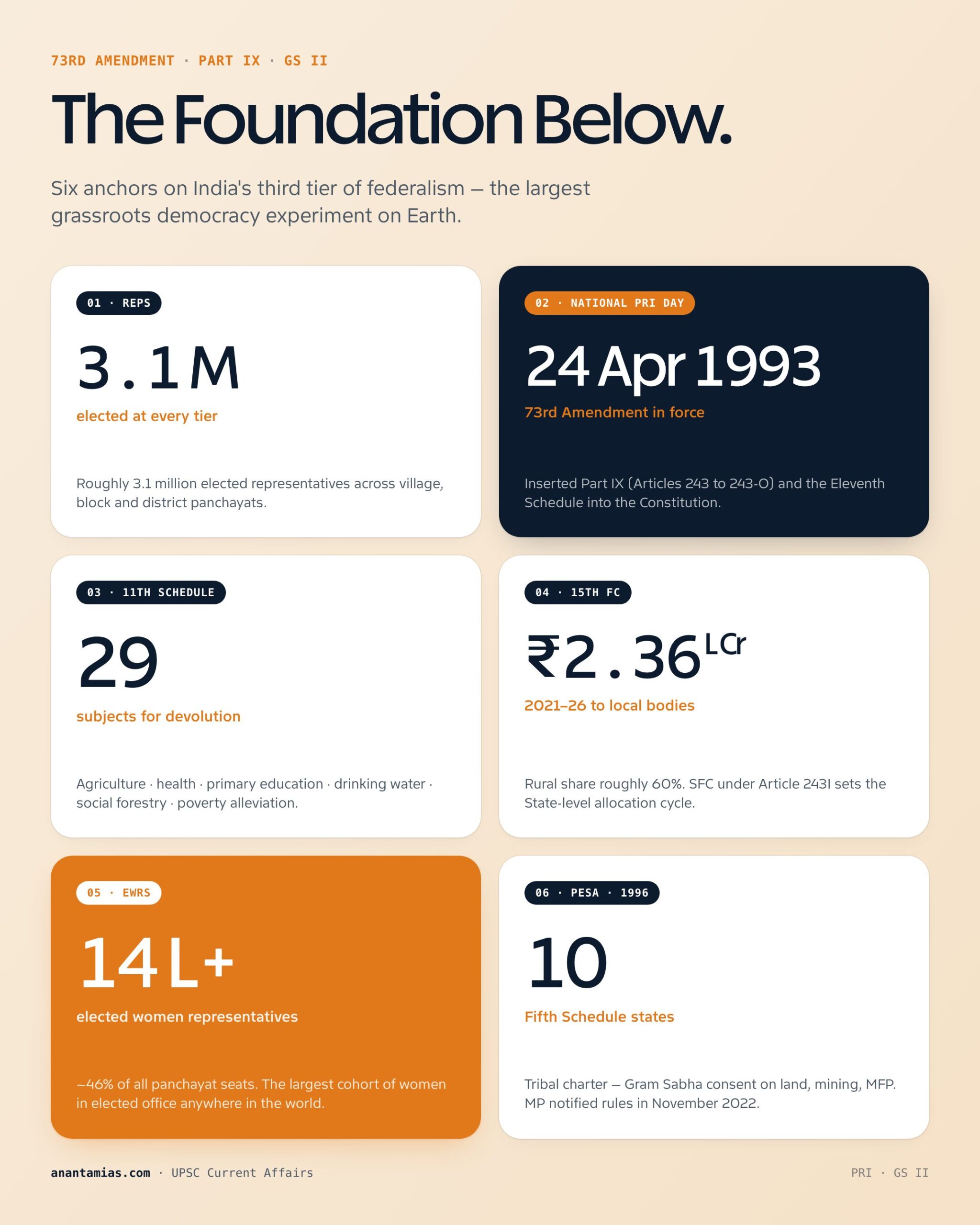
The 73rd Amendment came into force on 24 April 1993, now observed as National Panchayati Raj Day.
Constitutional Architecture: Article 243
Part IX (Articles 243 to 243-O) provides the skeleton; State Acts fill in the flesh.
| Article | Subject |
|---|---|
| 243 | Definitions ("Gram Sabha", "Panchayat") |
| 243A | Gram Sabha — village body of all registered voters |
| 243B | Constitution of three-tier panchayats |
| 243C | Composition |
| 243D | Reservation of seats (SC, ST, women) |
| 243E | Five-year term |
| 243F | Disqualifications |
| 243G | Powers, authority and responsibilities |
| 243H | Powers to levy taxes and finances |
| 243I | State Finance Commission every 5 years |
| 243J | Audit of accounts |
| 243K | State Election Commission |
| 243M | Exemptions: Scheduled Areas, hill areas, Nagaland, Meghalaya, Mizoram |
| 243N | Continuance of existing laws |
| 243O | Bar on interference by courts in electoral matters |
The Eleventh Schedule
Lists 29 subjects that States may devolve to panchayats — including agriculture, land improvement, minor irrigation, animal husbandry, fisheries, social forestry, drinking water, primary education, primary health, women and child development, public distribution, and poverty alleviation.
Three-Tier Structure
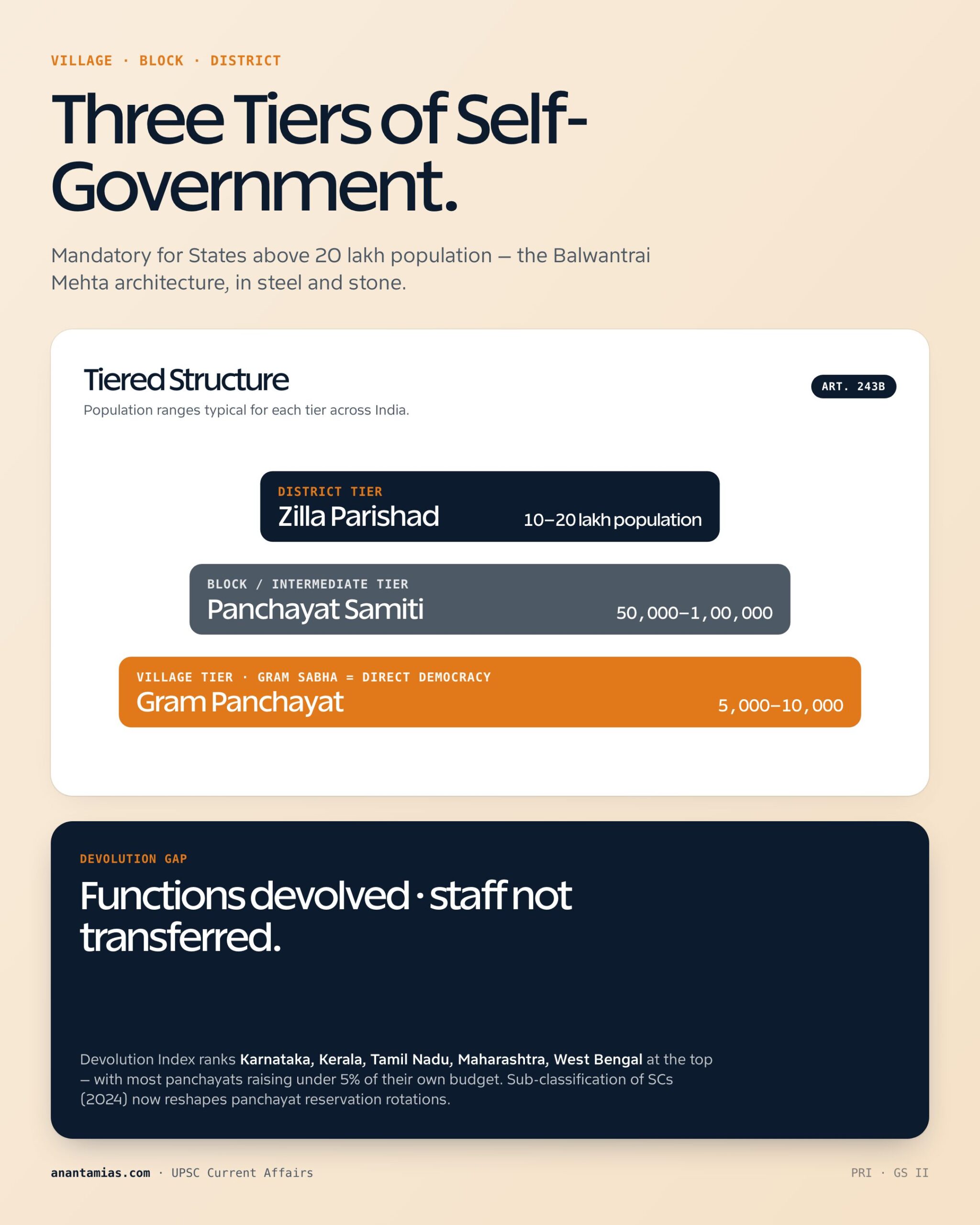
The 73rd Amendment mandates a three-tier system for States with populations above 20 lakh.
| Tier | Body | Population (typical) |
|---|---|---|
| Village | Gram Panchayat | 5,000–10,000 |
| Intermediate / Block | Panchayat Samiti | 50,000–1,00,000 |
| District | Zilla Parishad | 10–20 lakh |
The Gram Sabha — the body of all registered voters in a village — is the only "direct democracy" institution recognised by the Constitution. All other panchayat bodies are elected representatives.
Mandatory and Discretionary Provisions
The 73rd Amendment did not impose a single uniform model on all States; it distinguished mandatory provisions from discretionary ones.
Compulsory:
- Three-tier structure (subject to population threshold)
- Reservation for SC, ST, and women (one-third), with rotation
- Five-year term and elections within six months of dissolution
- State Election Commission for conduct of panchayat elections
- State Finance Commission every five years
- Direct election to all seats at every level
Discretionary:
- Reservation for OBCs
- Indirect election of chairperson at village level
- Voting rights for MPs/MLAs in panchayat bodies
- Devolution of subjects from the Eleventh Schedule
The discretionary list is precisely where the devolution gap opens up.
Reservation: Women, SC and ST
Article 243D mandates reservation for SCs and STs in proportion to their population, and at least one-third of seats and chairperson posts for women (including a third within SC/ST quotas).
Twenty-one States (including Andhra Pradesh, Bihar, Karnataka, Maharashtra, Madhya Pradesh, Rajasthan, Uttarakhand, West Bengal) have raised the women's quota in panchayats to 50% through State legislation. As of 2025, women hold roughly 46% of all panchayat seats — over 14 lakh elected women representatives (EWRs) — making this the largest cohort of women in elected office anywhere in the world.
The Nari Shakti Vandan Adhiniyam, 2023 (106th Amendment), which reserves one-third of Lok Sabha and State Assembly seats for women, draws explicit constitutional inspiration from the panchayat experience.
Powers, Functions and Finances
Article 243G: Powers and Responsibilities
Article 243G empowers the State Legislature to endow panchayats with:
- Powers and authority necessary to function as institutions of self-government;
- Preparation of plans for economic development and social justice;
- Implementation of schemes from the Eleventh Schedule.
Article 243H and 243I: The Money Question
Panchayats may levy and collect taxes, duties, tolls and fees authorised by State law. They also receive grants from the Consolidated Fund of the State on the recommendation of the State Finance Commission (SFC) under Article 243I. The 15th Finance Commission (2021–26) allocated ₹2.36 lakh crore to local bodies (rural and urban together), of which the rural share is roughly 60%.
The Devolution Gap
Despite the constitutional design, real devolution remains uneven. The Ministry of Panchayati Raj's Devolution Index consistently ranks Karnataka, Kerala, Tamil Nadu, Maharashtra and West Bengal at the top, while Bihar, Jharkhand, Punjab, Goa, Manipur and Puducherry trail.
Common gaps:
- Functions devolved on paper but staff not transferred (the F-and-F gap);
- SFC reports submitted late or not tabled in the Assembly;
- Untied funds form less than 15% of panchayat budgets in most States;
- Parallel bodies (DRDA, CSS implementation societies) bypass panchayats.
PESA, 1996: The Tribal Charter
The Panchayats (Extension to Scheduled Areas) Act, 1996 — known as PESA — extends the 73rd Amendment, with adaptations, to Fifth Schedule areas in 10 States (Andhra Pradesh, Chhattisgarh, Gujarat, Himachal Pradesh, Jharkhand, Madhya Pradesh, Maharashtra, Odisha, Rajasthan, Telangana).
PESA recognises:
- The Gram Sabha as competent to safeguard customs, community resources and dispute resolution;
- Mandatory consultation with Gram Sabha before land acquisition, resettlement, or grant of mining/minor mineral leases;
- Ownership of minor forest produce;
- Power to prevent alienation of tribal land and to control money-lenders and intoxicants.
In practice, PESA implementation has been weak. Madhya Pradesh notified PESA Rules in November 2022, joining six other States; Odisha has yet to. The 2024 Forest Rights Act monitoring data shows continuing conflicts where Gram Sabha consent under PESA was bypassed for mining projects.
Recent Reforms and Hooks (2024–2026)
| Year | Development | Significance |
|---|---|---|
| 2022 | SVAMITVA Scheme scaled to all States — drone-based property cards | Land-record-based revenue for panchayats |
| 2023 | Government e-GramSwaraj and AuditOnline mandatory for SFC grants | Digital accountability |
| 2024 | Sansad Adarsh Gram Yojana revamp + PMAGY scheduled-caste villages refresh | Convergence at panchayat level |
| 2024 | Davinder Singh ruling allows States to sub-classify SCs — affects panchayat reservation rotations | Direct PRI implication |
| 2025 | 16th Finance Commission receives memoranda from Ministry of Panchayati Raj seeking higher untied grants | Fiscal devolution |
| 2025 | Mission Antyodaya 2025 survey uses Gram Panchayat as the unit of measurement for 200+ indicators | Data-driven planning |
Criticism and Reform Agenda
The Second Administrative Reforms Commission (Sixth Report, 2007) and the Standing Committee on Rural Development (2024) converge on the same diagnosis:
- Functional devolution remains incomplete — only 11 of 29 subjects fully devolved on average.
- Inadequate own-source revenue — most panchayats raise less than 5% of their budget.
- Weak technical capacity — over 2 lakh panchayats lack a full-time secretary.
- Parallel bodies dilute panchayat authority.
- Captured leadership — "Sarpanch Pati" phenomenon, where elected women's husbands run affairs in some States.
Reform Levers
- Implement the 2nd ARC's recommendation on activity mapping for each of the 29 subjects.
- Empower Gram Sabhas as the audit and social-accountability authority (Kerala model).
- Mandatory tabling of SFC reports within the constitutional six-month window.
- Ringfence untied grants so panchayats can plan, not just implement.
- Build cadres of panchayat secretaries and gender resource centres to back women representatives.
State-Level Models: What Works
Comparative panchayat performance offers concrete templates that recur in UPSC mains.
- Kerala — the Kerala Panchayati Raj Act, 1994 combined with the People's Plan Campaign (1996) transferred about 35–40% of plan funds directly to local bodies. Ward Sabhas and neighbourhood groups (Ayalkoottams) carry deliberation below the Gram Sabha. Result: best-in-class outcomes on health, sanitation and women's participation.
- Karnataka — the only State with a separate panchayat budget annexure in its State Budget. Bengaluru Rural and Mysuru Zilla Parishads consistently top the Devolution Index.
- Maharashtra — model rules for activity mapping under each of the 29 subjects; pioneer of performance-linked grants.
- Telangana — early adopter of e-Panchayat real-time fund tracking.
- Tamil Nadu — single-window social audit of all centrally-sponsored schemes through Gram Sabhas; scaled MGNREGA social audit nationally.
- Bihar and Madhya Pradesh — pioneered 50% women's reservation in panchayats (2006 onwards), but devolution remains thin.
This unevenness across States is itself a constitutional feature — Article 243G makes devolution a State subject, not a Union mandate.
Convergence with Other Schemes
PRIs sit at the convergence point of nearly every rural welfare scheme.
| Scheme | Role of PRI |
|---|---|
| MGNREGA | Gram Panchayat is the principal planning and implementing agency; Gram Sabha approves the shelf of works |
| PMAY-G | Beneficiary identification at Gram Sabha; payment release through panchayat-linked PFMS |
| Jal Jeevan Mission | Village Water and Sanitation Committees as standing committees of Gram Panchayats |
| Swachh Bharat Mission – Gramin | Open-defecation-free verification by Gram Sabha |
| PM Gram Sadak Yojana | Gram Panchayat maintenance responsibility post-construction |
| 15th Finance Commission Tied Grants | Released directly to Gram Panchayat accounts for water and sanitation |
| Mission Antyodaya | Annual ranking of Gram Panchayats on 200+ indicators |
The Sustainable Development Goals (SDGs) Localisation Framework of NITI Aayog explicitly identifies the Gram Panchayat as the unit of planning and reporting, mapping each of the 17 SDGs to Eleventh Schedule subjects.
PRIs in the UPSC Syllabus
- GS Paper II — Devolution of powers and finances up to local levels and challenges therein.
- GS II — Welfare schemes; transparency and accountability.
- GS III — Inclusive growth, rural development.
- Prelims — Article numbers, Eleventh Schedule subject count, PESA States, devolution index ranks.
- Essay — "Panchayati Raj has deepened democracy but not yet delivered governance."
Conclusion
PRIs embody Gandhi's vision of Gram Swaraj filtered through Nehru's reminder that democracy at the top needs a foundation below. The 73rd Amendment supplied the constitutional skeleton — three tiers, five-year terms, women's reservation, the Eleventh Schedule, the State Finance Commission, the State Election Commission, PESA. The next decade's task, driven by the 16th Finance Commission, the Davinder Singh sub-classification verdict, the PESA implementation push and the e-GramSwaraj digital stack, is to make the flesh match the skeleton — by transferring real funds, functions and functionaries to panchayats, and by treating the Gram Sabha as the constitutional check it was meant to be. UPSC answers that hold these three threads — text, devolution data, and the 2024–25 reforms — together will stand out.
Tell Google you want more of this.
Add Anantam IAS as a preferred sourceOne tap, and this site shows up more often in your own Top Stories, AI Overviews and AI Mode. Remove it any time.