

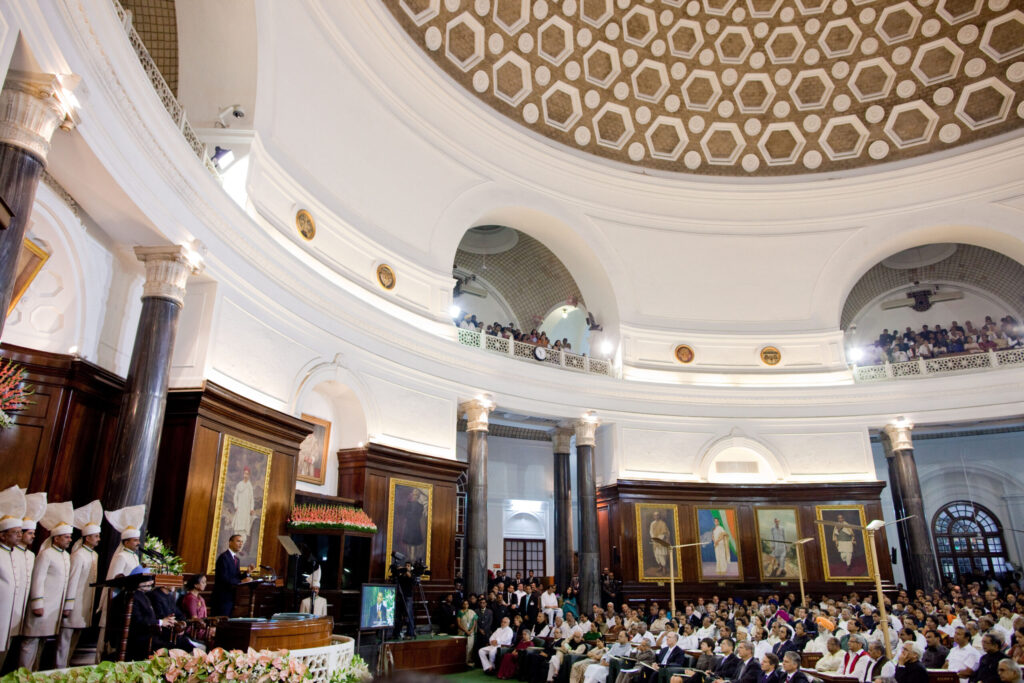
The Women’s Reservation Bill, formally the Constitution (One Hundred and Twenty-Eighth Amendment) Act, 2023, also called the Nari Shakti Vandan Adhiniyam, reserves one-third of seats in the Lok Sabha and every state legislative assembly for women. It was passed by both Houses of Parliament during the special session in September 2023, received presidential assent on 28 September 2023, and became the longest-delayed reform finally written into the Constitution after twenty-seven years of failed attempts.
The Women’s Reservation Bill matters for two structural reasons. First, India ranks far below the global median for women’s representation in Parliament despite holding the largest democracy in the world. Second, the Bill ties the actual operation of the quota to the next delimitation, which itself is conditional on the first census conducted after the amendment. This produces a peculiar legal status where the right exists on paper but its trigger is calendar-bound.
This explainer walks through the long history of the Women’s Reservation Bill from its 1996 origins, the four governments that tried and failed, the architecture of the 128th Constitutional Amendment, the OBC sub-quota debate, the comparison with Panchayat reservation under the 73rd and 74th Amendments, and what the post-delimitation conditional implementation means in practice.
Quick Facts on the Women’s Reservation Bill
- Formal name. Constitution (One Hundred and Twenty-Eighth Amendment) Act, 2023 / Nari Shakti Vandan Adhiniyam.
- First introduced. 12 September 1996 by the Deve Gowda government as the 81st Amendment Bill.
- Passed. 20 September 2023 in Lok Sabha (454–2), 21 September 2023 in Rajya Sabha (215–0).
- Presidential assent. 28 September 2023 by President Droupadi Murmu.
- Reservation scope. 33% of seats in Lok Sabha, Delhi Legislative Assembly, and every State Legislative Assembly.
- SC/ST sub-reservation. One-third of seats reserved for SCs and STs will be sub-reserved for women.
- Implementation trigger. After the first census post-amendment and the subsequent delimitation of constituencies.
- Sunset clause. Reservation will operate for 15 years from commencement, extendable by Parliament.
What the Women’s Reservation Bill Does
The Women’s Reservation Bill amends Articles 239AA, 330, 330A, 332, 332A, and inserts Article 334A into the Constitution. Together these provisions reserve one-third of seats for women in:
- The Lok Sabha (Article 330A).
- The Legislative Assemblies of every State (Article 332A).
- The Legislative Assembly of the National Capital Territory of Delhi (amended Article 239AA).
Within the reserved Scheduled Caste and Scheduled Tribe seats in Lok Sabha and state assemblies, one-third will be sub-reserved for SC and ST women. The reservation does not extend to the Rajya Sabha or Legislative Councils because those are indirectly elected.
1996: The First Women’s Reservation Bill
The story begins on 12 September 1996, when the United Front government of H.D. Deve Gowda introduced the 81st Constitution Amendment Bill in the Lok Sabha. The Bill proposed 33% reservation for women in the Lok Sabha and state assemblies. It was referred to a Joint Parliamentary Committee chaired by Geeta Mukherjee.
The Geeta Mukherjee Committee submitted its report in December 1996 with seven key recommendations, including reservation for Anglo-Indian community women, sub-reservation for OBC women in case OBC reservation was provided, and rotation of reserved constituencies. The Deve Gowda government fell before the Bill could be enacted.
Failed Attempts: 1998, 1999, 2008
The Vajpayee government reintroduced the Women’s Reservation Bill in 1998 as the 84th Amendment. Then RJD MP Surendra Prasad Yadav famously snatched the bill from the Speaker’s table. It lapsed. Vajpayee tried again in 1999 with the 85th Amendment. Lapsed again.
The Manmohan Singh government reintroduced the Bill in May 2008 as the 108th Amendment. After two years of negotiation, the Rajya Sabha passed it on 9 March 2010 by 186 to 1 votes. Three SP and RJD MPs were marshalled out before voting. But the Bill never came up in the Lok Sabha and lapsed with the dissolution of the 15th Lok Sabha in 2014. The Women’s Reservation Bill had now failed across four prime ministers.
Nari Shakti Vandan Adhiniyam 2023
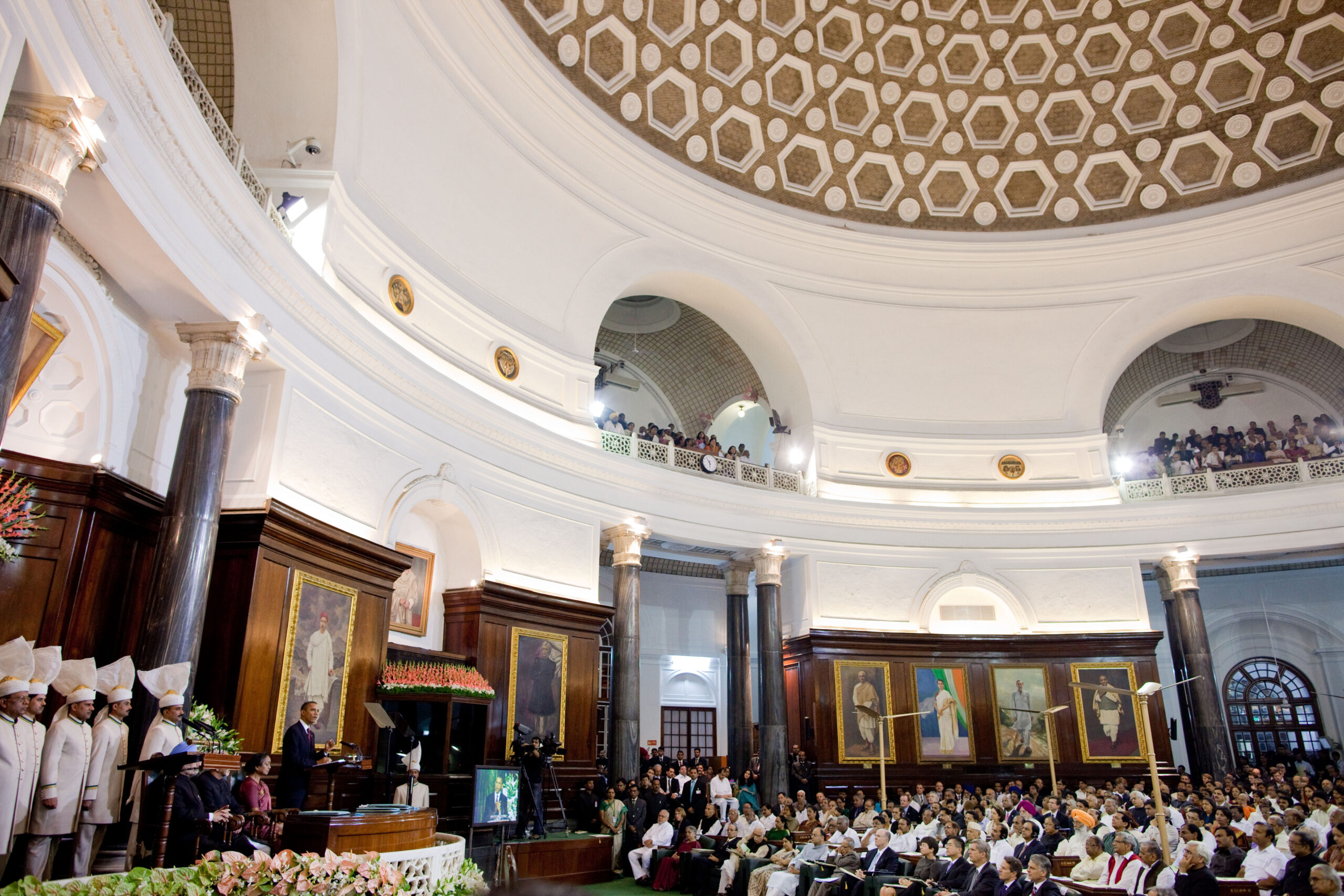
On 19 September 2023, during the special session called for the move to the new Parliament building, Law Minister Arjun Ram Meghwal introduced the Constitution (128th Amendment) Bill, 2023, naming it the Nari Shakti Vandan Adhiniyam. The Lok Sabha passed it on 20 September 2023 by 454 votes to 2. The Rajya Sabha passed it unanimously the next day, 215 to 0.
President Droupadi Murmu, herself the first Adivasi woman to occupy Rashtrapati Bhavan, gave assent on 28 September 2023. The Women’s Reservation Bill had become law twenty-seven years after first being introduced.
The Delimitation Trigger
The most discussed feature of the Women’s Reservation Bill is its conditional operation. Article 334A provides that the reservation will come into effect only after:
- The first census conducted after the commencement of the Constitution (128th Amendment) Act, 2023.
- The delimitation exercise undertaken on the basis of that census.
The census that triggers the quota has now been scheduled. The Census of India 2027 — postponed from 2021 — has a reference date of 1 March 2027, with house-listing (Phase I) begun in April 2026 and population enumeration in February 2027. Its completion starts the delimitation clock (frozen until after 2026 under the 84th Amendment, 2001), which places the earliest realistic operation of the Women’s Reservation Bill at the 2029 general elections. A separate Constitution (131st Amendment) Bill, 2026 — which sought to advance the quota using 2011 Census data instead of waiting for fresh delimitation — was introduced in the Lok Sabha in April 2026 but failed to secure the required special majority.
Critics call this a “kicked-down-the-road” provision. Defenders argue that fresh constituency boundaries are necessary to identify reserved seats fairly and to update population data for SC and ST sub-reservation.
OBC Sub-Quota Debate
The Women’s Reservation Bill does not provide a separate reservation for Other Backward Class women, even though it sub-reserves SC and ST seats. This was the principal objection of the SP and RJD during earlier attempts and remains contested.
Geeta Mukherjee Committee had recommended OBC sub-reservation if OBC reservation was first introduced in Lok Sabha and state assemblies. Since no general OBC reservation exists in Parliament, the 2023 Act left the matter open. The Congress and DMK supported the Bill in 2023 but tabled formal demands for OBC women sub-reservation. The debate is likely to recur when implementation rules are notified.
Comparison: Panchayat Reservation Under 73rd and 74th Amendments
India already has thirty-plus years of experience with women’s reservation at the local level. The 73rd Constitutional Amendment Act, 1992, inserted Article 243D, reserving one-third of seats in Panchayats for women, with SC and ST sub-reservation. The 74th Amendment did the same for urban local bodies under Article 243T.
Multiple states have since raised the local quota to 50%, including Bihar (2006), Madhya Pradesh, Rajasthan, Uttarakhand, Tripura, Andhra Pradesh, Maharashtra, Kerala, and Karnataka. Today more than 14 lakh elected women representatives sit in panchayats, almost half of all panchayat seats.
The Panchayat experience supports two arguments. First, women elected through reservation often govern as effectively as men. Studies by Esther Duflo and Raghabendra Chattopadhyay show panchayats led by women invest more in drinking water and roads. Second, the early fear of “proxy candidates” (husbands or fathers ruling through their elected women relatives) has faded with experience.
The Women’s Reservation Bill at the Lok Sabha and assembly level is therefore not an experiment but a scaling up of a tested model.
Constitutional Architecture
The 128th Amendment touches multiple articles:
- Article 330A. New article reserving one-third of Lok Sabha seats for women, with sub-reservation within SC/ST seats.
- Article 332A. Parallel provision for State Legislative Assemblies.
- Article 239AA. Amended to extend reservation to the Delhi Legislative Assembly.
- Article 334A. New article providing for commencement, the 15-year sunset, and rotation of reserved constituencies.
Rotation means a particular constituency reserved for women in one election may rotate to a different constituency in the next, similar to how SC and ST reserved seats rotate after each delimitation. This prevents permanent “women-only” constituencies.
Reservation Operation and Sunset
Article 334A provides that the reservation will operate for fifteen years from the date of commencement. Parliament can extend the period through ordinary legislation. The 15-year clause mirrors the original SC and ST reservation clause in Article 334, which has been extended every decade since 1950.
The Bill does not reserve seats in the Rajya Sabha or Legislative Councils because those are elected indirectly by MLAs and have no constituencies to redraw. Reservation in those Houses would require a different design.
Why the Bill Matters: The Representation Gap
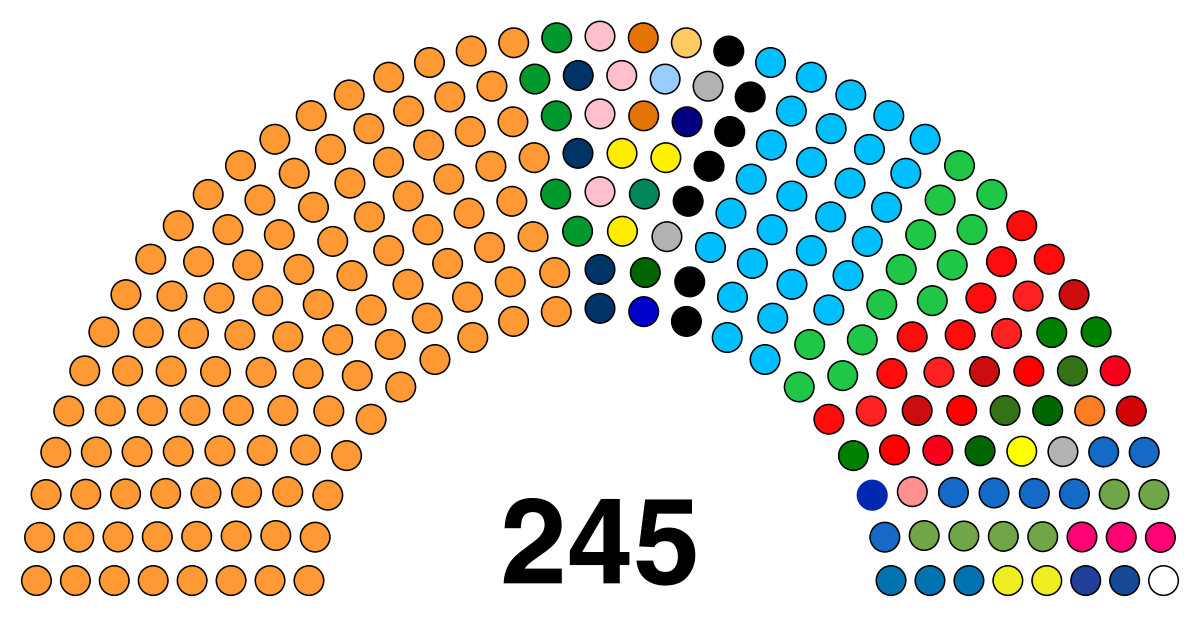
In the 18th Lok Sabha (2024), women hold 74 of 543 seats, about 13.6%. India ranks 143rd out of 185 countries in women’s parliamentary representation, below the global average of 27%. Rwanda leads at 61%, followed by Cuba and Nicaragua. The Women’s Reservation Bill is meant to close this gap by structural design rather than party initiative.
Within parties, women candidates have historically been concentrated in a few states like West Bengal, Odisha, and Tamil Nadu. Reservation forces every state and every party to nominate women in fixed proportions, which research suggests creates a pipeline of women politicians who can later contest unreserved seats.
Arguments For the Women’s Reservation Bill
- Constitutional equality. Articles 14, 15, and 15(3) explicitly allow special provisions for women.
- Representation gap. Less than 15% of MPs and MLAs are women despite women being 48% of the electorate.
- Panchayat evidence. Three decades of local reservation show effective governance outcomes.
- Party pipeline. Reservation forces party machinery to identify and nurture women candidates.
- Policy outcomes. Women legislators have been shown to prioritise health, education, and child welfare.
Arguments Against and Concerns
- Delayed implementation. Tied to delimitation, the Bill may not operate until 2029 or 2034.
- No OBC sub-quota. Critics see this as excluding socially disadvantaged women.
- Proxy fears. Concern that elected women may serve as proxies for male relatives.
- Loss of male incumbents. Sitting male MPs in rotated constituencies will face displacement.
- Token versus substantive change. Reservation in seats does not automatically translate to party leadership or cabinet positions.
How the Women’s Reservation Bill Connects to UPSC
For prelims, key facts include the 128th Amendment, the 33% quota, the Nari Shakti Vandan Adhiniyam name, the delimitation trigger, and the 15-year sunset. For mains GS-II on the Constitution and polity, the Bill is a strong example of constitutional reform driven by directive principles (Article 39) and the equality clauses. Strong answers cite the Geeta Mukherjee Committee, the panchayat reservation experience, and the OBC sub-quota debate.
The Bill also links to broader gender justice questions including the Shah Bano case trajectory toward gender equality across personal laws, and the Uniform Civil Code in India which advances equality through codification rather than representation. The three together form the substantive equality agenda in Indian constitutional law alongside Article 14 and Article 20.
Frequently Asked Questions
What is the Women’s Reservation Bill 2023?
It is the Constitution (128th Amendment) Act, 2023, also called the Nari Shakti Vandan Adhiniyam, which reserves one-third of seats in the Lok Sabha and all state legislative assemblies for women.
When was the Women’s Reservation Bill first introduced?
The first Women’s Reservation Bill was introduced on 12 September 1996 by the Deve Gowda government as the 81st Amendment Bill. It lapsed and was reintroduced multiple times before being passed in 2023.
Why is implementation linked to delimitation?
Article 334A provides that reservation comes into force only after the first census conducted after the amendment and the subsequent delimitation. This delays operation until at least 2029.
Does the Women’s Reservation Bill include OBC women?
No separate OBC sub-quota is provided. The Bill sub-reserves only SC and ST seats for women within their existing reservation. OBC sub-reservation remains a contested demand.
What is the duration of the reservation?
Reservation will operate for fifteen years from the date of commencement, with Parliament empowered to extend the period by ordinary law.
Does the Bill apply to the Rajya Sabha?
No. The Rajya Sabha and State Legislative Councils are not covered because their members are elected indirectly without territorial constituencies.
How does Lok Sabha reservation compare with Panchayat reservation?
Panchayat reservation under the 73rd Amendment (1992) was immediate and is now 50% in many states. The Lok Sabha reservation under the 128th Amendment is delayed until delimitation and capped at one-third.
What is the 128th Constitutional Amendment Act?
It is the formal name of the Women’s Reservation Act 2023, which inserted Articles 330A, 332A, and 334A into the Constitution to provide one-third reservation for women in legislatures.
Tell Google you want more of this.
Add Anantam IAS as a preferred sourceOne tap, and this site shows up more often in your own Top Stories, AI Overviews and AI Mode. Remove it any time.






