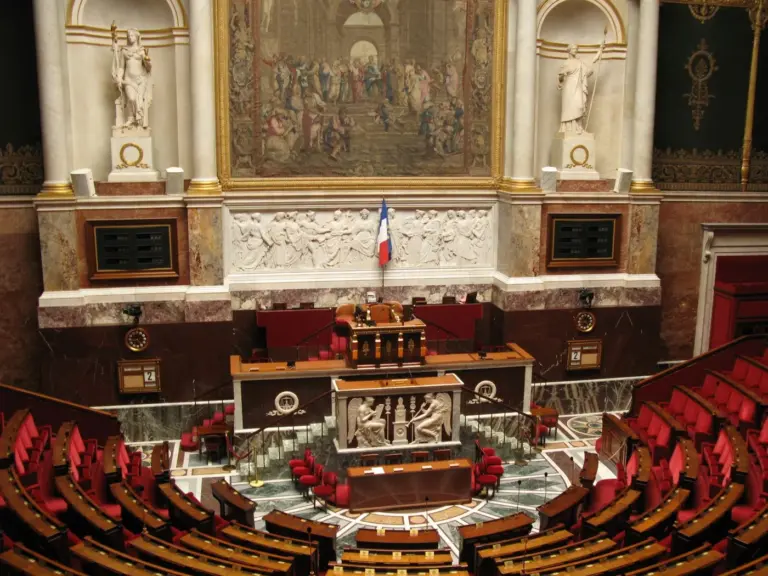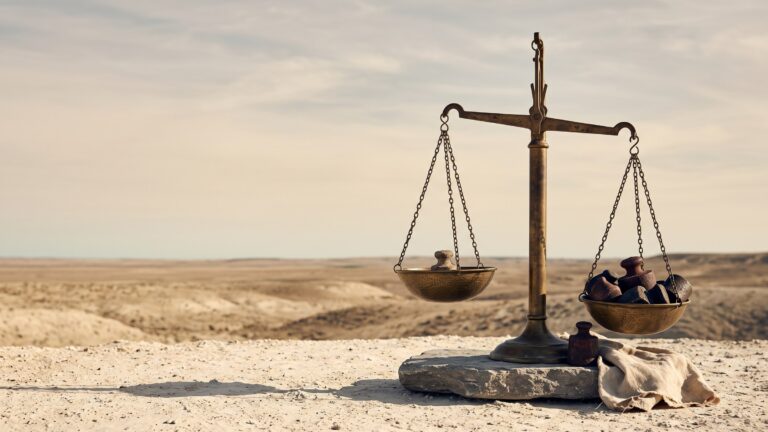

Three traditions, three answers to the same question about the source of political authority. Dharmashastra grounds it in cosmic duty, Arthashastra in the state’s own interest, and the Buddhist texts in the consent of those who elected the first king.
This is chapter 15 of the PSIR Optional Notes, from the part on Indian Political Thought in the Paper I syllabus. The complete book is a free download.
UPSC syllabus
Indian Political Thought: Dharamshastra, Arthashastra and Buddhist traditions.
In one page
- Dharmashastra is duty-centric rather than rights-centric. The organising category is not what a person may claim but what their station requires, and the king is bound by rajadharma exactly as the subject is bound by varnashrama dharma.
- Danda, the rod of punishment, exists to prevent matsyanyaya, the law of the fish, in which the strong devour the weak. This is the classical Indian equivalent of the state-of-nature argument.
- Kautilya‘s Arthashastra (c. 4th century BCE, recovered 1905) makes artha primary and treats statecraft as a technical science with its own rules, which is why he is compared to Machiavelli.
- The saptanga theory gives the state seven limbs; mandala theory maps inter-state relations as concentric circles of enemies and friends; shadgunya gives six foreign policies; the four upayas give four instruments.
- Kautilya is not simply amoral. The king’s happiness lies in the happiness of his subjects, and the welfare functions of the state are extensive.
- Buddhist thought supplies the tradition’s contractual strand. The Agganna Sutta narrates the election of Mahasammata, the great elect, to end disorder over property, so kingship rests on agreement, not on divine descent.
- Dhamma in the Buddhist sense is universal ethical law rather than caste-specific duty, which is why it can ground criticism of the social order rather than merely sanctify it.
- Ashoka converts Dhamma into public policy: edicts, Dhamma Mahamattas, tolerance between sects, and the ideal of conquest by Dhamma rather than by arms.
The Dharmashastra tradition
Dharma as the organising category
The 2024 paper asked whether Dharmashastra presents a duty-centric worldview, and the answer is yes with three qualifications worth making.
Dharma is not religion in the modern sense and not law in the positivist sense. It is the sustaining order of things, and derivatively the conduct that sustains it. Its sources, in the standard enumeration, are shruti (the Vedas), smriti (the remembered texts including the Dharmashastras themselves), sadachara (the practice of the virtuous), and, in Manu’s addition, atmatushti, what is agreeable to one’s own conscience.
Because the category is duty, there is no vocabulary of subjective right. What a person is owed appears only as the obverse of what someone else is obliged to do. This is a genuine structural difference from the Western tradition and is what the question is testing.
The qualifications. First, the tradition is plural: Manu, Yajnavalkya, Narada and the commentators differ substantially, and treating Manusmriti (c. 200 BCE–200 CE) as the whole of Dharmashastra is a common error. Second, apaddharma, the law for times of distress, explicitly permits departure from ordinary duty, so the system contains its own flexibility. Third, the purusharthas give dharma, artha, kama and moksha as four legitimate human ends, so the worldview is not exclusively renunciatory.
The king, danda and matsyanyaya
The political core is the theory of danda. Left to themselves, in the absence of punishment, the strong would devour the weak as larger fish devour smaller in water; this is matsyanyaya, the law of the fish. Danda, wielded by the king, prevents it. The parallel with Hobbes is close enough to be worth drawing and different enough to be worth qualifying: the Indian argument yields not an absolute sovereign but a king bound by dharma, since danda itself must be applied according to dharma, and an unjust king destroys himself.
Rajadharma therefore limits the ruler. The king’s duty is protection, raksha, for which taxation is the wage rather than a right of ownership; the standard image is the king taking a sixth of the produce as his share for protecting the realm. Several texts contemplate resistance to or abandonment of a king who fails in this, though the tradition never develops a right of revolution in Locke’s sense.
The system’s indefensible core, which an answer must state plainly rather than manage around, is varnashrama dharma: duty is assigned by birth into a varna and by stage of life, and the Dharmashastra texts prescribe graded punishments and disabilities accordingly. Ambedkar’s attack, treated in Chapter 17, is directed precisely here and is not answerable by pointing to the tradition’s other merits.
Key terms
Matsyanyaya — The law of the fish: in the absence of punishment the strong consume the weak. The classical Indian argument for political authority.
Danda — The rod, meaning coercive authority; dandaniti is the science of its use, one of the four sciences in Kautilya’s scheme.
Rajadharma — The king’s own duty, which binds him. Its content is protection, and its breach delegitimises rule.
Apaddharma — Law for times of calamity, permitting departure from ordinary rules. The tradition’s built-in escape clause, and Kautilya uses it extensively.
Kautilya’s Arthashastra
Thinker
Kautilya (Chanakya, Vishnugupta) (c. 4th century BCE)
Key works. Arthashastra (text recovered by R. Shamasastry in 1905, published 1909)
Core claim. Artha, material well-being and the power that secures it, is the primary end, since dharma and kama both depend on it. Statecraft is a technical discipline with its own rules: the state has seven limbs, inter-state relations follow a calculable geometry of circles, and the ruler’s obligations are measured by results rather than by intentions.
Standard critique. The text is composite and its dating contested, so treating it as one author’s system is unsafe; and its apparatus of spies, entrapment and secret punishment is not made consistent with the welfare obligations it also imposes.
Exam hook. The standard Indian counterpart to Machiavelli, and the source of every question on realism in the Indian tradition. Also relevant to Paper II as an indigenous antecedent of realist IR.
Saptanga: the seven limbs
The state is an organism with seven prakritis, in descending order of importance:
- Swami, the ruler. The head; his qualities of birth, intellect, energy and self-discipline are treated at length.
- Amatya, the ministers and higher bureaucracy, appointed after tests of integrity.
- Janapada, territory together with the people on it, since land without population is worthless.
- Durga, the fortified capital and its defences.
- Kosha, the treasury, on which all else depends.
- Danda, the army, sometimes rendered as the coercive power generally.
- Mitra, the ally.
The theory’s analytical value is that it makes the state a set of interacting variables whose relative health can be assessed, and it anticipates the modern list of population, territory, government and sovereignty while adding treasury and alliance.
Mandala, shadgunya and the upayas
The rajamandala is Kautilya’s theory of international relations, and it is genuinely structural rather than moral. The would-be conqueror, the vijigishu, sits at the centre; the immediate neighbour is the natural enemy, ari; the state beyond the enemy is the natural friend, mitra; and so on outward in alternating rings. The madhyama, intermediate king, and udasina, neutral king of superior strength, complete the scheme, which is conventionally counted as twelve kings.
From the mandala follow the shadgunya, six measures of foreign policy: sandhi (peace or treaty), vigraha (hostility), asana (staying quiet), yana (marching), samshraya (seeking shelter with a stronger power), and dvaidhibhava (the dual policy of peace with one and war with another). Which to adopt is a calculation of relative power, not of right.
The four upayas are the instruments of statecraft: sama (conciliation), dana (gift or inducement), bheda (dissension), and danda (force), used in that order of preference.
Kautilya and Machiavelli
The comparison is standard and the differences carry the marks.
| Kautilya | Machiavelli | |
|---|---|---|
| Method | Systematic manual of statecraft; artha as an autonomous science | Empirical, historical, the effectual truth; politics autonomous from theology |
| Ruler’s constraint | Bound by rajadharma and by duty to subject welfare | Bound only by necessity and by the requirement of not being hated |
| Purpose of the state | Protection, order and the material welfare of subjects, extensively specified | Preservation of the state itself; no further end supplied |
| Ethics | Ordinary morality suspended in specified conditions of danger (apaddharma) | Ordinary morality suspended whenever necessity commands |
| Welfare | Elaborate: irrigation, famine relief, orphans, widows, the sick | Not a theme |
| Legacy | Read as realist statecraft with a dharmic frame | Read as the founder of realism, often without the Discourses |
The line most worth quoting is that in the happiness of his subjects lies the king’s happiness and in their welfare his welfare, for the king’s good is not what pleases him but what pleases the subjects. That sentence is why reducing Kautilya to Indian Machiavellianism is a mistake, and saying so is usually worth a mark.
The Buddhist tradition
Dhamma, and why it is politically enabling
The 2023 paper asked how Buddhist thought on Dhamma facilitates the emancipation of political action, which is a precise question and needs a precise answer. Four features of Buddhist Dhamma do the work.
- It is universal, not station-specific. Dhamma applies to all persons as persons rather than assigning different duties by birth. It therefore supplies a standard independent of the existing social order, from which that order can be judged.
- It is grounded in reason and experience. The Kalama Sutta’s instruction not to accept a claim merely because of tradition, scripture or the authority of a teacher makes Dhamma a matter of examination rather than of revelation, which removes the sanctity that shields an unjust arrangement.
- It denies a permanent essence. Anatta and anicca, no-self and impermanence, undercut the claim that social hierarchy reflects an unchanging order of being. If nothing is fixed, caste is not fixed either.
- It makes suffering the central political fact. Dukkha and its removal give a criterion for evaluating institutions by their effect on actual human beings.
The Sangha supplies the institutional demonstration. Its procedures, admission irrespective of varna, decision by assembly, formal motions and voting by salaka sticks, quorum rules, and resolution by majority where consensus failed, are a functioning model of collective self-government, and are frequently cited as an indigenous republican precedent.
The Agganna Sutta and elected kingship
The tradition’s most striking political text narrates a decline from an original condition of plenty. As beings become greedy, property in rice fields appears, and with it theft, censure, lying and violence. The people then assemble and agree to appoint one among them to show anger where anger is due, censure where censure is due and banish where banishment is due, and in return they will grant him a share of the rice. He is called Mahasammata, the great elect, because he is chosen by the whole people.
Three claims follow, and an answer should state each. Kingship originates in agreement, not in divine creation or descent. It is functional: the king exists to perform a task, and his share of the produce is payment for it. And it is remedial, arising from a decline rather than expressing an eternal order. The parallel with European contract theory is real, and predates Hobbes by many centuries, though the text is a narrative rather than an argument from premises.
The dasa raja dhamma, the ten duties of the king, give the normative content: liberality, morality, self-sacrifice, integrity, kindness, austerity, freedom from anger, non-violence, patience and non-obstruction of the popular will. The chakravartin ideal describes the universal ruler who conquers by righteousness rather than by arms.
Ashoka’s Dhamma
Ashoka converts the doctrine into administrative practice, and the edicts are the evidence. His Dhamma is deliberately non-sectarian: obedience to parents and elders, generosity to brahmanas and shramanas, right treatment of servants, truthfulness, restraint and non-injury. Rock Edict XII enjoins honouring the sects of others, and states that whoever honours his own sect while disparaging another’s damages his own sect thereby, which is one of the earliest official statements of religious tolerance anywhere.
The instruments are equally concrete: Dhamma Mahamattas as officers charged with promoting it, Dhamma yatras replacing royal hunting tours, public works, and the renunciation of war after Kalinga in favour of Dhammavijaya, conquest by Dhamma. Note the standard scholarly caution: Ashoka’s Dhamma is a public ethic for a diverse empire rather than the promulgation of Buddhism as a state religion, and reading it as the latter is a common error.
Debate: Does classical Indian thought contain a theory of political obligation?
Yes. The Agganna Sutta grounds kingship in an agreement to remedy disorder, with the king’s share of produce as consideration for the service. Dharmashastra binds the king by rajadharma and ties taxation to protection, so obligation is conditional on performance. Both are recognisably contractual in structure, and the Kautilyan king is judged by results. No. There is no notion of individual rights from which obligation could be derived, no mechanism for withdrawing consent, and no institution through which subjects could enforce the king’s duty. Duty flows from cosmic order or from station, so the appearance of contract is a narrative device rather than an argument. What looks like consent is closer to acquiescence in an order held to be natural. The examiner’s line. Both, if the question is put precisely. The tradition contains a theory of the grounds of obligation, protection given and received, and lacks a theory of its limits that any subject could invoke. Say which half is present. Note also that Ambedkar, who knew these texts thoroughly, drew exactly this conclusion when he turned to constitutional guarantees rather than to dharmic restraint.
In the happiness of his subjects lies the king’s happiness; in their welfare his welfare
Kautilya, Arthashastra, c. 4th century BCE
Whoever honours his own sect and disparages another’s, wholly from devotion to his own, injures his own sect very severely
Ashoka, Rock Edict XII
Where answers lose marks
- Treating Manusmriti (c. 200 BCE–200 CE) as the whole of Dharmashastra. The tradition is plural and the commentators disagree substantially.
- Presenting Kautilya as purely amoral. The welfare obligations and the binding force of rajadharma are in the same text and must be reported.
- Giving saptanga and mandala as lists. Say what each is for: saptanga makes state capacity assessable, mandala makes alliance choices calculable from geography.
- Calling Ashoka’s Dhamma the establishment of Buddhism as a state religion. It is a deliberately non-sectarian public ethic for a plural empire.
- Writing on Buddhist political thought without the Agganna Sutta. The elected Mahasammata is the tradition’s contractual core and the reason the question is asked.
- Praising the classical tradition without naming varnashrama. An answer that omits the caste order of Dharmashastra reads as evasive, and Ambedkar’s critique is examinable.
Asked before
- Dharmashastra presents a duty-centric worldview for individuals and communities. Comment. (2024, Paper I, 15 marks)
- Buddhist thought on Dhamma facilitates the emancipation of political action. Explain. (2023, Paper I, 20 marks)
Answer skeleton
Buddhist thought on Dhamma facilitates the emancipation of political action. Explain. (20 marks, 350 words)
Frame. Distinguish two senses of Dhamma at the outset. In the Brahmanical sense it is station-specific duty, which sanctifies the existing order. In the Buddhist sense it is universal ethical law, which is why it can license action against that order.
Ground one, universality. Dhamma applies to persons as persons, not by varna, so it supplies a standard independent of social position from which the order can be judged.
Ground two, reason. The Kalama Sutta’s rejection of tradition, scripture and teacherly authority as sufficient grounds makes Dhamma examinable, removing the sanctity that protects unjust arrangements.
Ground three, impermanence. Anatta and anicca deny fixed essences, so hierarchy cannot be defended as reflecting an unchanging order of being.
Ground four, suffering as criterion. Dukkha gives an evaluative test institutions can fail, which is the beginning of political criticism.
The institutional demonstration. The Sangha: admission irrespective of varna, assembly decision-making, formal motions, quorum, voting where consensus fails. And the Agganna Sutta, where kingship is instituted by agreement, so authority is answerable.
Historical realisation. Ashoka’s Dhamma as public policy: tolerance in Rock Edict XII, Dhamma Mahamattas, Dhammavijaya after Kalinga.
Evaluate and close. The emancipatory potential is real but was not institutionalised durably, and caste survived Buddhism’s decline in India. Close on Ambedkar’s 1956 conversion, which is the deliberate political retrieval of exactly this potential.
Last-mile revision
- Sources of dharma: shruti, smriti, sadachara, atmatushti. Purusharthas: dharma, artha, kama, moksha. Apaddharma as the escape clause.
- Matsyanyaya and danda; rajadharma binds the king; taxation as wage for protection; varnashrama as the indefensible core.
- Kautilya recovered by R. Shamasastry in 1905, published 1909. Artha primary.
- Saptanga: swami, amatya, janapada, durga, kosha, danda, mitra.
- Mandala: vijigishu at the centre, ari, mitra alternating outward; madhyama and udasina; twelve kings.
- Shadgunya: sandhi, vigraha, asana, yana, samshraya, dvaidhibhava. Upayas: sama, dana, bheda, danda.
- Buddhist Dhamma: universal, reason-tested (Kalama Sutta), anatta and anicca, dukkha as criterion. Sangha procedure as republican model.
- Agganna Sutta: decline, property, disorder, election of Mahasammata, share of rice as payment. Dasa raja dhamma; chakravartin.
- Ashoka: Rock Edict XII on tolerance, Dhamma Mahamattas, Dhamma yatras, Dhammavijaya after Kalinga; a public ethic, not a state religion.
Read the rest. This chapter is one of 58 in the complete PSIR Optional Notes, covering Paper I and Paper II in full — free to download.
Tell Google you want more of this.
Add Anantam IAS as a preferred sourceOne tap, and this site shows up more often in your own Top Stories, AI Overviews and AI Mode. Remove it any time.