The zoology optional paper 2026 is reproduced below from the official UPSC PDFs for Paper I and Paper II. Each paper printed eight questions in two sections. You attempt five of them for 250 marks in three hours. Questions 1 and 5 are compulsory short-note sets. Of the remaining three, at least one must come from each section.
The English wording below is the Commission’s. Hindi on the scanned papers is not retyped here. Diagrams were asked for where they help; the papers say so in the common instructions. Use this page to see where 2026 put the weight, then go back to your Zoology notes for books and the 24-week plan.
Zoology Optional 2026 at a glance
| Fact | Detail |
|---|---|
| Exam | Civil Services (Main) Examination, 2026 |
| Papers | Zoology Paper I (KVMS-P-ZOY) and Paper II (KVMS-B-ZOY) |
| Time and marks | Three hours, 250 marks per paper |
| Questions printed | 8 per paper, in two sections |
| Attempt | 5 questions; Q.1 and Q.5 compulsory; at least one from each section |
| Short notes | Q.1 and Q.5: five notes of about 150 words, 10 marks each |
| Official files | UPSC PDFs dated with the 1 September 2026 paper set |
Zoology Optional 2026 Paper I
Official paper: Zoology Optional 2026 Paper I (UPSC PDF).
Paper I stayed close to the animal-diversity half of the syllabus, then switched in Section B to ecology, behaviour, genetics tools and applied zoology. Annelida, vertebrates’ aortic arches, honey bees, sericulture and TEM are the parts that reward a labelled diagram.
The attempt is the same as every other optional. You see 400 marks on the paper and you write 250. The two compulsory note questions take 100 marks if you finish all ten notes. That leaves 150 marks for three long questions. A clean plan is Q.1, Q.5, one 50-mark question from Section A (2, 3 or 4) and two from Section B, or the mirror of that if your ecology and tools notes are weaker than your diversity notes. Leaving a whole section untouched fails the “at least one from each section” rule even if the other four answers are good.
Section A
| Q. | Question | Marks |
|---|---|---|
| 1(a) | Structure of gemmules in Porifera and their importance. | 10 |
| 1(b) | Structure and functions of parathyroid gland. | 10 |
| 1(c) | Retrogressive metamorphosis in Herdmania. | 10 |
| 1(d) | Locomotion in echinoderms. | 10 |
| 1(e) | Mechanism of parental care in reptiles. | 10 |
| 2(a) | Write peculiar characters of phylum Annelida. Classify this phylum into different classes and mention features of each class with examples. | 20 |
| 2(b) | Mention the structure of respiratory organs in Lamellidens and explain the mechanism of respiration in them. | 15 |
| 2(c) | Discuss various flight adaptations in birds. | 15 |
| 3(a) | Give a comparative account of aortic arches in vertebrates. | 20 |
| 3(b) | Explain different ways of locomotion in Protozoa citing suitable examples. | 15 |
| 3(c) | Describe the general features and life history of Nereis. | 15 |
| 4(a) | Explain types of fins in fishes and their role in locomotion. | 20 |
| 4(b) | Describe the functions of various gonadal hormones in humans. | 15 |
| 4(c) | Describe the general features, distribution and social organization in honey bees. | 15 |
Section B
| Q. | Question | Marks |
|---|---|---|
| 5(a) | Green house effect. | 10 |
| 5(b) | Sign stimuli in animals and their significance. | 10 |
| 5(c) | Gene therapy and its significance. | 10 |
| 5(d) | Null hypothesis. | 10 |
| 5(e) | Principle and applications of gel electrophoresis. | 10 |
| 6(a) | Enumerate various population characteristics. Explain the following characteristics in detail: (i) Natality and mortality (ii) Population dispersion | 20 |
| 6(b) | Describe one-way and two-way F-test and its significance in biological research. | 15 |
| 6(c) | What is sericulture? Describe rearing of mulberry silk worm. Add a note on types of silk cultured in India. | 15 |
| 7(a) | Differentiate among alpha, beta and gamma diversity. Explain various factors which threaten the biodiversity. | 20 |
| 7(b) | Describe instinctive behaviour and learned behaviour in animals taking suitable examples. | 15 |
| 7(c) | What are transgenic animals? Mention their applications in applied fields. | 15 |
| 8(a) | Explain the following human genetic diseases: (i) Haemophilia (ii) Thalassemia | 20 |
| 8(b) | Explain various biological rhythms with the help of suitable examples. | 15 |
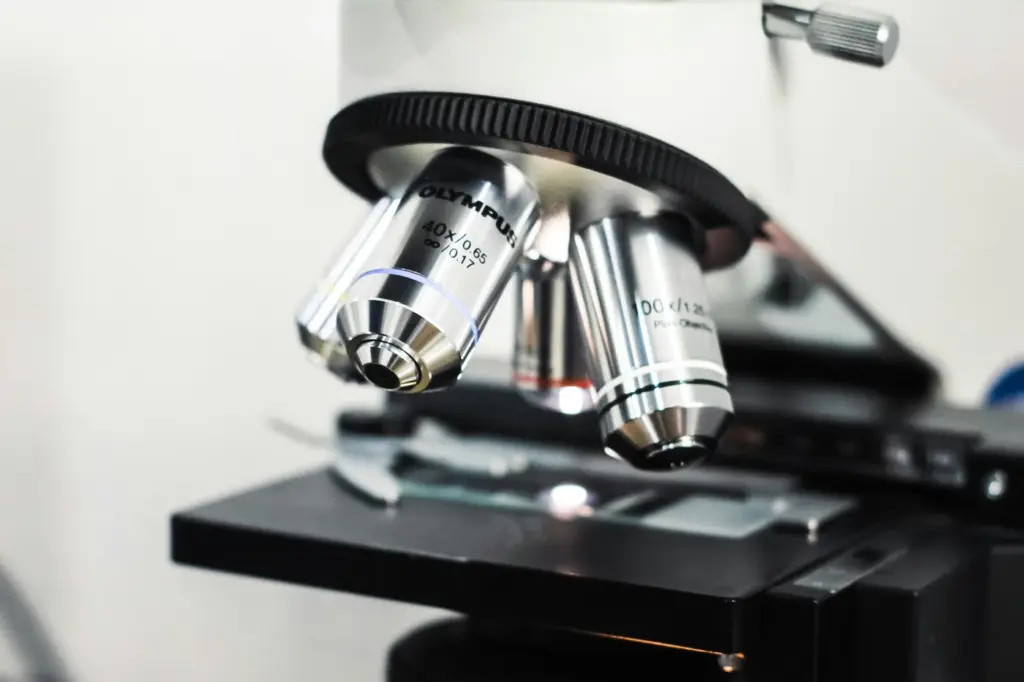
| 8(c) | Write the principle, working and applications of Transmission Electron Microscope (TEM). | 15 |
Paper I printed greenhouse as two words. Keep that spelling if you quote the paper. The rest of the English is clean enough to use as a mock without going back to the scan, except where a Hindi-English pair sat on the same line in the OCR. When in doubt, open the official PDF. Do not reconstruct a part from memory; the printed wording is the mock. That is the whole secret of using a past paper.
Zoology Optional 2026 Paper II
Official paper: Zoology Optional 2026 Paper II (UPSC PDF).
Paper II is cell biology, genetics, evolution, physiology and development. The common instructions again ask for sketches where they help. A nerve-impulse figure, a sarcomere with the named proteins, and a simple apoptosis pathway save more marks than an extra paragraph of names.
Haemophilia appeared in both papers: a 10-mark note in Paper I Question 8(a)(i) and a 10-mark note in Paper II Question 1(d). That is a reminder to keep one clean page on the disease, not two conflicting versions. DNA transcription, recombinant DNA, apoptosis and T-cell activation sit next to Oparin, continental drift and vitamin versus co-enzyme. Physiology still wants a diagram: muscle proteins, nerve impulse, pancreas and calcium in contraction.
Section A
| Q. | Question | Marks |
|---|---|---|
| 1(a) | Semiconservative replication of DNA | 10 |
| 1(b) | Difference between pinocytosis and phagocytosis | 10 |
| 1(c) | Principle and applications of AFLP | 10 |
| 1(d) | Symptoms, causes and treatment of haemophilia | 10 |
| 1(e) | Role of variations in evolutionary change | 10 |
| 2(a) | What is DNA transcription? Explain the process of DNA transcription in eukaryotes. | 20 |
| 2(b) | What is primary and secondary sex determination? Explain hormonal regulation of sex determination in humans. | 15 |
| 2(c) | What is speciation? Elaborate the role of continental drift in the formation of new species. | 15 |
| 3(a) | What is recombinant DNA technology? Describe the different vectors used in DNA cloning. | 20 |
| 3(b) | Describe the applications of cladistics in modern taxonomy. | 15 |
| 3(c) | Differentiate between mitosis and meiosis division. | 15 |
| 4(a) | What is Oparin concept? Comment on the chemical theory of origin of life. | 20 |
| 4(b) | Explain the functional elements of eukaryotic chromosomes. | 15 |
| 4(c) | Do mitochondria contribute in the process of inheritance of characters? Explain with suitable example. | 15 |
Section B
| Q. | Question | Marks |
|---|---|---|
| 5(a) | Role of calcium in muscle contraction | 10 |
| 5(b) | How is excretion different from osmoregulation in mammals? | 10 |
| 5(c) | Biosynthesis of peptide hormones | 10 |
| 5(d) | Significance of placenta in maintaining the pregnancy in human females | 10 |
| 5(e) | Sperm capacitation during fertilization | 10 |
| 6(a) | Explain various levels of protein organization with suitable examples. | 20 |
| 6(b) | What is nerve impulse? How is the action potential generated and propagated across the nerve membrane? | 15 |
| 6(c) | Explain the concept of body axis formation during embryonic development with suitable example. | 15 |
| 7(a) | Name the proteins and their functions involved in skeletal muscle contraction. Unlike skeletal muscles, why do cardiac muscles not fatigue? | 20 |
| 7(b) | Describe the mechanism of generation, differentiation and activation of T-cells. | 15 |
| 7(c) | Define teratogenesis. Illustrate how teratogens interfere with early embryonic development. | 15 |
| 8(a) | Define apoptosis. Explain the characteristics, molecular pathways and significance of apoptosis. | 20 |
| 8(b) | Describe the role of pancreas in blood sugar regulation. | 15 |
| 8(c) | Define vitamins. How are vitamins different from co-enzymes in their structure and functions? | 15 |
How the 2026 papers read
Paper I rewarded animal diversity you can draw: gemmules, Herdmania, Nereis, Lamellidens, aortic arches, fins and honey-bee society. Section B then asked tools (null hypothesis, F-test, gel electrophoresis, TEM) and applied topics (sericulture, transgenic animals, gene therapy). If your notes stop at classification tables, 5(d), 6(b) and 8(c) will stall you.
A useful way to split Paper I is “can I draw this in two minutes” versus “do I know the instrument”. Gemmules, aortic arches, fins, Lamellidens gills and the TEM column are the first kind. Null hypothesis, one-way versus two-way F-test and gene therapy are the second. Sericulture is the applied bridge: the question wants mulberry rearing and the types of silk cultured in India, not a paragraph on the silk industry as a GS3 topic.
Paper II is the cell-to-organism paper. Transcription, cloning vectors, AFLP and mitochondrial inheritance sat in Section A. Section B was physiology and development: muscle proteins, nerve impulse, apoptosis, T-cells, teratogenesis, placenta and capacitation. Continental drift in a speciation question is the one part that looks like a geography aside; it is still an evolution question.
The compulsory notes on Paper II are a checklist of first-year cell biology. Semiconservative replication, pinocytosis versus phagocytosis, AFLP, haemophilia and variation in evolution can each be answered in 150 words if you keep one definition, one mechanism and one named example. The 20-mark parts then stretch that same material: transcription in eukaryotes, cloning vectors, Oparin, protein organisation, skeletal versus cardiac muscle, apoptosis pathways.
Two traps are easy to miss under time. First, haemophilia is asked twice. Write one accurate note and reuse the facts; do not invent a second mechanism for Paper I. Second, 4(c) on Paper II asks whether mitochondria contribute to inheritance. The expected answer is cytoplasmic inheritance with a named example such as petite mutants in yeast or a human mitochondrial disease, not a vague yes.
If you are sitting the next cycle, treat this paper as a mock before you open a new book. Time five questions. Then mark only the diagrams and the compulsory notes. Those two slices decide whether Zoology is still the right optional, which is also the honest test in the Zoology optional guide.
The rest of the Mains optional set on this site uses the same layout, so you can compare load. The Anthropology optional paper 2026 and the History optional paper 2026 show how other subjects split a 400-mark printed paper into a 250-mark attempt. The UPSC optional subjects page is the place to stand if you are still choosing. The UPSC syllabus page sits next to those if you need the wider Mains map.
Frequently Asked Questions
What was asked in the zoology optional paper 2026?
Paper I asked animal diversity (Porifera gemmules, Annelida, Herdmania, Nereis, birds, fishes, honey bees) plus ecology, behaviour, sericulture, TEM and two human genetic diseases. Paper II asked DNA replication and transcription, cloning vectors, AFLP, evolution, and physiology from muscle and nerve to apoptosis, T-cells and the pancreas.
How many questions do I attempt in each Zoology paper?
Each paper prints eight questions in two sections. You answer five for 250 marks in three hours. Questions 1 and 5 are compulsory. Of the other three, take at least one from each section.
Where can I download the official 2026 Zoology papers?
UPSC hosts them on the Civil Services (Main) Examination, 2026 page and in the previous-question-papers archive. Direct files: Zoology Paper I and Zoology Paper II, both in the 1 September 2026 set.
How should I use this paper in preparation?
Write the two compulsory note questions first, timed. Then pick one 20-mark comparative question (aortic arches, Annelida classes, muscle proteins) and draw it. Use the rest of the week to fill the tools you skipped: null hypothesis, F-test, gel electrophoresis, TEM, AFLP.
Does Zoology Paper I still need diagrams?
Yes. The common instructions ask for sketches where they help, and several 2026 parts are unanswerable without one: gemmules, aortic arches, fins, Lamellidens gills, TEM.
Is haemophilia in the Zoology syllabus twice?
The 2026 papers asked it twice, once under human genetic diseases in Paper I and once under symptoms, causes and treatment in Paper II. Prepare one accurate note and reuse it; do not write two different mechanisms.
Tell Google you want more of this.
Add Anantam IAS as a preferred sourceOne tap, and this site shows up more often in your own Top Stories, AI Overviews and AI Mode. Remove it any time.