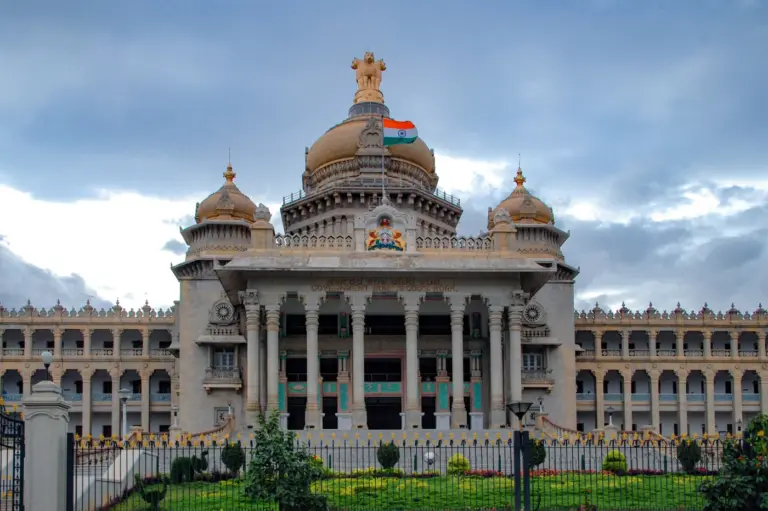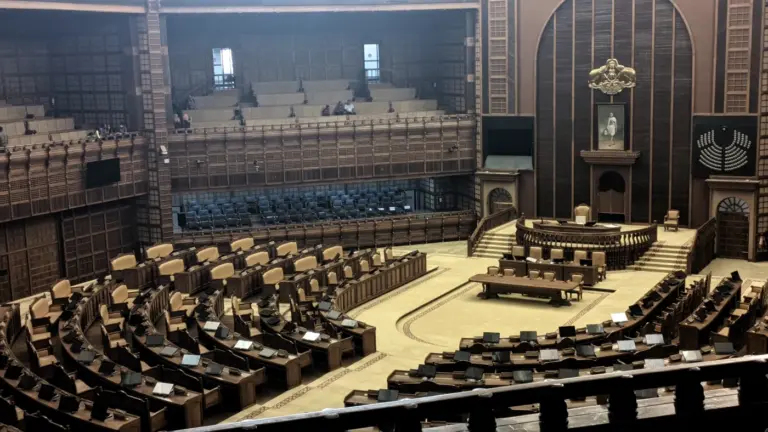
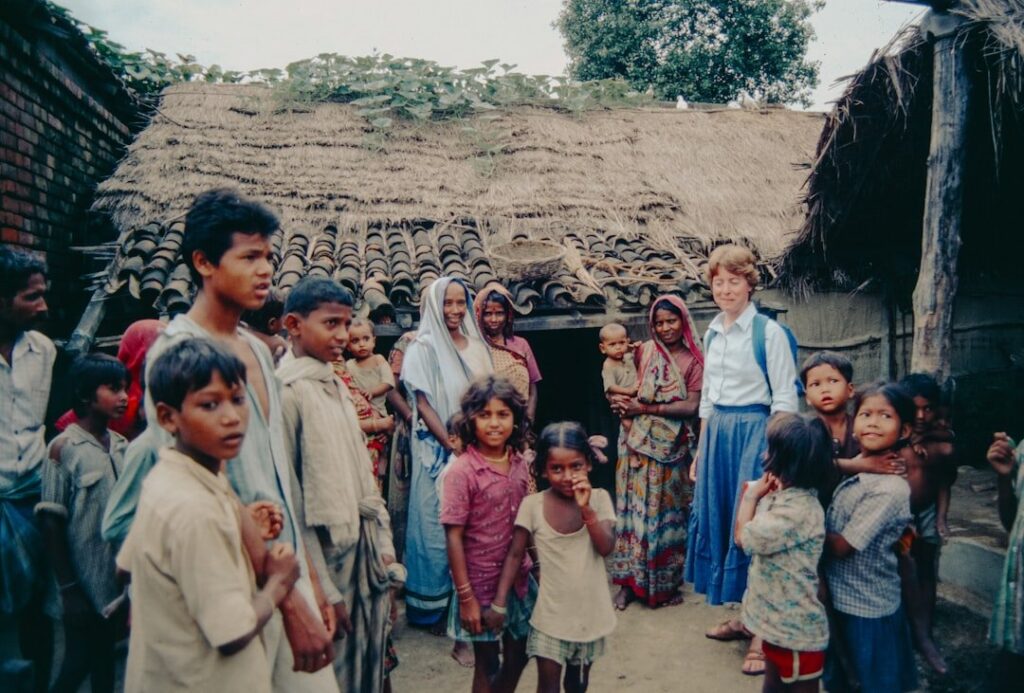
The 73rd and 74th Amendments 1992 are the single largest expansion of Indian federalism after the original 1950 design. Together they created a constitutionally mandated third tier of government — rural Panchayati Raj Institutions under Part IX and urban local bodies (Municipalities) under Part IX-A — and added the Eleventh and Twelfth Schedules listing the subjects they administer. Before 1992, local government existed only as a Directive Principle (Article 40) and at the mercy of State legislatures. After the 73rd and 74th Amendments 1992, local self-government became a constitutional right with mandatory elections, reservations, finance commissions, and a defined functional domain.
This article walks through the historical committees that led to 1992, every key feature of the 73rd and 74th Amendments, the reservation framework that transformed local representation, and why these amendments remain a UPSC favourite for Mains questions on grassroots democracy.
Historical Background: Three Committees, Forty Years
The journey to the 73rd and 74th Amendments 1992 is long and committee-heavy. UPSC frequently asks the chronology:
Balwant Rai Mehta Committee (1957)
Set up to review the Community Development Programme, this committee recommended a three-tier Panchayati Raj structure — Gram Panchayat at village, Panchayat Samiti at block, and Zila Parishad at district. Rajasthan launched the first PRI system in Nagaur on 2 October 1959, followed by Andhra Pradesh. By the mid-1960s, however, PRIs had begun to decline due to political neglect and lack of finances.
Ashok Mehta Committee (1977-78)
Set up by the Janata government, the Ashok Mehta Committee recommended a two-tier system — Zila Parishad at district and Mandal Panchayat covering a cluster of villages. It also pushed for compulsory taxation powers and direct elections. Karnataka, Andhra Pradesh, and West Bengal experimented with the model, but most States ignored the report.
L. M. Singhvi Committee (1986)
Set up by the Rajiv Gandhi government, this committee was the first to recommend giving constitutional status to Panchayati Raj — making PRIs justiciable, fixing five-year terms, and creating a State Election Commission and a State Finance Commission. The Singhvi report is the direct intellectual ancestor of the 73rd and 74th Amendments 1992.
Rajiv Gandhi’s 64th Amendment Bill (1989)
Rajiv Gandhi introduced the 64th Constitution Amendment Bill in July 1989 to give PRIs constitutional status. It passed the Lok Sabha but failed in the Rajya Sabha by two votes. After the Congress’s return to power, P. V. Narasimha Rao’s government reintroduced the proposals as the 72nd and 73rd Bills — eventually numbered, after passage, as the 73rd and 74th Amendments 1992. Both were ratified by more than half the State legislatures (as required for federalism amendments under Article 368) and received Presidential assent on 20 April 1993. They came into force on 24 April 1993 (Panchayati Raj Day) and 1 June 1993 respectively.
Part IX and Part IX-A: Constitutional Architecture
The 73rd Amendment 1992 inserted Part IX (Articles 243 to 243-O) on Panchayats. The 74th Amendment 1992 inserted Part IX-A (Articles 243-P to 243-ZG) on Municipalities. Schedule 11 lists 29 functional items for Panchayats; Schedule 12 lists 18 items for Municipalities. (See our pillar on schedules of the Constitution.)
Article 243 is the definitions article — defining “Gram Sabha“, “Panchayat”, “village”, “intermediate level”, and “district”.
Three-Tier Structure
Under Article 243B, every State with a population above 20 lakh must have a three-tier Panchayat system:
- Gram Panchayat (village level)
- Panchayat Samiti / Intermediate Panchayat (block level)
- Zila Parishad / District Panchayat (district level)
Smaller States may skip the intermediate level. Article 243Q similarly mandates three types of urban local bodies:
- Nagar Panchayat for transitional areas
- Municipal Council for smaller urban areas
- Municipal Corporation for larger urban areas
Gram Sabha (Article 243A)
The Gram Sabha — the assembly of all registered voters in a village — is the bedrock of grassroots democracy. Its powers are defined by State law, but the constitutional recognition of the Gram Sabha was a 1992 first. PESA (1996) later extended a strengthened Gram Sabha to Scheduled Areas.
Reservations: The Quiet Revolution
The reservation framework in the 73rd and 74th Amendments 1992 is the most far-reaching social-justice provision in post-Emergency Indian constitutional law. Articles 243D (Panchayats) and 243T (Municipalities) require:
- Seats reserved for Scheduled Castes and Scheduled Tribes in proportion to their share of the local population.
- One-third of all seats (including those reserved for SC/ST) reserved for women.
- One-third of Chairperson posts reserved for SC/ST/women.
- States may make additional reservations for Other Backward Classes (OBCs).
Many States — including Bihar, Madhya Pradesh, Rajasthan, Uttarakhand, Andhra Pradesh, Maharashtra, Tripura, Chhattisgarh — have since raised the women’s reservation to 50%. The cumulative effect is that close to 14 lakh women hold elected local-government office in India, the largest such cohort in any democracy.
Mandatory Elections and Five-Year Terms
Articles 243E and 243U fix a five-year term for every Panchayat and Municipality. Elections must be completed:
- Before the expiry of the five-year term, OR
- Within six months of dissolution
If a Panchayat or Municipality is dissolved earlier, the new body serves only the remainder of the unexpired term — not a fresh five years (unless the unexpired period is less than six months).
State Election Commission (Article 243K, 243ZA)
Each State must have a State Election Commission consisting of a State Election Commissioner appointed by the Governor. The SEC superintends, directs, and controls the preparation of electoral rolls and the conduct of local-body elections. SECs are independent of the Election Commission of India and report directly to the Governor.
State Finance Commission (Article 243-I, 243Y)
Every State must constitute a State Finance Commission (SFC) every five years. The SFC recommends:
- The distribution of taxes, duties, tolls, and fees between the State and the Panchayats/Municipalities
- Determination of taxes that may be assigned to local bodies
- Grants-in-aid from the Consolidated Fund of the State
- Measures to improve local finances
The Union Finance Commission, under Article 280(3)(bb) and (c), also recommends measures to augment the Consolidated Fund of a State to supplement local-body resources. The 15th Finance Commission allocated ₹4.36 lakh crore to local bodies for 2021-26 — a record share.
District Planning Committee (Article 243ZD)
Each district must have a District Planning Committee (DPC) to consolidate the plans prepared by Panchayats and Municipalities and prepare a draft district-development plan. At least four-fifths of the DPC must be elected representatives.
Metropolitan Planning Committee (Article 243ZE)
For metropolitan areas with a population of 10 lakh or more, a Metropolitan Planning Committee (MPC) must consolidate plans across constituent Municipalities and Panchayats. At least two-thirds of its members must be elected representatives.
Functional Domain: Schedules 11 and 12
Schedule 11 (Panchayats) — 29 subjects
Agriculture, land improvement, minor irrigation, animal husbandry, fisheries, social forestry, minor forest produce, small-scale industries, khadi, rural housing, drinking water, fuel and fodder, roads, rural electrification, non-conventional energy, poverty alleviation, education (primary and secondary), technical training, adult literacy, libraries, cultural activities, markets, health, family welfare, women and child development, social welfare, welfare of weaker sections, public distribution, community assets.
Schedule 12 (Municipalities) — 18 subjects
Urban planning, regulation of land-use, planning for economic and social development, roads and bridges, water supply, public health, fire services, urban forestry, safeguarding weaker sections, slum improvement, urban poverty alleviation, urban amenities (parks, gardens, playgrounds), promotion of cultural and educational aspects, burials and burial grounds, cattle pounds, vital statistics, public conveniences, regulation of slaughter-houses.
States may devolve any or all of these subjects to local bodies. The actual devolution (3Fs — Functions, Funds, Functionaries) varies sharply across States and remains a perennial UPSC GS-II issue.
Exceptions and Special Cases
- Article 243M: Part IX does not apply to Scheduled Areas (Fifth Schedule) and Tribal Areas (Sixth Schedule), or to Nagaland, Meghalaya, Mizoram, and the hill areas of Manipur and Darjeeling Gorkha Hill Council. PESA (1996) was enacted to extend PRIs to Scheduled Areas with safeguards.
- Article 243ZC: Part IX-A does not apply to Scheduled and Tribal Areas.
Why They Matter for UPSC Polity
The 73rd and 74th Amendments 1992 are tested across Prelims, GS-II Mains, and Essay:
- Federalism third-tier: how 1992 changed Indian federalism from two-tier to three-tier.
- Reservations: women’s reservation in PRIs preceded the 106th Amendment (Nari Shakti Vandan Adhiniyam, 2023) for Lok Sabha and Assemblies by three decades.
- Devolution gap: the 3Fs problem and why most States have devolved functions but not funds and functionaries.
- Continuity with parts of the Constitution — Parts IX and IX-A added a whole new layer.
For wider context, see our pillars on the 42nd Amendment 1976 (which centralised), the 44th Amendment 1978 (which restored civil liberties), and the 103rd Amendment EWS (which extended reservations on economic criteria).
Frequently Asked Questions
When were the 73rd and 74th Amendments passed?
Both were passed by Parliament in December 1992. They received Presidential assent on 20 April 1993 and came into force on 24 April 1993 (Panchayati Raj Day) and 1 June 1993 respectively.
What did the 73rd Amendment do?
The 73rd Amendment inserted Part IX (Articles 243 to 243-O) and Schedule 11 into the Constitution, giving constitutional status to a three-tier Panchayati Raj system, mandating five-year terms, regular elections, reservations for SC/ST/women, a State Election Commission, and a State Finance Commission.
What did the 74th Amendment do?
The 74th Amendment inserted Part IX-A (Articles 243-P to 243-ZG) and Schedule 12, giving constitutional status to three categories of urban local bodies — Nagar Panchayats, Municipal Councils, and Municipal Corporations — with the same five-year terms, reservations, and SEC/SFC framework as Panchayats.
What is the reservation for women in Panchayats and Municipalities?
The amendments mandated one-third reservation for women in seats and chairperson posts. Many States have since raised this to 50%, including Bihar, Madhya Pradesh, Rajasthan, Maharashtra, Chhattisgarh, Tripura, and Andhra Pradesh.
What is a State Finance Commission?
A State Finance Commission (Articles 243-I and 243Y) is constituted by the Governor every five years to recommend distribution of taxes between the State and local bodies, grants-in-aid, and measures to improve local-body finances.
What are the three tiers of Panchayati Raj?
Gram Panchayat (village), Panchayat Samiti or Intermediate Panchayat (block), and Zila Parishad or District Panchayat (district). States with a population below 20 lakh may skip the intermediate level.
Where does Part IX-A not apply?
To Scheduled Areas under the Fifth Schedule, Tribal Areas under the Sixth Schedule, Nagaland, Meghalaya, Mizoram, the hill areas of Manipur, and the Darjeeling Gorkha Hill Council area (Article 243ZC). PESA (1996) extended a modified PRI framework to Scheduled Areas.
What is the Eleventh Schedule?
Schedule 11, added by the 73rd Amendment, lists 29 subjects that States may devolve to Panchayats — including agriculture, drinking water, primary education, health, and poverty alleviation. Schedule 12 (added by the 74th) lists 18 subjects for Municipalities, including urban planning, water supply, and public health.
Tell Google you want more of this.
Add Anantam IAS as a preferred sourceOne tap, and this site shows up more often in your own Top Stories, AI Overviews and AI Mode. Remove it any time.