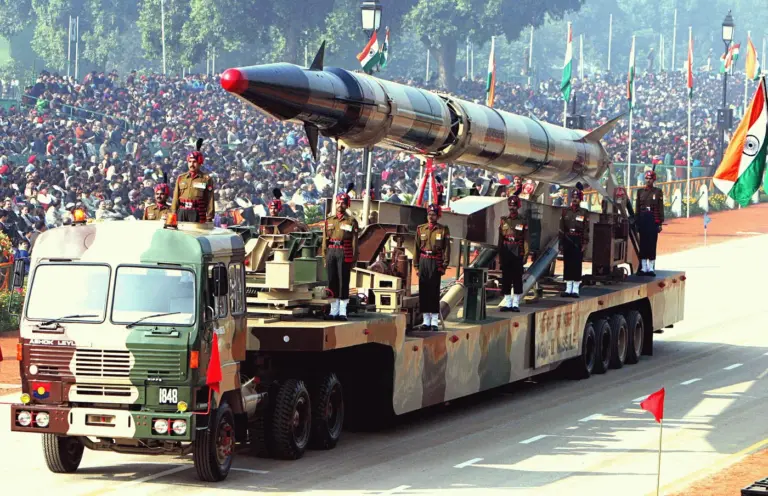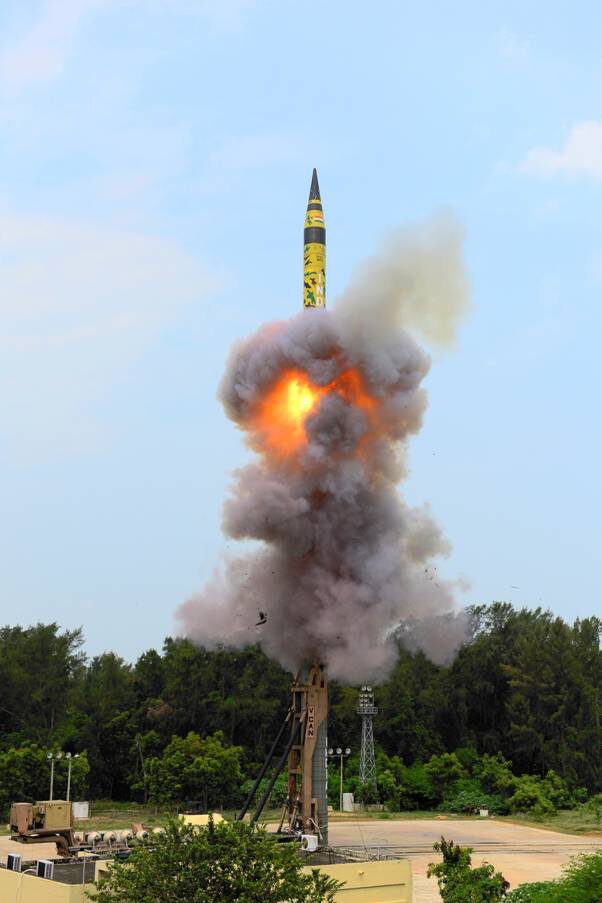
The Agni missile series is the backbone of India’s strategic nuclear deterrent and the most consequential weapons programme India has built indigenously. Developed by DRDO under the Integrated Guided Missile Development Programme (IGMDP) launched in 1983, the Agni missile series spans a six-variant family — from the 700 km Agni-I to the 5,000 km Agni-V intercontinental ballistic missile (ICBM). The series was the first Indian system to demonstrate Multiple Independently Targetable Re-entry Vehicle (MIRV) capability, tested as Mission Divyastra on 11 March 2024 with the Agni-V platform. Together with the BrahMos cruise missile and the K-series submarine-launched ballistic missiles, the Agni missile series completes India’s nuclear triad and is operated by the Strategic Forces Command under the Nuclear Command Authority.
For UPSC, the Agni missile series spans GS-III internal security, defence indigenisation and science and technology; GS-II nuclear non-proliferation and strategic relations; and Prelims static facts on every variant. It is one of the most repeatedly tested defence topics in the civil services exam, dating back to the IGMDP era and the leadership of Dr A P J Abdul Kalam.
Origin: The IGMDP and Dr Kalam
The Agni missile series began as one of five projects under the Integrated Guided Missile Development Programme (IGMDP), approved by the Government of India in July 1983 with a budget of ₹390 crore. The IGMDP was led by DRDO under the directorship of Dr A P J Abdul Kalam.
The Five IGMDP Projects
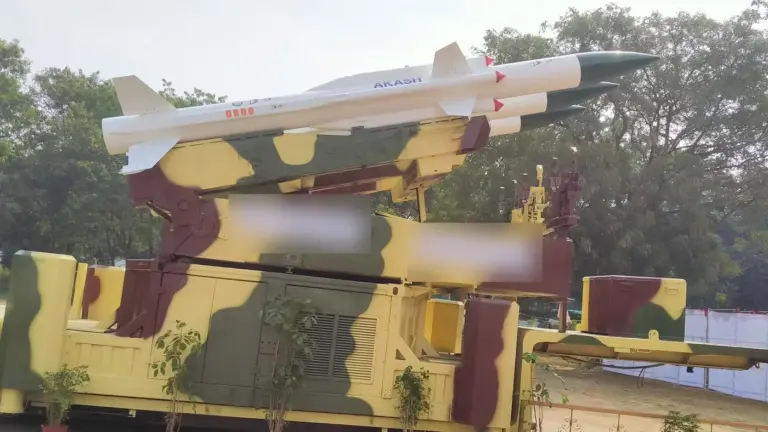
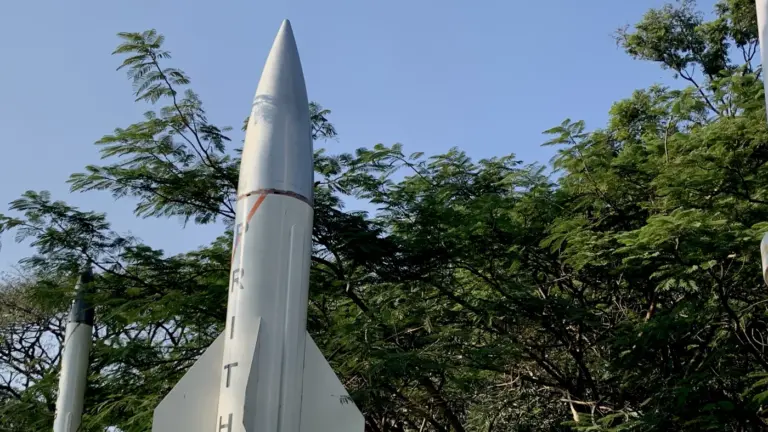
The IGMDP comprised five missile programmes — Prithvi (surface-to-surface short-range), Trishul (low-altitude surface-to-air), Akash (medium-range surface-to-air), Nag (anti-tank guided missile) and Agni (technology demonstrator for ballistic missile). Of these, the Agni programme would expand from a single technology demonstrator into a six-variant family covering ranges from 700 km to over 5,000 km.
From Technology Demonstrator to Operational Force
The first Agni technology demonstrator flew on 22 May 1989 from the Wheeler Island (now Dr Abdul Kalam Island) test range off the Odisha coast. The early Agni was a two-stage missile combining a solid-fuel first stage with a liquid-fuel second stage. Subsequent variants moved entirely to solid propellant for faster reaction time, longer storage life and easier mobility. The IGMDP was formally concluded in 2008, by which point the Agni missile series was already an operational deterrent.
Agni-I
Agni-I is the shortest-range Agni missile in service.
Specifications
Agni-I is a single-stage, solid-fuel, surface-to-surface ballistic missile with a range of 700 km. It carries a one-tonne conventional or nuclear warhead. The missile is rail-mobile and road-mobile, deployable from a transporter-erector-launcher (TEL). Agni-I was first test-fired in January 2002 and inducted into the Strategic Forces Command in 2007.
Role
Agni-I covers Pakistan-centric targets and fills the gap between the short-range Prithvi (150–350 km) and the long-range Agni-II. It is the most numerous Agni variant in service.
Agni-II
Agni-II is a two-stage, solid-fuel missile with a 2,000 km range, sufficient to cover all of Pakistan and southwestern China. The missile carries a one-tonne warhead and was inducted in 2004. Agni-II uses ring-laser-gyro inertial navigation supplemented by satellite updates, giving it a circular error probable (CEP) of about 30 to 40 metres at maximum range.
Agni-III
Agni-III extended the Agni missile series into intermediate-range territory.
Specifications
Agni-III is a two-stage, solid-fuel missile with a range of 3,500 km and a payload of up to 1.5 tonnes. First flown in 2006 (an initial test failed; the second test in April 2007 succeeded), Agni-III was inducted in 2011. Its range covers all of China, including Beijing and Shanghai.
Strategic Significance
Agni-III shifted India’s deterrent posture from Pakistan-centric to China-capable. The missile is rail-mobile, deployed in canisterised form, and uses advanced re-entry vehicle technology that withstands the higher heat of intermediate-range re-entry.
Agni-IV
Agni-IV is a two-stage, solid-fuel intermediate-range ballistic missile with a 4,000 km range. First tested in 2011, Agni-IV introduced composite-material rocket motors, a fifth-generation ring-laser-gyro and digital flight control. The result is a lighter, more accurate missile that fills the gap between Agni-III and Agni-V. Agni-IV was inducted into the Strategic Forces Command in 2014.
Agni-V: India’s First ICBM
Agni-V is the longest-range missile in the Agni missile series and India’s first true intercontinental ballistic missile.
Specifications
Agni-V is a three-stage, solid-fuel missile with a range of over 5,000 km, capable of striking targets across all of Asia, parts of Europe and parts of Africa. It carries a 1.5-tonne warhead. The missile is canisterised — sealed in a launch tube at the factory — which allows rapid road deployment from a TEL and decades of storage without maintenance. First test-fired in April 2012, Agni-V was inducted into the Strategic Forces Command in 2018.
Why Canisterisation Matters
Canisterisation transforms a ballistic missile from a slow-to-deploy weapon requiring hours of preparation into a ready-to-fire system that can launch within minutes. India’s no-first-use nuclear doctrine requires a credible second-strike capability, and canisterised Agni-V missiles provide exactly that. The launch tube also protects the missile against weather, dust and shock during transit.
Mission Divyastra — MIRV Capability
On 11 March 2024 DRDO carried out Mission Divyastra, the first successful flight test of Agni-V equipped with Multiple Independently Targetable Re-entry Vehicles (MIRV). A MIRV-equipped missile carries multiple warheads, each programmed to strike a different target after the missile delivers them on a ballistic trajectory. Mission Divyastra was a landmark — India joined the United States, Russia, China, the UK and France in the very small MIRV club. Prime Minister Modi announced the test, declaring it a major step in India’s strategic capability. MIRV multiplies the deterrent value of a single Agni-V launcher and makes ballistic-missile defence by adversaries much harder.
Agni-P (Agni Prime)
Agni-P, also called Agni Prime, is a next-generation two-stage canisterised missile that replaces both Agni-I and Agni-II in service.
Specifications and Tests
Agni-P has a range of 1,000 to 2,000 km, putting all of Pakistan and parts of southwestern China within reach. It uses composite rocket motors, manoeuvrable re-entry vehicles (MaRV) and improved guidance. First tested in June 2021, Agni-P has completed multiple successful flights, and its road-mobile version has been inducted into the Strategic Forces Command after user trials. On 24 September 2025 DRDO and the Strategic Forces Command test-fired Agni-P from a rail-based mobile launcher for the first time — a canisterised launch from a moving rail platform that placed India alongside Russia and China in that select group. It is lighter, more accurate and more mobile than the missiles it replaces.
Agni-VI
Agni-VI is the planned next variant in the Agni missile series, intended to extend India’s strategic reach beyond 6,000 km. Reportedly under development at DRDO, Agni-VI would carry multiple MIRV warheads and incorporate improved propulsion and guidance. The exact configuration and timeline remain classified; defence analysts expect first tests in the late 2020s.
Agni Missile Series in India’s Nuclear Doctrine
The Agni missile series is operated by the Strategic Forces Command (SFC), established in 2003 as the custodian of India’s nuclear weapons under the Nuclear Command Authority.
Credible Minimum Deterrence
India’s nuclear doctrine, declared in 2003, rests on three pillars — no first use against non-nuclear states, credible minimum deterrence, and massive retaliation in response to a nuclear strike. The Agni missile series, together with the K-series submarine-launched missiles, provides the credible second-strike capability required by this doctrine.
The Nuclear Triad
India operates a nuclear triad — land, air and sea-based delivery. The Agni missile series anchors the land leg. The Mirage 2000 and Rafale fighters provide the air leg. The Arihant-class submarines with K-15 (750 km) and K-4 (3,500 km) missiles provide the sea leg. The Agni-V and forthcoming Agni-VI ensure the land leg remains credible against any potential adversary.
Comparing the Agni Variants
The Agni missile series in a single view —
- Agni-I — 700 km, single-stage solid, mobile, Pakistan-focused
- Agni-II — 2,000 km, two-stage solid, deep Pakistan and parts of China
- Agni-III — 3,500 km, two-stage solid, all of China
- Agni-IV — 4,000 km, two-stage solid, China and beyond
- Agni-V — 5,000+ km, three-stage solid, ICBM, MIRV-capable (Divyastra 2024)
- Agni-P — 1,000–2,000 km, two-stage canisterised, replaces Agni-I/II
- Agni-VI — 6,000+ km (in development)
Strategic Implications
The Agni missile series places India among a small group of countries — the United States, Russia, China, the United Kingdom, France and India — that have indigenously developed and deployed long-range solid-fuel ballistic missiles. With Mission Divyastra in March 2024, India also joined the MIRV club. The Agni missile series, alongside the BrahMos cruise missile and the S-400 Triumf air-defence shield, defines the conventional and nuclear architecture of India’s deterrent. For broader data on India’s defence posture and arms imports/exports, see the SIPRI 2025 report on India’s defence and arms data.
Why the Agni Missile Series Matters for UPSC
The Agni missile series is among the most frequently tested defence topics in the civil services examination.
Prelims Facts
- IGMDP launched 1983; led by Dr A P J Abdul Kalam; concluded 2008
- Agni-I — 700 km, single-stage solid
- Agni-II — 2,000 km, two-stage solid
- Agni-III — 3,500 km, all of China
- Agni-IV — 4,000 km, composite motors
- Agni-V — 5,000+ km, ICBM, canisterised, MIRV (Mission Divyastra, 11 March 2024)
- Agni-P — 1,000–2,000 km, replaces Agni-I/II
- Operated by Strategic Forces Command under Nuclear Command Authority
Mains Angles
- India’s nuclear doctrine — no first use, credible minimum deterrence, massive retaliation
- The nuclear triad — land, air, sea
- Indigenisation under IGMDP and the Kalam legacy
- MIRV capability and ballistic missile defence
- Strategic competition with China and Pakistan
- Non-proliferation regime — MTCR, NSG, India’s position
Frequently Asked Questions
What is the Agni missile series?
The Agni missile series is India’s family of indigenously developed surface-to-surface ballistic missiles, ranging from the 700 km Agni-I to the 5,000+ km Agni-V intercontinental ballistic missile. Developed by DRDO under the Integrated Guided Missile Development Programme (IGMDP) launched in 1983, the Agni missile series is operated by the Strategic Forces Command and is the backbone of India’s nuclear deterrent.
What is the range of Agni-V?
Agni-V has a range of over 5,000 km — covering all of Asia, parts of Europe and parts of Africa — making it India’s first intercontinental ballistic missile. Agni-V is a three-stage solid-fuel canisterised missile that can be launched from a road-mobile transporter-erector-launcher within minutes. It was inducted into the Strategic Forces Command in 2018.
What is Mission Divyastra?
Mission Divyastra was the first successful flight test of an Agni-V missile equipped with Multiple Independently Targetable Re-entry Vehicles (MIRV), carried out by DRDO on 11 March 2024. The test placed India in a very small global club of MIRV-capable nations — the US, Russia, China, UK, France and now India. MIRV allows one missile to deliver multiple warheads to different targets.
What is the IGMDP?
The Integrated Guided Missile Development Programme (IGMDP) was launched by the Government of India in July 1983 to develop five indigenous missiles — Prithvi, Trishul, Akash, Nag and Agni. It was led by DRDO under Dr A P J Abdul Kalam. The IGMDP was concluded in 2008 after delivering operational missiles to the armed forces.
What is Agni Prime (Agni-P)?
Agni Prime, also called Agni-P, is a next-generation two-stage canisterised ballistic missile with a 1,000 to 2,000 km range. It replaces Agni-I and Agni-II in service and uses composite rocket motors, manoeuvrable re-entry vehicles (MaRV) and improved guidance. First tested in June 2021, Agni-P is lighter, more accurate and more mobile than its predecessors.
Who operates the Agni missile series?
The Agni missile series is operated by the Strategic Forces Command (SFC), a tri-service unified command established in 2003 under the Nuclear Command Authority. SFC is the custodian of all of India’s nuclear weapons and delivery systems, including the Agni missiles, the K-series submarine-launched missiles and the nuclear-capable Mirage 2000 and Rafale aircraft.
What is MIRV capability?
A Multiple Independently Targetable Re-entry Vehicle (MIRV) missile carries several warheads, each independently guided to its own target after the missile delivers them on a ballistic trajectory. MIRV multiplies the effect of a single launcher and makes interception by ballistic-missile defence far harder. India became the sixth country to demonstrate MIRV with Mission Divyastra on Agni-V in March 2024.
What is Agni-VI?
Agni-VI is the planned next variant in the Agni missile series, intended to extend India’s reach beyond 6,000 km with multiple MIRV warheads, improved propulsion and improved guidance. Reportedly under development at DRDO, the exact configuration and timeline are classified; defence analysts expect first tests in the late 2020s.
Tell Google you want more of this.
Add Anantam IAS as a preferred sourceOne tap, and this site shows up more often in your own Top Stories, AI Overviews and AI Mode. Remove it any time.