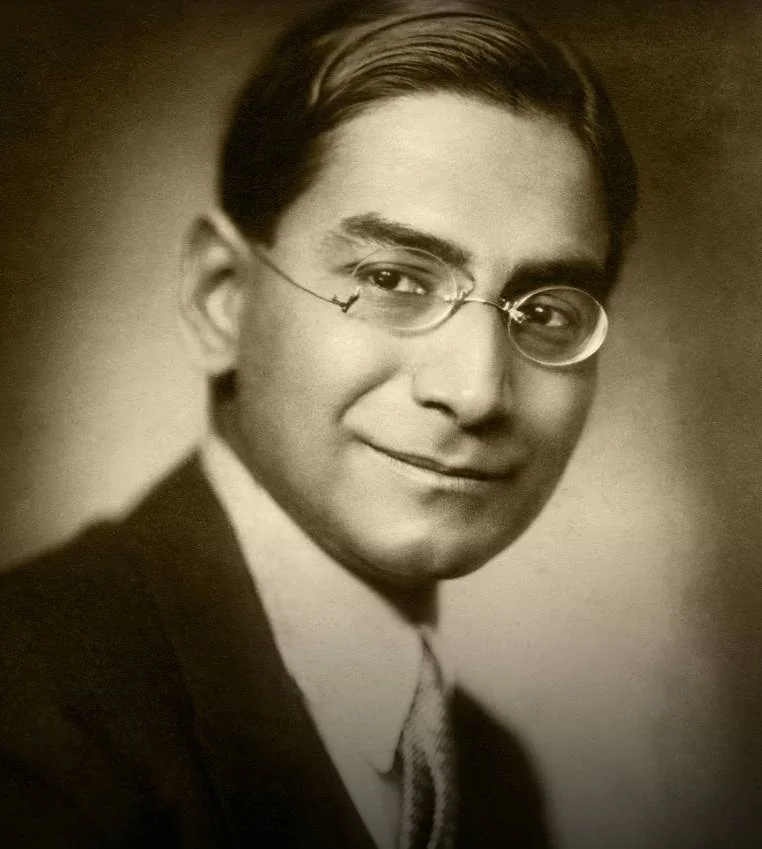
Jayant Narlikar (1938 to 2025) was an Indian cosmologist best known for the Hoyle-Narlikar theory of gravity, which he developed with Fred Hoyle at Cambridge, and for founding the Inter-University Centre for Astronomy and Astrophysics (IUCAA) in Pune in 1988. He also wrote science books and fiction in English, Hindi and Marathi. He died at his home in Pune on 20 May 2025, aged 86.
Most readers remember him as “the scientist who opposed the Big Bang”, and that is where the confusion starts. His alternative cosmology did not win the argument, and an honest note has to say so. But his gravity theory was serious mathematics published in the Royal Society’s journal, and his largest contribution was not a theory at all: it was an institution that brought astronomy research to Indian universities. This note separates the three.
Who was Jayant Narlikar?
Jayant Vishnu Narlikar was a theoretical astrophysicist and cosmologist, a student and collaborator of Fred Hoyle and the founding director of IUCAA. Few Indian scientists of his generation were as well known outside the laboratory.
| Fact | Detail |
|---|---|
| Born | 19 July 1938, Kolhapur, Maharashtra |
| Died | 20 May 2025, Pune, aged 86 |
| Education | B.Sc., Banaras Hindu University (1957); PhD, Cambridge, under Fred Hoyle (1963) |
| Best-known theory | Hoyle-Narlikar theory of gravity (Royal Society paper, 1964) |
| Cosmology | Steady-state theory, later the quasi-steady-state theory (1993) |
| Institutions | Tata Institute of Fundamental Research (from 1972); founding director of IUCAA, Pune (from 1988) |
| National honours | Padma Bhushan (1965), Padma Vibhushan (2004) |
| Science communication | UNESCO Kalinga Prize (1996); Sahitya Akademi Award (2014) for his Marathi autobiography |
The 1965 Padma Bhushan deserves a second look. He was 26 when he received it, which tells you how quickly his Cambridge work made his name in India.
Life in phases
Narlikar’s life falls into three phases: Varanasi, Cambridge and the return to India, where he spent the rest of his career building institutions and audiences.
Varanasi, 1938 to 1957
He was born in Kolhapur to Vishnu Vasudev Narlikar, a mathematician and theoretical physicist at Banaras Hindu University, and Sumati Narlikar, a Sanskrit scholar. He grew up in Varanasi, studied at Central Hindu College and took his B.Sc. from BHU in 1957.
Cambridge, 1957 to 1972
At Cambridge he became a doctoral student of Fred Hoyle, one of the leading astrophysicists of the century, and received his PhD in 1963. He stayed on as a fellow of King’s College and earned a further master’s degree in astronomy and astrophysics in 1964. The same year, he and Hoyle published the gravity theory that bears their names, and in 1967 he won Cambridge’s Adams Prize.
India, 1972 to 2025
He returned to join the Tata Institute of Fundamental Research in Bombay in 1972. In the 1980s the University Grants Commission invited him to set up a centre that would help universities do research in astronomy, and IUCAA opened in Pune in 1988 with him as its first director. He remained in Pune for the rest of his life.
What is the Hoyle-Narlikar theory of gravity?
The Hoyle-Narlikar theory is an alternative theory of gravity that agrees with Einstein’s general relativity for everything we can test locally but differs in what it says about the universe as a whole. Hoyle and Narlikar published it as “A new theory of gravitation” in the Proceedings of the Royal Society in November 1964.
The easiest way in is to ask a strange question: does a stone know the rest of the universe exists? In Einstein’s theory, you can write down a perfectly valid universe that contains nothing at all. Hoyle and Narlikar built a theory in which that is impossible. Their paper’s own summary makes three points:
- Same local predictions: for ordinary, large-scale phenomena the theory matches Einstein, so it passes the same classical tests of general relativity.
- Gravity tied to the whole universe: the strength of gravity, the constant G, follows from the mean density of matter in the universe.
- No empty universe: an empty world is not allowed, and the smallest possible universe contains two particles.
The paper even jokes that the theory lets a cosmologist know how hard he will hit the ground if he falls over a cliff, because the force of that fall depends on how much matter the whole universe holds.
Why the idea matters
This is a version of an old idea associated with the physicist Ernst Mach: that the inertia of a body comes from its relationship with all the other matter in the universe. A useful picture is a spider’s web. Touch one strand and the whole web responds; in the Hoyle-Narlikar picture, local gravity is a strand of a cosmic web. The analogy stops at the details, because the theory is a precise set of field equations, not a vibrating net, but it captures the claim that local physics depends on the global universe.
What the dates say
The IUCAA tribute dates the theory to 1966, while the founding paper appeared in 1964. The difference reflects later papers that developed the theory; for an answer, 1964 is the date of the original publication.
The steady-state debate
Narlikar is equally known for defending the steady-state theory of the universe and, later, the quasi-steady-state theory, alternatives to the Big Bang model. These positions explain both his fame and the criticism he faced.
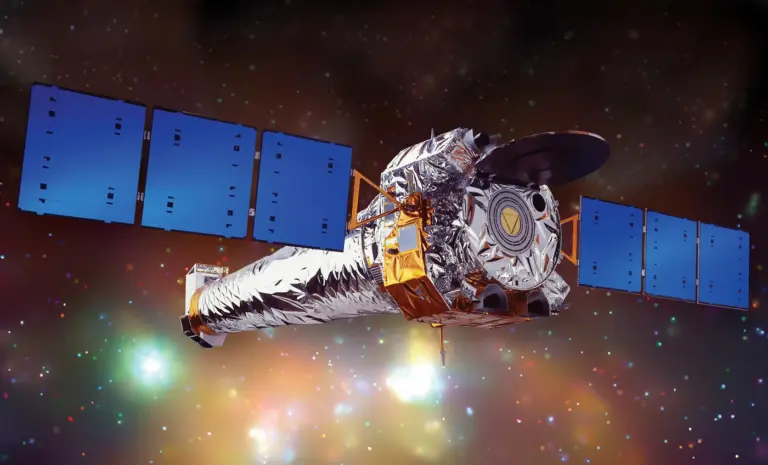
The steady-state idea, associated with Hoyle and his colleagues from the late 1940s, holds that the universe has no beginning. It expands, but new matter is continuously created, so on large scales the universe looks the same at all times. The observed expansion itself, first measured through galaxy redshifts and refined by instruments such as the Hubble Space Telescope, was never in dispute; the argument was about what the expansion implies. The Big Bang model instead says the universe began in a hot, dense state and has been evolving ever since.
Most cosmologists came to accept the Big Bang because of evidence such as the cosmic microwave background, the faint afterglow radiation discovered in the 1960s. Narlikar and his collaborators responded with the quasi-steady-state model in 1993, in which the universe goes through cycles of expansion and contraction within a long-term steady state, with matter created in bursts.
The fair judgment has two halves. The quasi-steady-state model never displaced the Big Bang, and it remains a minority view. But challenging the dominant model forced its supporters to sharpen their evidence, and Narlikar argued his case openly in the published literature. For an aspirant, he is a good example of how dissent works inside science: through papers and data, not through slogans.
His later interests ran in a similar independent direction. IUCAA’s biography notes that he pursued the idea that microorganisms could enter Earth’s atmosphere from outer space, another position outside the mainstream.
Building IUCAA
IUCAA is the part of his legacy that no one disputes. It is an autonomous centre set up under the University Grants Commission to solve a specific problem: Indian universities had astronomers but lacked the equipment, computing and research culture that national laboratories enjoyed.
Narlikar’s plan, described by PIB as his “Eightfold Way”, combined research excellence with service to the university system:
- Outreach to university teachers, who could visit IUCAA and use its facilities.
- Guidance for PhD students from universities without strong astronomy groups.
- Access to observational facilities for Indian astronomers.
- Science education and outreach for schoolchildren and the public.
IUCAA’s own tribute describes it as a “role model” institute meant to grow active astronomy groups inside Indian universities, and records that he travelled widely to lecture and introduce teachers and students to the centre. Today IUCAA is one of the three Indian institutional partners in LIGO-India, the planned gravitational-wave observatory, which shows how far the centre has grown from its founding idea.
Science for everyone
Narlikar treated science communication as part of a scientist’s job, not a hobby. He wrote books and articles in English, Hindi and Marathi, from technical treatises to science fiction with Indian settings, and he appeared often on radio and television. He also served as a consultant for NCERT’s science and mathematics textbooks.
He was openly critical of pseudoscience, including astrology, and argued for evidence-based thinking. That stance connects directly to the Constitution’s call to develop the scientific temper, one of the fundamental duties under Article 51A(h).
His writing was recognised by literary bodies as well as scientific ones. He received the Sahitya Akademi Award in 2014 for his Marathi autobiography, Chaar Nagarantale Maze Vishwa, and in January 2021 he was chosen to preside over the 94th Akhil Bharatiya Marathi Sahitya Sammelan at Nashik. In 1996 UNESCO gave him the Kalinga Prize for the popularisation of science.
Legacy and recognition
India’s honours for Narlikar span six decades:
- Padma Bhushan, 1965, one of the Padma awards given each Republic Day.
- Shanti Swarup Bhatnagar Award, 1978.
- Padma Vibhushan, 2004, India’s second-highest civilian honour.
- Maharashtra Bhushan, 2010, the state’s highest civilian award.
- The first Govind Swarup Lifetime Achievement Award of the Astronomical Society of India, for 2022, presented to him in Pune in May 2023.
The Astronomical Society’s citation called him one of the first to start cosmology research in India. When he died in May 2025, the Prime Minister described his passing as a monumental loss to the scientific community and singled out his role as an institution builder and a writer who made science accessible.
What historians and scientists dispute
Narlikar’s record is clear on facts; the debate is over weight:
- His cosmology: supporters see principled dissent; critics see a long defence of a model the evidence had moved past. Both agree the work was published and argued in the open.
- The date of the gravity theory: 1964 for the original paper, with later developments sometimes giving 1966.
- Where his greatest contribution lies: most assessments, including IUCAA’s own, place it in institution building and the university community rather than in any single theory.
How to study Jayant Narlikar for exams
Narlikar fits GS Paper III under achievements of Indians in science and technology, and GS Paper I where personalities from modern India are asked about. His work on scientific temper also links to GS Paper II through fundamental duties, and to ethics papers where science and society meet.
The examiner tests Indian scientists through their contributions to the country, not through biographical trivia. Mains 2014 GS Paper III asked candidates to critically comment on the claim that “Scientific research in Indian universities is declining”, and IUCAA is the textbook example of an institution built to reverse exactly that trend. Science and Technology accounts for 192 of the 1,403 questions in the Prelims question bank, so pair him with other astronomy and space topics when you revise.
Revision facts:
- Born 19 July 1938, Kolhapur; died 20 May 2025, Pune.
- PhD at Cambridge under Fred Hoyle (1963).
- Hoyle-Narlikar theory of gravity: Royal Society paper, 1964.
- Quasi-steady-state cosmology: 1993.
- Founded IUCAA, Pune, in 1988 at the UGC’s invitation.
- Padma Bhushan 1965; Padma Vibhushan 2004; UNESCO Kalinga Prize 1996.
- Sahitya Akademi Award 2014 for his Marathi autobiography.
Two confusions are common. First, the steady-state model is not the Hoyle-Narlikar theory: one is a model of the universe’s history, the other a theory of gravity. Second, IUCAA is not part of TIFR or ISRO; it is a UGC-backed inter-university centre in Pune.
| Scientist | Main field | Signature contribution | Institution link |
|---|---|---|---|
| Jayant Narlikar | Cosmology | Hoyle-Narlikar theory; quasi-steady-state model | Founding director, IUCAA |
| Subrahmanyan Chandrasekhar | Astrophysics | Maximum mass of white dwarfs (Nobel 1983) | University of Chicago |
| Govind Swarup | Radio astronomy | Ooty Radio Telescope and GMRT | National Centre for Radio Astrophysics |
| C.V. Raman | Optics | Raman effect (Nobel 1930) | Indian Institute of Science, Raman Research Institute |
For your preparation, Narlikar is valuable less for his cosmology than for what he shows about Indian science: that a researcher can disagree with the world’s consensus in the open, build an institution that outlives him and still find time to explain the universe to a schoolchild in Marathi. Use him when an answer needs a living example of scientific temper and institution building together.
Frequently Asked Questions
Who was Jayant Narlikar?
Jayant Narlikar was an Indian astrophysicist and cosmologist, born in Kolhapur in 1938. He co-developed the Hoyle-Narlikar theory of gravity with Fred Hoyle, founded IUCAA in Pune in 1988 and wrote widely on science for the public.
When did Jayant Narlikar die?
Jayant Narlikar died at his residence in Pune on 20 May 2025, at the age of 86. The Prime Minister described his passing as a monumental loss to the scientific community.
What is the Hoyle-Narlikar theory?
It is an alternative theory of gravity, published by Fred Hoyle and Jayant Narlikar in 1964. It agrees with Einstein’s general relativity for local phenomena but ties the strength of gravity to the mean density of matter in the universe and does not allow an empty universe.
Did Jayant Narlikar reject the Big Bang theory?
He championed the steady-state theory and later the quasi-steady-state theory, both alternatives to the Big Bang. Most cosmologists accept the Big Bang model, so his cosmological views remain a minority position.
What is IUCAA and who founded it?
IUCAA, the Inter-University Centre for Astronomy and Astrophysics in Pune, was founded in 1988 with Jayant Narlikar as its first director. The University Grants Commission set it up to help Indian universities carry out research in astronomy and astrophysics.
Which awards did Jayant Narlikar receive?
He received the Padma Bhushan in 1965, the Padma Vibhushan in 2004 and the UNESCO Kalinga Prize for the popularisation of science in 1996. He also won the Sahitya Akademi Award in 2014 for his Marathi autobiography.
Who was Jayant Narlikar’s PhD guide?
Fred Hoyle guided his doctoral research at Cambridge University, which he completed in 1963. The two later collaborated on the Hoyle-Narlikar theory and on alternatives to the Big Bang.
Why is Jayant Narlikar remembered as a science communicator?
He wrote books, articles and science fiction in English, Hindi and Marathi and spoke often on radio and television. He criticised pseudoscience such as astrology and promoted evidence-based thinking among students and the public.
Practice Questions
Prelims
1. Consider the following statements about Jayant Narlikar: 1. He was the founding director of the Inter-University Centre for Astronomy and Astrophysics in Pune. 2. He completed his doctoral research under Subrahmanyan Chandrasekhar at Chicago. Which of the statements given above is/are correct?
- (a) 1 only
- (b) 2 only
- (c) Both 1 and 2
- (d) Neither 1 nor 2
Answer: (a) His PhD guide was Fred Hoyle at Cambridge.
2. Consider the following statements about the Hoyle-Narlikar theory: 1. It predicts the same results as general relativity for local, macroscopic phenomena. 2. It allows a universe with no matter at all. Which of the statements given above is/are correct?
- (a) 1 only
- (b) 2 only
- (c) Both 1 and 2
- (d) Neither 1 nor 2
Answer: (a) The 1964 paper says an empty world is not possible in the theory.
3. The quasi-steady-state theory of the universe, associated with Jayant Narlikar, is an alternative to:
- (a) Plate tectonics
- (b) The Big Bang model
- (c) The nebular hypothesis of the solar system
- (d) Quantum electrodynamics
Answer: (b) It was proposed in 1993 as an alternative to the Big Bang model of the universe.
4. The UNESCO Kalinga Prize, awarded to Jayant Narlikar in 1996, recognises:
- (a) Contributions to world peace
- (b) Popularisation of science
- (c) Excellence in classical music
- (d) Environmental conservation
Answer: (b) The Kalinga Prize honours the popularisation of science.
5. Which one of the following pairs is correctly matched?
- (a) IUCAA: Bengaluru
- (b) Jayant Narlikar: Sahitya Akademi Award for Marathi autobiography
- (c) Hoyle-Narlikar theory: theory of plate movement
- (d) Jayant Narlikar: Nobel Prize in Physics
Answer: (b) He won the 2014 Sahitya Akademi Award for his Marathi autobiography; IUCAA is in Pune.
Mains
- Discuss the contributions of Jayant Narlikar to cosmology and to the growth of astronomy research in Indian universities. (10 marks, 150 words)
- Scientific dissent strengthens science when it is conducted through evidence. Examine this statement with reference to the steady-state and Big Bang debate. (10 marks, 150 words)
- Inter-university centres can revive research in higher education. Evaluate this model with reference to IUCAA and other such centres in India. (15 marks, 250 words)
- Promoting the scientific temper is a constitutional duty. How can scientists and science communicators help fulfil it in India? (15 marks, 250 words)
- Why do public intellectuals in science matter in a democracy? Illustrate with the work of Jayant Narlikar and other Indian scientists. (15 marks, 250 words)
Tell Google you want more of this.
Add Anantam IAS as a preferred sourceOne tap, and this site shows up more often in your own Top Stories, AI Overviews and AI Mode. Remove it any time.