
Disclosure: this guide contains Amazon affiliate links. As an Amazon Associate, Anantam IAS earns from qualifying purchases — at no extra cost to you.
Most aspirants buy two or three ethics books, read the definitions chapter of each, and then sit blank in front of a case study that asks what they would do. That gap, between knowing what integrity means and being able to write a defensible decision under time pressure, is the real problem with GS Paper 4. No book fully closes it, and buying more books makes it worse, not better.
So this is not a list of every ethics title in the market. It’s a stance on which one book you should actually own, what to read inside it, what to skip, and when a second book is worth the money. Ethics is the most beatable paper in the Mains because the examiner rewards clear thinking over loaded content, and that’s the whole secret most coaching notes bury.
How many ethics books do you actually need?
One. Maybe one and a half. You need a single primary book to cover the syllabus terminology and thinkers (the Paper 4 Section A spine), plus your own bank of answer frameworks and roughly fifteen to twenty case studies you’ve actually written out. That’s it. The common advice to read three full ethics books cover to cover is how aspirants lose two months and still freeze on a case study, because none of those months were spent writing.
Section B, the case-study half, carries the marks and the difficulty. It isn’t recalled, it’s reasoned. If you treat ethics as a content paper and try to memorize your way through it, you’ll always lag the aspirant who read one book well and practiced fifty answers. Before you pick a title, get the paper’s logic straight from our GS Paper 4 preparation strategy, then come back and buy exactly one of the books below.
Here’s the test for any ethics book you’re considering: does it help you answer faster, or just read longer? A good primary gives you the thinkers, the foundational values, and worked examples you can adapt under exam pressure. Everything beyond that one book is supplementary, and the moment a second book starts repeating the first, you’ve stopped learning and started collecting. That tendency to hoard titles trips up everyone in their first year, so be ruthless about it now.
Lexicon for Ethics, Integrity & Aptitude by Niraj Kumar
If you want the fastest possible map of every keyword the syllabus can throw at you, the Lexicon for Ethics, Integrity & Aptitude is the one to start with. Niraj Kumar built it as a dictionary-style reference: each term (empathy, probity, conscience, emotional intelligence, foundational values) gets a crisp definition, a context, and a usable example. For a paper where examiners reward precise vocabulary, that structure is genuinely efficient.
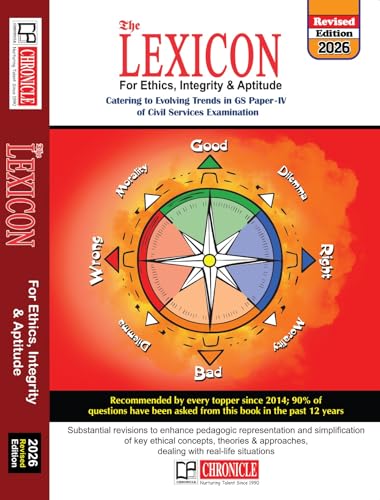
The Lexicon for Ethics, Integrity and Aptitude — Niraj Kumar
- Term-by-term treatment of the GS-4 syllabus vocabulary
- Definitions an examiner recognises, with short illustrations
- Organised as a dictionary, so it survives repeated revision
Read it for Section A: the terms, the difference between closely related concepts, and the ready quotes you can deploy without sounding generic. Skip reading it linearly. It’s a 592-page reference, not a narrative, and front-to-back reading will bore you and waste time. Use it to look things up and to revise before the exam. Don’t buy it as your only book if you struggle to convert keywords into flowing answers, because the Lexicon gives you the bricks but not much mortar. It pairs best with a separate answer-writing routine.
Ethics, Integrity and Aptitude by Subba Rao & Roy Chowdhury
This is the closest thing GS Paper 4 has to a standard textbook, and for most aspirants it’s the single best primary buy. Ethics, Integrity and Aptitude by G. Subba Rao and P.N. Roy Chowdhury walks the whole syllabus in order, with thinkers, administrative examples, and a solid set of case studies at the back. At roughly 640 pages it’s heavy, but the coverage is honest and exam-aligned.
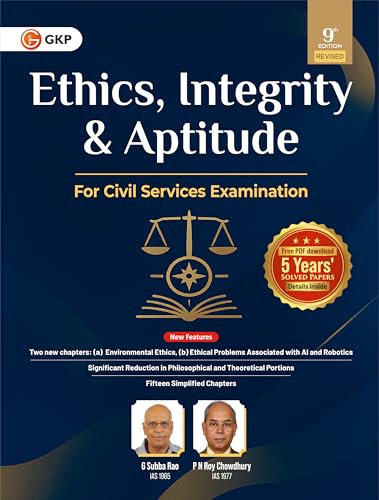
Ethics, Integrity and Aptitude — Subba Rao & P.N. Roy Chowdhury
- 640 pages, the fullest treatment of the GS-4 syllabus
- Thinkers, case studies and administrative applications
- Heavier reading than the Lexicon
Read the thinkers and the governance-ethics chapters carefully; they map directly onto recurring questions about probity, accountability, and corruption. Work through its case studies with a pen, not as reading material. Skip nothing structurally, but don’t get lost in the longer philosophical passages, you’re writing a 150-word answer, not a thesis. The honest caveat: this book is dense, and a first-time ethics reader can find Subba Rao slow going. If that’s you, the McGraw-Hill titles below read easier. Once the basics are in place, deepen the core concepts using our explainer on ethics and human interface.
Ethics, Integrity and Aptitude by Ajmera & Reddy
The McGraw-Hill book by Santosh Ajmera and Nanda Kishore Reddy is the friendliest entry point if ethics intimidates you. Ethics, Integrity and Aptitude by Ajmera and Reddy is more readable than Subba Rao, leans on real administrative anecdotes, and at around 576 pages is a touch lighter to carry through a revision cycle. It explains concepts in plain language and connects them to day-to-day governance, which is exactly what nervous first-readers need.
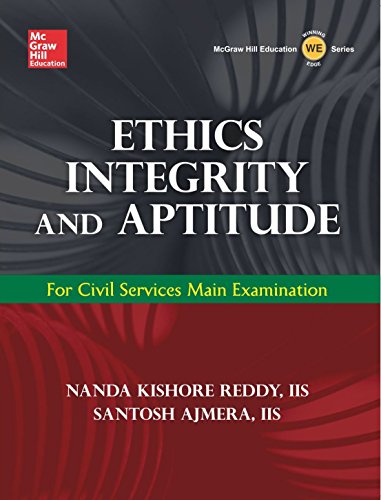
Ethics, Integrity and Aptitude — Ajmera & Reddy
- 576 pages with an administrator's framing
- Case studies drawn from real service situations
- Strong on the aptitude half most books rush
Read it as your primary if you want comprehension over comprehensiveness. The administrative case anecdotes are its strongest section, mine them for examples you can reuse in Section A answers. Skip treating it as your case-study trainer; its practice cases are decent but thinner than you’ll want, so supplement with our worked walkthroughs on ethics case study writing. Don’t buy both this and Subba Rao. They cover the same ground, and owning two near-identical books is the most common money-and-time leak in ethics prep.
Ethics, Integrity and Aptitude for Civil Services by M. Karthikeyan
The newest of the four, Ethics, Integrity and Aptitude for Civil Services by M. Karthikeyan is the most compact of the lot at about 544 pages, and that’s its selling point. It’s tighter, cleaner, and less repetitive than the older textbooks, which makes it a good fit for repeaters who already know the syllabus and want a lean revision book rather than a teaching one.
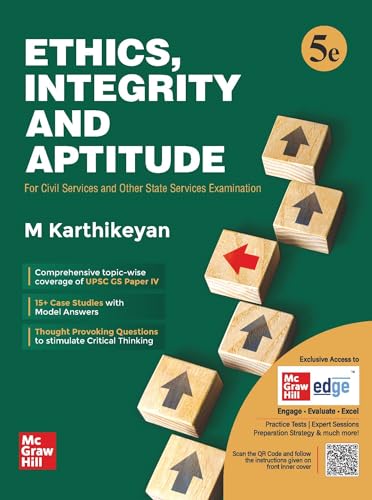
Ethics, Integrity & Aptitude — M. Karthikeyan (5th Edition)
- 544 pages, McGraw Hill, built to the current GS-4 pattern
- Answer frameworks alongside the theory
- Compact enough to finish before Mains
Read Karthikeyan if this is your second attempt and you want crisp coverage you can finish in a fortnight. Skip it as a first book; its brevity assumes you’ve already met the thinkers and frameworks elsewhere, so a beginner will find it under-explained. The honest line: it’s an excellent second pass and a weak first read. For governance-specific application, layer it with our note on ethics in governance so your examples stay administrative, not abstract.
The mistakes that cost aspirants Paper 4 marks
The wrong book rarely sinks an ethics score. The wrong method does. Watch for these, because they’re predictable and fixable:
- Reading without writing. Finishing two textbooks and never drafting a case study is the single biggest reason scores stay flat. The paper tests judgment under time, which only practice builds.
- Memorizing quotes to sprinkle. Examiners can spot a pasted quote instantly. One relevant line in your own framing beats five borrowed ones.
- Treating every case study as unique. Most cases reduce to a few recurring tensions (rules versus compassion, loyalty versus public interest, short-term order versus long-term integrity). Once you see the patterns, you stop starting from scratch.
- Buying a second textbook for comfort. If you already have a primary, a near-identical second book adds anxiety, not marks. Spend that money and time on answer review instead.
Ethics books for UPSC compared at a glance
| Book | Author | Best for / Notes |
|---|---|---|
| The Lexicon for Ethics, Integrity & Aptitude | Niraj Kumar | Keyword and definition reference; revision tool, not a first read. Brilliant for Section A vocabulary. |
| Ethics, Integrity and Aptitude | G. Subba Rao & P.N. Roy Chowdhury | The default primary textbook. Dense but exam-aligned, strong on thinkers and governance ethics. |
| Ethics, Integrity and Aptitude | Santosh Ajmera & Nanda Kishore Reddy | Most readable primary. Best for first-time ethics readers; rich administrative anecdotes. |
| Ethics, Integrity and Aptitude for Civil Services | M. Karthikeyan | Compact and current. Ideal lean revision book for repeaters, weak as a first read. |
How to actually use this list
Pick one primary book by how you read, then add the Lexicon only as a reference. Here’s the reading order that works for most aspirants:
- Choose your primary. Nervous beginner: Ajmera & Reddy. Comfortable reader who wants depth: Subba Rao. Repeater revising fast: Karthikeyan.
- Read Section A once, slowly, building a personal sheet of thinkers, foundational values, and your own one-line definitions. Don’t copy the book’s wording.
- Add the Lexicon as a lookup, not a read. Use it to sharpen any keyword you can’t define crisply in your own words.
- Write case studies from week one. Aim for fifteen to twenty worked answers, reviewed and rewritten. This is where marks live.
- Revise from your own sheets, not the textbook, in the final month. The book got you the raw material; your sheets are what you’ll actually recall in the hall.
If you’re building your whole Mains book stack, slot ethics into the larger plan using our guide to the best books for UPSC Mains so you don’t over-invest in any single paper. Ethics rewards practice far more than reading, so budget your time accordingly.
The honest verdict
For most aspirants, buy Subba Rao & Roy Chowdhury as your primary and the Lexicon by Niraj Kumar as a reference, and stop there. If dense textbooks slow you down, swap Subba Rao for Ajmera & Reddy; if you’re a repeater, Karthikeyan is your lean revision companion. Whatever you pick, remember that the book is the smaller half of the job. The aspirant who reads one ethics book and writes fifty case studies will out-score the one who owns all four and writes none. That’s not motivational fluff, it’s how Paper 4 is marked.
Frequently Asked Questions
Which is the best book for ethics in UPSC?
For most aspirants, Ethics, Integrity and Aptitude by G. Subba Rao and P.N. Roy Chowdhury is the best single primary book because it covers the GS Paper 4 syllabus in order with thinkers, governance examples, and case studies. Pair it with the Lexicon by Niraj Kumar as a keyword reference. If you find Subba Rao dense, the Ajmera and Reddy book is a more readable alternative.
How many books are enough for UPSC ethics?
One primary textbook is enough, supported by a keyword reference like the Lexicon and your own bank of case-study answers. Reading three full ethics books cover to cover is a common mistake that wastes time. The marks in Paper 4 come from writing practice, not from reading more titles.
Is the Lexicon enough for UPSC ethics preparation?
The Lexicon by Niraj Kumar is excellent for definitions and keyword vocabulary, but it is a dictionary-style reference, not a teaching book. On its own it won’t train you to write flowing answers or case studies. Use it alongside a primary textbook and a regular answer-writing routine.
Which ethics book is best for beginners in UPSC?
Ethics, Integrity and Aptitude by Santosh Ajmera and Nanda Kishore Reddy is the friendliest for first-time ethics readers. It explains concepts in plain language and uses real administrative anecdotes, which makes the syllabus less intimidating than the denser textbooks.
Do I need a separate book for ethics case studies?
Not necessarily. Most primary textbooks include case studies at the back, and the Subba Rao book has a solid set. Rather than buying a dedicated case-study book, practice fifteen to twenty cases by actually writing them out and reviewing your answers, which is where the real improvement happens.
Is M. Karthikeyan’s ethics book good for UPSC?
Yes, for the right reader. Karthikeyan’s Ethics, Integrity and Aptitude for Civil Services is compact, current, and less repetitive than older textbooks, which makes it ideal for repeaters who want a lean revision book. It is a weaker choice as a first read because its brevity assumes you already know the frameworks.
Tell Google you want more of this.
Add Anantam IAS as a preferred sourceOne tap, and this site shows up more often in your own Top Stories, AI Overviews and AI Mode. Remove it any time.