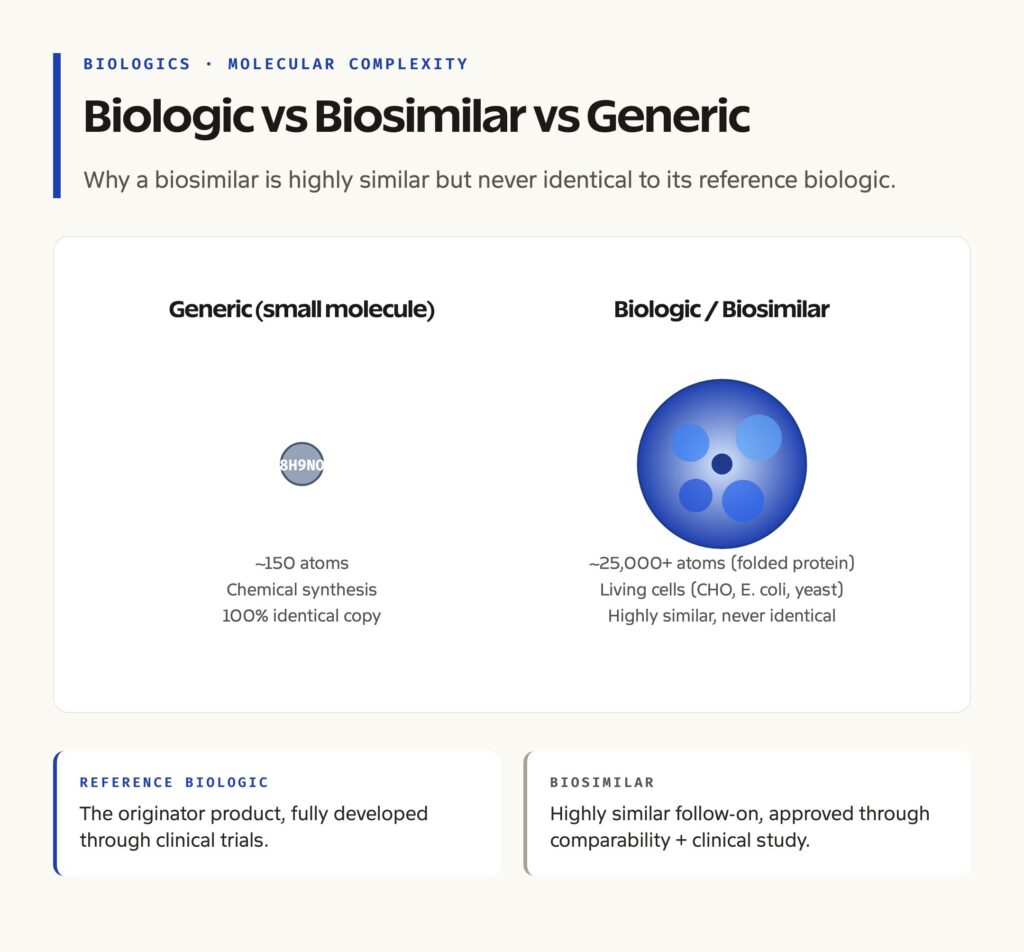
For decades, the words generic drug meant something simple. A patented chemical molecule lost its exclusivity, another manufacturer copied it atom for atom, and the price collapsed. The system that built India’s reputation as the pharmacy of the world ran on this logic. The shift to biological medicines has broken the simplicity. A modern monoclonal antibody is not a small molecule. It is a folded protein produced by living cells. You cannot copy it the way you copy paracetamol. The category that has emerged to handle this problem is the biosimilar.
A biosimilar is a biological medicine that is highly similar, though not identical, to an already approved reference biologic. It has no clinically meaningful differences in safety, purity, or potency. It is approved by a different regulatory pathway than a generic, costs less than the reference product but more than a small-molecule generic, and is now central to the affordability of cancer therapy, autoimmune treatment, and chronic disease management worldwide.
For UPSC purposes, the topic sits at the intersection of biotechnology, public health, intellectual property, and trade. India has been one of the earliest movers globally in biosimilar development, and the regulatory framework here is among the most mature in the developing world. This article walks through what biosimilars are, how they differ from generics, how they are approved, and where India sits in the global race.
Quick Facts on Biosimilars
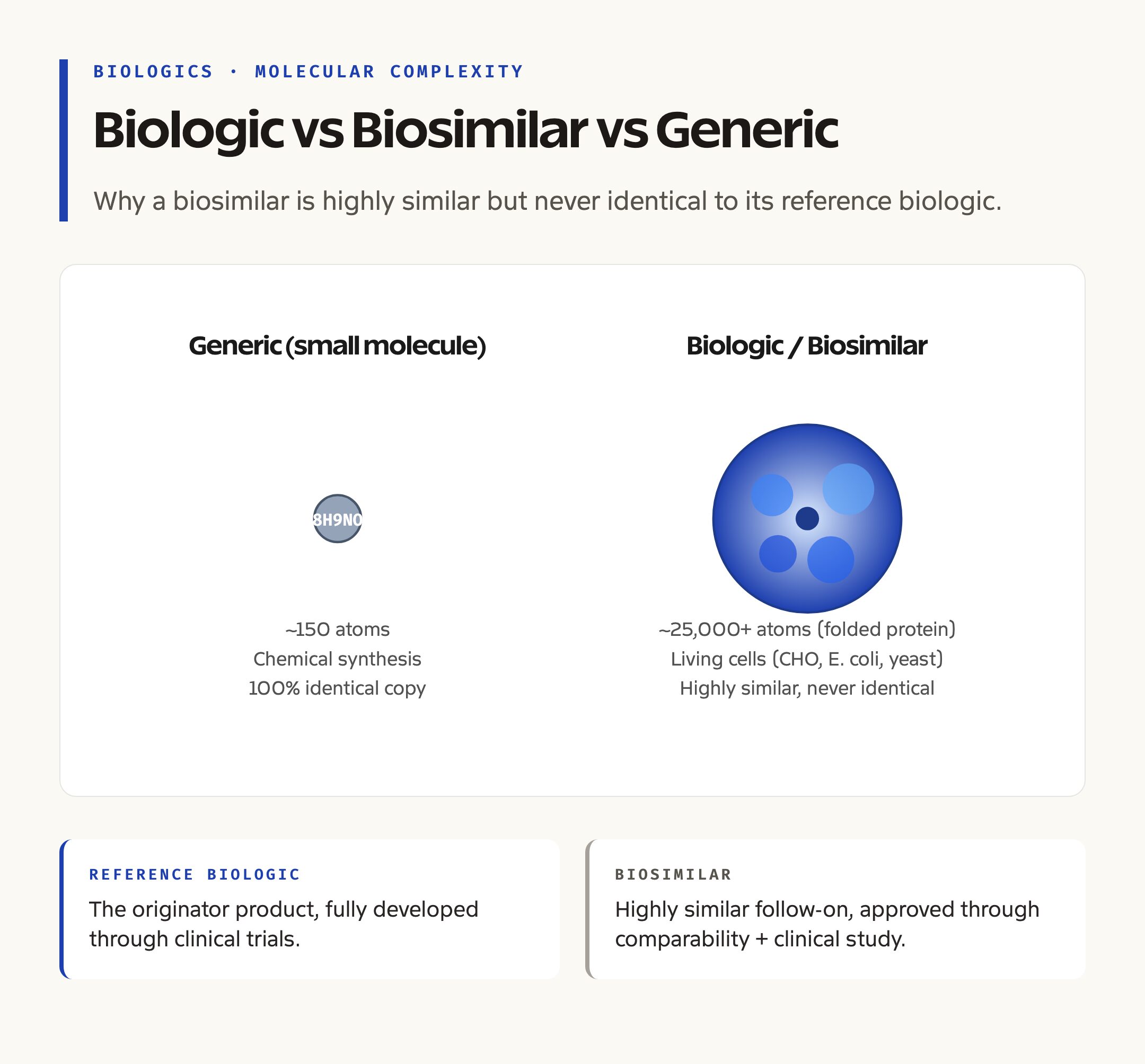
A biological drug, or biologic, is a medicine made from living cells or organisms rather than from chemical synthesis. Biologics include insulin, monoclonal antibodies, growth hormone, vaccines, and gene therapies. The molecules involved are large and complex, often hundreds of times the size of an aspirin molecule.
A biosimilar is a follow-on biologic, approved as highly similar to a reference biologic that has already gone through full clinical development. It is not identical to the reference product because no two batches of a biological drug, even from the same manufacturer, are perfectly identical. The regulatory standard is similarity, not sameness, judged through structural, functional, and clinical comparability studies.
In India, biosimilars are regulated jointly by the Central Drugs Standard Control Organisation, abbreviated CDSCO, and the Department of Biotechnology, abbreviated DBT, under the Guidelines on Similar Biologics first issued in 2012 and revised in 2016. Globally, the category is regulated by the World Health Organization at the standard-setting level, by the United States Food and Drug Administration in the US, and by the European Medicines Agency in the European Union.
What a Biosimilar Actually Is
A biologic is produced inside a living system. Most modern biologics are made by inserting the gene that codes for a target protein into a host cell, growing the cells in a bioreactor, and harvesting and purifying the protein the cells secrete. Hosts include bacteria like E. coli, yeasts like Pichia pastoris, and mammalian cell lines, most commonly Chinese hamster ovary cells.
Because the manufacturing organism is alive, the output is variable. Sugar chains attached to the protein, known as glycosylation patterns, can shift slightly from batch to batch. Folding, charge, and aggregation can vary. Even the same manufacturer running the same process can produce slightly different batches. Regulators have lived with this variability for decades. They have set acceptable tolerance ranges and required ongoing comparability checks.
A biosimilar manufacturer enters this same world from outside. It does not have access to the original cell line, the original purification process, or the original quality data. It develops its own cell line and process, then has to demonstrate that the protein it produces falls inside the acceptable range of variation that the reference product itself shows. The comparison is structural, functional, and clinical. The drug must look the same, behave the same in laboratory assays, and produce the same therapeutic outcome and safety profile in patients.
Background and Historical Context
The biosimilar concept emerged from a regulatory gap. The first wave of biotech drugs, including human insulin and recombinant growth hormone, came out of patents in the late 1990s and early 2000s. Generic-style copies began to appear, but the existing generic-drug pathways, which relied on chemical equivalence, were a poor fit. Indian regulators and the European Medicines Agency moved early to fill the gap.
India approved its first biosimilar, a hepatitis B vaccine, in the early 2000s. India also became one of the first countries to approve a biosimilar of a monoclonal antibody when Reditux, a biosimilar of rituximab used in lymphoma treatment, was launched in 2007. The European Medicines Agency approved its first biosimilar, a growth hormone, in 2006. The US Food and Drug Administration was slower, with the formal biosimilar pathway under the Biologics Price Competition and Innovation Act coming into effect only in 2010 and the first US biosimilar approval coming in 2015.
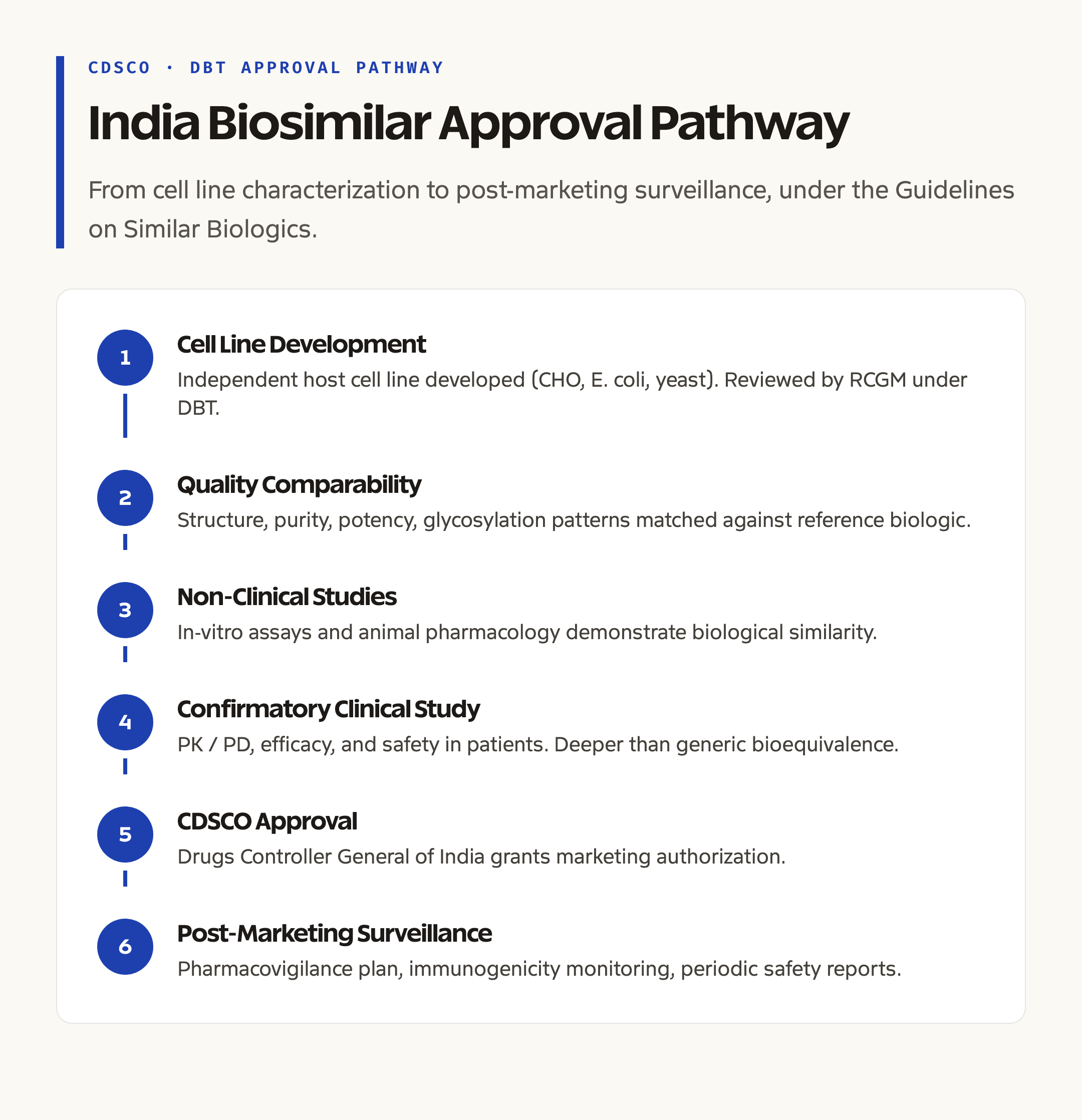
India’s Guidelines on Similar Biologics were issued in 2012 by CDSCO and DBT jointly, then revised in 2016. The 2016 revision tightened the comparability standard, brought Indian rules closer to the EMA template, and clarified the role of the Review Committee on Genetic Manipulation that sits within DBT for cell-line and genetic-engineering review. A further refinement in 2019 streamlined the post-approval surveillance regime.
Key Features of the Indian Pathway
The Indian regulatory pathway has four elements that distinguish it from the generic-drug pathway. The first is dual oversight. CDSCO regulates the drug as a medicine. DBT, through the Review Committee on Genetic Manipulation, regulates the genetic engineering and cell-line aspects. Both must clear the product.
The second is the requirement for comparability data at three levels. Quality comparability covers structure, purity, and biological activity. Non-clinical comparability covers laboratory and animal studies. Clinical comparability requires at least a confirmatory clinical study in patients, generally with pharmacokinetics, pharmacodynamics, efficacy, and safety endpoints. The depth of clinical data is far greater than what is required for a chemical generic, where bioequivalence in healthy volunteers is typically enough.
The third is the reference biologic requirement. The biosimilar must be compared against a single reference product approved for marketing in India under a full registration. If the reference is not approved in India, an Indian comparability bridge is required.
The fourth is post-marketing surveillance. Every biosimilar carries a defined pharmacovigilance plan, with periodic safety update reports, immunogenicity monitoring, and risk-management measures. The intensity is closer to that for a new biologic than for a generic.
Why Biosimilars Matter
Biosimilars matter because biologics are expensive. A year of treatment with a reference monoclonal antibody can cost the equivalent of a middle-class household’s annual income in India, and significantly more in advanced economies. Biosimilars typically launch at twenty to forty percent below the reference price and converge over time as competition deepens. The cumulative savings to public health systems and to patients are large.
In India, biosimilar competition has made trastuzumab, used in HER2-positive breast cancer, accessible at a fraction of the original price. Filgrastim, used to support cancer patients through chemotherapy, has multiple Indian biosimilars. Insulin biosimilars, glargine and aspart variants, have lowered the cost of diabetes care for millions. Adalimumab biosimilars, for rheumatoid arthritis and inflammatory bowel disease, are now well established.
The category also matters for export. Indian biosimilars are increasingly approved in Europe, Latin America, and parts of Asia, generating a new line of pharmaceutical export earnings beyond traditional small-molecule generics. The category fits naturally into India’s larger health system ambitions on affordability.
Detailed Analysis: Biosimilar versus Generic versus Bio-Better
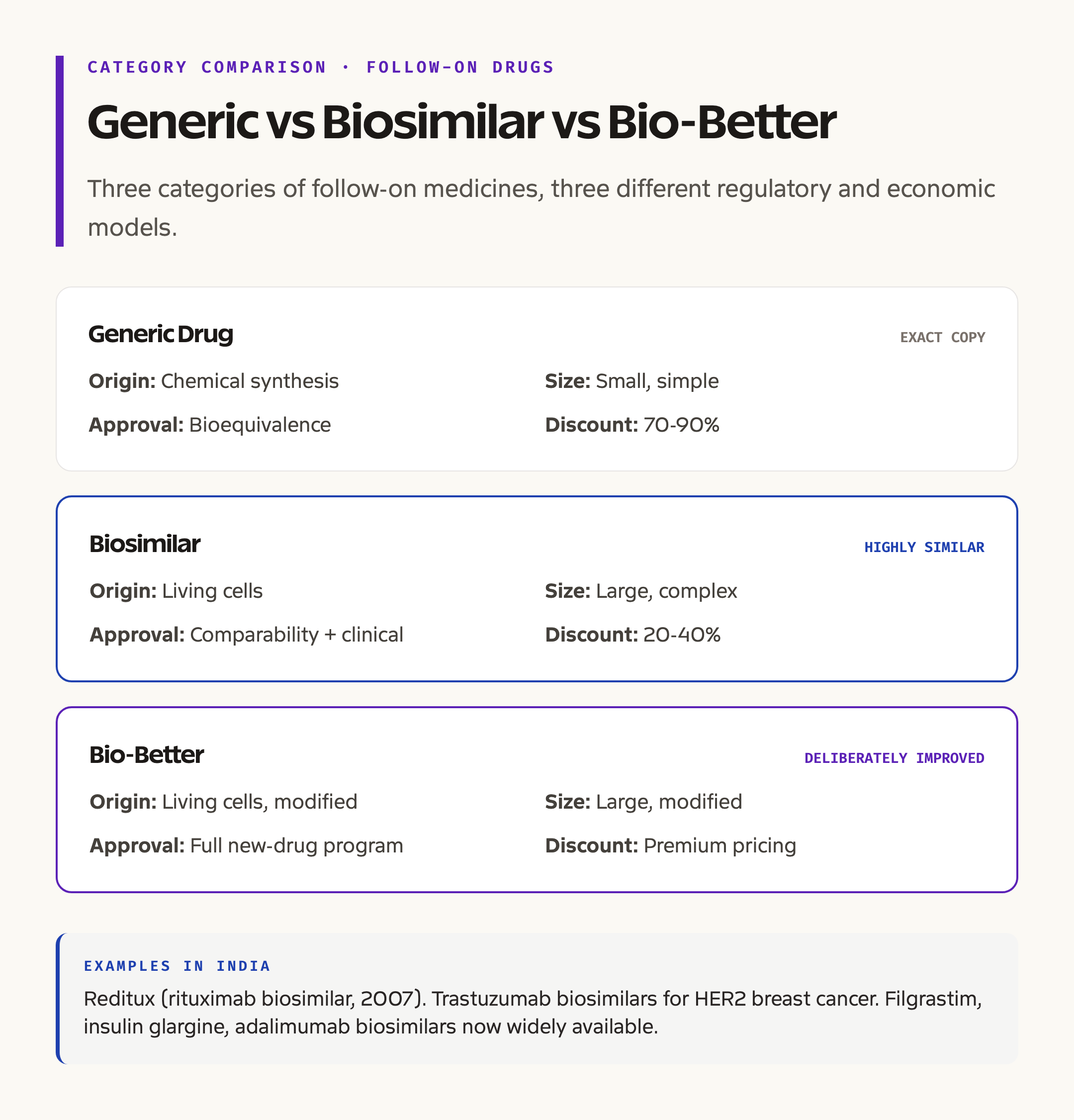
The category gets confused in casual usage. A generic is a small-molecule chemical drug that is an exact copy of the originator. A biosimilar is a large-molecule biological drug that is highly similar but not identical to the reference biologic. A bio-better, sometimes called a bio-superior, is a deliberately modified version of a reference biologic, with improved properties such as longer half-life, better tissue penetration, or different dosing. Bio-betters are treated by regulators as new drugs, not as biosimilars, because they are not designed to be similar.
| Feature | Generic Drug | Biosimilar | Bio-Better |
|---|---|---|---|
| Origin | Chemical synthesis | Living cells | Living cells, modified |
| Molecule size | Small and simple | Large and complex | Large and modified |
| Fidelity to reference | Identical | Highly similar | Deliberately different |
| Approval path | Bioequivalence study | Comparability + clinical study | Full new-drug clinical program |
| Typical price discount | 70 to 90 percent | 20 to 40 percent | Premium pricing |
The economic logic of each is different. Generics work on volume and razor-thin margins. Biosimilars require significant upfront investment, often over a hundred million dollars per molecule, and recover that through moderate price discounts at scale. Bio-betters take the original molecule as a starting point but charge a premium for added value, competing on differentiation rather than price.
Comparative Snapshot: India, EU, and US Pathways
The three major pathways converge on the principle that comparability replaces full development, but differ in detail.
The European Medicines Agency was the first to formalize biosimilar review in 2006 and operates a centralized procedure that grants a single marketing authorization valid across all EU member states. The agency has approved over a hundred biosimilars and has built the deepest body of regulatory experience in the category. The EMA also operates a framework for interchangeability, allowing pharmacy substitution under defined conditions.
The US Food and Drug Administration’s pathway, under the Biologics Price Competition and Innovation Act of 2010, distinguishes between biosimilar and interchangeable biosimilar status, with the latter requiring additional switching studies. The slower pace of approvals and the complexity of US patent litigation have meant that biosimilar uptake in the US has lagged the EU.
India’s CDSCO and DBT joint framework, articulated through the 2016 Guidelines on Similar Biologics, offers a middle position. It requires substantive clinical comparability but is less prescriptive than the EMA on interchangeability. India does not formally distinguish biosimilar from interchangeable biosimilar.
Challenges in the Biosimilar Ecosystem
The first challenge is the cost of development. Even a biosimilar costs forty to two hundred million dollars to bring to market, far more than the few million dollars typical for a chemical generic. This is a barrier for smaller Indian firms.
The second challenge is interchangeability and substitution. Pharmacists in many jurisdictions are not permitted to substitute a biosimilar for the reference product without physician approval. This slows uptake and limits the price-erosion effect that pharmacy substitution produces in the small-molecule generic market.
The third challenge is patent thicketing by originators. Reference manufacturers often surround a biologic with secondary patents on formulation, dosage form, and method of use, extending exclusivity beyond the headline patent. Indian biosimilar developers face a maze of secondary patents in export markets.
The fourth challenge is immunogenicity. Because biologics can trigger immune responses, even small differences between a biosimilar and its reference can in rare cases produce different safety profiles. Robust pharmacovigilance is therefore essential, and the data infrastructure for this in India is still maturing.
Prelims Pointers
- A biosimilar is a biological medicine that is highly similar, but not identical, to an already approved reference biologic.
- Biological drugs are made from living cells or organisms and have large, complex molecules.
- India’s Guidelines on Similar Biologics were issued in 2012 and revised in 2016.
- CDSCO and the Department of Biotechnology jointly regulate biosimilars in India.
- The Review Committee on Genetic Manipulation, under DBT, reviews cell-line and genetic-engineering aspects.
- The European Medicines Agency was the first regulator globally to formalize biosimilar review, in 2006.
- The US Food and Drug Administration’s biosimilar pathway was created by the Biologics Price Competition and Innovation Act, 2010.
- A bio-better is a deliberately improved version of a reference biologic and is treated as a new drug.
- Reditux, an Indian biosimilar of rituximab, was launched in 2007 and was among the first monoclonal antibody biosimilars globally.
- Biosimilars are typically priced twenty to forty percent below the reference biologic at launch.
Mains Practice Questions
- Explain the concept of biosimilars and distinguish them from chemical generics. Examine the regulatory framework in India and discuss its adequacy for the next decade of biologics development.
- Discuss the role of biosimilars in improving access to advanced therapies in India. Critically examine the challenges of cost, interchangeability, and post-marketing surveillance.
- Compare the biosimilar approval pathways of India, the European Union, and the United States. What lessons can India draw from each for the next revision of its Guidelines on Similar Biologics?
Way Forward
The next phase of India’s biosimilar policy needs four moves. First, a further revision of the Guidelines on Similar Biologics to harmonize more tightly with EMA standards, particularly on interchangeability and switching, would deepen export competitiveness. Second, public investment in a national biosimilar testing and characterization facility would lower entry barriers for smaller firms and reduce dependence on overseas analytical services. Third, the inclusion of biosimilars in the National List of Essential Medicines, with corresponding price-control mechanisms calibrated to preserve manufacturer incentives, would translate the affordability benefit to patients more reliably. Fourth, a coordinated push for biosimilar licensing in Africa and Southeast Asia, leveraging India’s existing pharmaceutical export footprint, would lock in the next round of market growth. The biosimilar window for the next decade of off-patent biologics is large. Capturing it requires regulatory polish, infrastructure investment, and trade diplomacy in equal measure.
Frequently Asked Questions
What is a biosimilar?
A biosimilar is a biological medicine that is highly similar to a reference biologic that has already been approved. It is not identical to the reference product but has no clinically meaningful differences in safety, purity, or potency, and is approved through a comparability-based regulatory pathway.
How is a biosimilar different from a generic drug?
A generic drug is a chemical molecule produced by synthesis and is an exact copy of the originator. A biosimilar is a large protein produced by living cells and is highly similar but not identical to the reference biologic. Biosimilars require comparability studies and clinical confirmation, while generics typically require only bioequivalence studies in healthy volunteers.
Who regulates biosimilars in India?
Biosimilars in India are regulated jointly by the Central Drugs Standard Control Organisation, which handles drug approval, and the Department of Biotechnology, which through the Review Committee on Genetic Manipulation handles the genetic engineering and cell-line aspects. The Guidelines on Similar Biologics, first issued in 2012 and revised in 2016, govern the process.
What is a reference biologic?
A reference biologic is the originator product against which a biosimilar is compared. It is a biological drug that has gone through a full clinical development program and is approved for marketing. The biosimilar manufacturer must demonstrate that its product is highly similar to the reference biologic in structure, function, and clinical effect.
What is a bio-better?
A bio-better is a biological drug that is deliberately modified to improve on a reference biologic, for example by extending its half-life, changing its dosing regimen, or improving tissue penetration. Bio-betters are treated by regulators as new drugs and are not approved through the biosimilar pathway.
How much cheaper are biosimilars than reference biologics?
Biosimilars typically launch at twenty to forty percent below the reference biologic and converge further over time as competition deepens. The discount is smaller than for chemical generics because biosimilar development costs are far higher, but the savings to public health systems are still substantial.
Why is a biosimilar not identical to its reference product?
Because biological drugs are produced by living cells, no two batches are ever perfectly identical, even from the same manufacturer. The biosimilar manufacturer uses a different cell line and process and must demonstrate that its product falls inside the acceptable range of variation that the reference product itself shows. The standard is similarity, not sameness.
Are biosimilars safe?
Yes. Approved biosimilars meet the same safety standards as the reference biologic, demonstrated through comparability studies and confirmatory clinical trials. Like all biologics, they are subject to ongoing pharmacovigilance, including immunogenicity monitoring and periodic safety reporting.
What is interchangeability?
Interchangeability is the regulatory status that permits pharmacy-level substitution of a biosimilar for its reference product without physician approval. The European Medicines Agency operates such a framework. The US FDA recognizes a separate interchangeable biosimilar designation that requires additional switching studies. India does not formally distinguish biosimilar from interchangeable biosimilar.
What was Reditux?
Reditux was a biosimilar of rituximab, a monoclonal antibody used in the treatment of non-Hodgkin lymphoma and certain autoimmune conditions. It was launched in India in 2007 and was among the earliest monoclonal antibody biosimilars approved anywhere in the world. Its launch is widely regarded as a milestone in the global biosimilar story.
Tell Google you want more of this.
Add Anantam IAS as a preferred sourceOne tap, and this site shows up more often in your own Top Stories, AI Overviews and AI Mode. Remove it any time.