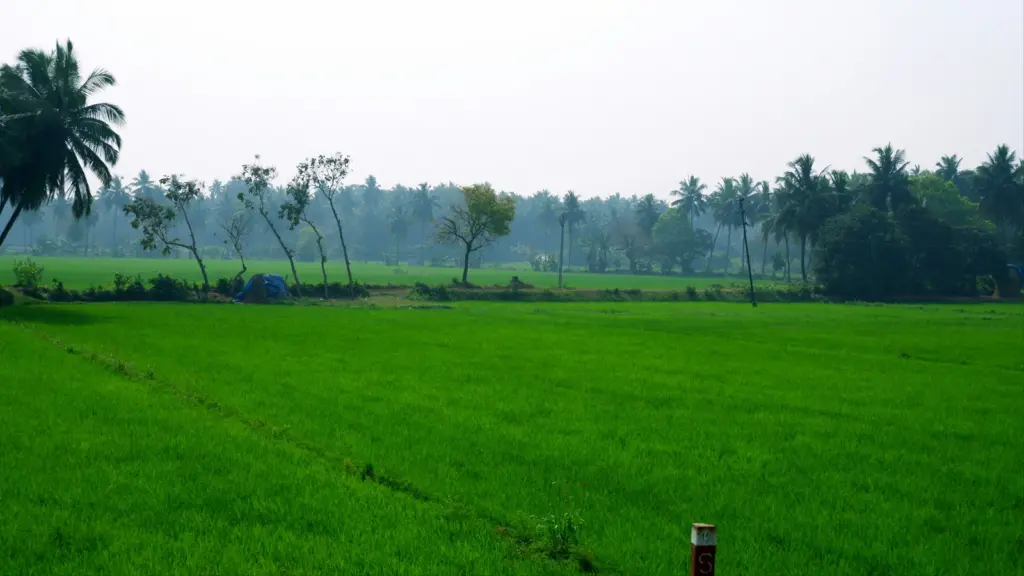
Ask why Punjab grows paddy in a region with modest rainfall and the honest answer is not about soil. It is about who guarantees the purchase. Cropping pattern is the spatial and temporal arrangement of crops on a given area of land over a specific period, and in India it is shaped far more by prices, procurement and subsidies than by agronomic fit.
That is the analytical move worth carrying into any answer on this topic. Physical geography sets the outer boundary of what can be grown. Policy decides what actually is.
The Two Aspects
- Temporal aspect: crops grown on the same land across different seasons, for example rice in kharif followed by wheat in rabi
- Spatial arrangement: a mix of crops grown simultaneously in the same area, for example cotton with pigeon pea in Maharashtra
- Monocropping: growing only one type of crop on a given piece of land in a given season
What Determines the Pattern
Physical determinants set the limits: rainfall, temperature, soil type, terrain and length of growing season. Within those limits, economic and policy variables decide the outcome.
Relative prices and export demand. High international demand and better realisation for basmati rice have pushed farmers in Haryana and Punjab towards it, often replacing other cereals. Price signals from export markets move area allocation quickly.
Assured procurement. Government support to sugar mills for procuring cane at the Fair and Remunerative Price effectively guaranteed offtake for sugarcane. Area under cultivation and production of sugarcane in India nearly doubled between 1990-91 and 2020-21.
Fuel policy. Rising ethanol blending demand has added a second market on top of sugar, further reinforcing sugarcane.
Marketing arrangements. Contract farming between corporates or traders and farmers has introduced new crops in several regions by supplying an assured buyer and technical support. Chicory in Punjab, gherkins in Andhra Pradesh and potato in Gujarat are the standard examples.
Input subsidies. Subsidised power for groundwater pumping and cheap nitrogen change the relative cost of water-intensive and nutrient-intensive crops, and therefore the pattern.
Why the Rice-Wheat Rotation Persists Where It Should Not
The north-western rice-wheat system is the clearest case of policy overriding geography. It persists because three guarantees stack.
- Assured procurement at Minimum Support Price removes price risk
- Subsidised power removes much of the cost of pumping groundwater
- Established procurement infrastructure removes marketing risk
Any alternative crop asks the farmer to give up all three at once. Framed that way, the persistence of paddy in Punjab stops looking irrational and starts looking inevitable.
The Ecological Bill
- Groundwater depletion where water-intensive crops sit in low-rainfall regions
- Pest pressure and chemical dependence built up by continuous monoculture
- Residue burning driven by the short turnaround between paddy harvest and wheat sowing
- Soil depletion of organic carbon and micronutrients under uninterrupted cereal cultivation
None of these is caused by the crop itself. Each is caused by growing that crop in that place, at that intensity, for that long.
Emerging Shifts
The pattern is not static. Three shifts are visible.
- Towards high-value horticulture where cold chains and urban demand exist, particularly around metropolitan catchments
- Towards millets and pulses where climate volatility has made water-intensive cereals riskier and policy attention has increased
- Towards contract-linked speciality crops in pockets where a private buyer supplies both the market and the technical package
Each of these shifts is driven by the arrival of certainty from a new source. That is the consistent lesson.
The Way Forward
- Broaden assured procurement beyond paddy and wheat, so that changing crops does not mean losing the guarantee.
- Reprice groundwater through metered or direct-benefit power, so that the water cost of a crop reaches the person choosing it.
- Make contracts enforceable, since private assurance can substitute for public assurance only if it is reliable.
- Align crop planning with agro-climatic zones, using zone-level water budgets rather than state-level targets.
- Support residue management so that a tight rotation does not require burning.
Cropping pattern is a mirror. It reflects, with unusual accuracy, what the state has chosen to guarantee.
Frequently Asked Questions
What is cropping pattern?
Cropping pattern is the spatial and temporal arrangement of crops on a given area of land over a specific period. The temporal aspect covers crops grown on the same land across different seasons, such as rice in kharif followed by wheat in rabi. The spatial aspect covers crops grown simultaneously in the same area, such as cotton with pigeon pea in Maharashtra.
What is monocropping?
Monocropping is growing only one type of crop on a particular piece of land in a given season. It simplifies operations and mechanisation but concentrates pest, price and climate risk, and depletes specific soil nutrients over successive cycles.
What determines the cropping pattern in a region?
Physical factors such as rainfall, temperature, soil type and terrain set the outer limits. Within those limits, the decisive determinants are economic and policy variables: relative prices, assured procurement, input subsidies, irrigation availability, credit, market access and contractual arrangements with buyers.
How has export demand changed cropping patterns?
High international demand and better realisation for basmati rice have pushed farmers in Punjab and Haryana to allocate more land to it, often displacing other cereals. Export price signals can move area allocation faster than extension advice does.
How did sugar policy affect area under sugarcane?
Government support to sugar mills for procuring cane at the Fair and Remunerative Price gave sugarcane assured offtake, and area and production of sugarcane in India nearly doubled between 1990-91 and 2020-21. Rising ethanol demand has reinforced this, adding a fuel market on top of the sugar market.
What role does contract farming play?
New marketing arrangements between corporates or traders and farmers have introduced new crops in several regions by supplying assured buyers, inputs and technical support. Chicory in Punjab, gherkins in Andhra Pradesh and potato in Gujarat are standard examples of contract-led introduction.
Why is the rice-wheat system so entrenched in the north-west?
Because assured procurement at Minimum Support Price, subsidised power for groundwater pumping and a developed procurement infrastructure together make it the lowest-risk option. The soil and climate would support alternatives; the incentive structure does not.
What are the ecological consequences of a distorted cropping pattern?
Water-intensive crops in low-rainfall regions deplete groundwater, monoculture builds pest pressure and requires more chemical input, residue burning from a tight rice-wheat rotation degrades air quality, and continuous cereal cultivation depletes soil organic carbon and micronutrients.
Practice Questions
Prelims MCQs
- Growing rice in kharif followed by wheat in rabi on the same land is an example of
(a) Spatial arrangement
(b) Temporal aspect of cropping pattern
(c) Monocropping
(d) Mixed cropping
Answer: (b) Sequencing crops across seasons on the same land is the temporal aspect of cropping pattern. - The Fair and Remunerative Price is associated with which crop?
(a) Wheat
(b) Paddy
(c) Sugarcane
(d) Cotton
Answer: (c) FRP is the statutory minimum price at which sugar mills procure sugarcane from farmers. - Area under sugarcane in India nearly doubled between 1990-91 and 2020-21 chiefly because of
(a) Decline in wheat prices
(b) Assured procurement by mills at FRP and later ethanol demand
(c) A ban on cotton cultivation
(d) Reduced irrigation availability
Answer: (b) Assured offtake at FRP, reinforced by ethanol blending demand, made sugarcane a low-risk high-return choice. - Chicory in Punjab and gherkins in Andhra Pradesh are cited as examples of
(a) Traditional cropping systems
(b) Contract farming introducing new crops
(c) Crops procured under MSP
(d) Crops grown only under organic certification
Answer: (b) These crops entered new regions through contract arrangements with corporates and traders that supplied assured markets. - Which of the following is the most important economic determinant of cropping pattern in Punjab and Haryana?
(a) Soil texture
(b) Assured procurement and subsidised power for irrigation
(c) Distance from the coast
(d) Average holding size
Answer: (b) Guaranteed purchase at MSP combined with cheap groundwater pumping makes the rice-wheat rotation the rational low-risk choice.
Mains Questions
- Cropping pattern in India is determined more by policy signals than by agro-climatic suitability. Critically examine. (250 words)
- Discuss how export demand and ethanol policy have reshaped the area allocation of specific crops in India. (250 words)
- Evaluate contract farming as an instrument for changing cropping patterns, and identify the conditions for its success. (150 words)
- Examine the ecological consequences of the rice-wheat cropping system in north-western India. (150 words)
- Suggest a policy package to align cropping patterns with agro-climatic suitability without reducing farmer incomes. (250 words)
Tell Google you want more of this.
Add Anantam IAS as a preferred sourceOne tap, and this site shows up more often in your own Top Stories, AI Overviews and AI Mode. Remove it any time.