The WTO Agreement on Agriculture is the multilateral rulebook that limits how much a country may subsidise its farmers, and it is the reason India’s minimum support price programme is contested internationally. It came into force on 1 January 1995 as an outcome of the Uruguay Round, and it was the first time agriculture, long treated as a domestic matter, was brought under binding trade discipline.
The Three Pillars
- Market access. Converting non-tariff barriers such as quotas into tariffs (tariffication), binding those tariffs, and reducing them over time. Special safeguard provisions apply to some products.
- Domestic support. Disciplining subsidies paid to producers within the country, classified by how trade-distorting they are. This is the pillar India fights on.
- Export competition. Reducing and, after the Nairobi Ministerial of 2015, eliminating export subsidies for agricultural products, with longer timelines for developing countries.
The Box Classification
| Box | Meaning | Discipline |
|---|---|---|
| Amber Box | Support that directly distorts production and trade — price support such as MSP, and input subsidies on fertiliser, power, irrigation, seeds and credit. | Capped. Measured as Aggregate Measurement of Support (AMS). |
| Blue Box | Direct payments under production-limiting programmes, where support is tied to a fixed area, yield or head of livestock. | Exempt from reduction, subject to conditions. |
| Green Box | Support with no or minimal trade-distorting effect — research, extension, pest control, infrastructure, public stockholding for food security purposes, domestic food aid, decoupled income support, environmental and regional assistance. | Unlimited, subject to criteria. |
| Special and Differential (S&DT) Box | Investment and input subsidies generally available to low-income or resource-poor producers in developing countries, under Article 6.2. | Exempt for developing countries. |
- De minimis limits allow amber box support up to a threshold of the value of production: 5 per cent for developed countries and 10 per cent for developing countries, calculated both product-specific and non-product-specific.
- India has no reduction commitment on AMS beyond the de minimis threshold, because its base-period support was low.
Why India and the Agreement Collide
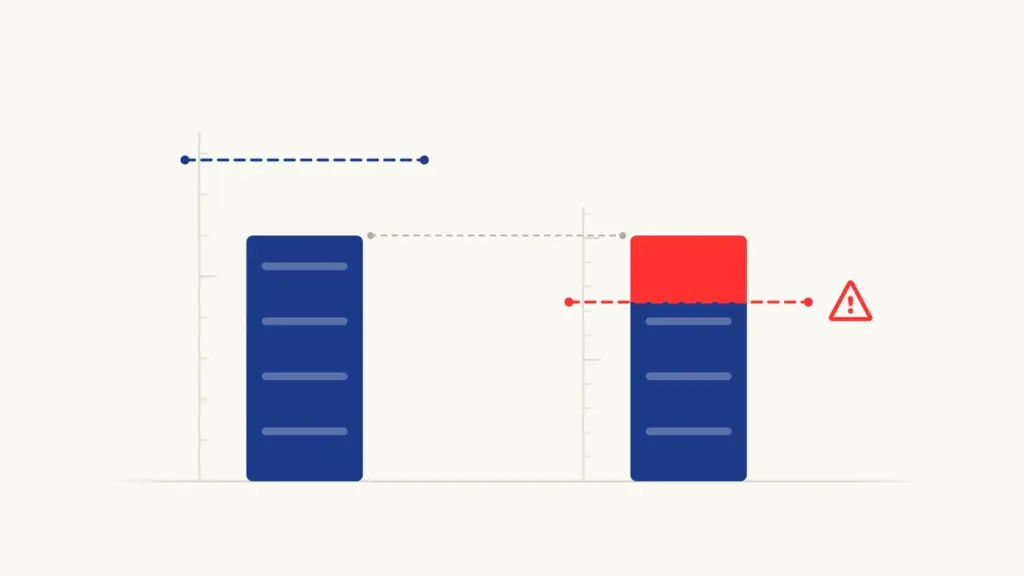
- The 1986-88 external reference price. AMS is calculated as the gap between the administered price and a fixed external reference price from 1986-88, unadjusted for inflation. Four decades of price change are simply not counted, so a support level that is modest in real terms breaches the limit arithmetically.
- Currency of calculation. Support is calculated in the currency of the original schedule, which magnifies the measured breach for countries whose currency has depreciated.
- Public stockholding. India procures at MSP and stocks for the public distribution system. Because procurement uses an administered price, it is counted as amber box support rather than as a green box food-security operation.
- Eligible production. Whether AMS is calculated on procured quantity or total production materially changes the number, and this remains disputed.
- Asymmetry. Developed countries shifted support into the green box through decoupled direct payments, which remain unlimited. Developing countries with price-support systems cannot make the same shift without dismantling procurement.
The Peace Clause and the Permanent Solution
- At the Bali Ministerial (2013), members agreed an interim peace clause: developing countries would not be legally challenged for breaching de minimis limits on public stockholding for food security, subject to transparency and anti-circumvention conditions.
- The 2014 General Council decision extended the peace clause indefinitely until a permanent solution is agreed.
- A permanent solution — chiefly, updating the 1986-88 reference price or moving public stockholding into the green box — has been under negotiation since, and successive ministerial conferences have not delivered it.
- India leads the G-33 coalition of developing countries on this issue, and has consistently linked progress on other negotiating areas to it.
The peace clause protects India legally but not commercially, since it does not stop the transparency obligations or the political pressure, and it is conditional in ways that a permanent green box classification would not be.
Other Live Issues
- Special Safeguard Mechanism. Developing countries want a right to raise tariffs temporarily against import surges or price falls. Developed exporters resist it.
- Cotton subsidies in developed countries and their effect on West African producers, an issue India supports.
- Fisheries subsidies, negotiated separately, where India has defended the subsistence fishing exemption.
- Export restrictions. India has used export bans on rice, wheat and sugar for domestic price stability, which other members contest as a distortion in the opposite direction.
- Fertiliser and power subsidies counted as non-product-specific amber box support, which brings India’s fertiliser subsidy regime into the WTO conversation.
The structural point is that the agreement froze a snapshot of 1986-88 support patterns and disciplined everyone against it. Countries that were subsidising heavily then retained headroom; countries that were not, did not.
Frequently Asked Questions
What is the WTO Agreement on Agriculture?
A multilateral agreement that came into force on 1 January 1995 as an outcome of the Uruguay Round, bringing agriculture under binding trade discipline for the first time. It rests on three pillars: market access, domestic support and export competition.
What are the amber, blue and green boxes?
The amber box covers trade-distorting support such as price support and input subsidies, and is capped. The blue box covers direct payments under production-limiting programmes and is exempt subject to conditions. The green box covers support with minimal trade-distorting effect, such as research, infrastructure and decoupled income support, and is unlimited.
What is the de minimis limit?
The threshold below which amber box support need not be counted towards reduction commitments: 5 per cent of the value of production for developed countries and 10 per cent for developing countries, calculated both product-specific and non-product-specific.
Why is India’s MSP programme disputed at the WTO?
Because Aggregate Measurement of Support is calculated against a fixed external reference price from 1986-88 that is not adjusted for inflation. Four decades of price change are not counted, so procurement at administered prices breaches the de minimis limit arithmetically even when real support is modest.
What is the peace clause?
An interim arrangement agreed at the Bali Ministerial in 2013 and extended indefinitely in 2014, under which developing countries cannot be legally challenged for breaching de minimis limits on public stockholding for food security, subject to transparency and anti-circumvention conditions.
What is India’s demand for a permanent solution?
Chiefly that the 1986-88 external reference price be updated for inflation, or that public stockholding for food security purposes be moved into the green box so that it is not counted as trade-distorting support. India leads the G-33 coalition on this.
Practice Questions
Prelims MCQs
1. The WTO Agreement on Agriculture came into force in:
- (a) 1986
- (b) 1994
- (c) 1995
- (d) 2001
Answer: (c) 1995
2. Under the Agreement on Agriculture, subsidies with minimal trade-distorting effect are classified under the:
- (a) Amber box
- (b) Blue box
- (c) Green box
- (d) Red box
Answer: (c) Green box
3. The de minimis limit for domestic support in developing countries is:
- (a) 5 per cent of the value of production
- (b) 8 per cent of the value of production
- (c) 10 per cent of the value of production
- (d) 15 per cent of the value of production
Answer: (c) 10 per cent of the value of production
4. Aggregate Measurement of Support is calculated against an external reference price of the period:
- (a) 1980-82
- (b) 1986-88
- (c) 1994-96
- (d) 2001-03
Answer: (b) 1986-88
5. The peace clause on public stockholding was agreed at the Ministerial Conference held at:
- (a) Doha
- (b) Cancun
- (c) Bali
- (d) Nairobi
Answer: (c) Bali
Mains Questions
- Discuss the different types of subsidies provided to Indian agriculture and examine the issues arising under the WTO Agreement on Agriculture. (15 marks, 250 words)
- “The Agreement on Agriculture froze a snapshot of 1986-88 and disciplined everyone against it.” Critically examine this assessment. (15 marks, 250 words)
- Explain the box classification of agricultural subsidies under the WTO and India’s position within it. (10 marks, 150 words)
- Discuss the peace clause on public stockholding and why a permanent solution has remained elusive. (10 marks, 150 words)
- Examine the argument that developed countries shifted support into the green box while developing countries could not, and its implications for India. (15 marks, 250 words)
Tell Google you want more of this.
Add Anantam IAS as a preferred sourceOne tap, and this site shows up more often in your own Top Stories, AI Overviews and AI Mode. Remove it any time.