3 current affairs published on Tuesday, 2 December 2025
2 December 2025 Current Affairs for UPSC — every
Why-in-News article AnantamIAS published on Tuesday, 2 December 2025, broken down with
Why in News?, the exact GS paper it feeds, sub-topic mapping, MCQ-ready facts and a
UPSC-style practice question. 3 articles in total, covering Polity, Economy, Environment, S&T, IR, Geography, History, Society and Internal
Security — the same Why-in-News + GS-paper-mapping + practice-question format the Compass uses across
every daily digest on the site.
Daily current affairs for UPSC is where new material enters your prep stream. Read this
2 December 2025 digest end-to-end in 25–35 minutes, attempt the practice question
at the foot of each article (it's MCQ for some, 10/15-marker for others), then bookmark the entries
that fall inside your active revision window. Everything stays cross-linked: tap any subject pill to jump
to that subject's hub, or use the table of contents above to skip straight to a specific story.
Why we publish daily current affairs separately from the monthly compilation: daily is learning,
monthly is revision. Use the daily page to add fresh material to your notes the day it breaks;
come back to the December 2025 compilation 60 days before Prelims when the
noise has settled and only the lasting takeaway is worth re-reading.
2024 – What is disaster resilience? How is it determined? Describe various elements of a resilience framework. Also mention the global targets of Sendai Framework for Disaster Risk Reduction (2015-2030). (15 M)
2017 – ‘Climate Change’ is a global problem. How will India be affected by climate change? How will Himalayan and coastal states of India be affected by climate change? (15 M)
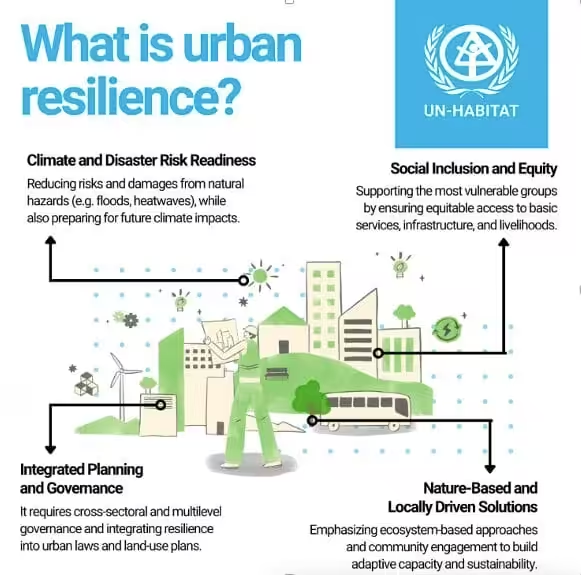
What is urban resilience?
Urban resilience is the capacity of a city to:
Anticipate potential risks
Absorb shocks
Adapt systems
Recover quickly
Urban resilience is a holistic concept which includes, resilience to climate change, inequality, health and mismanagement. City functions (water, health, transport, housing) are interlinked; failure in one leads to the cascading impacts. Cities must be prepared for heatwaves, floods, cyclones, drought, air pollution giving more focus on urban poor, elderly, women and migrants. It requires good governance initiatives, coordination across departments + data-driven decisions.
Why is urban resilience needed?
Urban resilience is needed because cities are becoming the epicentres of climate vulnerability, population growth, and socio-economic stress.
Firstly, climate change is dramatically increasing the frequency and intensity of extreme events. Cities now face 3–10 times higher exposure to heatwaves, cloudbursts, and flooding, as documented by IPCC assessments.
Secondly, climate-related risks have become a public health emergency. Rising temperatures have led to a surge in heatstroke cases, while waterlogging and flooding have triggered outbreaks of dengue, chikungunya, leptospirosis, and cholera. WHO estimates that air pollution alone causes around 1.2 million premature deaths in India every year, most of which occur in urban areas.
Thirdly, cities are crucial for economic activity; therefore, climate disruptions inflict severe economic losses. The 2015 Chennai floods resulted in nearly $2 billion in damages, while continuous flooding in Mumbai leads to annual economic shocks affecting businesses, transport networks, and daily wage workers.
Fourthly, rapid and often unplanned urbanisation is intensifying vulnerability. By 2050, India is expected to add 416 million new urban residents, which will strain housing, water supply, transport, and health services. Without resilience planning, cities may face continuous cycles of disaster and recovery.
Finally, the impacts of climate change are unevenly distributed, with informal settlements experiencing greater exposure to heat, flooding, and disease. Urban resilience is essential to protect these groups and reduce widening inequalities.
What steps should be taken to promote urban resilience?
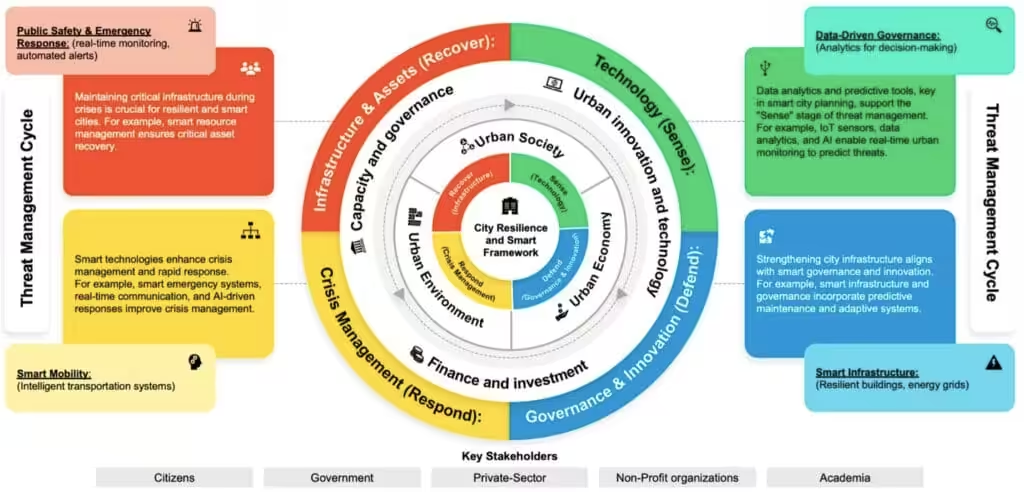
Promoting urban resilience requires systematic, multi-sectoral interventions across planning, environment, technology, and governance.
Cities must invest in data-driven climate governance. This includes setting up Urban Data Observatories and integrated climate–health dashboards that merge meteorological, health, water, mobility, and demographic data. Such platforms enable early warning systems for heatwaves, flooding, and disease outbreaks.
Semarang, Indonesia, uses an integrated climate-and-health data model that links local hospitals with meteorological forecasts to predict dengue outbreaks. Its community-centred micro-resilience planning is considered a pioneering effort among rapidly growing coastal cities.
Integrating Nature-Based Solutions (NbS) into urban design is another crucial requirement. Restoring wetlands, protecting mangroves, expanding urban forests, improving lake systems, and promoting green roofs help absorb excess rainwater, reduce heat, and improve biodiversity.
Singapore – “City in a Garden” Model – Singapore integrates parks, green roofs, vertical gardens, and permeable landscapes into its urban plan, cooling the city while increasing stormwater absorption and biodiversity. Rotterdam, Netherlands – ‘Water Squares’; Rotterdam has created “water plazas” that act as public spaces during normal weather and transform into temporary water storage basins during heavy rain, significantly reducing urban flooding.
Strengthening the urban health system is essential. Cities should adopt climate-proof infrastructure for hospitals and primary health centres by ensuring uninterrupted power, resilient water supply, and emergency preparedness for heat and vector-borne disease outbreaks. Establishing heat clinics and cooling centres can significantly reduce mortality during extreme heat periods.
Resilient infrastructure planning must be prioritised. This includes upgrading stormwater drains, promoting permeable pavements, rehabilitating old water pipelines, and creating sponge-city components like water retention basins and infiltration zones.
Community participation is another core pillar. Cities should develop ward-level climate action plans, train citizens in emergency response, and involve resident welfare groups, SHGs, and youth clubs in resilience-building.
Finally, resilience must be embedded in municipal governance and finance. Climate budgeting, long-term investment plans, urban green bonds, and Resilience Cells within ULBs are essential instruments. These ensure that resilience is not an ad-hoc activity but a structurally integrated function of urban governance.
Surat Urban Resilience Model: Following the 1994 plague outbreak and recurring floods, Surat invested heavily in disease surveillance, drainage upgrades, and flood early warning systems. It later became one of the first Indian cities to join the 100 Resilient Cities network. Surat’s integrated approach has transformed it into a global model for resilience planning.
What steps are taken in this regard?
At international level:
Sendai Framework for Disaster Risk Reduction (2015–2030) emphasises preparedness, risk mitigation, and resilient infrastructure.
The Paris Agreement urges countries to pursue climate-resilient development pathways.
Organisations like the Resilient Cities Network and the former “100 Resilient Cities” initiative have supported cities worldwide—including Chennai, Surat, and Pune—in developing comprehensive resilience strategies.
The WHO Urban Health Initiative focuses on linking climate policies with health outcomes, especially in densely populated cities.
The UN-Habitat New Urban Agenda stresses sustainable and resilient urbanisation.
At the national level:
The National Mission on Sustainable Habitat promotes climate-sensitive mobility, building codes, and waste management practices.
The Smart Cities Mission has established Integrated Command and Control Centres across 100 cities, enabling real-time monitoring during floods, heatwaves, and health emergencies.
The AMRUT 2.0 programme promotes green spaces and water resilience through rejuvenation of water bodies.
The NIUA Urban Resilience Unit has been instrumental in capacity building, resilience assessments, and promoting Urban Data Observatories.
India’s Heat Action Plans, now operational in over 130 cities and 23 states, are considered global best practices for reducing heat mortality.
Additionally, India leads the Coalition for Disaster Resilient Infrastructure (CDRI), a global initiative focused on climate-proofing critical infrastructure.
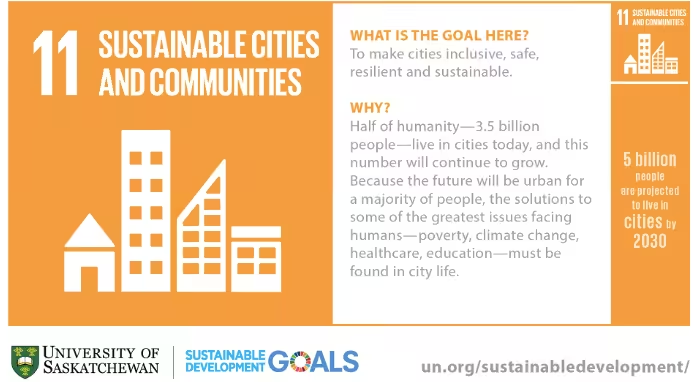
There needs to be a future in which cities provide opportunities for all, with access to basic services, energy, housing, transportation and more.
Practice question:
Urban resilience is no longer about managing disasters—it is about ensuring the long-term sustainability and livability of Indian cities. Do you agree? (15 marks, 250 words)