UPSC PYQ (2015)
Mumbai, Delhi and Kolkata are the three Megacities of the country but the air pollution is a much more serious problem in Delhi as compared to the other two. Why is this so?
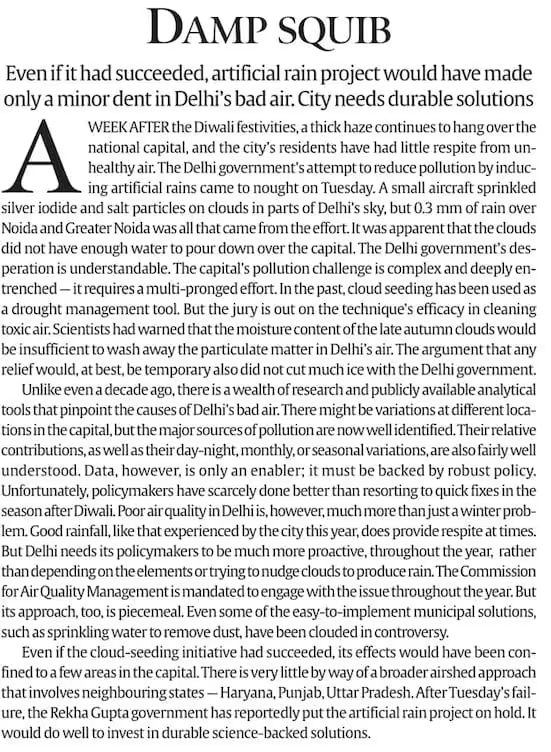
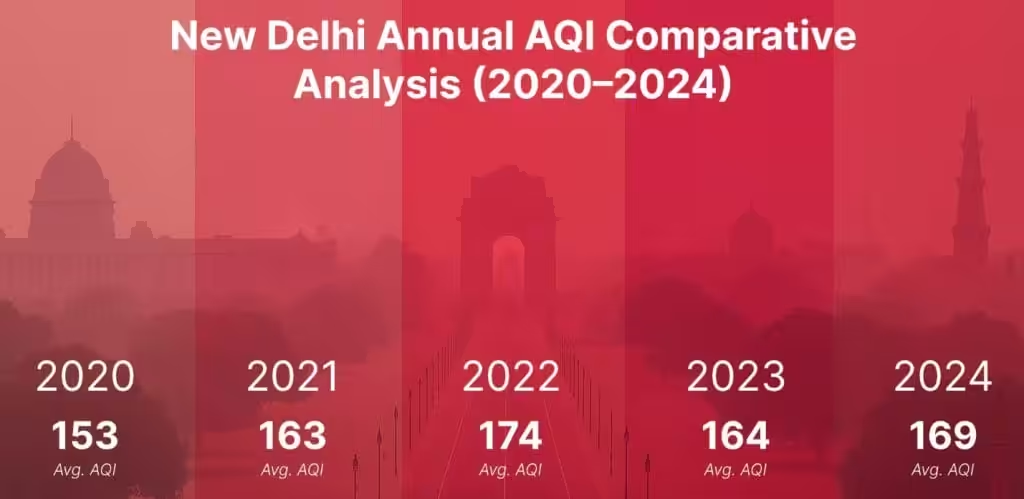
Why Delhi experiences higher Air pollution especially in winters?
Delhi or for that matter entire North India, experiencing higher Air Pollution during winters is due to mix of Natural as well as Anthropogenic factors.
Natural Factors:
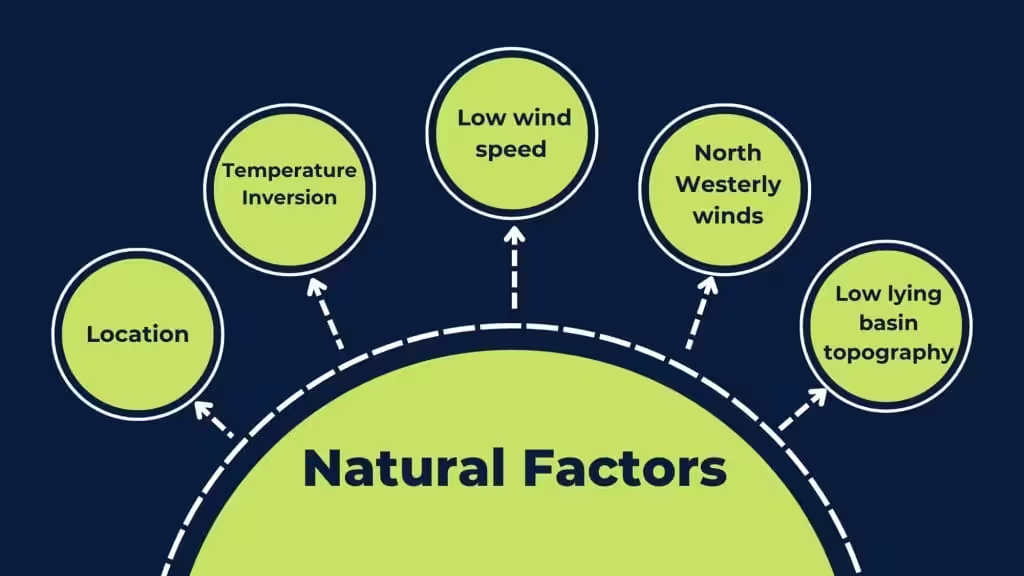
- Location of Delhi: Delhi is located far from the maritime influence of the Indian Ocean and therefore Delhi experiences dry weather especially in winters.
- Temperature Inversion: CPCB Annual air quality report 2022 mentions that in winter, cool air near the surface gets trapped under warmer air, stopping vertical mixing. The mixing height falls from ~1,500 m (summer) to under 300 m (winter), trapping pollutants near the ground.
- Low wind speed & calm conditions: Winds weaken to below 5 km/hr in winter, causing air stagnation therefore pollutants from local and nearby regions remain suspended for longer periods.
- North Westerly winds: The region experiences North Westerly winds from Central Asian region during winter which carry the dust particles along with it.
- Low lying basin topography: IITM published a report in 2021 detailing the outcomes of basin topography of of Delhi. According to that report, Delhi lies in a bowl-shaped basin bounded by the Himalayas and the Aravallis. This natural topography restricts horizontal air movement, allowing pollutants to accumulate.
- Lack of rainfall & foggy conditions: Winter is dry; no rain means no natural “washout” of pollutants. Dense fog combines with pollutants forming smog, further reducing visibility.
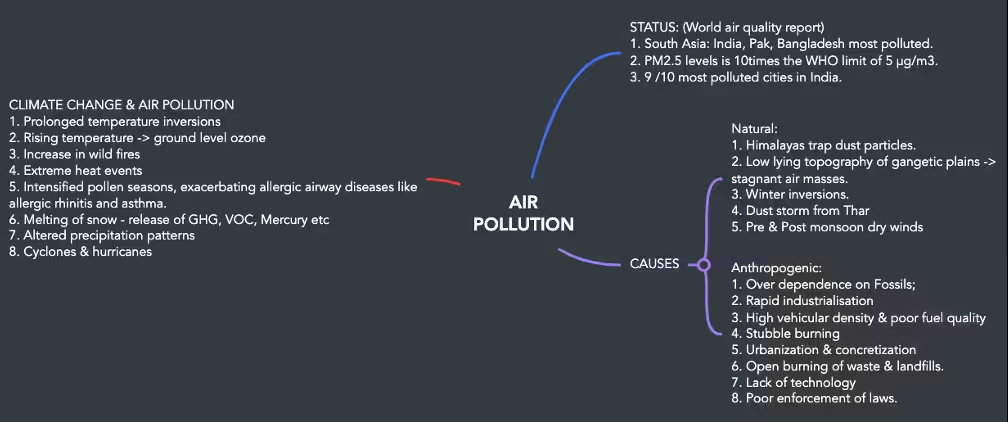
Anthropogenic Factors:
- Stubble burning in Punjab & Haryana: According to SAFAR, Ministry of Earth Sciences 2023, stubble burning contributes 25–40% of Delhi’s PM₂.₅ concentration during peak burning season.
- Vehicular emissions (CPCB & TERI, 2022): Diesel and idling emissions are major culprits, especially during cold, dense air conditions contributing ~40% of PM₂.₅ load.
- Biomass & waste burning (CSE, 2021): Centre for Science and Environment, 2021 said that open burning of household waste and biomass for heating increases in winter nights adding 7–9% of total PM₂.₅ levels.
- Industrial emissions & construction Dust: Thermal power plants, brick kilns, and dust from construction sites also contribute large PM loads.
- Governance gaps & reactive policy: NITI Aayog Air Quality Report said that current measures like GRAP and odd-even schemes are short-term and reactive. Crop diversification, clean transport, and regional coordination remain under-implemented.
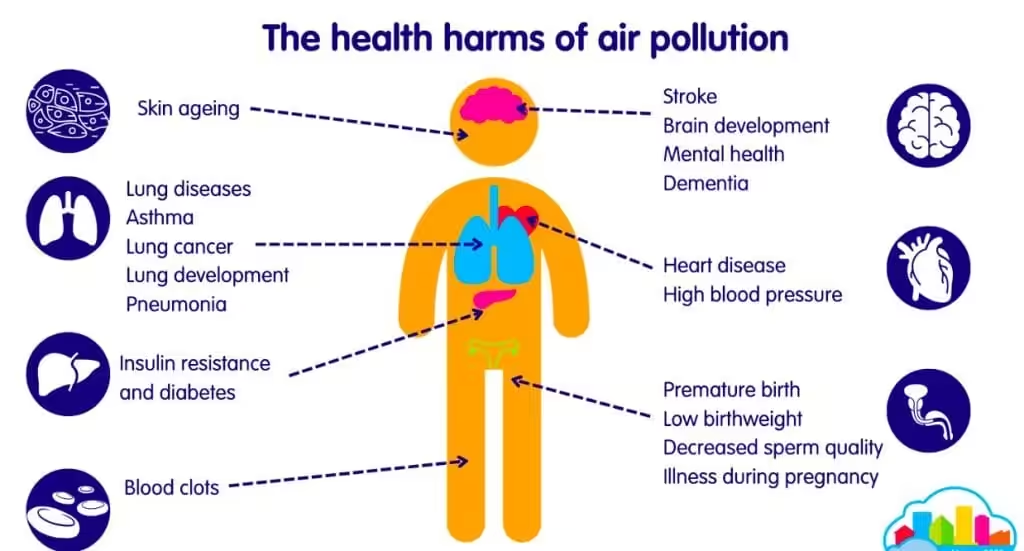
What are the health impacts of Air pollution?
Indian initiatives to tackle air pollution (including 2024–25 updates)
| Initiative | Year / Launch | Target / Scope | Key Features & Status |
| National Ambient Air Quality Standards (NAAQS) | 2009 | Set permissible limits for pollutants (PM₂.₅, PM₁₀, SO₂, NO₂ etc.) | Provides benchmark regulatory standards used in monitoring and enforcement. |
| National Air Quality Index (NAQI) | 2015 | Real‑time air quality grading across cities | Enables public awareness and timely data dissemination. |
| Graded Response Action Plan (GRAP) – Delhi‑NCR | 2017 | Trigger actions at different AQI levels | Allows short‑term crisis measures like construction bans, traffic curbs in Delhi‑NCR. |
| National Clean Air Programme (NCAP) | 2019 | Reduce PM levels 20‑30% by 2024 (now 40% by 2026) | Implemented in 131 cities; ₹13,000 cr released; 97 cities improved air quality (2024). |
| BS‑VI Emission Standards | 2020 | Leap in fuel/vehicle emission norms | Major reduction of vehicular NOx and PM emissions. |
| Crop Residue & Waste Burning Management | 2021–Ongoing | Curb stubble & open waste burning | Promotes in‑situ management and bans open burning; targets major anthropogenic sources. |
| NCAP 130 City‑Specific Plans | 2025 | City‑specific clean air plans for 130+ cities | Targets dust, transport, construction; enhanced monitoring and fund release. |
| Fund Utilisation Review & Accountability | 2025 | Improve implementation of NCAP funds | Focus on utilisation (e.g., Delhi ~32.65%); directive to states for better execution. |
| Life Expectancy Gain Study | 2025 | Assess health gains from NCAP | 40% PM reduction could extend life expectancy by ~2 years in 130 cities. |
Practice Question:
Delhi’s air pollution is not just a local governance issue but a regional atmospheric phenomenon.” Discuss. (10 Marks, 150 words)
Tell Google you want more of this.
Add Anantam IAS as a preferred sourceOne tap, and this site shows up more often in your own Top Stories, AI Overviews and AI Mode. Remove it any time.