Why in news:
World Rhino Day is celebrated on September 22 every year! This special day provides the opportunity for cause-related organizations, NGOs, zoos, and members of the public to celebrate rhinos in their own unique ways.
UPSC Relevance:
UPSC CSE in prelims examination has focused on Species in news. Every year UPSC had asked at least one question related to species. A case in point is a following PYQ.
UPSC PYQ:
Q. Vultures which used to be very common in Indian countryside some years ago are rarely seen nowadays. This is attributed to (2012)
(a) the destruction of their nesting sites by new invasive species
(b) a drug used by cattle owners for treating their diseased cattle
(c) scarcity of food available to them
(d) a widespread, persistent and fatal disease among them.
About Rhinos:
- The Indian rhino is the largest of the three Asian species and shares its single horn characteristic with the Javan rhino. The Sumatran rhino, in contrast, has two horns, a trait linking Asian and African rhinos.
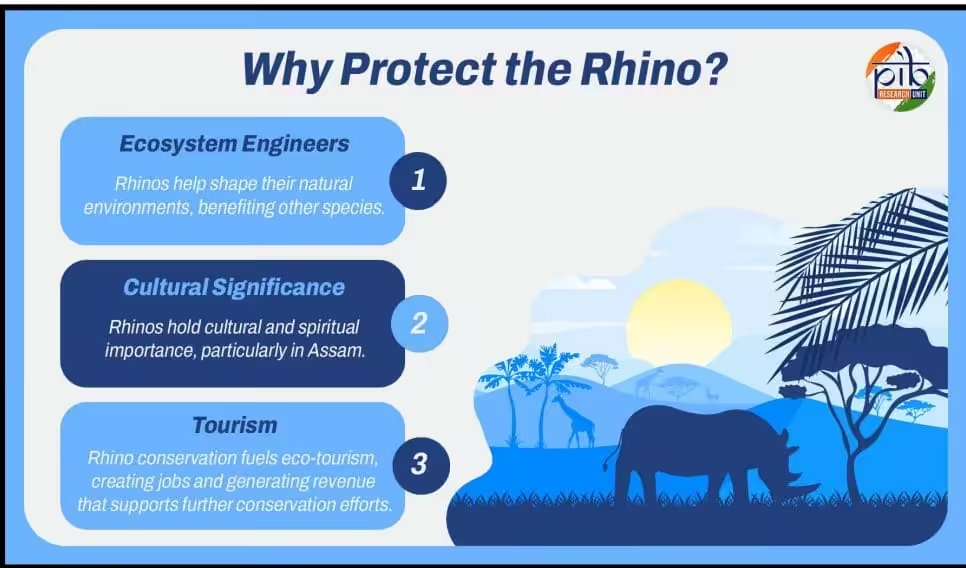
- Rhino Ecology: Rhinos play a crucial role in maintaining ecosystems. As mega-herbivores, they shape grasslands by grazing, creating open spaces that benefit other wildlife. Their wallowing behavior also creates waterholes, supporting various species.
- Biology: Indian rhinos are known for their single horn and thick, armor-like skin. Adults can weigh up to 2,800 kg and live for 45-50 years, feeding primarily on grass, leaves, fruits, and aquatic plants.
- Habitat: Rhinos thrive in floodplain grasslands, swamps, and riverine forests, particularly in the Terai region of India and Nepal.
- Distribution: Indian rhinos are primarily found in protected areas in Assam, West Bengal, Uttar Pradesh, and Nepal.
Rhino Species:
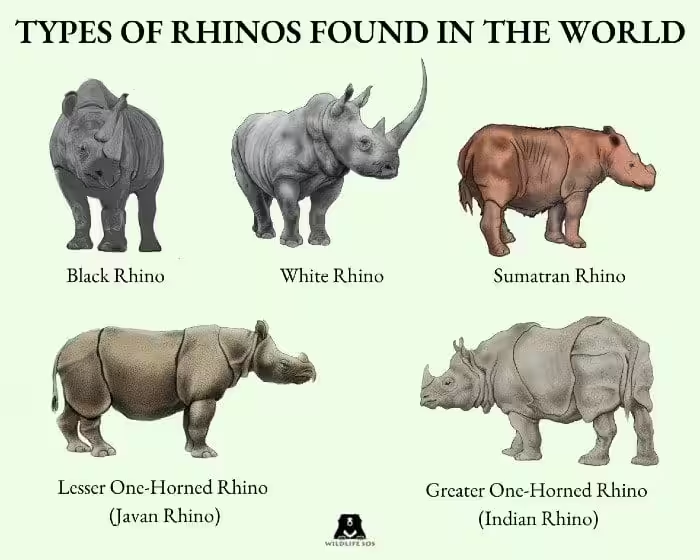
- Black Rhino
- White Rhino
- One-Horned Rhino
- Javan: Javan rhinos are the most threatened of the five rhino species, with only around 76 individuals that live only in Ujung Kulon National Park in Java, Indonesia.
- Sumatran Rhino: Critically Endangered. It has gone extinct in Malaysia.
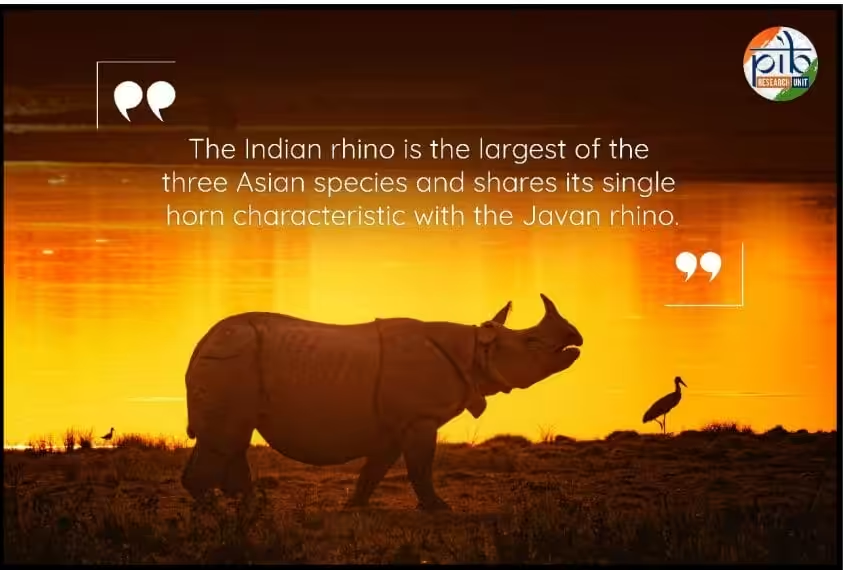
The Greater One-Horned Rhino:
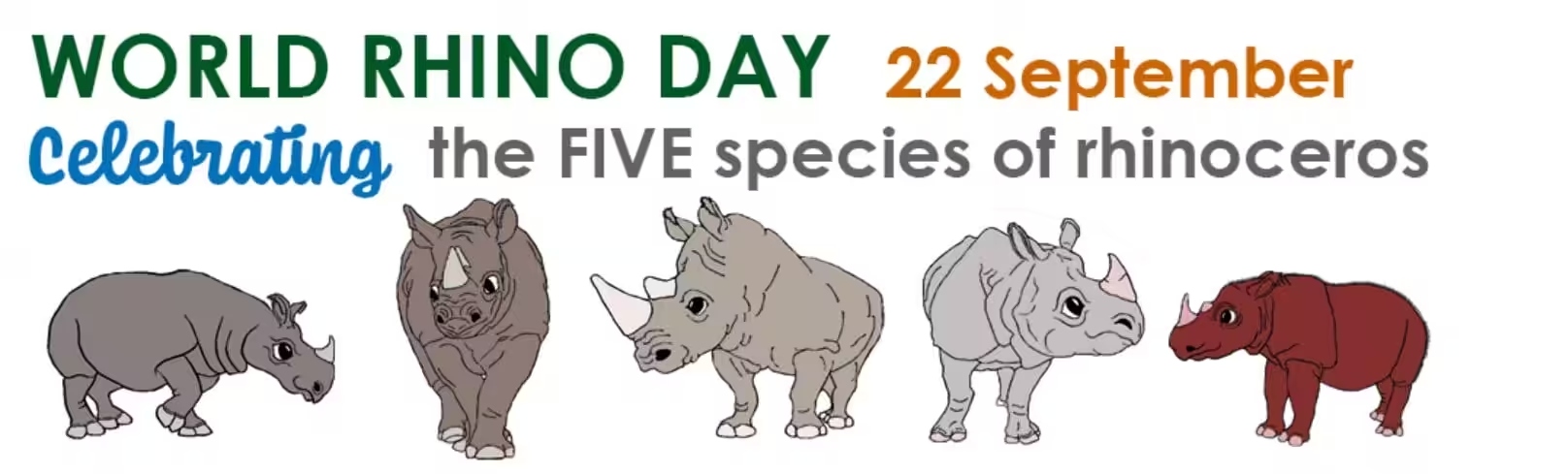
- The greater one-horned rhino, found primarily in the Indian subcontinent.
- With over 70% of its population residing in Assam’s Kaziranga.
One-Horned Rhino: Vulnerable
- Assam is collectively home to 80% of the global population of greater one-horned rhinos. Rhino population growth in Assam from the 1960s (600 rhinos) to 2024 (over 4,000 rhinos).
- An expansion of over 200 sq km in Orang National Park and the reclaiming of 12.82 sq km in Laokhowa–Burachapori Wildlife Sanctuary, emphasizes habitat growth for rhinos.
- Newly declared protected areas, such as Siknajhar National Park and Poba Wildlife
Sanctuary.
Conservation Efforts?
- National Rhino Conservation Strategy (2019): Launched in 2019, this strategy aims to ensure the long-term survival and protection of the greater one-horned rhinoceros in India through coordinated conservation efforts.
- Indian Rhino Vision 2020 (2005): Initiated in 2005, this ambitious program set the target of increasing the wild population of greater one-horned rhinos to at least 3,000 individuals by 2020. The vision also sought to distribute this population across seven protected areas in Assam, thereby reducing risks of concentrated threats and ensuring genetic diversity.