7 current affairs published on Wednesday, 5 November 2025
5 November 2025 Current Affairs for UPSC — every
Why-in-News article AnantamIAS published on Wednesday, 5 November 2025, broken down with
Why in News?, the exact GS paper it feeds, sub-topic mapping, MCQ-ready facts and a
UPSC-style practice question. 7 articles in total, covering Polity, Economy, Environment, S&T, IR, Geography, History, Society and Internal
Security — the same Why-in-News + GS-paper-mapping + practice-question format the Compass uses across
every daily digest on the site.
Daily current affairs for UPSC is where new material enters your prep stream. Read this
5 November 2025 digest end-to-end in 25–35 minutes, attempt the practice question
at the foot of each article (it's MCQ for some, 10/15-marker for others), then bookmark the entries
that fall inside your active revision window. Everything stays cross-linked: tap any subject pill to jump
to that subject's hub, or use the table of contents above to skip straight to a specific story.
Why we publish daily current affairs separately from the monthly compilation: daily is learning,
monthly is revision. Use the daily page to add fresh material to your notes the day it breaks;
come back to the November 2025 compilation 60 days before Prelims when the
noise has settled and only the lasting takeaway is worth re-reading.
The Supreme Court has decided to examine the constitutionality of a law that bans married couples facing secondary infertility from using surrogacy to have a second child.
UPSC Relevance
Prelims, GS
Legal Provision
The specific legal provision under scrutiny is Section 4(iii)(C)(II) of the Surrogacy (Regulation) Act, 2021, that bans married couples facing secondary infertility from using surrogacy to have a second child.
The review will assess whether this ban amounts to a state restriction on the reproductive choices of citizens.
Centre’s Stance and Arguments (Supporting the Ban)
It argues that availing surrogacy cannot be claimed as a fundamental right, but exists purely as a statutory right subject to conditions and restrictions.
The Centre contends that surrogacy involves the use of another woman’s body (the surrogate mother’s womb) and should only be a last resort, after all other options (natural birth, ART) have failed.
The government submitted that the Constitution does not recognize a right over another individual’s body.
The Centre points to an exception in the Section, which allows surrogacy for a second child if the existing child is mentally or physically challenged, suffers from a life-threatening disorder, or a fatal illness with no permanent cure.
The government calls this exception a “well-considered provision” that balances the intending couple’s genuine need against preventing the use of a surrogate mother when the couple already has a healthy child.
Petitioner’s Arguments (Challenging the Ban)
The petitioner, a couple facing secondary infertility, argues that the state cannot interfere in the private lives and reproductive choices of citizens.
The petitioner’s advocate, Mohini Priya, highlighted that secondary infertility (struggling to conceive a second child) is a complex and emotionally challenging condition that can be as distressing as primary infertility.
The lawyer submitted that the definition of “infertility” in the ART Act and the Surrogacy Act is not restricted to primary infertility.
The advocate also noted that India does not have a “one-child policy”, citing the Adoption Regulations, 2017, which allows for the adoption of up to three children.
Recent SC Rulings
Age Restriction Ruling (October 9, 2025): A bench including Justice B.V. Nagarathna ruled that the age restrictions under the Act will not apply retrospectively to couples who had already commenced the surrogacy process (like freezing embryos) before the Act came into force on January 25, 2022.
This ruling emphasized that the right to make reproductive choices is a facet of personal liberty and privacy under Article 21 of the Constitution.
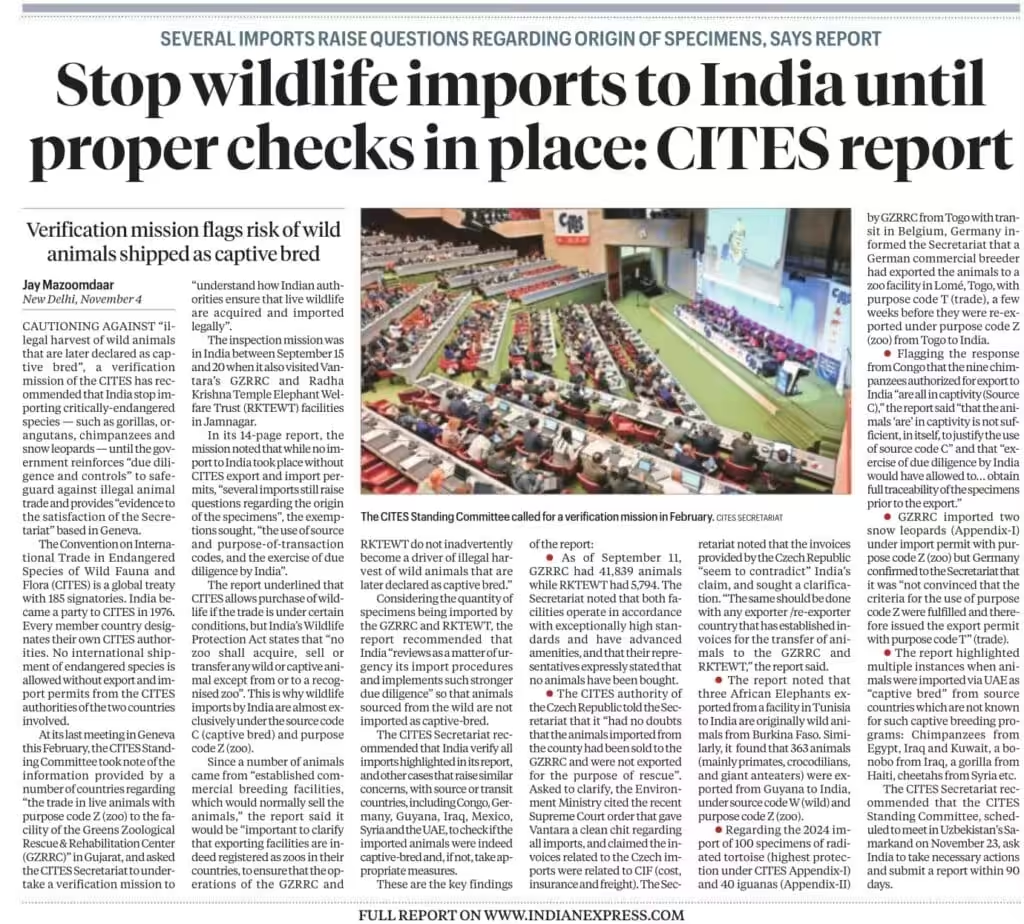
The Convention on International Trade in Endangered Species of Wild Fauna and Flora (CITES) has recommended that India temporarily halt all wildlife imports — particularly of critically endangered species like gorillas, orangutans, chimpanzees, and snow leopards — until proper verification and due-diligence mechanisms are established.
UPSC Relevance:
Environment
UPSC PYQ:
Q. With reference to the International Union for Conservation of Nature and Natural Resources (IUCN) and the Convention on International Trade in Endangered Species of Wild Fauna and Flora (CITES), which of the following statements is/are correct? (2015)
IUCN is an organ of the United Nations and CITES is an international agreement between governments.
IUCN runs thousands of field projects around the world to better manage natural environments.
CITES is legally binding on the States that have joined it, but this Convention does not take the place of national laws.
Select the correct answer using the code given below:
(a) 1 only (b) 2 and 3 only (c) 1 and 3 only (d) 1, 2 and 3
About CITES:
CITES (the Convention on International Trade in Endangered Species of Wild Fauna and Flora) is an international agreement between governments. Its aim is to ensure that international trade in specimens of wild animals and plants does not threaten the survival of the species.
CITES was drafted as a result of a resolution adopted in 1963 at a meeting of members of IUCN (The World Conservation Union).
The text of the Convention was finally agreed at a meeting of representatives of 80 countries in Washington, D.C., United States of America, on 2 March 1973, and was opened for signature on 3 March 1973.
On 1 July 1975 CITES entered in force.
The original of the Convention was deposited with the Depositary Government in the English, French and Spanish languages, each version being equally authentic. The Convention is also available in Chinese and Russian.
How CITES works:
CITES works by subjecting international trade in specimens of selected species to certain controls. All import, export, re-export and introduction from the sea of species covered by the Convention has to be authorized through a licensing system.
The species covered by CITES are listed in three Appendices, according to the degree of protection they need.
Appendix I includes species threatened with extinction. Trade in specimens of these species is permitted only in exceptional circumstances.
Appendix II includes species not necessarily threatened with extinction, but in which trade must be controlled in order to avoid utilization incompatible with their survival.
Appendix III: This Appendix contains species that are protected in at least one country, which has asked other CITES Parties for assistance in controlling the trade. Changes to Appendix III follow a distinct procedure from changes to Appendices I and II, as each Party’s is entitled to make unilateral amendments to it.
In the case of trade from a State that included the species in Appendix III, an export permit issued by the Management Authority of that State is required.
Administered by the UN Environment Programme (UNEP) in Geneva,
The structure of CITES:
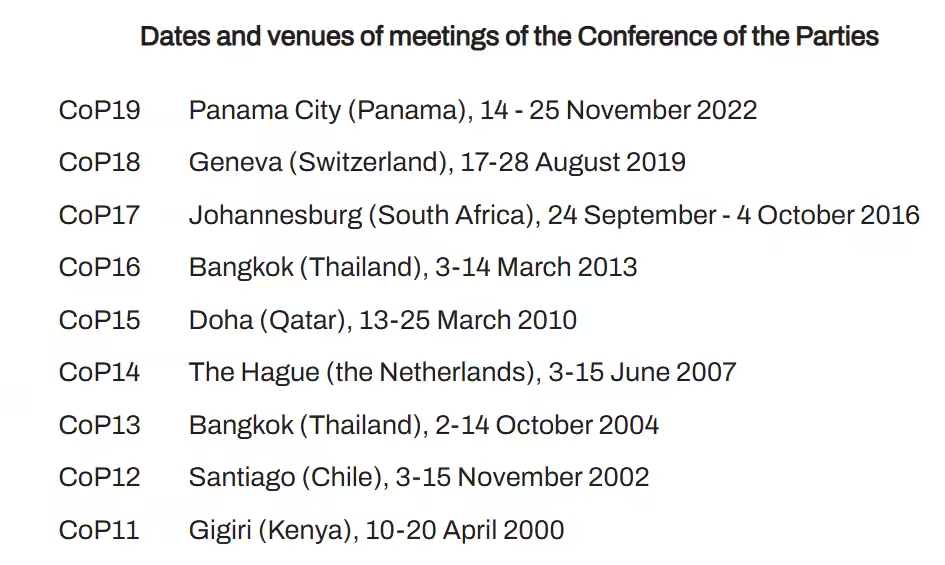
Meetings:
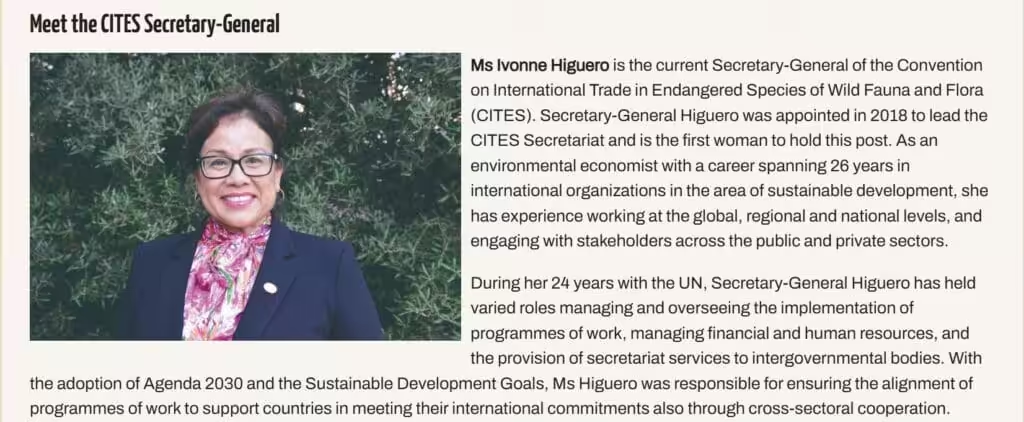
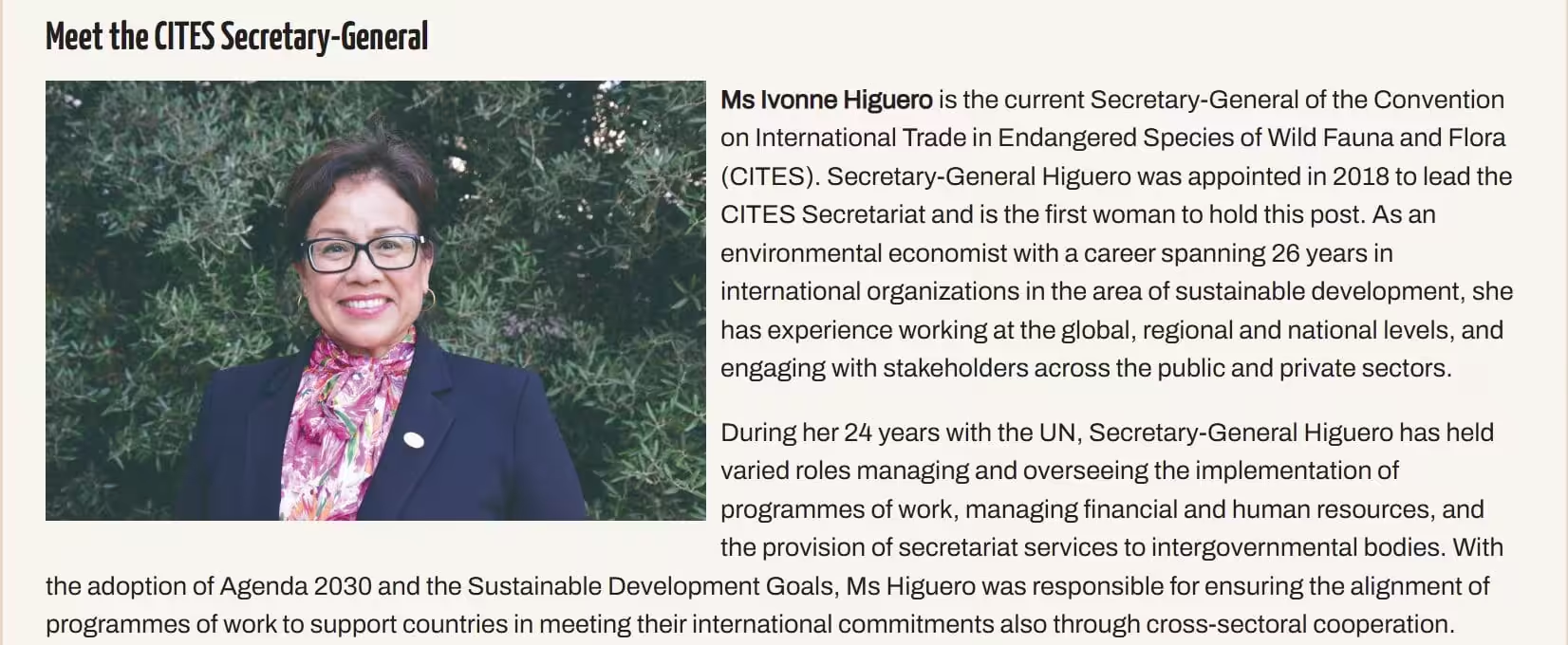
Secretary General:
Prelims Focus:
CITES: Convention on International Trade in Endangered Species of Wild Fauna and Flora (1973).
Headquarters: Geneva, Switzerland
India: Party since 1976
Objective: Ensure that international trade in wild animals and plants does not threaten their survival.
The recently held talks between Israel and India’s foreign minister has reasserted the high degree of trust and reliability that marks the strategic partnership between the two nations.
UPSC Relevance:
India Israel relations.
PYQ:
Q. “India’s relations with Israel have, of late, acquired a depth and diversity, which cannot be rolled back.” Discuss (2018)
History of India Israel Relations:
India announced its recognition of Israel on September 17, 1950. However, it established full diplomatic relations only in 1992.
India was part of the Non-Aligned Movement (NAM) while keeping a close relationship with the Soviet bloc and by proximity to the Arab world, while Israel was an ally of the United States and NATO.
Two main pillars: Since the upgradation of India-Israel relations in 1992, defence and agriculture formed the two main pillars of bilateral engagement.
In recent years, relations have rapidly grown across various sectors, with a future focus on a strong high-tech partnership between two knowledge-based economies.
India Israel Ties until 1992:
India did not establish diplomatic relations with Israel until 1992 for several reasons, including:
Political ideology: India’s commitment to the non-aligned movement caused implied freezing relations with Israel that was increasingly seen as leaning towards the Western bloc.
Ties with Arab countries: India’s dependence on Arab states for oil imports led to a pro-Arab tilt in its West Asia Policy.
A need to garner Arab support for its position over the Kashmir issue compelled New Delhi to pursue an exclusively pro-Arab policy.
Nehru and Gandhi’s stand: Both of them pledged support for the Palestinian cause and rejected the notion of two nations based on religious criteria.
As an international scofflaw and occupying power, Israel has struggled to break diplomatic ties with the countries of the Global South, including India.
Shift of India’s stand:
On the Kashmir issue, West Asia supported Pakistan.
The Oslo Accords of 1993: Agreements between Israel and the Palestine Liberation Organization (PLO), aimed to establish a framework for peace and self-governance in the Israeli-occupied Palestinian territories.
Significance of India-Israel Bilateral Relations:
Political Convergence: Both countries support each other’s positions on critical issues—India has backed Israel’s right to self-defence, and Israel supports India’s stance against cross-border terrorism. This convergence raises each nation’s diplomatic profile and provides reliable allies in volatile regions.
Defence and Security:
Israel is one of India’s top defence suppliers, providing advanced technologies in drones, air defence, missiles, and intelligence—enhancing India’s military readiness and anti-terror capabilities.
Joint R&D and co-production in areas like electronic warfare and missile defence directly strengthen India’s self-reliance and modernization.
Intelligence and Counterterrorism: Robust intelligence-sharing and operational cooperation have helped India counter terrorism and address emerging hybrid threats, with both countries facing similar security challenges in their regions.
Trade and Investment:
Bilateral trade—now touching $7–8 billion—spans agriculture, high-tech, defence, and pharmaceuticals.
The 2025 Bilateral Investment Treaty is expected to boost two-way FDI, fintech, and start-up collaborations, setting the stage for a future free trade pact.
Agriculture and Water Management: Israeli innovation in drip irrigation, water conservation, and precision agriculture has been scaled across India, improving Indian farmers’ efficiency, raising rural incomes, and addressing chronic water scarcity.
Innovation Ecosystem: India benefits from Israeli expertise in start-up incubation, cyber security, AI, and “smart city” technologies, and the I4F fund fosters joint research and product development for global markets.
Challenges in India-Israel Bilateral Relations:
The Palestine Issue: While India has successfully employed a policy of “de-hyphenation” (treating ties with Israel and Palestine separately), India remains a traditional supporter of the Palestinian cause in multilateral forums like the UN. This diplomatic position is sometimes at odds with Israel’s global interests.
Energy and Diaspora: India relies heavily on the Gulf Cooperation Council (GCC) for a substantial portion of its crude oil and natural gas supplies. Furthermore, over 9 million Indian expatriates reside in the Gulf, contributing critical remittances to the Indian economy. Any perceived over-alignment with Israel risks jeopardizing these vital economic and energy lifelines.
Iran & China Factors: India’s ties with Iran (for Chabahar port, regional strategy, energy) and Israel’s very close relationship with China in high technology (Israel-China trade: $22 billion+) produce diverging priorities, and India is concerned about technology transfers from Israel to China and Chinese FDI in Israel.
Limited Technology Transfer: India’s priority under its “Aatmanirbhar Bharat” initiative is to acquire technology for domestic manufacturing. While Israel is generally more willing to share defence technology than other nations, it still places restrictions on the full transfer of proprietary or sensitive systems, especially those containing US components (which are subject to US export control laws).
Non-Defence Trade Plateau: Despite ambitious targets, non-defence trade has generally plateaued between $6 billion and $8 billion, highlighting challenges in market access and scaling commercial engagement beyond established sectors.
Intellectual Property Rights (IPR): Israel, a high-tech exporter, shares concerns with other Western nations regarding India’s relatively lenient IPR regime, particularly concerning the protection of software and digital innovation.
Public Opinion in India: Despite the government’s strong public embrace, a significant segment of the Indian public and political opposition maintains traditional sympathy for the Palestinian cause, requiring the ruling party to occasionally temper its rhetoric and maintain a semblance of balance on the issue.
Areas of cooperation between India & Israel:
Defence & Security:
Arms Trade: Israel is consistently one of India’s top three defence suppliers. India procures critical systems like radar, missile defence shields (e.g., the Barak 8 system developed jointly), drones, and sophisticated surveillance equipment.
Joint Research and Development (R&D): The focus has shifted from a buyer-seller relationship to joint development and co-production, aligning with India’s “Aatmanirbhar Bharat” initiative.
Counter-Terrorism: Extensive intelligence sharing and training cooperation, particularly relevant due to shared security threats.
Water & Agriculture:
Drip Irrigation and Micro-Irrigation: Israel has implemented the Indo-Israel Agricultural Project (IIAP), establishing dozens of “Centres of Excellence” across various Indian states. These centres train Indian farmers on high-tech techniques, primarily focused on micro-irrigation, protected cultivation (greenhouses), and maximizing yield with minimal water use.
Water Management and Recycling: Cooperation in water treatment, desalination, and recycling technology to help India address its growing urban water scarcity.
Cybersecurity and R&D: Deep cooperation in cybersecurity, and joint research and funding in high-tech areas through the India-Israel Industrial R&D and Technological Innovation Fund (I4F).
I2U2 Grouping: India and Israel are core members of the I2U2 initiative, along with the US and UAE. This group focuses on promoting joint investments in key sectors like food security, water, energy, and transportation infrastructure, demonstrating Israel’s role in India’s regional economic strategy.
Way Forward:
Deepen Strategic and Defence Cooperation:
Strengthen defence ties by accelerating joint R&D, co-production of advanced military technologies (drones, missile defence, cyber security), and institutionalizing regular high-level dialogues.
Expand intelligence and counter-terrorism cooperation, leveraging Israel’s expertise and India’s regional security needs.
Expand Economic and Investment Collaboration: Fully implement the 2025 Bilateral Investment Treaty to boost two-way FDI, remove barriers, and scaffold a future Free Trade Agreement to increase trade volumes beyond the current $7–8 billion.
Enhance Innovation and Technology Exchange: Foster shared innovation in AI, biotech, cybersecurity, and smart infrastructure utilizing the India-Israel Industrial R&D and Innovation Fund (I4F).
De-Hyphenation through Integration: By channelling joint investments and projects through the I2U2 framework, India demonstrates that its partnership with Israel is not exclusive but is actively beneficial to the Arab world. This provides a diplomatic shield for India’s ties to Israel.
Knowledge Corridors: Establish structured “Knowledge Corridors” linking major Indian R&D institutions (like the IITs and IISc) with top Israeli universities and research centres to ensure a steady flow of research talent and joint discovery.
Conclusion:
A pragmatic, multi-sectoral, and balanced approach respecting geopolitical sensitivities and focusing on enhanced cooperation will cement India-Israel relations as a cornerstone of India’s strategic and innovation-driven growth trajectory.
Recent remarks by Microsoft founder Bill Gates on climate change have triggered a fierce debate on the effectiveness of the world’s current approach towards the problem. Instead of focusing on mitigation, Gates has argued for prioritising adaptation, which has immediate benefits for developing countries.
UPSC Relevance: GS3, Conservation, Environmental Pollution and Degradation, Environmental Impact Assessment, Important Climate Change initiatives are asked in Prelims
PYQ:
2025 – What is Carbon Capture, Utilization and Storage (CCUS)? What is the potential role of CCUS in tackling climate change? (10 M)
The Core Arguments of the Gates Memo
Not an Existential Threat: Climate change is one of the most serious problems humanity faces, but it is not an existential threat that will end civilization.
Temperature Targets Aren’t the Only Way: Adhering strictly to temperature targets (like the 1.5°C or 2°C targets in the Paris Agreement) is not the sole method to address the crisis.
Development as the Best Defense:Health, prosperity, and higher levels of development (especially in poorer regions) are the best defense against climate impacts.
Improvements in agriculture, better health, greater access to heating/cooling, and efficient early warning systems would improve lives and save lives from climate impacts.
The China Way
What is Adaptation and Mitigation?
Adaptation : Adaptation refers to adjustments in natural or human systems in response to actual or expected climatic stimuli or their effects, which moderates harm or exploits beneficial opportunities.
Mitigation: Mitigation refers to human interventions to reduce the sources of greenhouse gas (GHG) emissions or enhance the removal of GHGs from the atmosphere by sinks.
Arguments in Favour of Adaptation – Building Resilience
Immediate Benefits: Adaptation actions, such as effective early warning systems or improvements in agriculture, provide immediate benefits and can save lives from climate impacts.
Best Defence: Health and prosperity, coupled with higher levels of development, particularly in poorer regions, are argued to be the best defence against climate impacts.
Local Appeal: Adaptation brings local benefits, making it highly appealing to developing countries.
Ineffectiveness of Current Mitigation: Efforts to reduce global emissions have so far yielded minimal results, with annual global emissions still rising, and current reduction targets for 2030 are proving difficult to meet.
Delayed Mitigation Impact: Even if global emissions suddenly stopped, there would be no change in climate impacts for at least a few more decades because the accumulated carbon dioxide, which stays in the atmosphere for centuries, is the main driver of the greenhouse effect.
Gates’ Shift: Bill Gates has shifted his influential position to prioritize adaptation, arguing that focusing all resources on limiting temperature rise is not the only way, and that humanity will most likely survive the crisis.
Underfunded: Less than 20% of international climate finance is directed towards adaptation projects, despite its importance and demand from developing countries.
Limitations of Adaptation Measures
Insufficient Finance and High Initial Costs
Reduced finance + Increased initial costs : The funding needed for effective adaptation, especially in developing countries, is vastly greater than what is currently available. Adaptation projects are often capital-intensive upfront, creating a significant barrier to implementation.
Mitigation Over Adaptation:Most finance goes to Mitigation despite huge losses and damages due to lack of Adaptation. This imbalance leaves vulnerable communities exposed, as funds are directed more towards reducing future emissions than dealing with current and unavoidable impacts.
Maladaptation and Unintended Consequences – Maladaptation refers to actions intended to lower climate risk that actually increase vulnerability or shift the burden to other groups, sectors, or the future.
Afforestation of Naturally Unforested Regions: Planting trees (e.g., non-native species) in ecosystems that are naturally grasslands, savannahs, or wetlands can destroy the existing biodiversity, deplete water resources, and, ironically, even increase fire risk, ultimately making the area more vulnerable.
Biofuel Crops: Relying on certain biofuel crops can lead to massive land-use change, monoculture, and competition for water and land with food production, which can endanger food security and local ecosystems.
“Lock-in vulnerability” and Reduced space for Natural processes: Adaptation efforts (e.g., constructing rigid coastal defenses like seawalls) can create a long-term dependence on a specific, non-flexible solution, locking in vulnerability and reducing the ability of natural systems (like mangroves or dunes) to adapt, which are often more sustainable in the long run.
Systemic and Implementation Limits
Focus on Isolated, Short-term Measures: There is a tendency to focus on isolated and short-term adaptation measures instead of transformational adaptation.
Transformational Adaptation involves fundamental changes to the system (e.g., changing crop systems entirely, moving settlements away from high-risk zones, reforming governance structures).
Short-term, incremental measures (e.g., slightly raising a dike) may soon be overwhelmed by accelerating climate impacts, making the initial investment obsolete and potentially maladaptive.
Access to Inputs and Viable Markets: Even when a good adaptation technology or practice is identified (e.g., a drought-resistant seed), challenges remain in:
Securing access to inputs (e.g., seeds, reliable water, specialized tools).
Ensuring viable markets exist for the resulting products, making the adaptation economically sustainable for the users.
Knowledge and Absolute Limits
Adaptation Limits:Can’t prevent all losses & damages. This acknowledges the hard limit of adaptation. Even with unlimited resources, a certain level of damage and loss will occur as impacts exceed the capacity of human or natural systems to adjust (e.g., the complete loss of a specific coral reef ecosystem).
Lack of Climate Literacy and Knowledge: Insufficient understanding among policymakers, practitioners, and the public about climate risks, effective adaptation options, and the dangers of maladaptation hinders smart, integrated decision-making.
Solar Radiation Modification (SRM): SRM, such as Stratospheric Aerosol Injection, is a controversial form of geoengineering that is not yet fully understood.
While it could temporarily reduce global temperatures, it does not address the root cause (GHG concentration) or effects like ocean acidification.
Arguments in Favour of Mitigation – Emission Cuts
Existential Threat: Prominent scientists and climate activists maintain that climate change is an extremely serious problem and argue that rapid emission cuts, an immediate energy transition, and the early elimination of fossil fuels must be the dominant focus.
Scientific Necessity: The mainstream scientific narrative strongly advocates for rapid emission cuts to keep hopes of meeting the 1.5 or 2 degree Celsius targets mentioned in the Paris Agreement alive.
Avoiding Catastrophe: Climate scientists argue there is “no way to reboot the planet, if you crash it,” and that the “only safe and reliable way out” is to stop burning fossil fuels.
Not a Separate Problem: Climate change is not a problem separate from other issues like poverty and disease; it is described as a “hole in every bucket,” meaning reducing emissions protects resources and efforts in other areas.
Challenges in Mitigation
Technological & Financial Barriers
Slow Technological Change : The pace at which new, scalable, and affordable low-carbon technologies are developed and deployed is often insufficient to meet the urgency of the climate crisis. This inertia hinders the global transition away from fossil fuels.
Limited R&D and Finance: There is Less R&D and reduced finances for mitigation in developing countries, UDCs (Upper-Developing Countries), and LDCs (Least Developed Countries).
This financial gap means these nations, which often rely on older, more carbon-intensive infrastructure, struggle to invest in and adopt advanced green technologies and transition their energy systems.
Resource and Security Constraints
Population Growth and Resource Pressure :
Increased population growth naturally drives up energy and resource demand, making the overall mitigation task more difficult.
Mitigation itself creates pressure on existing resources, leading to potential trade-offs.
Competition for Land and Water:
Land needed for solar and wind power installation competes with other uses, such as agriculture or conservation.
Biofuel crops are water guzzling, which can seriously endanger food security and strain water resources, creating a conflict between climate goals and vital human needs.
Systemic and Safety Challenges
Lack of Coordination : A lack of coordination at national and subnational levels is a major obstacle. Mitigation policies require consistent goals and implementation across different government departments, states, and municipalities (e.g., energy, transport, land use). Fragmentation leads to delays and ineffective measures.
Mitigation Limits and Potential Risks : Even the proposed “green” solutions introduce new challenges:
Technological risks in solar PVs, e-waste problem, and mining for materials (e.g., lithium, cobalt) needed in these alternate green technologies (batteries, etc.). The shift to renewables creates new environmental and social burdens related to raw material extraction and managing end-of-life products.
India’s Stand on Climate Action
Alignment with Adaptation: India’s position, articulated in its Economic Survey of 2024, aligns very well with Gates’ latest views on prioritizing adaptation and development.
Flawed Approach: India argued that trying to keep global temperatures under an “arbitrary threshold” was a “flawed” way of dealing with the climate crisis.
Prioritizing Development: India advocated for rapid development and increasing incomes as the best insurance against climate impacts.
Space for Growth: India lamented that development goals had been “downgraded” while emission reduction was “elevated to the pinnacle of all economic policies,” and made the case for allowing adequate space for developing countries like India to grow rapidly, arguing that the climate problem would be resolved along the way.
Shared View with Developing Countries: India’s stance is likely to find support from many other developing countries that demand greater attention and support for adaptation actions.
Climate Resilient Development (CRD) – An Integrated Approach
The IPCC Sixth Assessment Report (AR6) defines Climate Resilient Development (CRD) as a process of implementing greenhouse gas mitigation and adaptation options to support sustainable development for all.
Integration of Adaptation and Mitigation:
CRD moves beyond treating adaptation (adjusting to impacts) and mitigation (reducing emissions) as separate issues. It seeks actions that achieve both simultaneously, or at least ensure that actions in one area do not undermine progress in the other (e.g., using solar power in resilient microgrids)
This integrated approach aims to reduce climate risk (adaptation) while also reducing greenhouse gas emissions (mitigation)
Focus on Sustainable Development and Equity:
CRD is firmly rooted in the goal of Sustainable Development for All and explicitly prioritizes equity, climate justice, and social justice
It emphasizes that successful climate action must also address existing challenges like poverty, inequality, and biodiversity loss. Actions that reduce poverty, improve health, and conserve ecosystems are inherently stronger CRD pathways.
A Continuous Process:
CRD is not a final destination but a continuous process of making coherent, consistent decisions and adjustments across all sectors (energy, transport, agriculture, health, etc.) and all levels of government and society
It involves navigating the complex synergies and trade-offs that exist between climate action, development choices, and underlying societal values.
Also known as Wah Umngot, Dawki River and ‘floating on air’ River.
Location: Flows through the West Jaintia Hills district of Meghalaya.
It forms a boundary between India and Bangladesh.
Fame: Famed for its picturesque crystal clear water, especially in the winter. Some sources also refer to it as Asia’s clearest river.
Significance: It is a major tourism asset and a “symbol of Meghalaya’s pristine natural heritage.”
Tourist Attractions: Locations along the river, such as Dawki and Shnongpdeng, are top tourist attractions in the state, central to the local economy during the peak season.
Adjusted Gross Revenue
The Supreme Court on 3rd November said that the government can review and reassess Vodafone Idea’s (VI’s) adjusted gross revenue (AGR) dues up to the financial year 2016-17, including interest and penalties. This decision brings major relief to the financially struggling telecom operator.
What is AGR?
AGR is the measure used to calculate the licence fees and spectrum charges telecom companies owe the government.
There has been a long-standing dispute over the definition of AGR, with the government’s broad interpretation including non-telecom revenues like interest income and rent, while the telecom industry argues AGR should only be based on core telecom revenues.
Supreme Court’s 2019 verdict: Upheld the DoT’s definition, leading to massive retrospective dues for telecom companies and creating a significant financial strain on the sector.
Current context: Recent Supreme Court decisions have provided some relief, allowing policy reconsideration on certain AGR demands and giving the sector more time to pay dues.
Sudan Crisis
2019 Regime Change: The 30-year regime of President Omar al-Bashir collapsed following a period of protest (symbolized by the viral image of the Sudanese woman).
Source of Instability: The conflict is primarily driven by “competing power-grab-bing attempts” between military factions.
2021 Coup: An interim civilian-military government was overthrown in 2021 by a coup led by two military generals who became rivals:
Abdel Fattah al-Burhan: Head of the Sudanese Armed Forces (SAF).
Mohamed Hamdan Dagalo: Head of the paramilitary Rapid Support Forces (RSF).
Start of Civil War: A fallout occurred between the SAF and RSF due to disagreements on the role of the two forces, leading to the ongoing civil war.
Current UN Assessment: UN General Secretary Antonio Guterres stated the situation is “spiralling out of control.”
Recent Power Shift: The paramilitary RSF seized the city of el-Fasher in Darfur.
War Crimes Allegations: The RSF has been accused of targeting the Massalit and other non-Arab people and their recent advances have been accompanied by reports of “widespread executions.”
Orb Weaver Spider
Web Decoration (Stabilimenta): Orb weaver spiders often add decorations, called stabilimenta, to their gauzy webs even after initial construction.
Composition: Stabilimenta are typically spun from silk, but sometimes they use bits of insect cadavers or shed exoskeleton.
Appearance: These are big, noticeable features that can look like zigzags, a scribbled disk, or a big “X” that marks the web’s center.
Example:Wasp spiders are a specific species of orb weaver found in Europe.
Purpose:
Predator Distraction (Ample Support): Spiders reportedly vibrate the web to blur the stabilimenta before they escape through a hole or jump away.
They may collect water.
They may fool insects by reflecting UV light.
Spiders detect prey through vibrations traveling along the silk threads.
The study hypothesizes that stabilimenta could affect the speed and distance of these vibration signals.
The BRICS grouping (Brazil, Russia, India, China, and South Africa) is intensifying efforts to challenge the dominance of the U.S.-led SWIFT financial messaging system by developing an alternative payment mechanism called BRICS Pay.
UPSC Relevance:
International Relation and Economy
UPSC PYQ:
Q. Consider the following statements: (2016)
New Development Bank has been set up by APEC.
The headquarters of the New Development Bank is in Shanghai.
Which of the statements given above is/are correct?
(a) 1 only
(b) 2 only
(c) Both 1 and 2
(d) Neither 1 nor 2
Ans: (b)
Q. The ‘Fortaleza Declaration’, recently in the news, is related to the affairs of (2015)
(a) ASEAN
(b) BRICS
(c) OECD
(d) WTO
About BRICS:
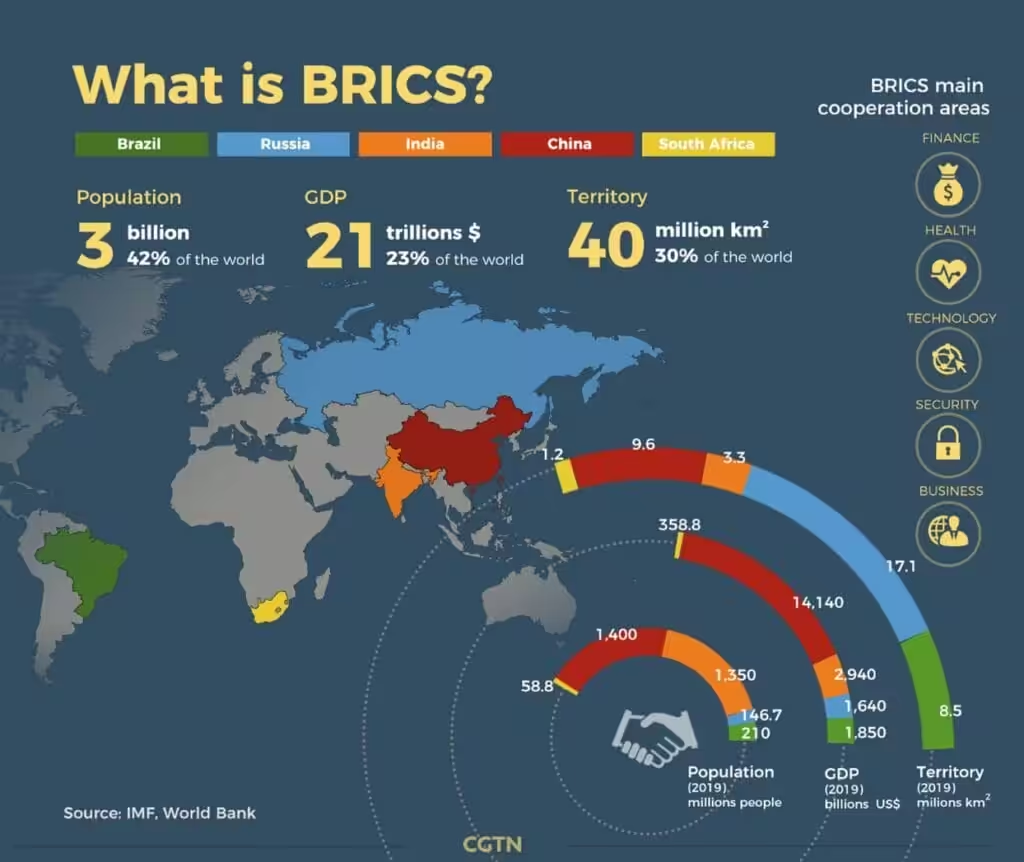
BRICS started in 2001 as BRIC (Brazil, Russia, India, and China). South Africa was added in 2010. The acronym ‘BRIC’ was coined by economist Jim O’Neill in 2001.
Founding countries: Brazil, Russia, India, and China.
Aim: nations’ economies would come to collectively dominate global growth by 2050.
First summit: Held in 2009 in Yekaterinburg, Russia
South Africa joined BRIC in 2010, transforming BRIC to BRICS.
BRICS Summits:
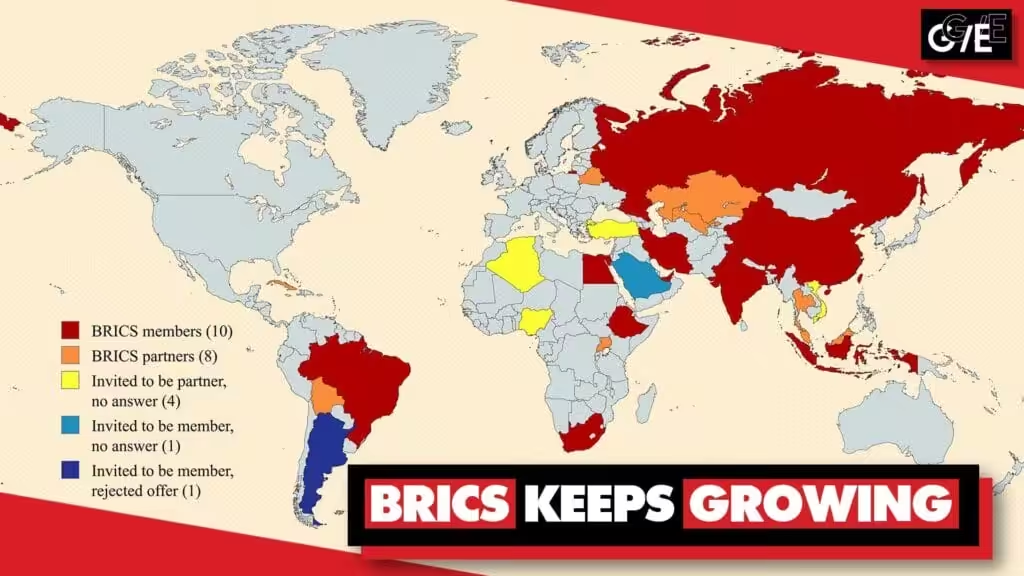
BRICS Members:
A further expansion of BRICS took place in 2024 with Egypt; Ethiopia; Iran;and UAE becoming full members of BRICS from 1 January 2024. InJanuary2025, Indonesia joined the BRICS as a full member.
BRICS brings together ten major emerging economies of the world, representing around 49.5 % of the global population, around 40%of the global GDP and around 26% of global trade.
4th and 13th BRICS Summit: India chair these two BRICS Summits
The term “Fortaleza Declaration” can refer to two different significant agreements: one from the 2014 BRICS Summit, which established the New Development Bank (NDB) and the Contingent Reserve Arrangement (CRA), and a more recent one from the 2024 Global Education Meeting (GEM) in Fortaleza, Brazil, which is a roadmap for educational reform.
Why BRICS avoid SWIFT System:
The push gained momentum after the Western sanctions on Russia over its actions in Ukraine, which restricted Russia’s access to the SWIFT network.
The 16th BRICS Summit (Kazan, Russia, October 2024) witnessed major discussions on creating a BRICS Payments System (BRICS Pay) to settle cross-border transactions in local currencies rather than U.S. dollars.
This marks a significant step towards establishing a parallel financial infrastructure independent of Western control.
About Swift System:
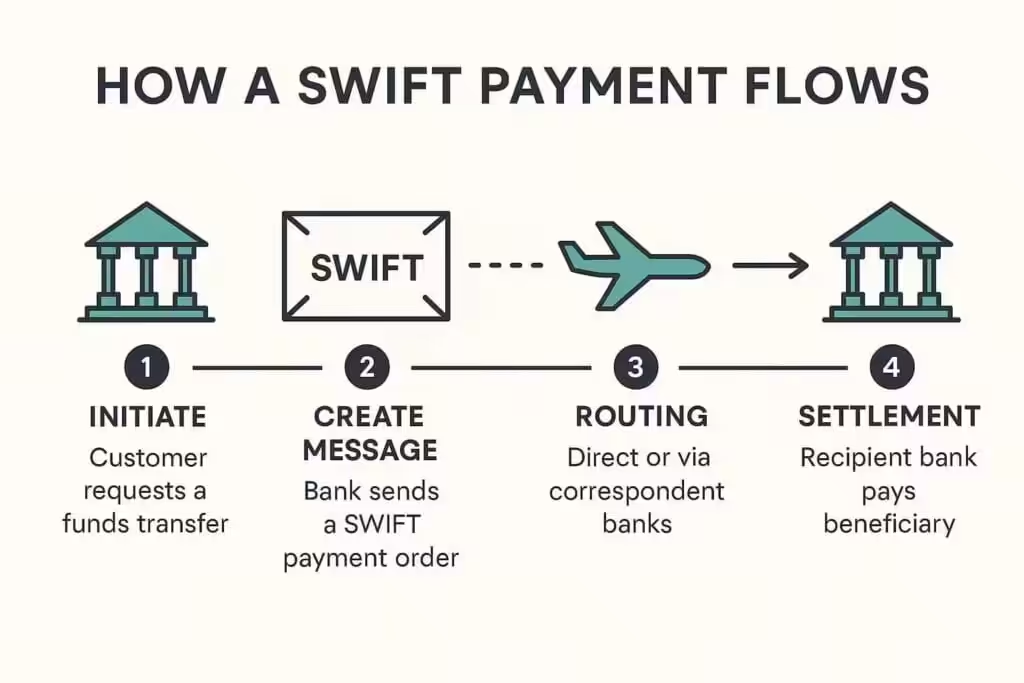
SWIFT (Society for Worldwide Interbank Financial Telecommunication) is a global network enabling secure cross-border financial transactions between over 11,000 banks and institutions in 200+ countries.
It does not transfer money but sends standardized financial messages to facilitate global trade and payments.
Dominated by Western powers, particularly the U.S. and EU, SWIFT is often used as a tool for economic sanctions.
It was established in 1973 and is based in Belgium.
It is controlled by the central banks of the G10countries, the European Central Bank, and the National Bank of Belgium.
The Group of Ten is made up of eleven industrial countries (Belgium, Canada, France, Germany, Italy, Japan, the Netherlands, Sweden, Switzerland, the United Kingdom and the United States) which consult and co-operate on economic, monetary and financial matters.
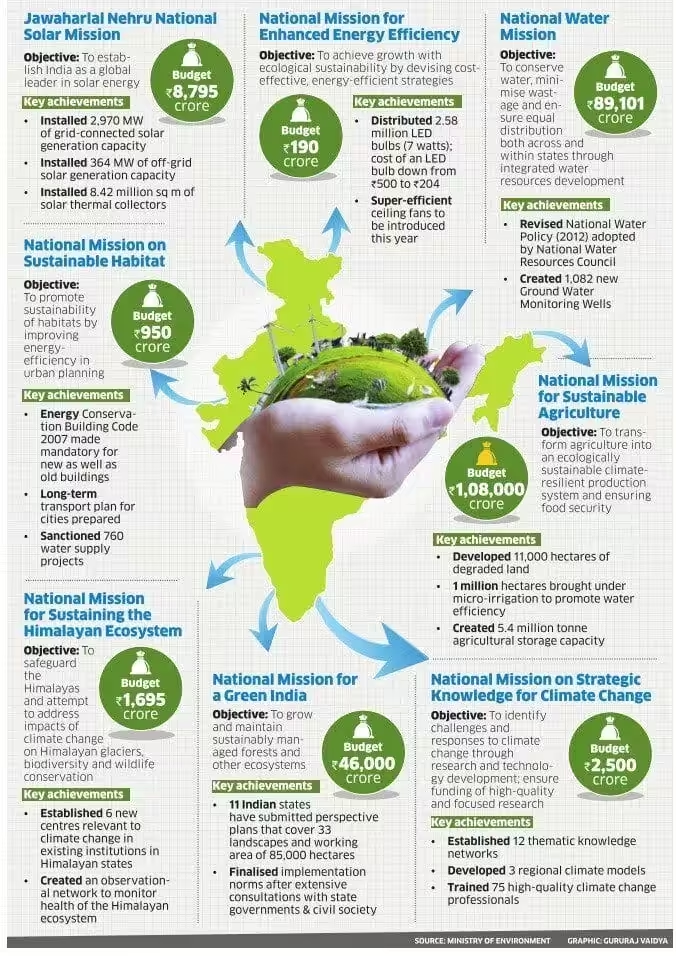
Nodal ministry: Ministry of Environment, Forest and Climate Change (MoEFCC)
Vision: Ecological restoration of degraded ecosystems to enhance forest and tree cover, strengthen ecosystem services, and improve forest-dependent livelihoods.
Key objectives:
Increase forest and tree cover on 5 million ha of land.
Improve quality of forest cover on another 5 million ha.
Enhance ecosystem services—biodiversity, carbon sequestration, water regulation.
Improve livelihoods of 3 million forest-dependent households.
Create an additional carbon sink of 2.5–3.0 billion tonnes CO₂ equivalent by 2030 (aligned with India’s NDC).
Eight Missions under NAPCC
How has been the performance so far?
Indicator
Achievement
Afforestation Coverage
11.22 million ha (2015–21) under GIM and convergence schemes
Funding (2019–24)
₹624.71 crore allocated to 18 states; ₹575.55 crore utilized
Carbon Sink Created
2.29 billion tonnes CO₂ (2005–2021, Lok Sabha data)
Institutional Structure
26 states onboard; implementation via Forest Development Agencies (FDAs) and JFMCs
Monitoring
GIS-based system under development for performance audits
What are the structural and implementation gaps in India’s afforestation efforts?
Community participation deficit – Nearly 200 million Indians depend on forests for livelihood and subsistence. The Forest Rights Act (2006) legally empowers local and tribal communities to manage forests, yet plantation drives often bypass community consent. This leads to loss of trust and weak social legitimacy of afforestation programs.
Odisha integrates Joint Forest Management Committees (JFMCs) into afforestation and revenue-sharing. Chhattisgarh experiments with biodiversity-sensitive plantations, reviving barren lands using mahua and other livelihood-linked native trees.
2. Ecological design: Traditional afforestation relied mainly on monocultures of eucalyptus and acacia, chosen for fast growth but ecologically harmful as they deplete groundwater, reduce native biodiversity, and increase climate vulnerability.
Tamil Nadu’s success — nearly doubling mangrove cover in three years — demonstrates that scientifically guided, native species restoration can deliver strong ecological and climate benefits.
3. Financing bottlenecks and CAMPA fund undertilisation: The CAMPA Fund currently holds over ₹95,000 crore, but fund utilisation remains uneven and bureaucratically slow. Example: Delhi utilised only 23% of its approved CAMPA allocation (2019–24). The Green India Mission itself has received modest allocations, relying heavily on CAMPA convergence rather than independent funding.
How the revised GIM (2021–2030) differs from the original?
Aspect
Original GIM (2014)
Revised GIM (2021–2030)
Focus
Afforestation and reforestation on 10 million ha (5 mha new + 5 mha improved).
Landscape-based ecological restoration across 24.7 million ha through convergence by 2030.
Approach
Centralized and scheme-driven, focusing on plantation and afforestation.
Region-specific, micro-ecosystem, bottom-up planning emphasizing local ecology and native species.
Geographical Focus
General forest areas with broad afforestation targets.
Ecologically critical landscapes — Aravalli ranges, Western Ghats, Himalayas, mangroves.
Integration
Limited convergence with other schemes.
Full convergence with CAMPA, MGNREGA, PMKSY, and the Aravalli Green Wall Project.
Livelihood Support
Provided through employment during afforestation works.
Creation of Livelihood Improvement Training Centres (LITCs) and NTFP Processing Centres for long-term forest-based income.
Monitoring
Periodic and manual reporting through forest departments.
GIS-based real-time monitoring and social audits using remote sensing.
Private Participation
Minimal private or CSR involvement.
Encourages Public–Private Partnerships (PPP), CSR, and carbon market participation.
Policy Alignment
Aimed at adaptation and generic climate mitigation.
Directly aligned with Paris Agreement, UNCCD, and India’s NDC targets.
Mission Cost
Not clearly specified.
Estimated ₹12,190 crore (2021–30) through CAMPA and convergence funding.
What is the GIM’s strategy to combat land degradation & desertification?
Region-specific restoration: target Aravalli ranges, Western Ghats, Himalayas, and mangroves and address site-specific ecological stress (deforestation, mining, desertification).
Integration with Aravalli Green Wall Project: Restore 8 lakh ha across 29 districts (4 states) and create a 5-km-wide buffer to reduce dust and desertification.
Focus on open forest restoration: Prioritize open and degraded forests for maximum carbon sequestration. Potential sink: 1.89 billion tonnes CO₂ across 15 mha.
Convergence Approach: Utilize CAMPA, MGNREGA, PMKSY, NMSA for water conservation & vegetation growth.
Promote natural ecosystems: promote forests, wetlands, grasslands, and mountain ecologies as natural carbon sinks.
Technology & monitoring: Use remote sensing, GIS-based monitoring, and desertification mapping for adaptive management.
Key Concepts:
Term
Explanation
CAMPA
Compensatory Afforestation Fund Management and Planning Authority — funds used for compensatory afforestation projects.
NAPCC
National Action Plan on Climate Change — umbrella program with 8 national missions including GIM.
LITCs
Livelihood Improvement Training Centres — to skill local communities in forest product processing and marketing.
NTFP
Non-Timber Forest Produce — includes products like honey, bamboo, medicinal plants used for livelihood generation.
Carbon Sink
A natural or artificial reservoir that absorbs and stores carbon dioxide from the atmosphere.
Open Forests
Forests with canopy density between 10–40%; most vulnerable to degradation but crucial for restoration.
Micro-Ecosystem Approach
Localized restoration model addressing region-specific ecological needs and vulnerabilities.
Practice Question:
Elaborate on the essential features of Green India Mission (GIM). How far do you think that GIM can help India to achieve its target of creating additional carbon sinks? (15 Marks, 250 words)