Opens in a new tab
Join Anantam IAS Channel on Telegram

Daily Digest · Tuesday

4 November 2025 Current Affairs for UPSC

6 current affairs published on Tuesday, 4 November 2025

4 November 2025 Current Affairs for UPSC — every Why-in-News article AnantamIAS published on Tuesday, 4 November 2025, broken down with Why in News?, the exact GS paper it feeds, sub-topic mapping, MCQ-ready facts and a UPSC-style practice question. 6 articles in total, covering Polity, Economy, Environment, S&T, IR, Geography, History, Society and Internal Security — the same Why-in-News + GS-paper-mapping + practice-question format the Compass uses across every daily digest on the site.

Daily current affairs for UPSC is where new material enters your prep stream. Read this 4 November 2025 digest end-to-end in 25–35 minutes, attempt the practice question at the foot of each article (it's MCQ for some, 10/15-marker for others), then bookmark the entries that fall inside your active revision window. Everything stays cross-linked: tap any subject pill to jump to that subject's hub, or use the table of contents above to skip straight to a specific story.

Use this page three ways. Read sequentially for a one-sitting scan of everything that mattered on 4 November 2025. Download the 4 November 2025 PDF below for offline study or print revision. Or use the November 2025 Current Affairs compilation to see this day in the month's full context. For the previous day's reading, see 3 November 2025 Current Affairs; the next day's is 5 November 2025 Current Affairs.

Why we publish daily current affairs separately from the monthly compilation: daily is learning, monthly is revision. Use the daily page to add fresh material to your notes the day it breaks; come back to the November 2025 compilation 60 days before Prelims when the noise has settled and only the lasting takeaway is worth re-reading.

ICMR’s Initiative to Develop Monoclonal Antibodies against Nipah Virus

Open article →Download PDF

Why in News

The Indian Council of Medical Research (ICMR) has invited Expressions of Interest (EoI) from organisations and companies to develop and produce monoclonal antibodies (mAbs) against the Nipah virus (NiV).

PYQ

With reference to monoclonal antibodies, often mentioned in news, consider the following statements:

I. They are man-made proteins.
II. They stimulate immunological function due to their ability to bind to specific antigens.
III. They are used in treating viral infections like that of Nipah virus.Which of the statements given above are correct?

A. I and II only

B. II and III only

C. I and III only

D. I, II and III

    Nipah Virus (NiV)

    Nipah Virus (NiV) is a highly lethal zoonotic pathogen causing acute respiratory illness and encephalitis, with no approved vaccine or antiviral. Discovered in 1998 in Malaysia, it has caused sporadic outbreaks in South-East Asia, particularly India and Bangladesh.

    AspectDetails
    TypeZoonotic virus (transmitted from animals to humans)
    Reservoir hostFruit bats (genus Pteropus), also called flying foxes
    Transmission– From bats to humans (via fruits, palm sap, or animal secretions) – From pigs to humans – Human-to-human transmission through contact with body fluids
    SymptomsFever, headache, vomiting, respiratory distress, encephalitis (brain inflammation), coma
    Fatality rate40–75% (depends on medical care quality)
    TreatmentNo specific antiviral or vaccine yet; only supportive care
    PreventionAvoid bat-contaminated food, use PPE in healthcare, isolate patients

    Bangladesh Clade (NiV-B)

    • NiV has two clades: Malaysia (NiV-M, pig-borne, lower human-to-human transmission) and Bangladesh (NiV-B, bat-borne via date palm sap, high respiratory droplet transmission).
    • NiV-B dominates India/Bangladesh with 68-100% CFR (Case Fatality Rate) due to encephalitis.
    • Known for:
      • Higher person-to-person transmission
      • Greater mortality rate
    • Compared to Malaysia clade (NiV-M) — less transmissible, lower mortality.

    Monoclonal Antibodies (mAbs) – Explained

    1. What are Antibodies?

    • Antibodies are proteins made by our immune system to fight germs (like viruses and bacteria).
    • Each antibody is specific — like a “key” that fits only one “lock” (antigen) on a pathogen.

    Example: If you get infected by the measles virus, your body makes antibodies only against measles.

    2. What are Monoclonal Antibodies?

    • “Mono” = one
    • “Clonal” = made from a single type of immune cell (clone)

    So, Monoclonal Antibodies (mAbs) are artificially produced identical copies of one specific antibody that targets one particular antigen on a virus, bacteria, or even cancer cell.

    In short: They are lab-made precision weapons that mimic our natural antibodies.

    3. How Are Monoclonal Antibodies Made?

    Originally, monoclonal antibodies were made by fusing mouse immune cells with cancer cells (hybridomas) so they could live forever and produce antibodies. This technology is called Hybridoma Technology.
    But modern biotechnology has eliminated the need for cancer-cell fusion.
    Now, through recombinant DNA, phage display, transgenic animals, or B-cell cloning, scientists can produce humanized or fully human antibodies at industrial scale — safer, more specific, and more effective.

    4. Uses of Monoclonal Antibodies

    Basically, monoclonal antibodies can be used in four main areas —

    4.1️. To fight infections: Monoclonal antibodies can act like ready-made soldiers that attack viruses or bacteria directly.

    Examples:

    • COVID-19: Regeneron’s antibody cocktail (Casirivimab + Imdevimab) was used to reduce severity.
    • Ebola: mAbs were used successfully to save lives.
    • Nipah virus: India’s ICMR is developing mAbs as an emergency treatment and post-exposure protection.

    Purpose: To neutralize the virus — either to prevent disease after exposure or to treat patients early.

    4.2️. To treat cancers: Some monoclonal antibodies are made to target specific markers (antigens) found only on cancer cells.

    • They attach to those cancer cells and either:
      • Block the signals that make them grow, or
      • Mark them for destruction by the immune system.

    Examples:

    • Rituximab: Used for blood cancers (like lymphoma).
    • Trastuzumab (Herceptin): Used for breast cancer that has the HER2 receptor.

    Purpose: To destroy or control the growth of cancer cells without harming normal cells.

    4.3️. To control autoimmune diseases:Sometimes, the immune system becomes overactive and attacks the body’s own tissues (like in arthritis or Crohn’s disease).

    • Monoclonal antibodies can block the overactive immune signals, reducing inflammation and pain.

    Examples:

    • Adalimumab (Humira): Used for rheumatoid arthritis.
    • Infliximab: Used for Crohn’s disease (a bowel disorder).

    Purpose: To calm down the immune system when it is attacking the body itself.

    4.4️. To detect diseases in lab tests: Monoclonal antibodies are also used in testing kits because they are very specific — they can detect even tiny amounts of a particular substance.

    Examples:

    • ELISA test: Used for detecting diseases like HIV or COVID.
    • Rapid test kits: (like home pregnancy tests or COVID antigen tests) use antibodies to show results.

    Purpose: To identify or measure disease-related substances quickly and accurately.

    ICMR’s New Initiative (2025)

    Context: Repeated Nipah outbreaks in Kerala.
    Problem: No vaccine or antiviral drug available.
    Solution: Develop indigenous monoclonal antibodies against Nipah virus.

    🔹 ICMR–NIV Pune leading the project.
    🔹 Monoclonal antibodies will be used as:

    • Post-Exposure Prophylaxis (PEP) for healthcare workers or close contacts.
    • Therapeutic treatment for early-stage patients.
      🔹 Aim: Build India’s self-reliant medical countermeasures for future viral outbreaks.

    Significance of ICMR’s Initiative

    ObjectiveExplanation
    Indigenous capabilityReduce reliance on imported or experimental antibodies during emergencies.
    Rapid responseHaving ready stock enables immediate treatment and containment during outbreaks.
    Public health preparednessStrengthens India’s ability to respond to emerging viral threats.
    Industry collaborationEncourages partnership between ICMR and Indian biotech/pharma industries to develop R&D platforms.

    Related Terms You Should Know:

    What is the difference between zoonotic and vector-borne diseases?

    • Zoonotic diseases are a broad category of infections that spread from animals to humans, Example: Rabies. 
    • While vector-borne diseases are specifically transmitted by an intermediate host, or vector (like mosquitoes or ticks). Vector-borne diseases are human illnesses caused by parasites, viruses and bacteria that are transmitted by vectors.
    •  Many vector-borne diseases are also zoonotic, meaning the pathogen first originated in animals and is transmitted to humans via an insect or other vector. However, some zoonotic diseases are not vector-borne, as they can spread through direct contact with animals or their body fluids. 
    • Vectors are living organisms that can transmit infectious pathogens between humans, or from animals to humans. Many of these vectors are bloodsucking insects which ingest disease-producing microorganisms during a blood meal from an infected host (human or animal) and later transmit it into a new host, after the pathogen has replicated. Often, once a vector becomes infectious, they are capable of transmitting the pathogen for the rest of their life during each subsequent bite/blood meal. Example: Malaria is a parasitic infection transmitted by Anopheline mosquitoes. Dengue is the viral infection transmitted by Aedes mosquitoes.

    Prophylaxis

    • Means prevention of disease.
    • Can be:
    1. Pre-exposure prophylaxis (PrEP): Given before contact with infection (e.g. malaria tablets before travel).
    2. Post-exposure prophylaxis (PEP): Given after exposure but before symptoms (e.g. rabies vaccine after dog bite).

    Therapeutic Use

    • Given after symptoms start, to reduce severity.
    • Monoclonal antibodies can sometimes have therapeutic use too.

    Biomedical Countermeasure

    • Any medicine, vaccine, antibody, or diagnostic tool used to protect against or treat biological threats (like viruses, toxins, or pandemics).
    • Example: COVID vaccines, antiviral drugs, ventilators, PPE, etc.

    Post-Exposure Prophylaxis (PEP):

    • Prevent the disease before symptoms start, after possible exposure. Given immediately after exposure (before symptoms start) to prevent infection from taking hold.
    • Uses vaccines, immunoglobulins, or monoclonal antibodies.
      Example: HIV PEP (within 72 hrs), Rabies PEP after a dog bite.

    Antiviral Drug:

    • Given after infection is confirmed or symptoms appear to treat the disease by stopping viral replication.
    • Uses chemical drugs acting directly on the virus.
      Example: Remdesivir for COVID-19

    Note: Monoclonal antibody can act as both PEP and antiviral depending on timing.

    Difference between Vaccine, Post-Exposure Prophylaxis (PEP) and Antiviral Drug

    AspectVaccineAntiviral Drug
    PurposePrevention — given before infection to build immunity.Treatment — given after infection to stop the virus from multiplying.
    MechanismTrains the immune system to recognize and neutralize the virus if it enters the body later.Acts directly on the virus (or on host cell mechanisms) to reduce viral replication and load.
    ExamplePolio vaccine, COVID-19 vaccine, Measles vaccine.Remdesivir (COVID-19), Oseltamivir/Tamiflu (Influenza), Acyclovir (Herpes).
    Duration of EffectLong-term / lifelong immunity (often with booster doses).Temporary — works only during the treatment period.
    When UsedPreventive → before exposure.Therapeutic → after infection occurs.
    Body’s RoleRelies on immune system to make antibodies.Relies on drug action to block viral enzymes or replication.
    EffectivenessPrevents disease entirely (if vaccinated).Reduces severity, duration, or complications of disease.

    Example: Rabies Case

    • Before bite: Rabies pre-exposure vaccine (PreP).
    • After bite: Rabies PEP → vaccine + rabies immunoglobulin.
    • If symptoms start: No antiviral exists — fatal.

    So, PEP sits between prevention and treatment — it’s early emergency prevention, not treatment.

    In Context of Nipah Virus:

    • Since there’s no vaccine or antiviral for Nipah,
      → developing monoclonal antibodies (mAbs) may serve as PEP (given after exposure to prevent disease).
      → Or as therapeutic (given after symptoms appear to reduce viral load).

    So the same antibody can have both prophylactic and therapeutic roles — depending on when it’s given.

    StageSituationWhat’s GivenPurpose
    Before exposureNo contact yetVaccinePrevent infection in future
    After exposure but before symptomsPossible contact (dog bite, blood splash, etc.)PEP (vaccine or antibodies)Prevent infection from taking hold
    After symptoms startConfirmed infectionAntiviral drugTreat disease, reduce severity

    Challenges:

    1. Absence of licensed vaccines or antivirals → Only supportive care available.
    2. High case fatality → Up to 75%.
    3. Frequent spillovers → Continuous risk in Kerala and neighbouring regions.
    4. Need for rapid diagnostics and containment infrastructure.
    5. Dependence on imported experimental antibody doses (previously from Australia/US).
    6. Need for biosafety (BSL-4) laboratories for safe research and testing.

    Way Forward:

    • Strengthen coordination between ICMR, NCDC, and State health departments.
    • Expand BSL-3 and BSL-4 labs across India.
    • Invest in genomic surveillance and vaccine research for high-fatality viruses.
    • Build public-private partnerships for rapid drug manufacturing.
    • Promote community awareness on zoonotic risks and safe food handling.

    HIV(Human Immunodeficiency Virus)

    Open article →Download PDF

    image 2

    WhatsApp Image 2025 11 04 at 07.15.08 ebacc0a4

    Context:

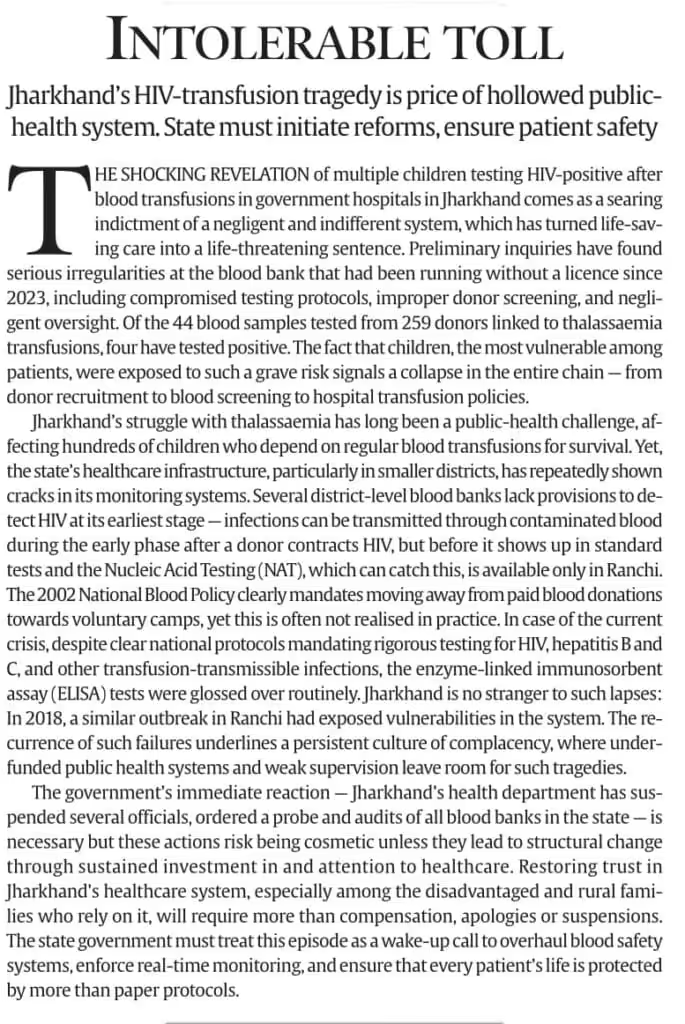
    Several children in Jharkhand, particularly thalassaemia patients, tested HIV-positive after blood transfusions in government hospitals. This exposes serious lapses in blood safety protocols and governance failures in the public health system.

    UPSC Relevance:

    Disease

    UPSC PYQ:

    Q. Which of the following diseases can be transmitted from one person to another through tattooing? (2013)

    1. Chikungunya
    2. Hepatitis B
    3. HIV-AIDS

    Select the correct answer using the codes given below:

    (a) 1 only
    (b) 2 and 3 only 
    (c) 1 and 3 only
    (d) 1, 2 and 3

    About HIV:

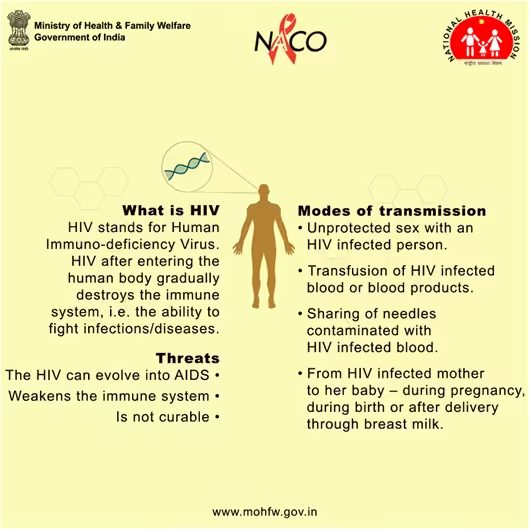
    • HIV (human immunodeficiency virus) is a virus that attacks cells that help the body fight infection, making a person more vulnerable to other infections and diseases. 
    • It is spread by contact with certain bodily fluids of a person with HIV, most commonly during unprotected sex (sex without a condom or HIV medicine to prevent or treat HIV), or through sharing injection drug equipment.
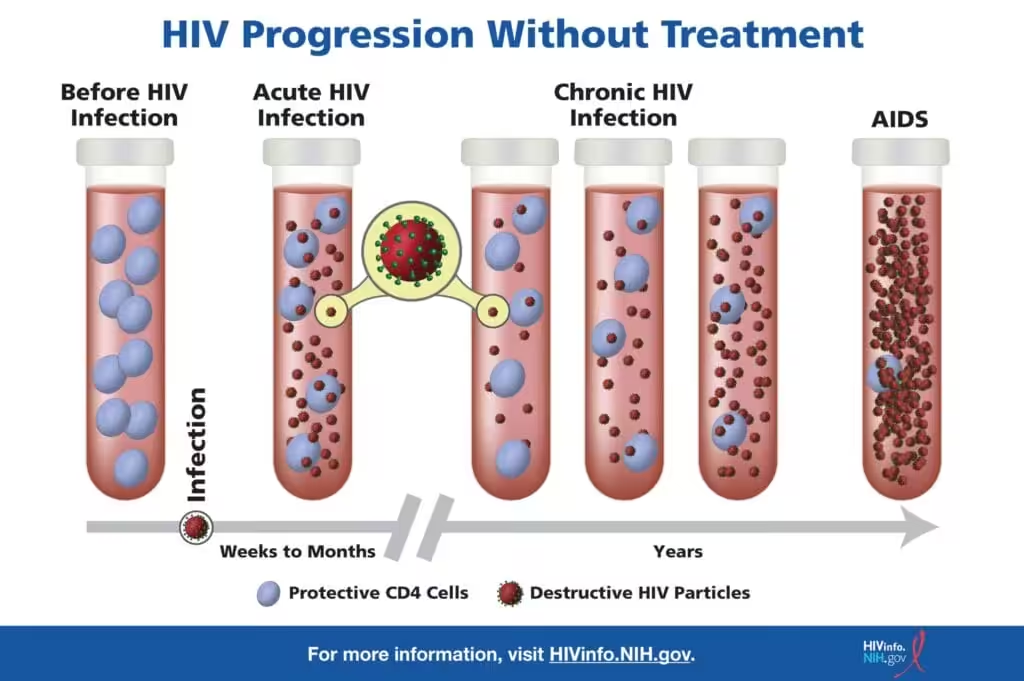
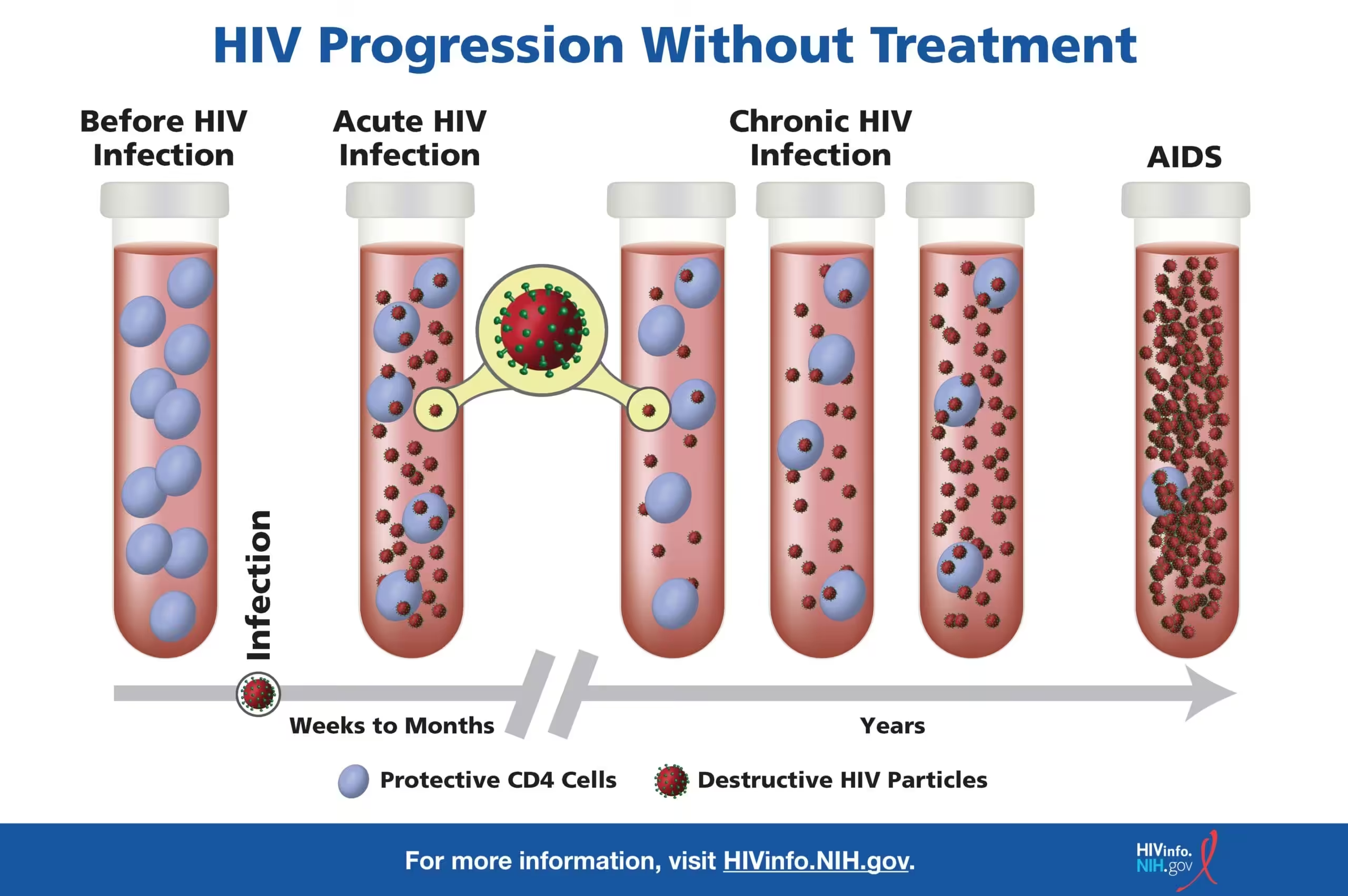
    • If left untreated, HIV can lead to the disease AIDS (acquired immunodeficiency syndrome).

    AIDS stands for acquired immunodeficiency syndrome. AIDS is the most advanced stage of HIV infection.

    image 3

    • The human body can’t get rid of HIV and no effective HIV cure exists. So, once you have HIV, you have it for life. Luckily, however, effective treatment with HIV medicine (called antiretroviral therapy or ART) is available. 

    HIV attacks and destroys the infection-fighting CD4 cells (CD4 T lymphocytes) of the immune system. The loss of CD4 cells makes it difficult for the body to fight off infections, illnesses, and certain cancers.

    How is HIV transmitted?

    HIV can be transmitted through bodily fluids, including blood, semen (“cum”), pre-seminal fluid (“precum”), vaginal fluids, rectal fluids, and breastmilk etc.

    image 4

    HIV scenario in India:

    image 3

    Steps taken by the Government for HIV/AIDS awareness:

    • National Aids Control Organization (NACO), a division of the Ministry of Health and Family Welfare, undertakes the responsibility to strengthen the awareness campaign against HIV/AIDs, through comprehensive multimedia campaigns, including mass media initiatives, and promote available services and facilities across the country.
    • World AIDS Day, observed annually on December 1 since 1988, serves as a global platform to unite people in raising awareness about HIV.
    • India has adopted a 90-90-90 target for combating AIDS. This target was later increased to 95-95-95, out of which 81% people with AIDS have been identified, 88% are being given ART and viral load of 97% identified people has been suppressed.
    • National AIDS Control Programme (NACP) Phase-V: Aims to reduce annual new HIV infections and AIDS-related mortalities by 80% by 2025-26 from the baseline value of 2010. 

    Q2. Which one of the following statements is not correct? (2019)

    (a) Hepatitis B virus is transmitted much like HIV.
    (b) Hepatitis B unlike Hepatitis C, does not have a vaccine.
    (c) Globally, the number of people infected with Hepatitis B and C viruses are several times more than those infected with HIV.
    (d) Some of those infected with Hepatitis B and C viruses do not show the symptoms for many years.

    Need Shift from Food Security to Nutrition Security:

    Open article →Download PDF

    image 5

    WhatsApp Image 2025 11 04 at 07.15.07 21ca34f5

    Context:

    In his inaugural address at the first Emerging Science Technology and Innovation Conclave (ESTIC), Prime Minister Narendra Modi said India’s scientists should generate ideas to move from food security to nutrition security.

    UPSC Relevance:

    Health and nutrition.

    PYQ:

    Q.) Food Security Bill is expected to eliminate hunger and malnutrition in India. Critically discuss various apprehensions in its effective implementation along with the concerns it has generated in WTO. (2013)

    About Nutritional Security and its status in India:

    • Nutritional Security- According to the FAO (2009), nutrition security implies physical, economic and social access to balanced diet, clean drinking water, safe environment, and health care (preventive and curative) for every individual.
    • High Nutritional Insecurity in India (Malnutrition)- According to World Bank Report, despite the sharp decline in extreme poverty in India from 45.9% to 13.4% between 1993 and 2015, India still suffers from a high malnutrition burden.

    Latest Findings of NHFS-5 regarding malnutrition:

    image 5
    • Double Burden of Nutritional Insecurity- According to a new Lancet study, there has been a steady increase in obesity levels in India. India has become one of the countries with a high ‘double burden of nutritional insecurity‘, with the increase in both malnutrition and the obesity levels.

    Reasons for the lack of Nutritional Security in India:

    There are multiple reasons behind the lack of nutritional security in India. These are explained below-

    1. Affordability Issues for the Poor Household– Affordability of nutritious food products, such as green leafy vegetables, protein-rich diet, has become difficult for the poor households in India. The increasing wealth inequality, with top 10% of Indians holding 57% of the national income, has exacerbated nutritional insecurity.

    2. Focus on Staple Crops- Agricultural policies, like Green Revolution, have prioritized the production of staple crops like wheat and rice over diverse, nutrient-rich crops. This has led to micronutrient deficiencies amongst the population.

    3. Calories Fundamentalism- The focus of the Public Distribution Scheme has been limited to ensuring food security and calorie requirement. The need for nutritional development has not been taken into account.

    4. Feminine marginalization in Nutrition- The nutritional requirements of adolescent and young female in poor and lower middle income households are not prioritized. This leads to malnourished female population and their offsprings. For ex- Large prevalence of anaemia due to inadequate focus on iron deficiency in female diet.

    5. Laxity in effective implementation of Child Care practices- Child caring practices, including exclusive breastfeeding, and introduction of complementary food and a diversified diet after the first six months, are not implemented properly. For ex- Only 55% of children in India were exclusively breastfed in 2015-16.

    6. Growth of Fast-food and junk-food Culture- Cheaper and easily available junk food has replaced the nutritious food in the dietary intakes of Indian population. For ex- According to recent Household Consumption Survey, Indians are spending less on cereals and pulses and more on beverages, refreshments and processed food.

    7. Increased income and urbanization- Increased income levels have led to a rise in the consumption of foods high in fats, sugar, and low physical activity. According to a joint study conducted by WHO and ICRIER, India’s ultra-processed food industry has grown at a CAGR of 13.37% in terms of retail sales value between 2011 and 2021.

    Negative effects of malnutrition:

    1. Child Deaths- According to a lancet Study in 2019, a staggering 68% of 1.04 million deaths of children under five years in India were attributable to malnutrition.

    2. Improper development of Children in formative years- Obesity in children results in stunted physical and cognitive development.

    3. Psychosocial Impact- Malnourished Individuals face psychosocial challenges like, body image issues and mental health concerns due to societal stigmas associated with weight.

    4. Economic Burden- Malnutrition increases the economic burden due to productivity losses on account of decreased work efficiency and absenteeism.

    5. Social Inequality and Disparities- Undernutrition and malnutrition perpetuates a cycle of health challenges and economic disadvantages amongst the vulnerable sections, exacerbates existing socio-economic disparities. Women are disproportionately affected by malnutrition, facing challenges related to reproductive health, maternal health, and overall well-being.

    Initiatives undertaken to provide for Nutritional Security in India:

    National Nutrition
    Mission (NNM)
    National Nutrition Mission (NNM), also known as POSHAN Abhiyan has been launched which aims to reduce stunting and underweight and low birth weight, each by 2% per annum; and anaemia amongst children, adolescent girls and women, each by 3% per annum by 2022.
    National Nutrition Strategy (2017)It aims to reduce the prevalence of underweight children (0-3 years) by three percentage points every year by 2022 from NHFS 2015-16 estimates.
    National Breastfeeding Promotion ProgramsPrograms like MAA- Mother’s Absolute Affection and Vatsalya- Matri Amrit Kosh,  aim to strengthen the regulation on breast milk substitutes and improve breastfeeding practice.
    Integrated Child Development Services (ICDS)Integrated Child Development Services provides nutritional meals, preschool education, primary healthcare, immunization, health check-up and referral services to children under 6 years of age and their mothers.
    Midday Meal SchemeIt aims to provide cooked meals to every child within the age group of six to fourteen years studying in classes I to VIII who enrols and attends the school.

    Way Forward:

    1. Change in the Policy Focus– The agricultural policies and programmes should be leveraged to be more ‘nutrition sensitive‘. The focus of food distribution programmes need to shift from ‘calories fundamentalism’ to providing a more diversified food basket, including coarse grains, millets, and pulses to improve the nutritional status of pre-school children and women of reproductive age.

    2. Innovative approaches- Innovative techniques such as bio-fortification, which involves incorporating nutrients into the seeds of major food grains will help to improve the micro-nutrient intake. Various food-based safety nets such as PDS, MDM can include bio-fortified staples to provide a more diversified food basket.

    3. Enhanced Focus on WASH initiatives- Synergy between WASH initiatives (safe drinking water, sanitation and hygiene) and nutritional interventions will have a multiplier effect on nutritional outcomes. This will help in improving child nutritional outcomes and are key to the success of nutritional interventions.

    4. Focus on Women education- Targeted programs for improving the educational status of girls, particularly at the higher educational levels, need to be promoted. This will help in better implementation of child care practices like breastfeeding and nutritional needs of children.

    5. Improving health care services- Improvement of access and utilization of prenatal and postnatal health care services must be prioritized. It would play a significant role in curbing undernutrition amongst children through comprehensive awareness programs and community participation.

    6. Successful International Interventions– India can draw key lessons from these developing countries to tackle the challenge of food insecurity and malnutrition. For ex- Brazil has transformed its food system and is investing in agricultural R&D and social protection programs to reduce the level of hunger in the country. China has attached great importance to early childhood development and has formulated a series of plans in this regard.

    Crop Procurement under MSP 

    Open article →Download PDF
    AD 4nXfkyv0DlN3 hD4pwxIiPwW7UojSrj3YmL w08otG4y0akYUHb5pv8fw472JY9zfFkBHD5tM49 qEs5el IOIuEoKJ3BBwcFP9F3niboAcxIvVpCVIAxaT0Gzm1hjWdAOEgD15T5KA?key=M 4gA9o 4DAWf I yGJaqA

    Why in the News?

    M.P. govt. wants to opt out of  decentralised procurement system.

    UPSC Relevance 

    GS3, Issues related to Direct and Indirect Farm Subsidies and Minimum Support Prices; Public Distribution System – Objectives, Functioning, Limitations, Revamping;

    Prelims

    PYQ

    2019 – What are the reformative steps taken by the government to make food grain distribution system more effective?

    Madhya Pradesh Seeks to Exit Decentralised Procurement

    The Madhya Pradesh government is requesting permission from the Centre to withdraw from the Decentralised Procurement (DCP) scheme.

    • Reason Cited: Chief Minister Mohan Yadav cites “growing financial strain” due to the procurement of wheat and paddy.
    • Request: The CM has written to Union Minister Prahlad Joshi, requesting that the State be allowed to return to the centralised procurement scheme through the Food Corporation of India (FCI).
    • Financial Issues:
      • Wheat and paddy procurement have increased significantly (to 77.74 lakh metric tons and 43.49 lakh metric tons, respectively).
      • The State claims to be suffering huge financial losses under the DCP system due to reasons such as the non-reimbursement of the actual cost from the Central government’s cost sheets.
      • The government is also facing problems in repaying a loan of ₹72,177 crore taken from banks for the decentralised scheme.
      • Impact on Farmers: Critics suggested that the complex FCI procurement process could lead to a large number of farmers’ produce being rejected, forcing them to sell to private traders at low prices.

    Crop Procurement Procedure for MSP in India

    The primary objective of public procurement is to provide an assured remunerative price (MSP) to farmers for their produce and to build a Central Pool of foodgrains for distribution through the Public Distribution System (PDS) and other welfare schemes.

    1. MSP Announcement: The Government of India (GoI) announces the Minimum Support Price (MSP) for 22 mandated crops before the sowing season, based on the recommendations of the Commission for Agricultural Costs and Prices (CACP).
    2. Farmer Registration: Farmers wishing to sell their produce at MSP must register on State Procurement Portals, which includes details of their land, crop, and bank accounts (facilitating Direct Benefit Transfer – DBT).
    3. Establishment of Centres: FCI and State Agencies establish numerous purchase centres at Mandis (wholesale markets) and key points, ensuring farmers can easily access the procurement system.
    4. Quality Check & Purchase: Government agencies purchase the crops conforming to the Fair Average Quality (FAQ) specifications from the registered farmers at the announced MSP.  Farmers are free to sell in the open market if the price is higher than the MSP
    5. Payment: The MSP amount is mandatorily paid directly into the farmer’s bank account via DBT, ensuring transparency and timely receipt.

    Differentiating Centralised and Decentralised Procurement

    The procurement of foodgrains (primarily Wheat and Rice) for the Central Pool is managed under two distinct systems:

    FeatureCentralised Procurement System (Non-DCP)Decentralised Procurement System (DCP)
    Procuring AgencyPrimarily the Food Corporation of India (FCI), either directly or through State Agencies (SAs).The State Government itself and its designated State Agencies.
    Ownership andStorageProcured stocks belong to the Central Pool from the start and are handed over to FCI for storage, subsequent distribution, or inter-state movement.Procured stocks are stored and distributed by the State Government within the state for its Targeted PDS (TPDS) and welfare schemes.
    Surplus ManagementStocks are managed by FCI for movement to deficit states.Surplus stocks (in excess of the State’s TPDS allocation) are handed over to FCI for the Central Pool.
    Funding/ReimbursementFCI handles most initial expenses. State Agencies’ expenditure is fully reimbursed by the Centre after the stock is handed over to FCI.The State Government bears the initial cost of procurement, storage, and distribution. The Centre reimburses the State based on pre-approved provisional and final cost sheets (Economic Cost).
    ObjectiveMaintained as the traditional, primary system.Introduced to reduce transportation costs/transit losses, enhance efficiency, and procure grains suitable for local tastes for PDS distribution.

    Minimum Support Price (MSP): The Farmer’s Price

    The MSP is the guaranteed floor price at which the Central and State government agencies purchase crops from farmers.

    The MSP is recommended by the Commission for Agricultural Costs and Prices (CACP), which considers several factors, including:

    • Demand and supply situation.
    • Market price trends (domestic and global).
    • Inter-crop price parity.
    • Terms of trade between agriculture and non-agriculture sectors.
    • The overall cost of production (CoP).

    The CoP calculation itself is categorized into three levels:

    Cost TypeComponents IncludedStatus in MSP Fixing
    A2Paid-out Costs: Direct expenses in cash and kind incurred by the farmer (seeds, fertilizers, pesticides, hired labour, fuel, irrigation, etc.).Base component.
    A2 + FLA2 + Imputed value of Unpaid Family Labour (FL).Current Basis: The government currently sets the MSP at a level which is at least 1.5 times the All-India Weighted Average A2+FL cost.
    C2A2 + FL + Imputed rental value of Owned Land + Interest forgone on Fixed Capital Assets.Benchmark/Demand: Farmers’ groups often demand that MSP be fixed at 1.5 times C2 cost, arguing this is the true comprehensive cost of production.

    The Cabinet Committee on Economic Affairs (CCEA) takes the final decision on the MSP level.

    Procurement Incidentals: Initial Operational Costs

    Procurement Incidentals are the initial costs incurred by the government agencies (FCI/State Agencies) from the time the grain is purchased at the mandi (market) until it is stored in the initial godown (warehouse) at the procurement centre.

    These costs are fixed by the Central Government (GoI) in consultation with the State Governments and include:

    ComponentDescription
    Statutory ChargesState taxes and levies (Mandi Fees, Rural Development Fund, Sales Tax/VAT, etc.). This often constitutes a large share of incidentals.
    Labour ChargesCost of labour for cleaning, weighing, standardization, bagging, stitching, loading, and unloading at the purchase centre.
    Gunny Bag CostCost of new/used gunny bags (sacks) used for packaging the procured grain.
    Arhatiya / CommissionCommission or fee paid to the Arhatiya (commission agent/middleman) in states where they facilitate the procurement.
    Transport CostCost of moving the foodgrains from the mandi to the designated nearby godown/storage facility.
    Administrative ChargesOverhead charges of the State Agencies involved in the operation.

    Procurement Incidentals are a major part of the overall cost, and controlling high State levies is a recurrent policy challenge.

    3. Economic Cost of Foodgrains

    The Economic Cost is the total cost incurred by the government (FCI/DCP States) for procuring, storing, handling, and distributing the foodgrains.

    Economic Cost = Procurement Cost + Distribution Cost

    A. Procurement Cost (Cost to Acquire the Grain)

    Procurement Cost = MSP + Procurement Incidentals + Bonus (if any)

    B. Distribution Cost (Cost to Deliver the Grain)

    These are the operational costs incurred after the grain is placed in the initial godown until it reaches the Fair Price Shop (FPS) under the PDS.

    • Freight/Transportation: Cost of inter-state movement (rail/road) from procuring states to consuming/deficit states
    • Storage and Handling: Costs for warehousing, fumigation, preservation, and other in-storage labour
    • Interest Cost: Interest paid on the substantial working capital loans utilized by FCI/State Agencies to fund the procurement operations.
    • Transit and Storage Losses: Financial value of losses due to spillage, theft, and wastage during movement and storage

    4. Food Subsidy: The Gap

    The Food Subsidy is the amount the Central Government must pay to FCI and DCP States to cover the difference between the high economic cost and the low price at which the grains are sold to the poor (Central Issue Price – CIP)

    Calculation

    Food Subsidy = Economic Cost of Foodgrains – Average Sales Realization (CIP)

    • Central Issue Price (CIP): The highly subsidized price at which FCI/DCP States issue foodgrains for distribution under the National Food Security Act (NFSA) (e.g., ₹2/kg for wheat, ₹3/kg for rice).
    • Average Sales Realization: The weighted average price the government receives for selling the grains (very low due to NFSA).

    The subsidy is released to FCI/DCP states, ensuring the system remains viable despite the large financial loss on each unit of grain sold.

    Stakeholders and Their Responsibilities/Expenditure

    The MSP procurement involves several key players, with expenditure largely borne by the Central Government, either directly or through reimbursement.

    StakeholderKey ResponsibilityShare in Expenditure/Funding
    Central Government (Ministry of Consumer Affairs, Food & Public Distribution)Sets the MSP and procurement targets. Provides financial policy for procurement (e.g., announcing the Economic Cost). Ultimately bears the Food Subsidy burden.Bears the entire Economic Cost of Foodgrains: This includes the MSP paid to farmers plus all procurement incidentals (mandi charges, transport, storage, interest, etc.).
    Commission for Agricultural Costs & Prices (CACP)Recommends the MSP for crops based on cost of production (including A2+FL and C2), market prices, and other factors.Policy/Administrative cost (internal to the Ministry of Agriculture).
    Food Corporation of India (FCI)Nodal Central Agency. Directly undertakes procurement (in non-DCP states). Manages the Central Pool, buffer stock, inter-state movement, and distribution to deficit states/PDS.Manages funds released by the Centre to pay for MSP and incidentals (in Centralised Procurement).
    State Governments / State Agencies (SAs)Ground-level operations: Establishes purchase centres, registers farmers, conducts quality checks, and procures the produce. Stores and distributes (under DCP).Initial Expenditure/Float: SAs/State Governments often incur initial expenses for procurement and are later reimbursed by the Centre (under both systems). Financial strain arises from delays in this reimbursement (as seen in the MP case).

    Challenges

    • Limited Scope : While the government announces MSP for 23 crops, extensive procurement is effectively limited to Paddy (Rice) and Wheat due to their critical role in the Public Distribution System (PDS). Farmers growing pulses (like Tur/Arhar) or oilseeds often have to sell their produce to private traders below the MSP because government procurement centres are either delayed, insufficient, or have minimal quotas for these crops.
    • Geographic Skew : Procurement is disproportionately high in states like Punjab, Haryana, and Western Uttar Pradesh, which have well-developed Mandi (market) infrastructure and strong historical procurement mechanisms (FCI presence).
      • Farmers in the eastern or northeastern states, or those in remote districts of large states, rarely benefit from MSP due to inadequate procurement infrastructure and lack of local awareness
    • Ignoring Market Signals : This policy focus creates a massive surplus of rice and wheat (far beyond buffer requirements) while causing shortages in other essential crops like pulses, oilseeds, and millets, requiring expensive imports and ignoring the need for crop diversification.
    • Storage and Quality : India’s storage capacity (especially for modern, weather-resistant silos) is often insufficient, leading to open-air storage (plinth storage), which causes significant wastage and spoilage due to rain, pests, and rot.
      • Furthermore, strict quality checks (Fair Average Quality – FAQ norms) are often used to justify massive deductions on the price paid to farmers, especially when grains have high moisture content due to unseasonal rain, leading to farmer distress sales.
    • Logistical Delays : Delays in the opening of procurement centres or bureaucratic hurdles in the payment process force small and marginal farmers, who lack holding capacity and need immediate cash, to sell their produce quickly to local traders at distress prices (below MSP).
    • Middlemen and Corruption : Despite the goal of direct farmer benefit, the system is often exploited by middlemen and commission agents. In many markets, middlemen (Arhatiyas or large traders) exploit farmers’ lack of information or immediate need for cash. They may collude to offer prices below MSP, cite spurious quality issues, or use their influence in the mandis to pressure small farmers into quick, underpriced sales, thereby capturing the difference between the market price and the MSP intended for the farmer.
    • Financial Strain on States (Decentralized Procurement) (Madhya Pradesh/Telangana): As highlighted in the initial text, DCP states must first borrow large sums (like the ₹72,177 crore loan mentioned by the MP CM) to fund the procurement operations. If the Centre delays the reimbursement of the “Economic Cost,” or disputes the cost incurred, the State government faces a severe financial strain, interest burden, and a debt trap. This can eventually force the state to limit or slow down future procurement.
    • Fiscal Cost : The Food Subsidy (the gap between the Economic Cost and the low Central Issue Price) is one of the largest budget expenditures. If the government were to legally guarantee MSP for all 23 crops, the estimated fiscal cost would be enormous, potentially diverting funds from other critical sectors and increasing the fiscal deficit.
    • International Trade : India’s MSP programs for certain crops (especially rice) have been challenged at the World Trade Organization (WTO), as the subsidy element is calculated to exceed the allowed limits (10% of the value of production), creating potential trade disputes and limiting export competitiveness.
    • Environmental degradation : Case Study (Punjab/Haryana): The high MSP for Paddy (a water-intensive Kharif crop) in Punjab and Haryana has led to monoculture and the excessive use of groundwater for irrigation. This has caused a rapid decline in the water table and widespread soil degradation (salinization/alkalinity), making the agricultural system environmentally unsustainable in the long run.

    Procurement System Reforms: Shifting from Acquisition to Income

    1. Reforming Price Assurance (MSP Implementation)

    RecommendationSourceRationale
    Shift to Price Deficiency Payment (PDP)NITI Aayog, PM-AASHA SchemeInstead of physical procurement, the government pays the farmer the difference between the MSP and the Mandi (market) price. This minimizes government storage/transport costs and encourages private trade competition.
    Implement the MSP ‘Plus’ ModelAshok Dalwai CommitteeEnsure MSP calculation adheres to the 1.5 times (A2+FL) formula (MSP being 50% above paid-out cost + imputed value of family labour) to truly make farming remunerative.
    Promote Negotiable Warehouse Receipts (NWRs)Shanta Kumar CommitteeFarmers can store their produce in accredited warehouses and get a loan (e.g., 80% of MSP value) from banks against the receipt. They can sell the grain later when prices are favorable, reducing distress sales.
    End State Bonuses on MSPShanta Kumar CommitteeThe Centre should clearly state that it will not accept grains into the Central Pool if the state has paid a bonus over and above the announced MSP, as this distorts market signals and increases central procurement costs.

    2. Restructuring FCI and Decentralization

    These reforms aim to improve the efficiency and financial health of the Food Corporation of India (FCI) and the Decentralised Procurement (DCP) system.

    • Regional Focus for FCI: The Shanta Kumar Committee recommended that FCI should hand over all procurement operations of rice and wheat to states that have gained sufficient experience (like Punjab, Haryana, MP, Chhattisgarh, etc.). FCI should then focus its own procurement efforts on states with weak procurement systems and small landholdings, such as Eastern Uttar Pradesh, Bihar, West Bengal, and Assam, to ensure MSP benefits reach more farmers.
    • Decentralize Storage: FCI should outsource its stocking operations to state agencies, Central Warehousing Corporation (CWC), and private sector entities under the Private Entrepreneur Guarantee (PEG) scheme, often in the form of modern silos for bulk handling.
    • Pro-active Liquidation Policy: End the “open-ended” procurement policy. FCI must adopt a pro-active and transparent liquidation policy to sell surplus stocks in the open market or export markets before they spoil, rather than holding stock far in excess of buffer norms.

    3. Crop Diversification and Market Liberalization

    To address the ecological harm caused by the wheat-paddy monoculture, the system must incentivise other crops.

    • Focus MSP on Pulses and Oilseeds: The Economic Survey and Dalwai Committee emphasize the need to persistently raise MSPs for pulses, oilseeds, and millets to address the imbalance and reduce India’s import dependence on edible oils and pulses.
    • Liberalize Agricultural Markets: NITI Aayog calls for the liberalization of output markets by amending the old regulations (like the APMC Act) to allow farmers greater freedom to sell their produce directly to processors, exporters, and organized retailers outside the designated Mandis, thereby promoting private investment in the post-harvest value chain.
    • Promote FPOs: Strengthening Farmer Producer Organisations (FPOs) is a key recommendation by the Ashok Dalwai Committee to increase the bargaining power of small and marginal farmers and attract private investment.

    4. Technology and Financial Reforms

    • Direct Benefit Transfer (DBT): Gradually introduce cash transfers (DBT) to PDS beneficiaries, starting in major cities. This reduces the cost of physical storage and distribution and plugs leakages.
    • End-to-End Computerisation: Implement complete end-to-end computerisation of the procurement, storage, and distribution process to prevent diversion of foodgrains and enhance transparency.
    • Quality Checks: Conduct proper quality checks (FAQ norms) using modern, mechanized processes (as recommended by the Shanta Kumar Committee) to prevent corruption and ensure the procured grain is fit for distribution.

    The High Seas Treaty

    Open article →Download PDF
    AD 4nXc1MqPsuScC6l0mZnJKz8GuFSqZtJY zbO6H3QIfR4kaiJEJWXOFZko3VDSUl8SwsmKSGrAqGrDdjX1FVO1IBTvwk9h6UR TK3xPJGDkAYFrg9OpLqfX9elJHHy5km2ks 17MeT?key=M 4gA9o 4DAWf I yGJaqA

    Why in the News?

    The High Seas Treaty was ratified by over 60 countries in September; it will now be enforced in January 2026.

    UPSC Relevance 

    GS3, Conservation, Environmental Pollution and Degradation, Environmental Impact Assessment.

    Prelims – Environmental laws 

    PYQ

    2018 – What is wetland? Explain the Ramsar concept of ‘wise use’ in the context of wetland conservation. Cite two examples of Ramsar sites from India.

    2023

    Consider the following statements: 

    1. Recently, all the countries of the United Nations have adopted the first-ever compact for international migration, the ‘Global Compact for Safe, Orderly and Regular Migration (GCM)’.

    2. The objectives and commitments stated in the GCM are binding on the UN member countries.

    3. The GCM addresses internal migration or internally displaced people also in its objectives and commitments.

    How many of the above statements are correct?

    a) Only one                        

    b) Only two

    c) All three                        

    d) None

    The High Seas Treaty 2023

    • Formal Name: Biodiversity Beyond National Jurisdiction (BBNJ) agreement.
    • Legally Binding treaty operating under the UNCLOS, 1982
      • 3rd treaty to be approved under UNCLOS.
      • Adopted by UN.
    • Purpose: Creates a framework to govern and manage common marine biodiversity on the high seas.
      • High seas – seas beyond 200 nautical miles or about 370 Kms from any country’s coastline.
        • 2/3rd of the world’s oceans.
    • Key Goals: Sets rules for sustainable use of marine biodiversity and addresses threats from climate change, overfishing, and pollution.
    • Enforcement: As of September 2025, the treaty reached 60 state ratifications (the required number) to trigger its entry into force. This means it is scheduled to take effect globally on January 17, 2026.
    • Members : Currently, the Agreement counts 145 signatories and 74 Parties (countries that have fully ratified it).
      • Both states and Regional Organisations can be members.
      • Signed by India in September 2024. India is not a founding Member.
    • Features:
      • Marine Genetic Resources (MGRs): Identifies them as the “common heritage of humankind.” Commitment to the sustainable use of MGRs.
      • Area-Based Management Tools (ABMTs): Formal establishment of Marine Protected Areas (MPAs) for conservation.
      • Environmental Impact Assessments (EIAs): Required for activities potentially affecting these areas, considering cumulative and transboundary impacts.
      • Access and Benefit-Sharing (ABS): An access and benefit-sharing committee will be established to frame guidelines for accessing benefits from the commercialization of resources.
      • Financial and Capacity Support: A special fund will be established to help developing countries, alongside provisions for Capacity Building and technology transfer.

    UNCLOS

    FeatureKey Fact/InformationSignificance
    Formal NameUnited Nations Convention on the Law of the Sea (UNCLOS)Establishes a comprehensive legal framework for all marine and maritime activities globally.
    Adoption/EntryAdopted in 1982; Entered into force in 1994 (after 60 ratifications).Replaced the four separate 1958 Geneva Conventions with a single, unified treaty.
    Core PrincipleLaw and Order for the World’s Oceans.Governs the use of oceans, allocation of rights and jurisdiction, resource management, and peaceful dispute settlement.
    Maritime Zones DefinedDefines and regulates five main zones measured from the baseline: Internal Waters, Territorial Sea, Contiguous Zone, Exclusive Economic Zone (EEZ), and High Seas.Clearly delineates coastal state sovereignty and international waters/rights.
    EEZ LimitCoastal states have sovereign rights over resources up to 200 nautical miles from the baseline.Grants coastal states exclusive rights to explore, exploit, conserve, and manage living and non-living resources in this zone.
    High Seas StatusBeyond the EEZ (Area) is considered the “common heritage of mankind” (seabed resources).Ensures traditional freedoms (navigation, overflight, etc.) but also includes obligations for conservation.
    Institutions CreatedEstablished the International Seabed Authority (ISA) and the International Tribunal for the Law of the Sea (ITLOS).ISA regulates deep seabed mining; ITLOS provides a mechanism for dispute settlement.

    Meaning of ‘Common Heritage of Humankind’

    • Definition: This principle supports equitable access and benefit-sharing of marine resources for all nations.
    • Contrast: It is in tension with the principle of “freedom on the high seas,” which emphasizes unrestricted rights of states for navigation, resource usage, and research.
    • Application in Treaty: The common heritage principle is only partially applicable in the treaty, particularly regarding MGRs, which is described as a compromise rather than a full resolution.

    Significance of the BBNJ Treaty

    The BBNJ Treaty, also known as the High Seas Treaty, is important for managing areas beyond national Exclusive Economic Zones (EEZ) for several reasons:

    • Conservation:
      • 30×30 Pledge: It establishes a legal framework to help countries meet the pledge agreed at COP15 to protect 30% of the world’s land and sea by 2030.
    • Regulation and Resource Management:
      • Vulnerability Reduction: The mandatory Regulation-EIA (Environmental Impact Assessment) will reduce the vulnerability of these areas from potentially damaging activities like deep-sea mining.
      • Resource Potential: It helps manage resources like polymetallic nodules, deep-water oil reserves, fisheries, and tourism.
    • Inclusion and Participation:
      • Data Sharing: Inter-country sharing of data and technology will help advance scientific research and environmental monitoring.
      • Inclusion: Access and benefit sharing, alongside seeking Free, Prior, and Informed Consent (FPIC) of Indigenous Peoples and local communities, promotes inclusion and empowerment.

    Challenges and Ambiguities of the High Seas Treaty

    • Uncertainty over Guiding Principles:
      • The concurrent application of the “common heritage of humankind” and “freedom of the high seas” principles creates ambiguity in exploration, research, and benefit-sharing.
    • Governance of Marine Genetic Resources (MGRs):
      • There were concerns over “biopiracy” and the unfair exploitation of discoveries by developed countries, potentially excluding developing nations from profits.
      • The treaty includes a framework for sharing monetary and non-monetary benefits, but lacks clear details on how such benefits will be calculated or shared.
    • Reluctance of Major Powers:
      • The treaty’s effectiveness is threatened by the non-participation of key nations like the U.S., China, and Russia, who have yet to ratify it.
    • Interaction with Multilateral Institutions:
      • The treaty must coexist and not conflict with existing international institutions (like the International Seabed Authority and Regional Fisheries Management Organisations) to prevent legal conflicts and fragmentation of ocean governance.
    • Ambiguous Language:
      • The text suggests the ambiguous language concerning MGRs and the common heritage of humankind principle will challenge the execution of the treaty, despite the treaty providing more clarity on other aspects of UNCLOS.
    • Scope and Coverage:
      • It falls short of addressing key threats like fishing and industrial expansion such as deep-sea mining.
      • Access and benefit sharing is limited to only aquatic resources.
    • Enforcement Weaknesses:
      • It did not identify a suitable international enforcement agency.
      • It did not negotiate or include financial commitments for enforcement.
    • Delayed Implementation : 
      • The long, drawn-out process of ratification (requiring 60 ratifications) has delayed its implementation.

    Way Ahead 

    To successfully implement the BBNJ Treaty and address its challenges, the following actions are suggested:

    • Universal Ratification:
      • Focus: Encourage universal ratification, especially by key maritime nations like the U.S., China, and Russia, whose non-participation currently undermines the treaty’s effectiveness and enforcement capacity.
    • Clarify and Finalize Operational Mechanisms:
      • Marine Genetic Resources (MGRs): Finalize clear, detailed, and enforceable operational guidelines for calculating and distributing both monetary and non-monetary benefits to ensure fair and equitable sharing.
      • Environmental Impact Assessments (EIAs): Develop and harmonize clear standards and guidelines for the EIA process, ensuring a strong scientific basis for all assessments.
    • Strengthen Institutional Cooperation:
      • Coordination: Establish robust coordination mechanisms to integrate the BBNJ framework with existing international and regional bodies, such as the International Seabed Authority (ISA) and Regional Fisheries Management Organisations (RFMOs), to prevent legal conflicts and fragmentation of ocean governance.
    • Ensure Effective Implementation and Enforcement:
      • MPA Management: Implement regular monitoring and adopt dynamic management approaches for Marine Protected Areas (MPAs).
      • Compliance: Develop mechanisms to ensure compliance, particularly concerning the “freedom of the high seas” principle conflicting with conservation efforts, and encourage states to take responsibility for activities under their flag.
    • Commit to Funding and Capacity Building:
      • Financial/Technical Support: Ensure sustained financial and technological support to developing countries, making the established fund operational and ensuring technology transfer mechanisms are effective to achieve the “no country left behind” principle

    Right to Safe Roads under Article 21

    Open article →Download PDF

    Context & Background

    • Case: High Court on Its Own Motion v. State of Maharashtra (2025 SCC OnLine Bom 3869)
    • Issue: Recurring pothole-related deaths in Maharashtra despite repeated judicial directions.
    • Judgment: Bombay High Court held that the right to safe and well-maintained roads is a part of the Right to Life under Article 21.
    • Compensation: ₹6 lakh for deaths, ₹50,000–₹2.5 lakh for injuries; recovery from erring officials and contractors.

    Constitutional & Legal Dimension

    • Article 21 Interpretation: Extends beyond mere animal existence to include dignity, safety, and humane living conditions (as per Maneka Gandhi v. Union of India, 1978).
    • Right to Civic Infrastructure: Similar expansion seen in Municipal Council, Ratlam v. Vardhichand (1980), where the SC held local bodies duty-bound to provide sanitation and prevent health hazards.
    • Strict Liability Principle: Even if private contractors err, ultimate accountability rests with the State (Doctrine of vicarious liability).
    • Continuing Mandamus: Court’s year-on-year monitoring aligns with M.C. Mehta v. Union of India (Oleum Gas Leak case, 1987) — judicial innovation for continuous enforcement.

    Administrative & Governance Dimension

    • Multi-tier Responsibility: Road governance involves State PWD, Municipal bodies (MCGM, NMC, PMC), and private contractors — often leading to diffused accountability.
    • Judicial Finding: Despite being one of Asia’s richest municipal corporations, MCGM failed to maintain safe roads, violating Article 21.
    • Precedent: Puducherry v. PWD Contractors Association (Madras HC, 2022) similarly held officers personally liable for poor-quality roads.
    • Mechanisms Mandated:
      • 48-hour pothole repair window.
      • Grievance redressal via apps, helplines, and social media.
      • Disciplinary action and blacklisting of negligent contractors.

    Social & Human Rights Dimension

    • Impact Distribution:
      • 80% of pothole victims are two-wheeler riders and pedestrians from lower- and middle-income groups.
      • Road safety is thus a social justice and equity issue under Articles 14 and 21.
    • Case Study: Akhilesh Tiwari v. State of Maharashtra (2021) — compensation awarded for pothole death, invoking Article 21 and the public law remedy principle.
    • Public Health Angle: Unsafe roads contribute to 1.68 lakh road deaths (MoRTH, 2023), affecting national productivity and healthcare costs.

    Policy and Legislative Interface

    • Motor Vehicles (Amendment) Act, 2019: Provides for enhanced penalties and liability of contractors (Section 198A).
    • National Road Safety Policy (2010): Recognizes road safety as a public health imperative — now reinforced constitutionally by this ruling.
    • Smart Cities & AMRUT Missions: Must integrate “complete streets” and universal accessibility under urban liveability indicators.
    • Judicial Linkage: The Court’s order aligns with Supreme Court’s Road Safety Committee (2014) directions in SaveLIFE Foundation v. Union of India (2014).

    Engineering & Environmental Dimension

    • Recurring Monsoon Damage: Reveals lack of climate-resilient road design — absence of drainage planning and use of substandard materials.
    • Global Example: Singapore’s Public Utilities Board integrates stormwater management with road design; India can replicate similar models.
    • Judicial Directive: Mandated roads to last minimum 5–10 years — enforcing lifecycle accountability.
    • Technological Solutions: Cold-mix asphalt, permeable pavements, and AI-based road inspection tools (as used in Hyderabad and Gurugram Smart Cities).

    Fiscal and Institutional Challenges

    • Budget Prioritization: Focus on new projects over maintenance — “visibility politics.”
    • Corruption & Collusion: Tender manipulation, lack of third-party quality checks.
    • Data Deficiency: Absence of centralized accident and pothole mapping systems.
    • Implementation Lag: Judicial orders often remain on paper without administrative backing.

    Recommendations / Way Forward

    Reform AreaActionable StepsSupporting Example
    AccountabilityEstablish Urban Road Safety Authorities with legal backingSimilar to SC’s Road Safety Committee (2014)
    Design & MaintenanceMandate annual third-party auditsDelhi PWD partnered with IIT Delhi for audit in 2023
    Legal EnforcementEnact National Road Maintenance & Safety Act integrating Art. 21 obligationsOn lines of Public Liability Insurance Act, 1991
    Funding MechanismCreate a dedicated “Road Maintenance Fund” separate from capex budgetsKerala’s Maintenance Grant Model
    Citizen EmpowermentUse GIS mapping and public complaint dashboardsHyderabad’s GHMC Pothole Tracking App
    Climate-Resilient InfrastructureAdopt weather-proof materials and sustainable drainageJapan’s Porous Pavement Systems

    Broader Significance

    • Rights-based Governance Shift: Infrastructure becomes a constitutional entitlement, not an administrative favour.
    • Judicial Federalism: State High Courts emerging as guardians of civic rights (similar to Delhi HC’s rulings on air quality and waste management).
    • Institutional Learning: Reinforces constitutional morality in public administration — “duty of care” as a constitutional value.
    • Link to SDGs: Advances SDG 3 (Health), SDG 11 (Sustainable Cities), and SDG 16 (Justice & Strong Institutions).

    Conclusion

    The Bombay High Court judgment transforms pothole deaths from administrative negligence to a constitutional violation. It bridges the gap between citizen safety and State responsibility, signalling that the Right to Life includes the Right to Safe Mobility.
    For sustainable impact, the ruling must catalyze legislative reforms, urban engineering innovation, and citizen-driven accountability, ensuring that Article 21 protection truly extends to the streets where Indians live and travel.