Why in News?
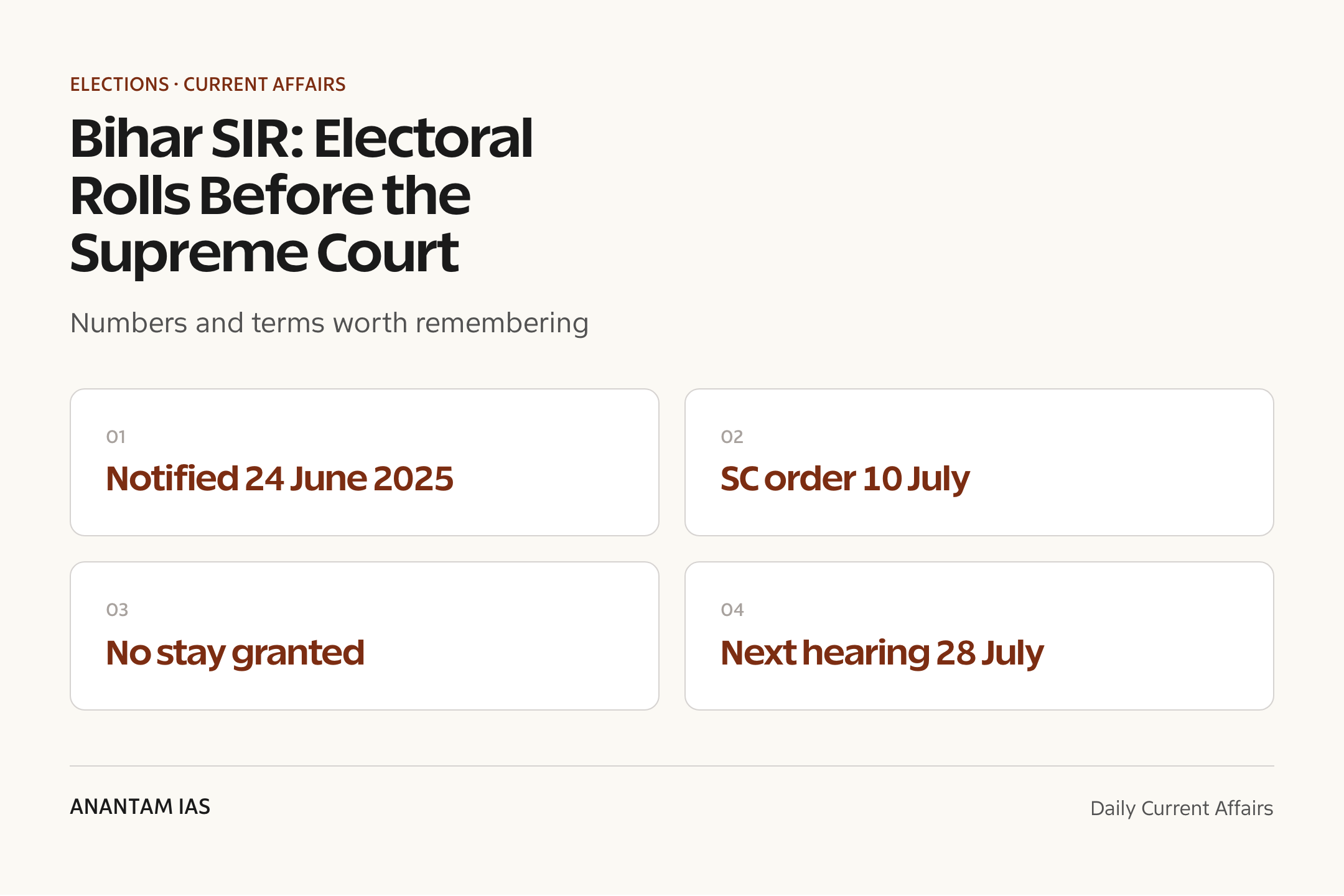
On 10 July 2025, the Supreme Court heard a clutch of petitions challenging the Election Commission of India (ECI)‘s Special Intensive Revision (SIR) of Bihar’s electoral rolls, notified on 24 June 2025 ahead of the state assembly polls. A bench of Justice Sudhanshu Dhulia and Justice Joymalya Bagchi declined to stay the exercise but flagged serious questions on its timing and the documents the ECI would accept.
The Court permitted the ECI to proceed for now and, in the interest of justice, directed the Commission to consider Aadhaar, the ration card and the EPIC (voter ID) among acceptable proofs of identity. It asked why a full revision was tied to a poll-bound state rather than done nationwide, and listed the matter for 28 July 2025. There is no final verdict yet — the challenge to the ECI’s powers and the burden of proving eligibility remains live before the Court.
- The ECI notified the Special Intensive Revision (SIR) of Bihar’s rolls on 24 June 2025, with 1 July 2025 as the qualifying date.
- On 10 July 2025 the Supreme Court declined to stay the SIR but did not endorse it either — the petitions were kept pending.
- The bench directed the ECI to consider Aadhaar, ration card and EPIC as valid identity documents during verification.
- It questioned why the exercise was linked to the Bihar assembly elections and not run for the whole country.
- The ECI was asked to file its counter-affidavit within a week; the draft rolls were slated for publication in August 2025.
- The matter was posted for the next hearing on 28 July 2025 before the regular bench.
The development matters in the context of:
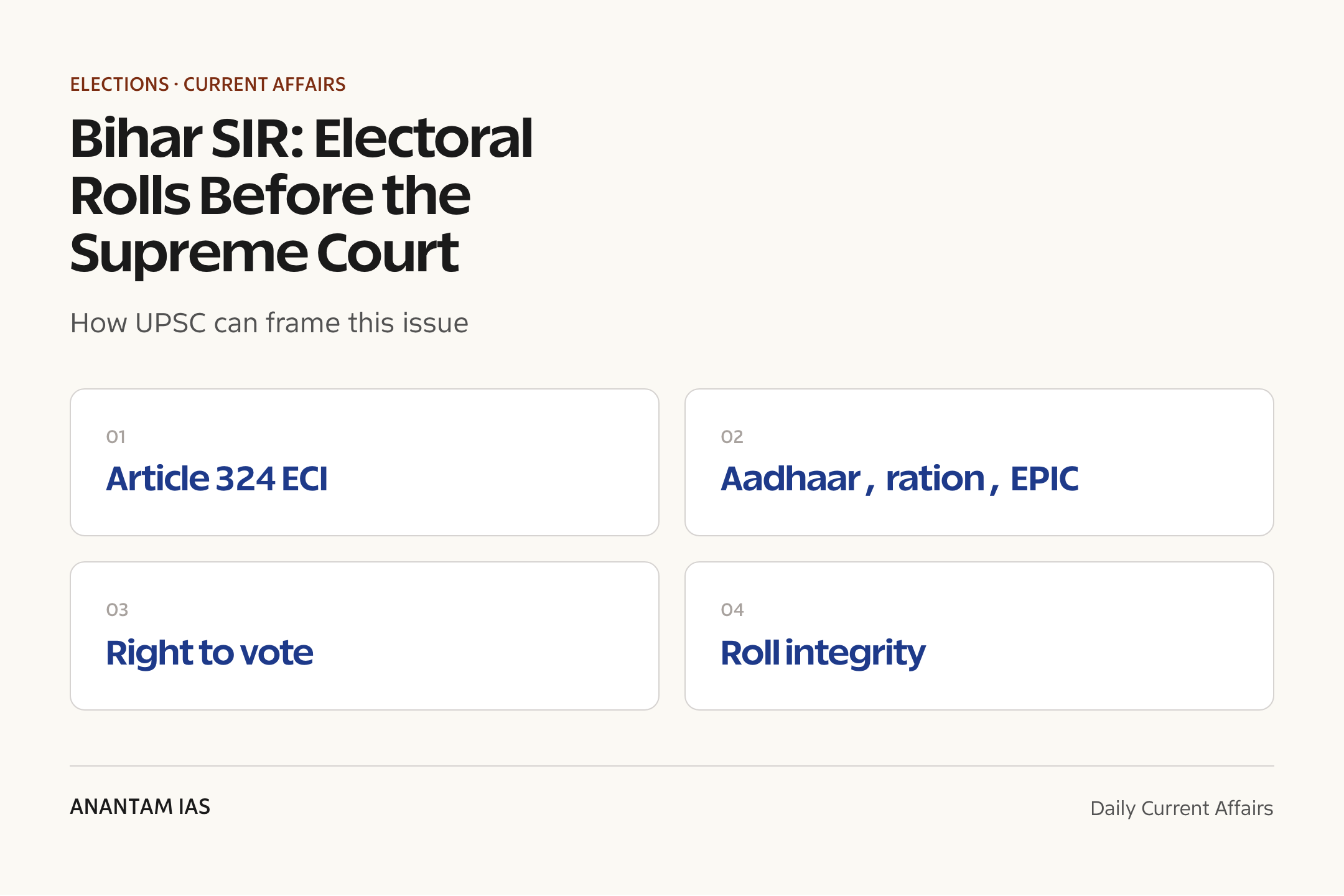
- Why this matters for polity: it tests the scope and limits of the ECI’s Article 324 superintendence over electoral rolls against judicial review.
- Why this matters for governance: roll revision shifts the burden of proof of eligibility onto the voter, raising due-process concerns close to an election.
- Why this matters for social justice: the poor, migrants and the document-less risk disenfranchisement if accepted proofs are too narrow.
UPSC Relevance
Prelims Relevance
- Article 324 vests superintendence, direction and control of elections and electoral rolls in the Election Commission of India.
- Article 325 bars a separate roll or exclusion from it on grounds only of religion, race, caste or sex.
- Article 326 guarantees adult suffrage — every citizen 18 or older, not otherwise disqualified, may vote.
- The Representation of the People Act, 1950 governs preparation and revision of electoral rolls; the 1951 Act governs the conduct of elections.
- The Registration of Electors Rules, 1960 set out the procedure for intensive and summary revisions.
- A Special Intensive Revision (SIR) is a fresh, house-to-house enumeration of voters, unlike a routine summary revision.
- EPIC is the Electors Photo Identity Card issued by the ECI.
- Citizenship and its proof fall within the Ministry of Home Affairs domain, not the ECI.
- Petitioners moved the Court under Article 32, citing Articles 14, 19 and 21.
- Disqualifications for registration are listed in Section 16 of the Representation of the People Act, 1950.
Mains Relevance
GS Paper 2
- The Election Commission’s constitutional powers under Article 324 and the scope of judicial review over a constitutional body.
- Electoral-roll integrity versus the right to vote: balancing roll purity against the risk of disenfranchisement and due process.
GS Paper 2
- Free and fair elections as part of the basic structure, and the institutional independence of the ECI.
Essay
- The vote as the great equaliser: who carries the burden of proving belonging?
- Independent institutions and the courts: guardianship without overreach.
Background and Context
What a Special Intensive Revision Is
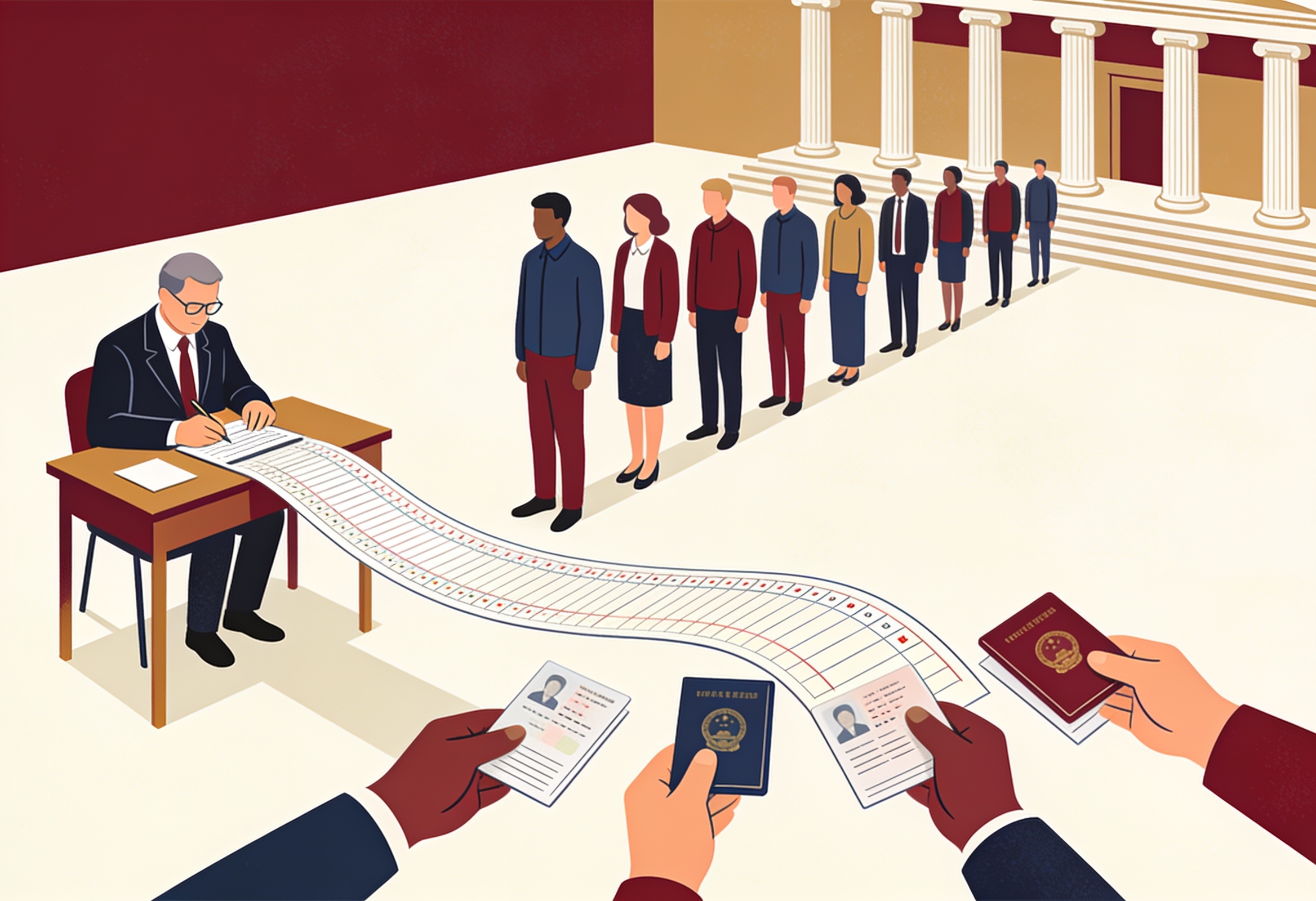
An SIR is a far deeper exercise than the routine roll update voters are used to.
- A summary revision simply updates the existing roll through claims and objections; an intensive revision rebuilds the roll through fresh house-to-house enumeration.
- The Special Intensive Revision notified on 24 June 2025 required Bihar’s electors to be re-verified, with 1 July 2025 set as the qualifying date.
- Enumeration forms had to be filled and supported by documents; the draft roll was scheduled for publication in August 2025, followed by claims and objections.
- The ECI framed it as cleaning the roll of duplicates, deaths and shifted voters and ensuring only eligible citizens remain enrolled.
The Constitutional Basis: Article 324 and the ECI
The ECI’s authority to revise rolls flows from the Constitution and two key statutes.
- Article 324 gives the ECI superintendence, direction and control of the preparation and revision of electoral rolls.
- The Representation of the People Act, 1950 and the Registration of Electors Rules, 1960 spell out how rolls are made and revised.
- Article 326 fixes the franchise on universal adult suffrage, so any exercise must not silently raise eligibility tests beyond what the law allows.
- The ECI argued the SIR falls squarely within its power to keep the roll accurate; petitioners argued the manner and timing went beyond it.
The Petitions and Who Filed Them
A range of civil-society bodies and political figures took the SIR to the Supreme Court.
- Petitioners included the Association for Democratic Reforms (ADR), the People’s Union for Civil Liberties (PUCL) and individual leaders such as Manoj Jha, Mahua Moitra and activist Yogendra Yadav.
- They moved the Court under Article 32, alleging breaches of Articles 14, 19 and 21 and a conflict with Article 326.
- The core grievance: a fresh enumeration so close to the polls could disenfranchise lakhs of genuine voters who lack the demanded papers.
- The Supreme Court had agreed on 7 July 2025 to hear the bundle of petitions, leading to the 10 July hearing.
What the Court Said on 10 July 2025
The bench let the exercise continue but recorded pointed concerns rather than approval.
- The bench of Justice Sudhanshu Dhulia and Justice Joymalya Bagchi declined to stay the SIR, letting the ECI proceed.
- It directed the ECI to consider Aadhaar, ration card and EPIC as acceptable identity proof, widening the document base.
- It questioned why a nationwide-style revision was being run only in a poll-bound Bihar, and observed the Commission could have acted earlier.
- It noted that verifying citizenship is the domain of the Ministry of Home Affairs, not the ECI, and asked for a counter-affidavit within a week.
Why the Document List Matters
The fight is largely about which papers a voter must produce, and who is excluded if they cannot.
- Demanding rare documents like a birth certificate or proof of a parent’s birthplace is hard for the poor, migrants and many rural voters.
- Adding Aadhaar, ration card and EPIC to the list, as the Court urged, broadens the proofs most ordinary citizens already hold.
- Aadhaar is an identity and residence proof, not by itself a proof of citizenship — a distinction at the heart of the dispute.
- The wider the accepted set, the lower the risk that a roll-cleaning drive turns into silent disenfranchisement.
The Larger Stakes for Elections
The case sits at the meeting point of clean rolls, an independent ECI and the right to vote.
- Roll integrity — removing duplicates, the dead and the migrated — is a legitimate and necessary goal of any election body.
- But a revision close to an election can change the composition of the electorate, so process and transparency carry constitutional weight.
- Free and fair elections form part of the basic structure, making the ECI’s independence and the Court’s oversight equally important.
- Whatever the eventual ruling, the case will shape how intensive revisions are run in other states in future.
Way Forward
Keep the document base inclusive
- Accept widely held proofs — Aadhaar, ration card, EPIC and similar — so genuine voters are not dropped for want of rare papers.
- Separate the identity question from the citizenship question, leaving the latter to the appropriate authority and process.
Build in transparency and remedy
- Publish deletions with reasons and give voters a clear, time-bound route to file claims and objections.
- Run wide awareness drives and field-level help so the document-less are guided, not excluded.
Settle the law before scaling up
- Let the Supreme Court clarify the limits of an SIR under Article 324 before such revisions are extended to other states.
- Time any future intensive revision well ahead of elections to avoid last-minute disruption to the electorate.
Conclusion
The Bihar SIR has turned a routine-sounding roll revision into a constitutional question. On 10 July 2025 the Supreme Court chose a middle path — it let the Election Commission continue, yet pressed it to accept Aadhaar, ration cards and EPIC, and asked hard questions about timing and the citizenship-identity line.
The deeper issue is the balance between a clean electoral roll and the right to vote, and between the Commission’s Article 324 powers and judicial review. With petitions still pending and the next hearing on 28 July 2025, the matter is unresolved. How the Court eventually draws these lines will guide every intensive revision that follows.
UPSC Practice Questions
Prelims MCQ 1
With reference to electoral rolls in India, consider the following statements:
- Article 324 vests the superintendence, direction and control of the preparation of electoral rolls in the Election Commission of India.
- The Representation of the People Act, 1950 deals with the preparation and revision of electoral rolls.
- Article 326 of the Constitution provides for universal adult suffrage.
How many of the above statements are correct?
(a) Only one (b) Only two (c) All three (d) None
Answer: (c) All three
Explanation:
All three are correct. Article 324 gives the ECI control over roll preparation and revision, the 1950 Act governs the rolls themselves (the 1951 Act covers conduct of elections), and Article 326 enshrines universal adult suffrage.
Prelims MCQ 2
In its order of 10 July 2025 on the Special Intensive Revision of Bihar’s electoral rolls, the Supreme Court did which of the following?
(a) Stayed the Special Intensive Revision entirely (b) Struck down the Election Commission’s notification (c) Declined to stay it and asked the ECI to consider Aadhaar, ration card and EPIC (d) Transferred the matter to the Ministry of Home Affairs
Answer: (c) Declined to stay it and asked the ECI to consider Aadhaar, ration card and EPIC
Explanation:
The bench did not stay the SIR or strike down the notification. It allowed the ECI to proceed while directing it to consider Aadhaar, the ration card and the EPIC as identity proof, and posted the matter for 28 July 2025.
UPSC Mains Questions
- The Special Intensive Revision of Bihar’s electoral rolls has revived the debate between electoral-roll integrity and the right to vote. In this light, examine the scope and limits of the Election Commission’s powers under Article 324 and the role of judicial review.
- A revision of electoral rolls close to an election can shift the burden of proving eligibility onto the voter. Discuss the due-process and social-justice concerns this raises, and suggest safeguards against disenfranchisement.
Sources: NewsOnAir, Prasar Bharati and Supreme Court Observer.
Frequently Asked Questions
What is the Special Intensive Revision in Bihar?
The Special Intensive Revision (SIR) is a fresh, house-to-house re-enumeration of Bihar’s voters that the Election Commission notified on 24 June 2025 ahead of the assembly polls, with 1 July 2025 as the qualifying date. Unlike a routine summary update, it rebuilds the roll and asks electors to re-verify their details with documents.
What did the Supreme Court say on 10 July 2025?
A bench of Justice Sudhanshu Dhulia and Justice Joymalya Bagchi declined to stay the SIR but let the Election Commission proceed. It directed the ECI to consider Aadhaar, ration cards and the EPIC voter ID as valid identity proof, questioned why the revision was tied to poll-bound Bihar, and listed the matter for 28 July 2025.
Did the Supreme Court uphold or strike down the SIR?
Neither. As of mid-July 2025 the Court had only passed an interim order declining a stay; it had not delivered a final verdict. The petitions challenging the exercise remained pending before the Court, with the next hearing set for 28 July 2025.
Under which articles is the SIR being challenged?
Petitioners moved the Supreme Court under Article 32, alleging violations of Articles 14, 19 and 21 and a conflict with Article 326 on adult suffrage. They argued the exercise could disenfranchise lakhs of genuine voters and went beyond the powers the Election Commission holds under Article 324.
Who filed the petitions against the Bihar SIR?
The petitioners included the Association for Democratic Reforms and the People’s Union for Civil Liberties, along with political leaders such as Manoj Jha and Mahua Moitra and activist Yogendra Yadav. They contended the timing and document demands risked excluding poor, migrant and document-less voters.
Why does the list of accepted documents matter?
Because it decides who can stay on the roll. Demanding rare papers like birth certificates burdens the poor and migrants, while accepting Aadhaar, ration cards and EPIC covers documents most citizens already hold. Aadhaar, though, proves identity and residence, not citizenship by itself, which is why the dispute is so sharp.
Tell Google you want more of this.
Add Anantam IAS as a preferred sourceOne tap, and this site shows up more often in your own Top Stories, AI Overviews and AI Mode. Remove it any time.