Why in News?
Through late 2025 the Bio-RIDE (Biotechnology Research Innovation and Entrepreneurship Development) scheme anchored India’s bioeconomy strategy as the operational vehicle for the BioE3 Policy. Run by the Department of Biotechnology (DBT) under the Ministry of Science and Technology, it merges DBT’s two long-running umbrella schemes and bolts on a new Biomanufacturing and Biofoundry component.
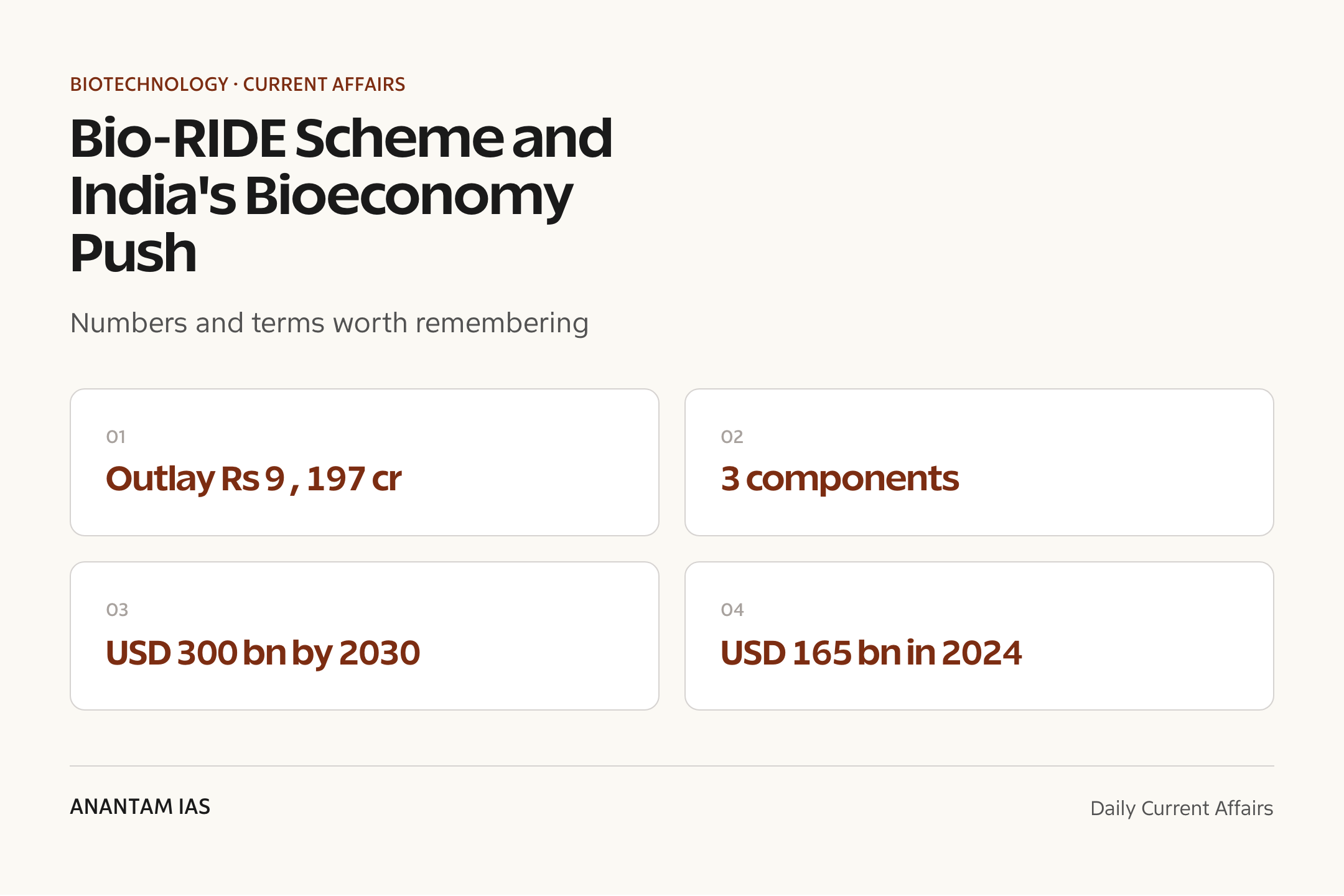
PIB confirmed the Union Cabinet cleared the unified scheme with an outlay of Rs 9,197 crore for the 15th Finance Commission cycle (2021-22 to 2025-26), positioning India to push its bioeconomy toward roughly USD 300 billion by 2030.
- Three components: Biotechnology R&D, Industrial and Entrepreneurship Development (I&ED), and the new Biomanufacturing and Biofoundry arm.
- Total outlay Rs 9,197 crore across 2021-22 to 2025-26 (15th Finance Commission period).
- Directly operationalises the BioE3 Policy (Biotechnology for Economy, Environment and Employment), approved by the Cabinet in 2024.
- Targets a bioeconomy of about USD 300 billion by 2030, up from roughly USD 165 billion in 2024.
- Implemented by the Department of Biotechnology and its autonomous institutions, including the Biotechnology Industry Research Assistance Council (BIRAC).
The development matters in the context of:
- Signals a deliberate shift from chemical-based production toward sustainable bio-based manufacturing.
- Frames biotechnology as a pillar of the Viksit Bharat and self-reliant-India agenda.
- Ties India’s bioeconomy ambitions to global sustainability goals and the circular economy.
UPSC Relevance
Prelims Relevance
- Bio-RIDE full form: Biotechnology Research Innovation and Entrepreneurship Development.
- Merges DBT’s two umbrella schemes plus a new Biomanufacturing and Biofoundry component.
- Three components: R&D, I&ED, Biomanufacturing and Biofoundry.
- Outlay Rs 9,197 crore; period 2021-22 to 2025-26 (15th Finance Commission).
- Implementing nodal body: Department of Biotechnology (DBT), Ministry of Science and Technology.
- BioE3 expands to Biotechnology for Economy, Environment and Employment.
- Bioeconomy target: about USD 300 billion by 2030.
- BIRAC is the DBT body that supports biotech startups and innovation.
- A biofoundry is a facility for rapid design-build-test-learn cycles in synthetic biology.
- BioE3 themes: bio-based chemicals, functional foods, precision biotherapeutics, climate-resilient agriculture, carbon capture, marine and space biotech.
Mains Relevance
GS Paper 3
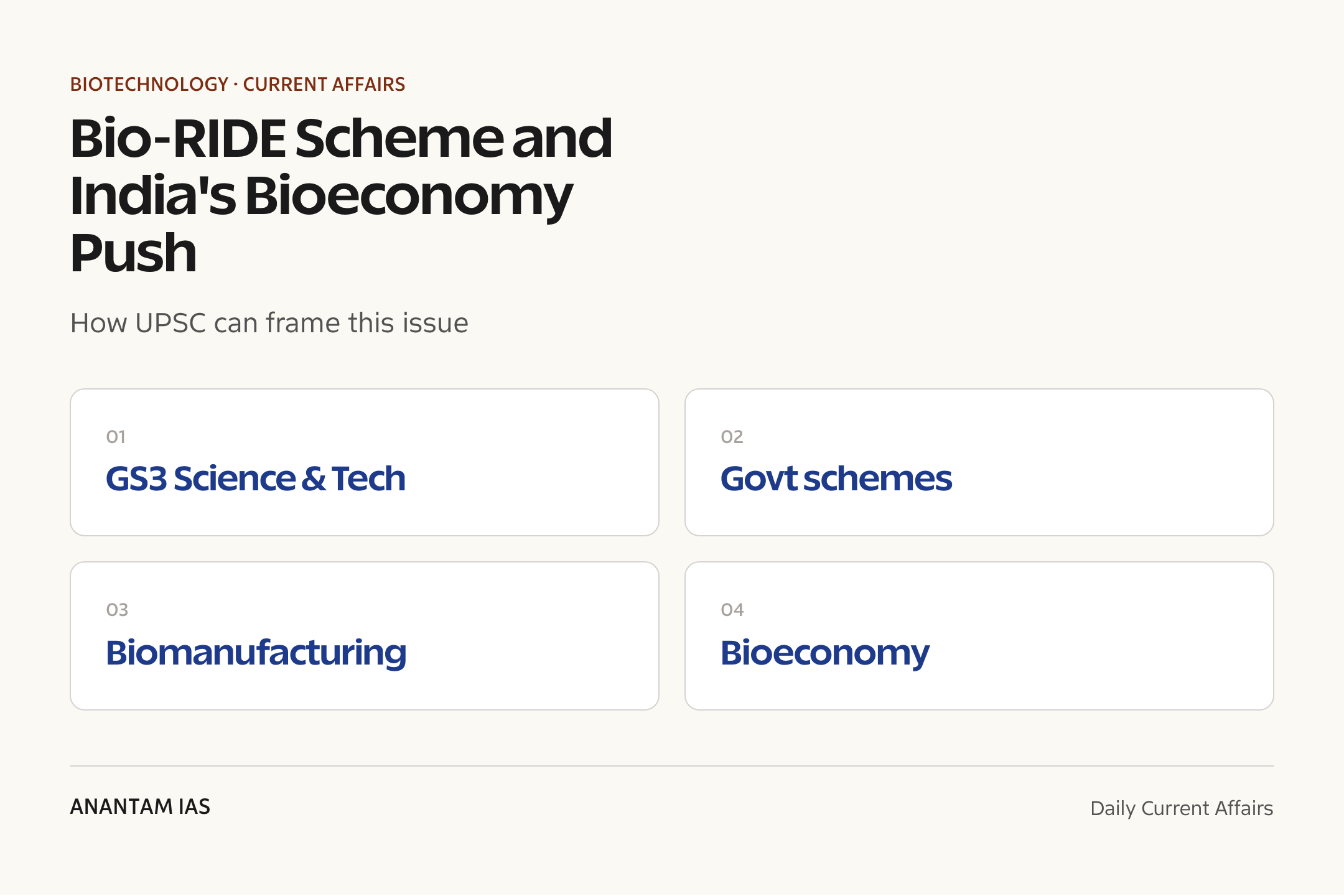
- Science and technology developments and their applications; indigenous biomanufacturing and high-value bio-based production.
- Government schemes and budgetary outlays for innovation, entrepreneurship and self-reliance in a strategic sector.
GS Paper 2
- Governance and institutional design: merging umbrella schemes for efficiency and outcome focus.
Essay
- Bioeconomy as the next engine of sustainable, employment-generating growth.
- From chemistry to biology: technology choices and the green transition.
Background and Context
What Bio-RIDE actually is
Bio-RIDE is a consolidation, not a brand-new programme.
- Merges the Department of Biotechnology’s two pre-existing umbrella schemes into one unified vehicle.
- Adds a third, new component: Biomanufacturing and Biofoundry.
- Aims to cut administrative duplication and align funding behind clear bioeconomy outcomes.
- Cleared by the Union Cabinet with an outlay of Rs 9,197 crore for 2021-22 to 2025-26.
The three components
The scheme is built on three pillars that run from lab to market.
- Biotechnology Research and Development (R&D) — basic and translational research, fellowships, infrastructure.
- Industrial and Entrepreneurship Development (I&ED) — startups, incubation, technology transfer and commercialisation, largely through BIRAC.
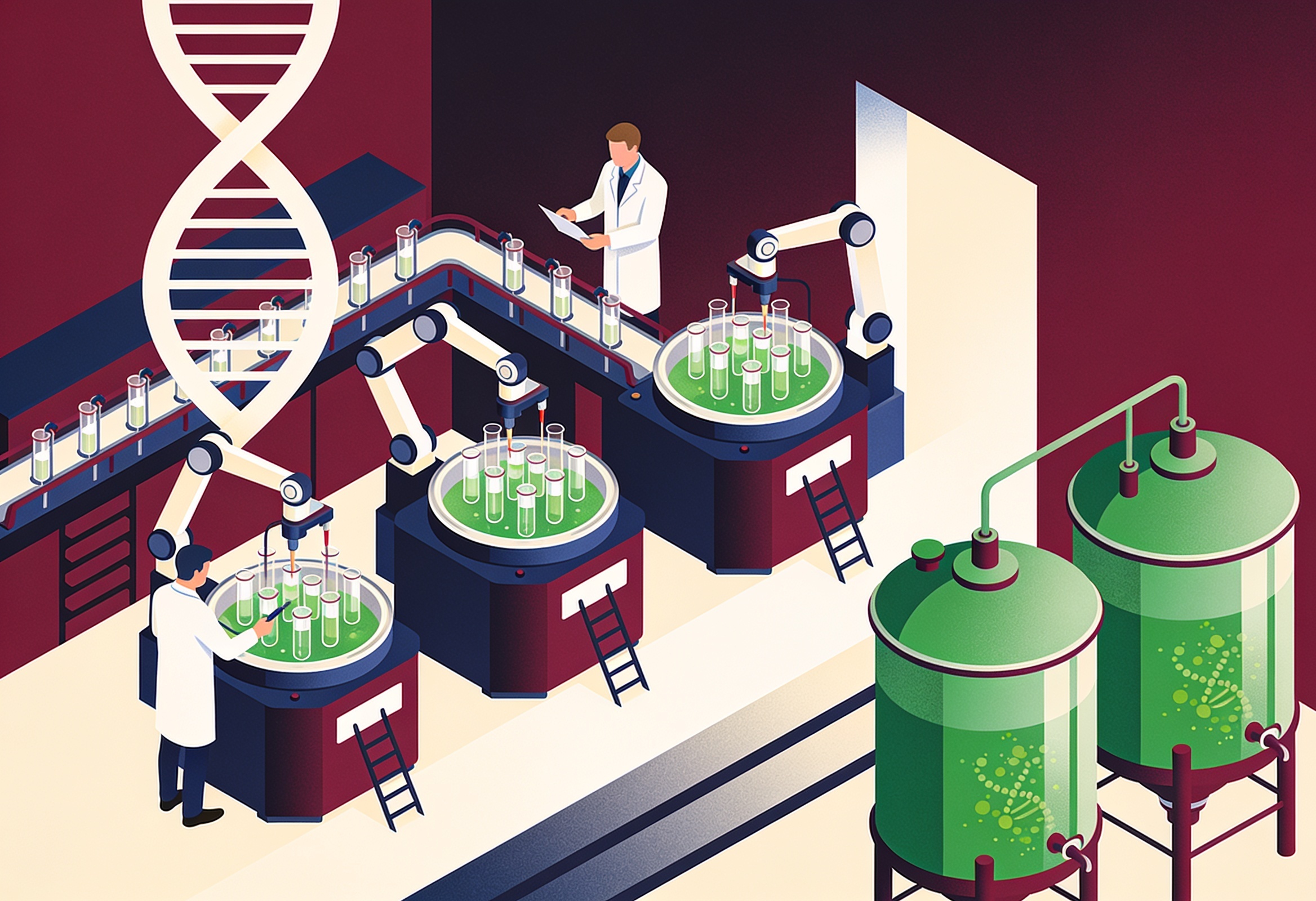
- Biomanufacturing and Biofoundry — the new arm that scales bio-based products and builds shared design-build-test-learn facilities.
- Together they try to close the long-standing gap between academic research and industrial application.
Why a Biomanufacturing and Biofoundry arm
This is the headline addition and the engine of the bioeconomy bet.
- Promotes high-value, bio-based production — bio-based chemicals, enzymes, materials and biotherapeutics.
- A biofoundry automates and standardises synthetic-biology workflows so products move faster from concept to scale.
- Targets indigenous solutions across healthcare, agriculture productivity and industrial inputs.
- Pushes a shift from chemical-based to sustainable bio-based manufacturing, feeding a circular bioeconomy.
How it operationalises BioE3
Bio-RIDE is the funding and delivery side of the BioE3 Policy.
- BioE3 — Biotechnology for Economy, Environment and Employment — was approved by the Cabinet in 2024 as the policy framework.
- BioE3 prioritises themes like bio-based chemicals, precision biotherapeutics, climate-resilient agriculture, carbon capture and marine and space biotechnology.
- Bio-RIDE supplies the schemes, money and institutions that turn that policy into projects.
- The pairing mirrors how a policy (vision) needs an umbrella scheme (instrument) to be implemented.
The bioeconomy numbers
The strategy is anchored to a steep growth trajectory.
- India’s bioeconomy was roughly USD 10 billion in 2014 and around USD 165 billion in 2024.
- Government target: about USD 300 billion by 2030.
- Growth reflects a fast-expanding base of biotech startups, products and services over the decade.
- Sustaining the curve depends on manufacturing capacity, talent and patient capital — exactly what Bio-RIDE tries to fund.
Institutions in the chain
Delivery runs through DBT and its specialised bodies.
- Department of Biotechnology (DBT) — nodal department under the Ministry of Science and Technology.
- BIRAC — the DBT public-sector enterprise that funds and mentors biotech startups and bridges industry and academia.
- DBT’s network of autonomous research institutes supports the R&D component.
- Biofoundry infrastructure is meant to be a shared national asset, not siloed in single labs.
Significance and limits
The promise is large; so are the execution risks.
- Could create skilled jobs, cut import dependence in pharma and chemicals, and support green goals.
- Scaling biomanufacturing needs reliable feedstock, energy and regulatory clarity on synthetic biology and GM products.
- A USD 300 billion target by 2030 is ambitious against a 2024 base and demands sustained private investment.
- Outcomes hinge on whether the merged scheme genuinely improves coordination rather than re-labelling old programmes.
Way Forward
Build the manufacturing backbone
- Stand up shared biofoundries and scale-up facilities accessible to startups and MSMEs.
- Secure stable bio-feedstock supply chains and clean energy for fermentation and bioprocessing.
Fix the enablers
- Provide clear, predictable regulation for synthetic biology and bio-based products.
- Expand patient risk capital and skilling so research translates into commercial production.
Track Bio-RIDE against measurable outcomes — products commercialised, startups scaled, jobs and exports created — so the bioeconomy target rests on delivery, not announcements.
Conclusion
Bio-RIDE reframes India’s biotech spending around one idea: turn research strength into manufacturing and a bigger bioeconomy. By merging DBT’s umbrella schemes and adding a Biomanufacturing and Biofoundry arm, it gives the BioE3 vision a concrete instrument.
The Rs 9,197 crore outlay and the USD 300 billion-by-2030 ambition are statements of intent. Whether they materialise depends on shared infrastructure, regulatory clarity and private capital — the unglamorous work of moving from policy to product.
UPSC Practice Questions
Prelims MCQ 1
With reference to the Bio-RIDE scheme, consider the following statements:
- It is implemented by the Department of Biotechnology under the Ministry of Science and Technology.
- It merges two umbrella schemes and adds a Biomanufacturing and Biofoundry component.
- It operationalises the BioE3 Policy.
How many of the above statements are correct?
(a) Only one (b) Only two (c) All three (d) None
Answer: (c) All three
Explanation:
Bio-RIDE is a Department of Biotechnology scheme that consolidates DBT’s two umbrella schemes, adds a new Biomanufacturing and Biofoundry arm, and serves as the delivery vehicle for the BioE3 Policy. All three statements are correct.
Prelims MCQ 2
The ‘BioE3’ in India’s biotechnology policy stands for Biotechnology for:
(a) Energy, Economy and Education (b) Economy, Environment and Employment (c) Economy, Equity and Employment (d) Environment, Energy and Entrepreneurship
Answer: (b) Economy, Environment and Employment
Explanation:
BioE3 expands to Biotechnology for Economy, Environment and Employment, the policy framework that Bio-RIDE operationalises.
UPSC Mains Questions
- The Bio-RIDE scheme reorganises India’s biotechnology funding to drive a bio-based economy. Examine its design and assess how far it can realise the BioE3 Policy’s bioeconomy ambitions. (250 words)
- Biomanufacturing is being positioned as a sustainable alternative to chemical-based industry. Discuss the opportunities and challenges in scaling India’s bioeconomy toward its 2030 target. (250 words)
Sources: PIB, Department of Biotechnology (Ministry of Science & Technology) and DD News.
Frequently Asked Questions
What is the Bio-RIDE scheme?
Bio-RIDE stands for Biotechnology Research Innovation and Entrepreneurship Development. It is a Department of Biotechnology scheme that merges DBT’s two earlier umbrella schemes and adds a new Biomanufacturing and Biofoundry component to fund research, startups and bio-based production, with a total outlay of about Rs 9,197 crore.
What are the three components of Bio-RIDE?
The scheme has three pillars: Biotechnology Research and Development (R&D); Industrial and Entrepreneurship Development (I&ED), which supports startups and commercialisation; and the newly added Biomanufacturing and Biofoundry component for scaling sustainable bio-based products.
How does Bio-RIDE relate to the BioE3 Policy?
BioE3 (Biotechnology for Economy, Environment and Employment) is the policy framework approved in 2024. Bio-RIDE is the funding and delivery instrument that operationalises BioE3, supplying the schemes, money and institutions needed to turn the policy vision into projects.
What is a biofoundry?
A biofoundry is a facility that automates and standardises synthetic-biology workflows through rapid design-build-test-learn cycles. It lets researchers and startups engineer and scale biological products faster, making it central to the biomanufacturing push under Bio-RIDE.
What is India’s bioeconomy target?
India aims to grow its bioeconomy to about USD 300 billion by 2030. The base was roughly USD 10 billion in 2014 and around USD 165 billion in 2024, so the target represents a steep but deliberate expansion the scheme is meant to support.
Which body implements Bio-RIDE?
The Department of Biotechnology (DBT) under the Ministry of Science and Technology implements Bio-RIDE, working through autonomous institutes and the Biotechnology Industry Research Assistance Council (BIRAC), which funds and mentors biotech startups.
Tell Google you want more of this.
Add Anantam IAS as a preferred sourceOne tap, and this site shows up more often in your own Top Stories, AI Overviews and AI Mode. Remove it any time.