Why in News:
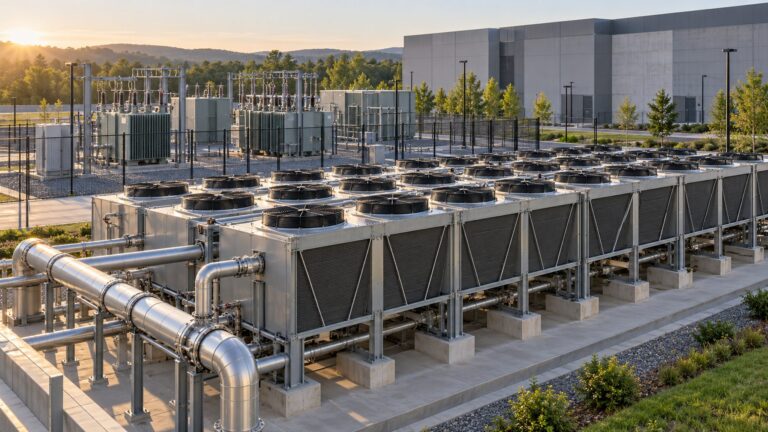
- At the India AI Impact Summit (2026), senior officials from Grid India warned that AI data centres may alter grid planning due to their large, dynamic power demand.
- Discussions have intensified around renewable integration, storage, and the possible role of nuclear energy in powering hyperscale AI infrastructure.
UPSC Relevance:
GS III – Infrastructure, Energy, Environment, Science & Technology
Introduction
Artificial Intelligence (AI) is emerging as a foundational technology for economic growth, governance, healthcare, logistics, and defence. However, AI systems depend on energy-intensive data centres that operate 24/7 and require continuous electricity and cooling.
India, while aspiring to become a global AI hub, has also committed to achieving Net Zero emissions by 2070. This raises a critical policy question:
- Can India expand AI infrastructure without undermining its climate commitments and grid stability?
Why is AI Increasing Energy Demand in India?
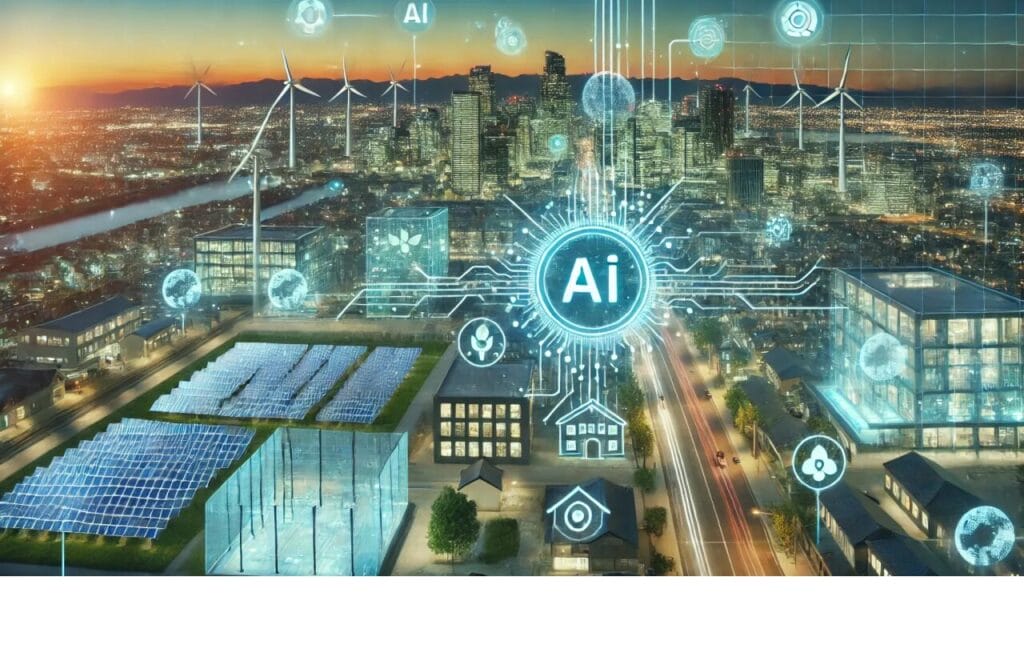
AI workloads, especially those using advanced GPUs, are significantly more energy-intensive than conventional cloud computing.
Growth Indicators:
- Installed data centre capacity:
- ~520 MW (2020)
- ~1.2–1.5 GW (2025)
- 6–10 GW projected by 2030
- Electricity demand from data centres could increase from ~0.5 GW today to ~7 GW by 2030.
- Water consumption estimated at ~150 billion litres in 2024.
Why Energy Demand is High:
- 24/7 operations
- High-performance computing
- Cooling requirements in tropical climate
- Backup and redundancy systems
Thus, AI is not merely a digital phenomenon; it is an infrastructure and energy challenge.
How Do Data Centres Affect Grid Stability?
According to Grid India, AI data centres are:
- Large transmission-level loads
- Highly concentrated geographically
- Variable and “spiky” in demand
- Capable of sudden grid isolation (“silent exit”)
Grid Risks:
- Disturbance due to sudden load withdrawal.
- Increased reserve and balancing requirements.
- Stress on transmission infrastructure.
- Need for higher-quality, uninterrupted power.
Traditional grid planning, designed for gradual industrial demand growth, must now adapt to hyperscale AI loads.
What are the Environmental Concerns?
(A) Carbon Emissions Risk
India’s renewable energy capacity has expanded significantly, yet renewables are intermittent.
AI data centres require:
- Firm, baseload electricity.
- High reliability.
If powered by fossil fuels, they could:
- Lock India into carbon-intensive pathways.
- Increase emissions trajectory.
- Complicate Net Zero 2070 target.
(B) Water Stress
Cooling infrastructure consumes enormous quantities of water.
Concerns:
- Major data centre hubs (Mumbai, Chennai, Hyderabad, Bengaluru) are water-stressed.
- Trade-off between air cooling (energy-intensive) and water cooling (water-intensive).
Thus, AI growth intersects with urban water governance.
What are the Policy Gaps in India?
Despite rapid expansion, regulatory preparedness remains limited.
Key Gaps:
- No mandatory environmental disclosure
- No compulsory reporting of:
- Power Use Efficiency (PUE)
- Water Use Efficiency (WUE)
- Carbon intensity
- No compulsory reporting of:
- Fragmented policy framework
- 15 states have data centre policies.
- Only a few incorporate sustainability norms.
- No binding national AI-energy framework.
- Lack of strategic siting policy
- No national plan for data centre zoning aligned with:
- Renewable energy corridors
- Water availability
- Grid readiness
- No national plan for data centre zoning aligned with:
- Grid code limitations
- Standards not yet fully evolved for inverter-based hyperscale loads.
Institutions like the Central Electricity Authority and the Bureau of Energy Efficiency will need to play a stronger regulatory role.
Is the AI vs Climate Debate a False Binary?
The debate is often framed as:
Either pursue AI growth
Or protect climate commitments
However, this framing is flawed.
Why It Is a False Binary:
- AI can improve renewable forecasting.
- AI enhances grid optimisation.
- AI supports energy efficiency.
- AI aids predictive maintenance.
Thus, AI can be both:
- An energy consumer.
- A climate solution enabler.
The challenge is governance design, not technological inevitability.
What Lessons Can India Learn from Global Experiences?
Several countries have faced AI-induced grid stress:
| Country | Response |
| Ireland | Data centres ~20% of electricity; stricter grid rules |
| USA | Co-location with gas plants |
| Singapore | Temporary pause on new data centre approvals |
| Netherlands | Restrictions on hyperscale centres |
Lessons:
- Unplanned expansion leads to fossil lock-in.
- Grid congestion increases consumer tariffs.
- Regulatory delays create policy uncertainty.
India must plan before capacity multiplies.
What Policy Measures Can Align AI Growth with Climate Goals?
(1) Mandatory Efficiency Standards
- Introduce star rating systems for data centres.
- Set benchmarks for energy and water efficiency.
- Mandatory sustainability disclosure.
(2) Renewable + Storage Integration
- Co-location with solar/wind.
- Long-duration storage (battery + pumped hydro).
- Round-the-clock green power contracts.
- Strengthening open access mechanisms.
(3) Grid Modernisation
- Upgrading transmission infrastructure.
- Updating grid codes for dynamic loads.
- Mandating on-site backup and storage.
- Resource adequacy planning.
(4) Strategic Location Planning
- Pre-identified national data centre zones.
- Avoidance of water-stressed areas.
- Alignment with renewable-rich regions.
(5) Role of Nuclear Energy
To achieve Net Zero, modelling suggests India may require large-scale nuclear expansion.
Advantages:
- Low-carbon baseload power.
- Suitable for hyperscale operations.
Challenges:
- High capital cost.
- Long gestation period.
- Social licence and safety concerns.
Therefore, nuclear should complement — not replace — renewables and storage.
How Can Demand-Side Efficiency Reduce Energy Burden?
Energy efficiency must also come from:
- Optimised AI model design.
- Use of heterogeneous computing (not all tasks need high-power GPUs).
- Advanced semiconductor innovations.
- Reduced data movement architectures.
The objective should shift from:
Maximising compute power
to
Maximising social impact per unit of energy consumed.
Conclusion
AI-driven data centres represent a structural transformation in India’s power system.
If poorly planned:
- They risk increasing emissions.
- They may strain grids and water systems.
- They could undermine Net Zero goals.
If strategically integrated:
- They can accelerate renewable adoption.
- Improve grid efficiency.
- Strengthen India’s digital competitiveness sustainably.
Thus, the real policy challenge is not choosing between AI and climate action, but designing an integrated AI–energy governance framework. India’s success will depend on foresight, regulatory clarity, infrastructure planning, and technological optimisation.
Practice Questions
- “Artificial Intelligence is as much an energy challenge as it is a technological revolution.” Discuss in the Indian context.
- Examine the implications of rapid data centre expansion on India’s power sector and climate commitments.
Tell Google you want more of this.
Add Anantam IAS as a preferred sourceOne tap, and this site shows up more often in your own Top Stories, AI Overviews and AI Mode. Remove it any time.