Why in news?
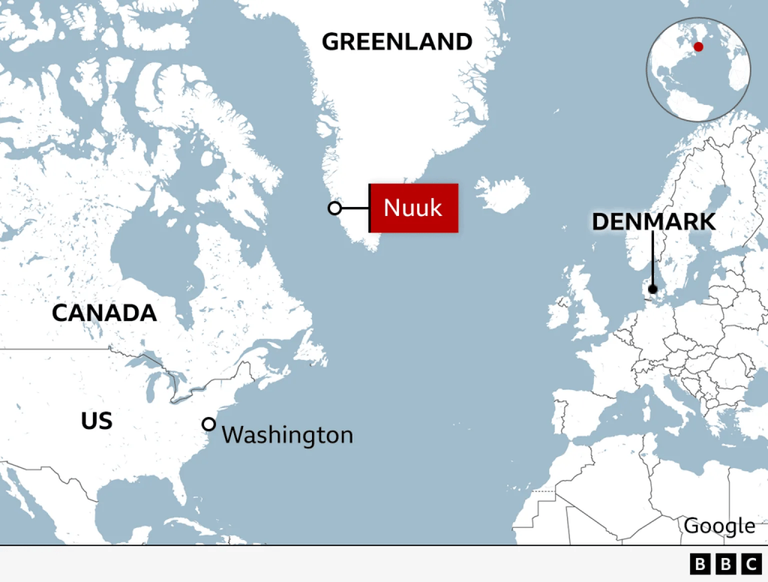
Support for the UNGA resolution against the U.S. embargo on Cuba fell sharply to 130 votes; India still backed it.
UPSC Relevance
Mains GS2 – Effect of policies and politics of developed countries on India’s interests; Bilateral, regional and global groupings
What is Unilateralism?
Unilateralism means a country acting on its own in foreign affairs, without consulting or seeking approval of other countries or international bodies. It is the opposite of multilateralism, where decisions are taken collectively through institutions like the UN or WTO.
A related term is Unilateral Coercive Measures (UCMs) – sanctions or embargoes imposed by one country without UN Security Council approval. Under Article 41 of the UN Charter, only the UNSC can impose sanctions binding on all members. The UN Human Rights Council has a Special Rapporteur that studies the negative impact of UCMs on human rights.
The Cuba Embargo – Background
| Year | Development |
|---|---|
| 1959 | Cuban Revolution under Fidel Castro; American properties nationalised |
| 1962 | President Kennedy imposed a near-total trade embargo on Cuba |
| 1992 | Cuban Democracy (Torricelli) Act tightened the embargo; UNGA passed its first resolution against it |
| 1996 | Helms-Burton Act – penalised even foreign companies dealing with Cuba (extraterritorial reach) |
| 2015 | Obama-era thaw – embassies reopened; in 2016 the U.S. abstained on the UNGA vote for the first time |
| 2017 onwards | Trump administration reversed the thaw; Cuba placed back on the State Sponsors of Terrorism list |
| 2026 | UNGA vote: 130 in favour, 17 against, 25 abstentions – the lowest support in decades |
Why Did Support Drop This Year?
- U.S. pressure – The Trump administration reportedly lobbied countries to change their votes.
- Shift in Latin America – Countries like Costa Rica, Ecuador, Argentina and Colombia, which have grown closer to the U.S. and downgraded ties with Havana, switched their votes. This followed the U.S. operation in Venezuela in January 2026, when President Maduro was taken to the U.S. for trial.
- Russia factor – The U.S. argued that Cuba-Russia ties support Russia’s war in Ukraine. Ukraine and Poland cited this; Germany and Italy abstained for the first time in years.
- Global South held firm – Most of the G77 and NAM, including India, kept supporting the resolution.
Note – UNGA resolutions are recommendatory, not binding. So the vote is mainly a measure of global opinion. Falling support shows how power politics is reshaping that opinion.
U.S. Unilateralism
| Area | Unilateral Action |
|---|---|
| Trade | Sweeping “reciprocal” tariffs from 2025, ignoring WTO’s MFN principle; India faced tariffs of up to 50% in 2025, partly linked to its Russian oil purchases |
| Dispute settlement | U.S. has blocked appointments to the WTO Appellate Body, leaving it non-functional since December 2019 |
| Sanctions | Secondary sanctions on third countries dealing with Iran, Russia, Venezuela; CAATSA (2017) |
| Nuclear deals | Exit from the Iran nuclear deal (JCPOA) in 2018 |
| Climate and health | Withdrawal from the Paris Agreement (twice) and from the WHO |
| UN bodies | Exit from UNESCO and the UN Human Rights Council; funding cuts to UN agencies |
| International law | Sanctions on officials of the International Criminal Court |
| Use of force | Military operation in Venezuela (January 2026) without UN authorisation |
Consequences
- Humanitarian costs – Sanctions hurt ordinary people more than governments. Cuba faces shortages of food, medicine and fuel; the BRICS New Delhi declaration flagged the “worrying humanitarian impact”.
- Might is right against rules based order– Smaller countries lose the protection that rules and institutions give them.
- Fragmentation – The world is splitting into blocs and rival trade, payment and technology systems.
- Paralysis on global problems – Climate change, pandemics, AI and debt crises need cooperation that unilateralism weakens.
- Economic uncertainty – Tariff wars and sanctions disrupt supply chains and raise costs, including for India.
India’s Position
- Consistent on Cuba – India has supported the UNGA resolution every year and this year called for “dialogue and diplomacy”.
- Opposes unilateral sanctions – India’s stated policy is to follow only UN-mandated sanctions.
- Strategic autonomy – India keeps ties with the U.S. and also with Russia, Iran and others, choosing positions based on its own interests.
- Reformed multilateralism – India calls for UNSC expansion, WTO reform and a bigger voice for developing countries.
- Voice of the Global South – India pushed for the African Union’s G20 membership (2023) and hosts the Voice of Global South Summits. As BRICS chair in 2026, it raised concern over the Cuba blockade.
- Practical limits – India too has felt the pressure of U.S. unilateralism – it cut Iranian oil imports in 2019 under sanctions threats, and faced steep tariffs in 2025. Principles have to be balanced with economic realities.
Way Forward
- Reform institutions – Expand the UNSC, restore the WTO Appellate Body and make IMF quotas reflect today’s economy.
- Build coalitions – Work with like-minded middle powers (EU, Brazil, South Africa, ASEAN) to defend core rules.
- Reduce vulnerability – Diversify trade partners, sign FTAs, promote rupee trade settlement and resilient supply chains.
- Humanitarian carve-outs – Push for exemptions for food, medicine and essential goods in all sanctions regimes.
- Lead by example – India’s own respect for international law (for example, accepting the 2014 Bangladesh maritime award) adds to its credibility.
A world without rules suits only the most powerful. For a rising power like India, a fair and predictable order is not charity for smaller states – it is in India’s own long-term interest.
Mains Practice Question
“Growing unilateralism by major powers signals the decline of the rules-based international order.” Critically examine this statement. How should India respond while protecting its strategic autonomy? (15 marks, 250 words)
Tell Google you want more of this.
Add Anantam IAS as a preferred sourceOne tap, and this site shows up more often in your own Top Stories, AI Overviews and AI Mode. Remove it any time.