Why in News?
On 7 November, the Ministry of Petroleum and Natural Gas disputed ethanol readings reported for Karnataka petrol outlets and said public oil marketing companies had sought an independent retest of the retained samples.
- Karnataka reported 26% to 31% ethanol at certain outlets. The ministry said the public oil companies’ own Karnataka survey had recorded 19% to 20% in its samples.
- The companies questioned whether the October collection exercise had followed the prescribed sampling procedure. They also sought the outlet records and laboratory certificates behind the reported readings.
- The proposed independent retest would examine material retained from the disputed collection. The ministry’s November statement gave the companies’ reasons for seeking that test and reported no result from it.
- A driver buying petrol at one outlet has an interest in the fuel actually dispensed there. A national blending average cannot establish the composition of that delivery.
- A regulator needs a result that the dealer, supplier and testing laboratory can trace to the same collection. The laboratory method and the sample record answer different questions about that result.
UPSC Relevance
Prelims Relevance
- E20 refers to a nominal blend of 20% ethanol by volume in petrol.
- IS 17021 specifies ethanol-blended motor gasoline.
- A counterpart sample is retained from the collection for subsequent verification.
- A certified reference material has an assigned value against which a measurement can be checked.
Mains Relevance
GS Paper 3
- Explain how a fuel standard connects a measurable property with a prescribed analytical method.
GS Paper 2
- Assess how joint sampling and communication of results support fair enforcement.
Background and Context
How Counterpart Samples Preserve the Evidence
A second laboratory can examine the original complaint only if material from the disputed collection remains available.
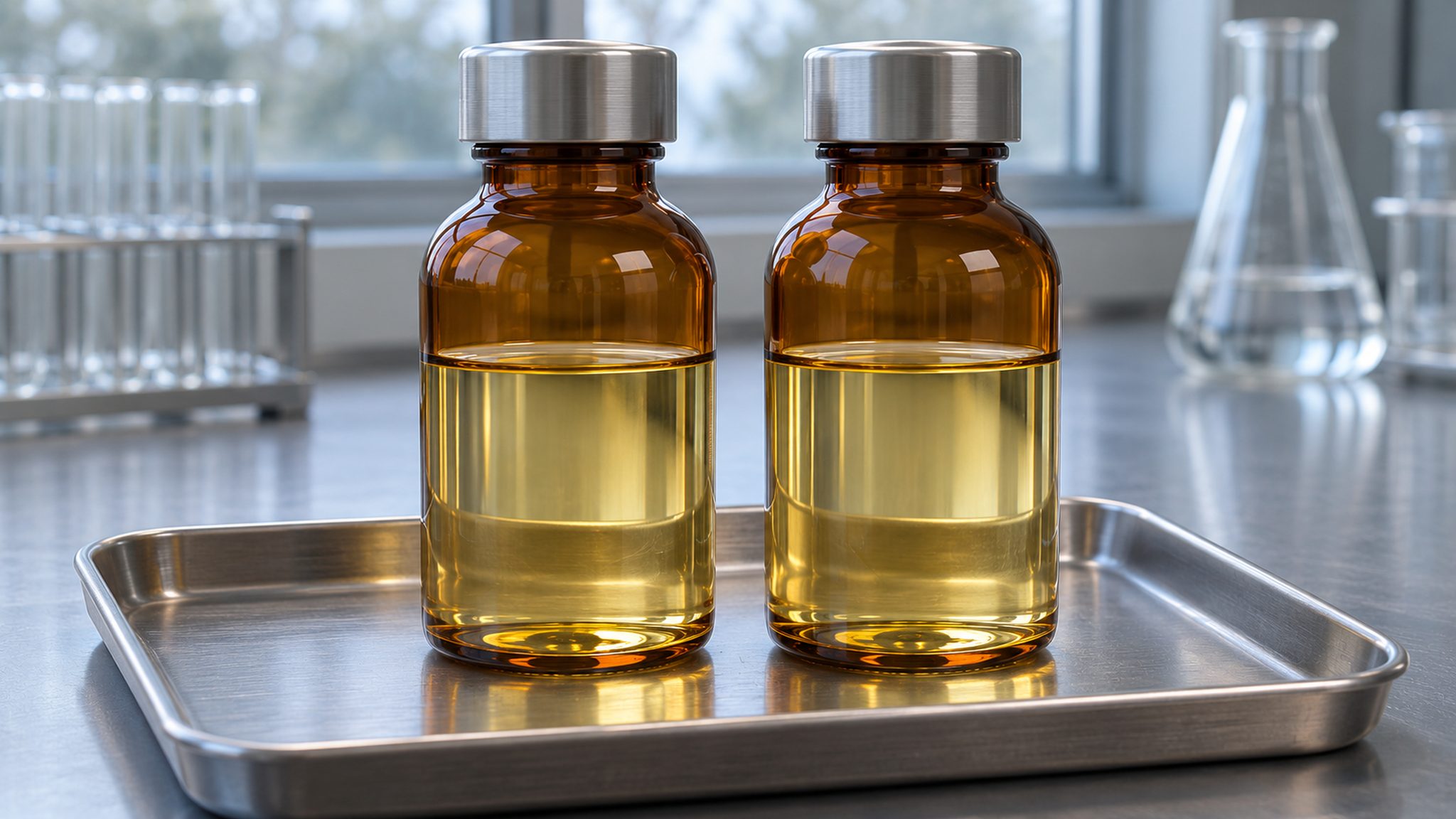
- The ministry’s account of the fuel control order and marketing guidelines describes six one-litre samples. The dealer receives two against acknowledgement, the company or department retains two, and two go to a designated laboratory.
- Jointly signed labels connect the containers with the collection witnessed at the outlet. The dealer’s acknowledgement records who took custody of the samples reserved for the dealer.
- A retailer might receive another delivery before investigators return. Drawing fresh petrol from the same nozzle would establish the composition at that later visit. A retained counterpart allows examination of the earlier collection.
- The companies said they lacked the relevant retention samples and complete outlet-wise records. That was their account of the October exercise. Reviewing the collection documents would help establish which samples each party received.
What a Gas Chromatography Certificate Must Explain
The instrument name alone leaves open how the laboratory prepared the petrol and converted the reading into an ethanol concentration.
- The ministry cited three permitted analytical approaches under IS 17021. They use infrared spectroscopy, water extraction or gas chromatography. Each approach has an associated procedure for determining the ethanol content.
- For the cited gas chromatography methods, the ministry described an equal-volume dilution with oxygenate-free petrol before analysis. An analyst reviewing the result needs to know whether the laboratory performed that preparation.
- The method also uses an E10 certified reference material for correction. Its assigned ethanol content gives the laboratory a known comparison when evaluating the response measured by the instrument.
- According to the companies, the available certificates named gas chromatography but omitted the specific method, dilution and reference details. Those omissions limit independent verification without establishing what concentration a properly documented retest would find.
How to Interpret Conflicting Fuel Surveys
Two surveys can return different ranges even when both laboratories measure the samples they receive accurately.
- First identify the population sampled. A survey across several outlets and an investigation prompted by complaints at particular outlets may cover different deliveries, dates and locations.
- Then ask whether the comparison concerns the same fuel. Agreement between two laboratories testing retained portions gives different evidence from agreement between two surveys of independently selected outlets.
- A practical comparison starts with the outlet and collection date on each report. Matching those records helps investigators decide whether an apparent difference concerns the fuel sampled, the analytical procedure or both.
- Lastly, separate the measured ethanol fraction from any claim about vehicle performance. A laboratory result describes a fuel sample. Estimating a driver’s mileage loss requires evidence about the vehicle and its operating conditions.
Way Forward
Make a Disputed Result Reproducible
- Match each outlet report to its signed sample records and retained containers.
- Record the applicable test method, preparation and reference material in the laboratory report.
- Communicate the independent result to the dealer and supplier alongside the original finding.
Conclusion
- A defensible outlet-level finding connects an identifiable sample with a reproducible measurement. Either link can be checked independently when the collection record, retained material and laboratory report are available.
- In a governance answer, explain how counterpart testing protects both the consumer seeking action and the dealer entitled to question an adverse finding.
UPSC Practice Questions
Prelims MCQ 1
Consider the following statements about the E20 testing dispute.
- A retained counterpart can help a second laboratory examine fuel from the disputed collection.
- The ministry announced the result of the requested joint retest on 7 November.
- A statewide survey average establishes the ethanol content of every disputed outlet sample.
How many of the above statements are correct?
(a) Only one (b) Only two (c) All three (d) None
Answer: (a) Only one
Explanation:
Only the first statement is correct. The companies requested a retest. A survey average cannot establish the value for a particular sample.
Prelims MCQ 2
Which item helps a laboratory check its measurement against an assigned ethanol concentration?
(a) The outlet sales register (b) The signed custody acknowledgement (c) A second untested retail sample (d) A certified reference material
Answer: (d) A certified reference material
Explanation:
The reference material supplies a known comparison. The acknowledgement helps identify custody, while the retail sample itself has an unknown concentration.
UPSC Mains Questions
- How do sample retention and standardised test methods support procedural fairness in the enforcement of fuel quality standards?
- Explain the limits of using a national biofuel blending average to assess complaints about individual retail outlets.
Source: PIB, Ministry of Petroleum and Natural Gas.
Frequently Asked Questions
What does E20 mean?
E20 describes petrol containing a nominal ethanol share of 20% by volume. The actual ethanol content of fuel collected at an outlet is a property that a laboratory can measure.
Why keep counterpart fuel samples?
The retained containers allow parties to seek another examination of material from the disputed collection. Fresh fuel drawn later may come from a different delivery to the same outlet.
Why does the test certificate need to identify the method?
The named method tells another analyst which preparation and reference checks to expect. Knowing that the laboratory used a gas chromatograph alone leaves those steps unclear.
Did the ministry publish independent retest results?
The November statement described the companies’ request for counterpart samples and testing at an authorised laboratory. It also reported the companies’ separate survey findings and their objections to the disputed certificates.
Tell Google you want more of this.
Add Anantam IAS as a preferred sourceOne tap, and this site shows up more often in your own Top Stories, AI Overviews and AI Mode. Remove it any time.