Why in News?
On 6 November, the Office of the Principal Scientific Adviser and DPIIT linked Startup India with I-STEM to help recognised startups find shared research equipment and request access.
- The Indian Science, Technology and Engineering Facilities Map lists equipment held by academic and research institutions.
- The new application programming interface (API) connects the two services and supports automated verification of startup recognition.
- The government proposed single sign-on for a subsequent phase. Host institutions continue to decide individual requests.
- A young company may need an expensive instrument for just one stage of prototype testing. Finding an existing facility can change the cost of that trial.
- A university knows its instrument settings, staff availability and operating limits. A national directory makes that local capacity easier for outside users to find.
UPSC Relevance
Prelims Relevance
- DPIIT administers Startup India.
- I-STEM stands for the Indian Science, Technology and Engineering Facilities Map.
- An API allows software services to exchange information.
- The host institution evaluates each equipment request.
Mains Relevance
GS Paper 3
- Explain how sharing instruments can lower the cost of experimental work for startups.
- Assess equipment sharing through completed tests and time to access.
GS Paper 2
- Examine how common digital services can coexist with decisions taken by individual institutions.
Background and Context
Why a Startup Might Share an Instrument
Consider a team developing a metal part that must bend under a load without breaking. It needs a measurement before it can improve the prototype.
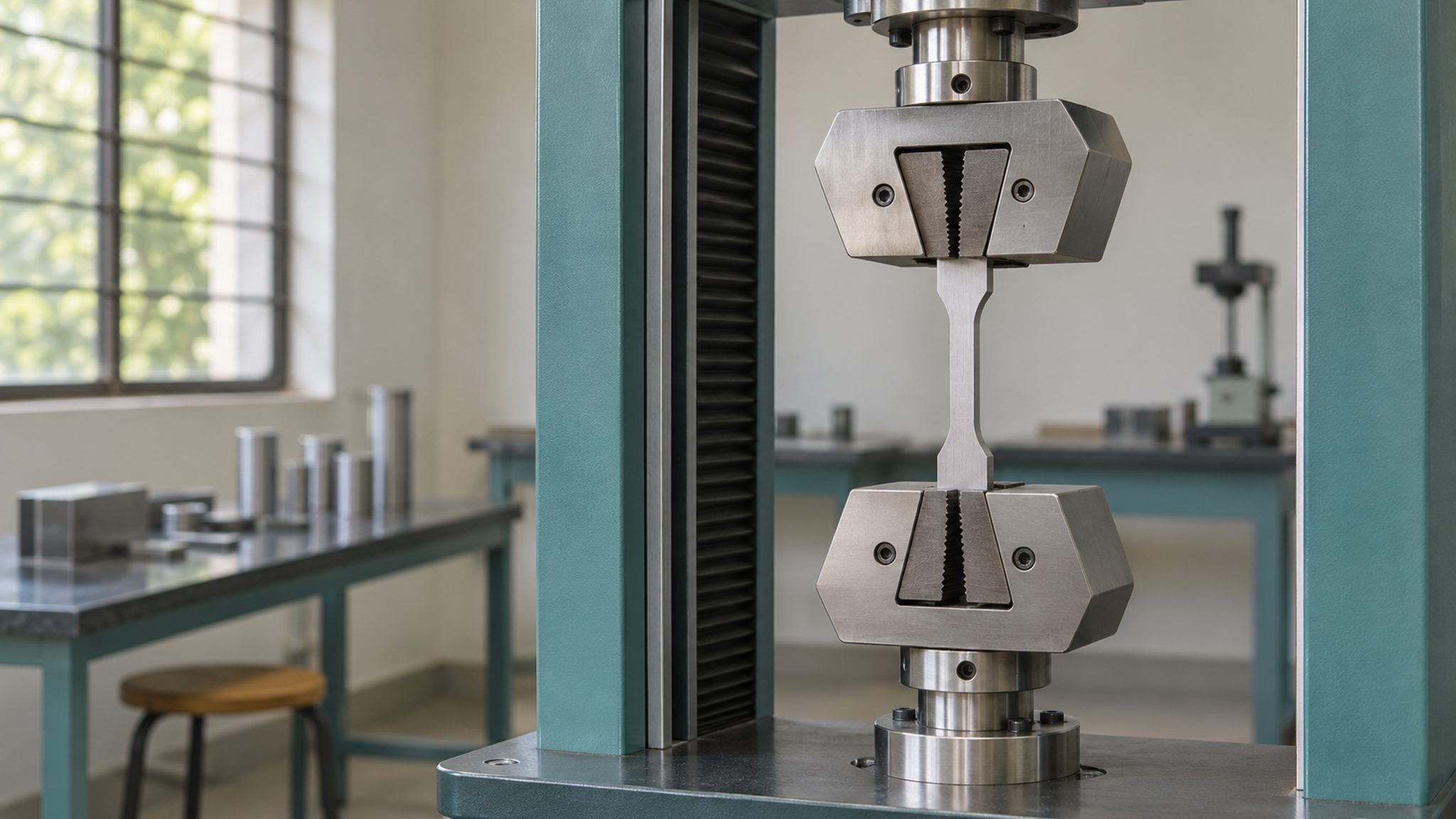
- To test a specimen, the team could use a universal testing machine. Its grips hold the sample while the machine applies a controlled load and measures the response.
- If the team needs only a few test runs, buying a machine ties up money that could pay for the next prototype. It would also need space and staff to operate the equipment.
- A laboratory with spare capacity could perform the measurement between its own experiments. The team would still have to find a machine with a suitable load range and an available time slot.
- Sharing addresses the cost of getting a particular measurement. A financing instrument such as the Research, Development and Innovation Fund addresses a different problem, the supply of capital for research.
How the Two Services Connect
A startup brings its recognition record to one service and its technical question to another. The link helps it move between them.
- The Department for Promotion of Industry and Internal Trade recognises eligible startups. The integration lets the services verify that status automatically as a business seeks access to research facilities.
- The I-STEM catalogue helps a team identify institutions with equipment for the test it has in mind. Two laboratories may list the same type of machine yet support different specimen sizes or operating ranges.
- After identifying a possible match, the team can request access. A description of the specimen and the measurement sought gives the host a practical basis for deciding whether its instrument can do the work.
- The launch covered an API connection. A separate proposal would add single sign-on, allowing users to reach the connected service through one login. The announcement placed that feature in a later phase.
What the Host Laboratory Decides
The host has to establish that it can perform the proposed test safely and within its existing commitments.
- Technical suitability depends on the actual experiment. A tensile testing machine might cover the required load range but lack the grips needed to hold a fragile specimen without damaging it.
- Availability includes the instrument time the host can offer. A catalogue entry can remain accurate while the machine is fully booked, under maintenance or reserved for a longer experiment.
- Safety requirements depend on the material and procedure. A biological sample, for instance, may need a facility with appropriate laboratory biosafety provisions before the host can accept it.
- Hosts also apply their own charges and permissions. A startup comparing two offers should check what each charge covers, including any specimen preparation or operator time needed to obtain a usable measurement.
Way Forward
Make Equipment Listings Useful for Booking
- Hosts can publish measurement ranges, specimen requirements and contact details alongside each instrument name.
- Showing availability and charges before submission would let teams compare feasible options.
- Track completed requests and waiting times to see which instruments need additional staff, maintenance or capacity.
Conclusion
- Equipment sharing can make a short experiment affordable when a host has the right instrument and can offer a slot at a workable price. Recognition makes it easier for a startup to seek that opportunity.
- An assessment of public research capacity should ask how many teams actually complete suitable tests, how long they wait and whether the results help them decide what to build next.
UPSC Practice Questions
Prelims MCQ 1
Consider these statements about the Startup India and I-STEM integration.
- The connection supports automated verification of DPIIT recognition.
- Single sign-on was proposed for a later phase.
- Recognition entitles a startup to a free slot on any listed instrument.
How many of the above statements are correct?
(a) Only one (b) Only two (c) All three (d) None
Answer: (b) Only two
Explanation:
The first two statements match the announcement. Hosts decide on requests and may apply charges.
Prelims MCQ 2
A recognised startup finds the instrument it needs, but its specimen exceeds the permitted load. Who decides whether to accept the request?
(a) The host institution (b) DPIIT (c) The startup itself (d) The portal operator
Answer: (a) The host institution
Explanation:
The host checks technical suitability, availability, safety, applicable charges and institutional permissions.
UPSC Mains Questions
- How can shared laboratory equipment improve the use of public research investment while supporting early-stage firms?
- Suggest criteria for evaluating whether easier discovery of scientific equipment leads to timely access for startups.
Source: PIB, Office of the Principal Scientific Adviser.
Frequently Asked Questions
Who can use the new Startup India connection?
The integration is aimed at DPIIT-recognised startups looking for research, testing or prototyping facilities. It helps verify their recognition status and links them to equipment listed on I-STEM.
Does DPIIT recognition guarantee equipment access?
The host institution evaluates each request against the experiment, its equipment and available capacity. It also applies its own safety requirements, relevant charges and permissions before granting access.
What is the difference between an API and single sign-on?
An API lets software services exchange information, such as a recognition status. Single sign-on lets a user reach connected services through one login. The government proposed the latter for a later phase.
Why would a startup request a shared instrument?
A prototype may require a specialised test only occasionally. Booking time on an existing instrument can help the team obtain a measurement without buying and maintaining equipment for that limited use.
Tell Google you want more of this.
Add Anantam IAS as a preferred sourceOne tap, and this site shows up more often in your own Top Stories, AI Overviews and AI Mode. Remove it any time.