Why in News?
On 5 November, the Telecom Regulatory Authority of India (TRAI) recommended a national satellite network authorisation that would let network operators supply capacity to eligible telecom service providers.
- The Department of Telecommunications sought terms for a network authorisation under section 3(1)(b) of the Telecommunications Act, 2023.
- TRAI proposes separate conditions for spectrum used between a gateway and satellite and spectrum used between a satellite and user terminal.
- The recommendations await a government decision.
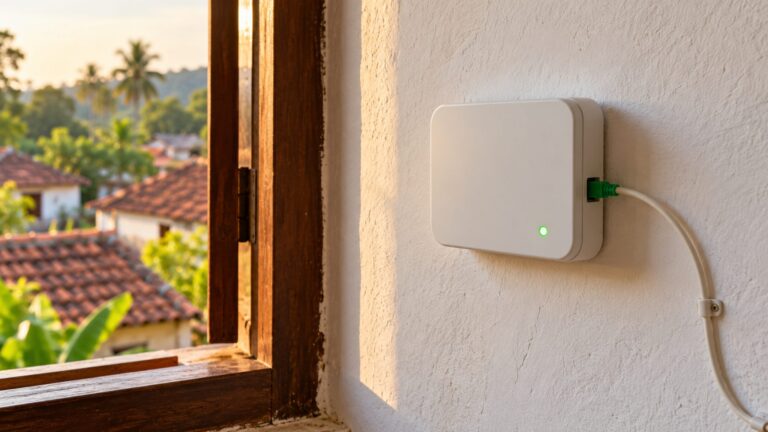
- A provider serving a remote community could buy satellite network capacity while retaining responsibility for its own service authorisation.
- The ability to carry a signal and the legal right to sell a service to the public are separate questions.
UPSC Relevance
Prelims Relevance
- SCNaaS stands for Satellite Communication Network as a Service.
- The proposed SCN authorisation covers the wholesale network function.
- A feeder link connects the satellite and its gateway earth station.
- A user link connects the satellite and a user terminal.
- FSS means Fixed Satellite Service and MSS means Mobile Satellite Service.
Mains Relevance
GS Paper 3
- Assess whether shared networks could reduce the cost of reaching remote settlements.
- Explain why spectrum conditions must follow the service carried over the network.
GS Paper 2
- Distinguish a regulator’s recommendations from the government’s decision on authorisation.
Background and Context
Who Would Serve the Subscriber?
Imagine a broadband provider seeking to connect a village beyond its terrestrial network. TRAI’s proposal separates the purchase of satellite capacity from the sale of broadband.
- The satellite network provider would supply network capacity to another eligible provider under a commercial agreement. Its proposed customer is the authorised service provider purchasing that capacity for its own service.
- The village household would subscribe through the service provider. Eligibility to purchase the wholesale service depends on permission to provide satellite communications or to deliver telecommunications through a satellite network.
- The proposed network authorisation would confer no independent right to sell a subscription to the household. A firm that holds both roles must identify which authorisation permits each activity.
- An existing eligible licensee could also offer wholesale capacity if it meets the prescribed entry criteria and accepts the network operator’s technical, security and rollout conditions. Its existing licence alone would be insufficient.
- Sharing infrastructure could spare a service provider the expense of developing its own satellite network. The commercial benefit would depend on the capacity it can obtain, on what terms and at what price.
Which Link Needs Which Spectrum?
Follow a transmission from a gateway to a satellite and onward to a terminal. Each of those two radio paths has its own proposed assignment conditions.
- The feeder link connects a gateway earth station to a satellite. TRAI recommends administrative assignment of Fixed Satellite Service spectrum to a network provider for this part of the path.
- The user link connects a terminal to the satellite. The proposal allows a network provider to seek Fixed Satellite Service or Mobile Satellite Service spectrum for this segment.
- For administrative assignment on the user link, the applicant would have to show that its partner’s intended service falls within the First Schedule to the Telecommunications Act. The use case determines eligibility.
- Alternatively, a partner’s existing spectrum could support wholesale capacity under an agreement. The partner would retain its right to use that spectrum, even while the network operator uses it to serve that partner.
- Network authorisation and frequency assignment answer different questions. Permission to operate the infrastructure would still leave the operator needing a lawful basis to use the particular frequencies on each radio link.
What Changes for Direct-to-Device Service?
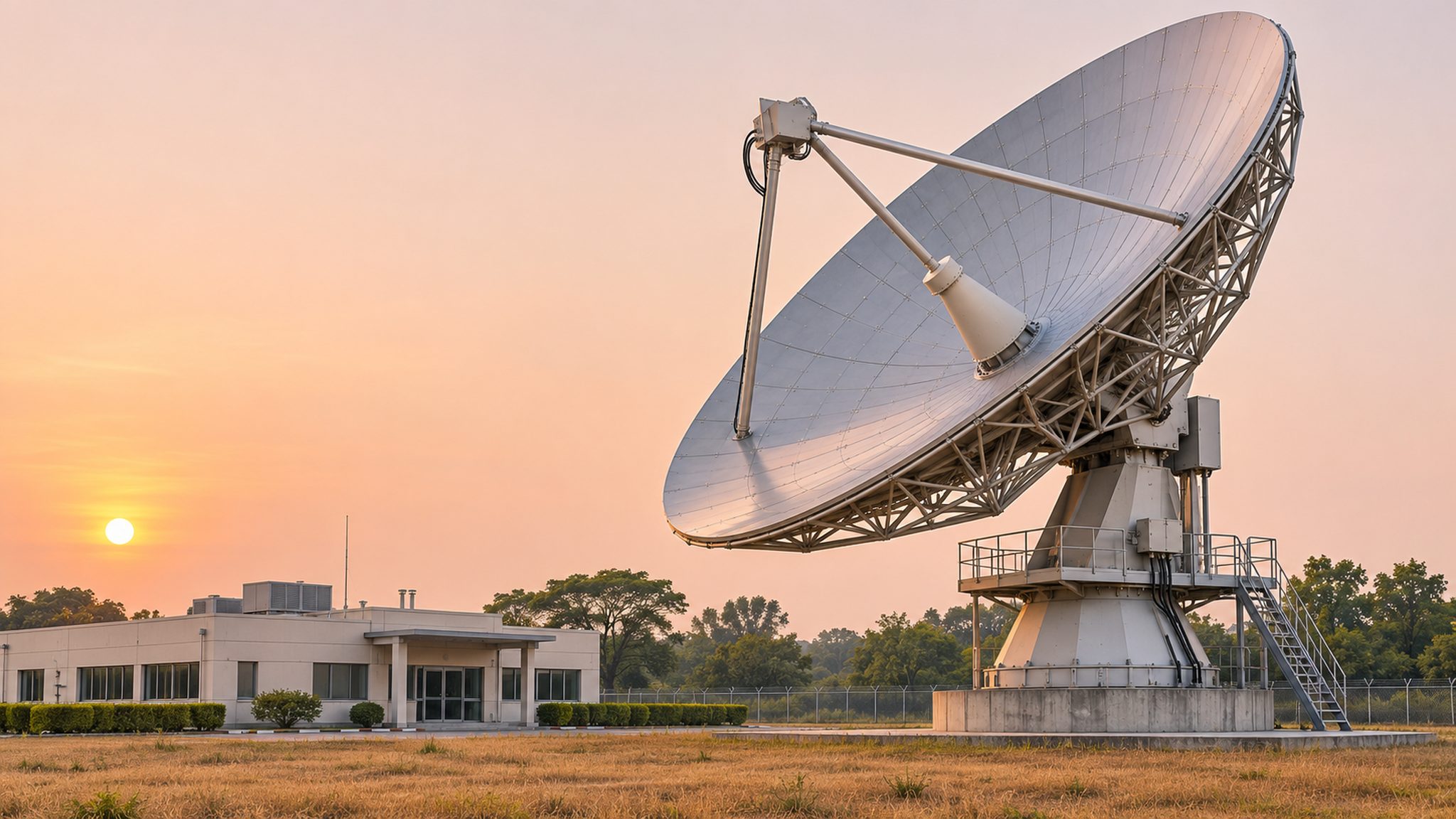
A phone communicating directly with a satellite still depends on a network operator, an authorised access provider and permission to use the relevant radio frequencies.
- One proposed route uses mobile satellite spectrum. An authorised access provider could obtain wholesale network capacity to offer the service, while the handset would need hardware compatible with the satellite bands.
- Another route uses mobile network spectrum already assigned to access providers. TRAI proposes that holders collectively covering the relevant frequency channel across all licensed service areas must agree to its use.
- The proposed mobile-band route would operate on a non-interference, non-protection basis. Satellite transmissions would have to protect existing services, and the satellite service could not demand protection from their lawful transmissions.
- Even a handset that supports the right band cannot establish a commercial entitlement to service. The government would still need to decide on the framework, and operators would need the applicable permissions and agreements.
Way Forward
Make the Division of Responsibility Clear
- Specify which entity answers to the subscriber when a wholesale capacity failure interrupts retail service.
- Require a documented match between the partner’s intended service and the spectrum assignment route.
- Read alongside control of satellite connectivity and telecom interconnection agreements for two distinct questions about network dependence.
Conclusion
- For a spectrum question, identify the endpoints of the radio link, whose frequencies it uses and which service the partner intends to supply.
- TRAI’s recommendation would let eligible providers share satellite infrastructure. The government’s decision on authorisation and the provider’s permission to serve end users remain separate steps.
UPSC Practice Questions
Prelims MCQ 1
With reference to TRAI’s proposed satellite network authorisation, consider the following statements:
- The network authorisation alone permits retail sales to households.
- The feeder link connects a gateway earth station and a satellite.
- An eligible partner can retain the right to use spectrum made available under a network agreement.
How many of the above statements are correct?
(a) Only one (b) Only two (c) All three (d) None
Answer: (b) Only two
Explanation:
Statements two and three describe the proposals. The SCN provider would supply eligible service providers and could not serve subscribers directly under this authorisation.
Prelims MCQ 2
What would an SCN provider need to show when seeking administrative assignment for a user link?
(a) The gateway uses a different satellite (b) Its partner’s intended service falls in the First Schedule (c) The operator already supplies retail broadband (d) Every subscriber owns a satellite dish
Answer: (b) Its partner's intended service falls in the First Schedule
Explanation:
TRAI ties the administrative assignment test for user-link spectrum to the service the partner intends to offer.
UPSC Mains Questions
- How could wholesale satellite networks expand connectivity while preserving accountability to subscribers?
- Explain why the distinction between feeder links and user links matters for spectrum governance.
Source: PIB, Ministry of Communications.
Frequently Asked Questions
What is SCNaaS?
Satellite Communication Network as a Service is the proposed wholesale supply of satellite network capacity to an eligible provider. That provider would use the capacity to deliver services within its own authorisation.
Who decides whether the framework takes effect?
TRAI has recommended terms after a request from the Department of Telecommunications. The Central Government must decide whether to adopt those terms before operators can rely on the proposed authorisation.
Can a network provider use its partner’s frequencies?
TRAI proposes allowing use under an agreement for the limited purpose of supplying network capacity to that partner. The right to use the frequencies would remain with the partner.
What is a satellite user link?
It is the radio connection between a satellite and the user terminal. Under the proposal, the partner’s intended service matters when seeking administrative assignment of spectrum for this connection.
Tell Google you want more of this.
Add Anantam IAS as a preferred sourceOne tap, and this site shows up more often in your own Top Stories, AI Overviews and AI Mode. Remove it any time.