Why in News?
The US Department of Energy designated helium a critical material under the Energy Act of 2020 on October 23, citing manufacturing importance and supply-chain risks.
- The US designation concerns American materials policy; it does not amend an Indian critical-materials list.
- DOE identifies semiconductor production and advanced technologies as important helium-dependent applications.
- Despite substantial domestic resources, limited refining capacity and lengthy permitting timelines constrain US production, according to DOE.
- Resource availability and reliable industrial supply are different policy problems: deposits cannot replace the facilities needed to deliver usable material.
- The development connects industrial policy with supply-chain security, showing why manufacturing resilience depends on upstream inputs as well as factories.
UPSC Relevance
Prelims Relevance
- Helium: a material identified by DOE as important for semiconductor production.
- Energy Act of 2020: the US legal framework cited for this designation.
- Criticality: importance to manufacturing alongside exposure to supply disruption.
- Resource availability, production capacity and refining capacity: distinct concepts.
- Substitution limits: application-specific rather than universal.
Mains Relevance
GS Paper 3
- Industrial supply security requires attention to refining and production bottlenecks.
- Technology manufacturing can depend on essential inputs beyond commonly discussed metals.
GS Paper 2
- Distinguish a foreign policy designation from changes in Indian law or policy.
Essay
- Natural-resource abundance becomes economic strength only when institutions and productive capabilities make it usable.
Background and Context
What Makes Helium Critical?
The designation combines industrial importance with vulnerability to disruption; it is not a statement that the United States has no helium resources.
- The DOE announcement identifies helium-rich natural gas deposits in the United States while also describing supply risks, demonstrating that domestic abundance and industrial vulnerability can exist together.
- Semiconductor manufacturing is the central industrial application highlighted in the announcement; a disruption to an essential input can constrain production even when the downstream manufacturing facility itself remains available.
- DOE says there are no viable substitutes in many critical applications; this qualification matters because the announcement does not establish that every possible use of helium lacks a workable alternative.
- Critical material is the designation announced under the US Energy Act of 2020; readers should preserve that legal description rather than infer an identical change under a different national framework.
- Industrial dependence can become a bottleneck even with domestic deposits: identifying helium as critical highlights the need to connect resource policy with refining and manufacturing capability.
Why Resources Do Not Guarantee Industrial Supply
The relevant chain runs from a resource that exists underground to material that industry can actually obtain; each stage imposes a different constraint.
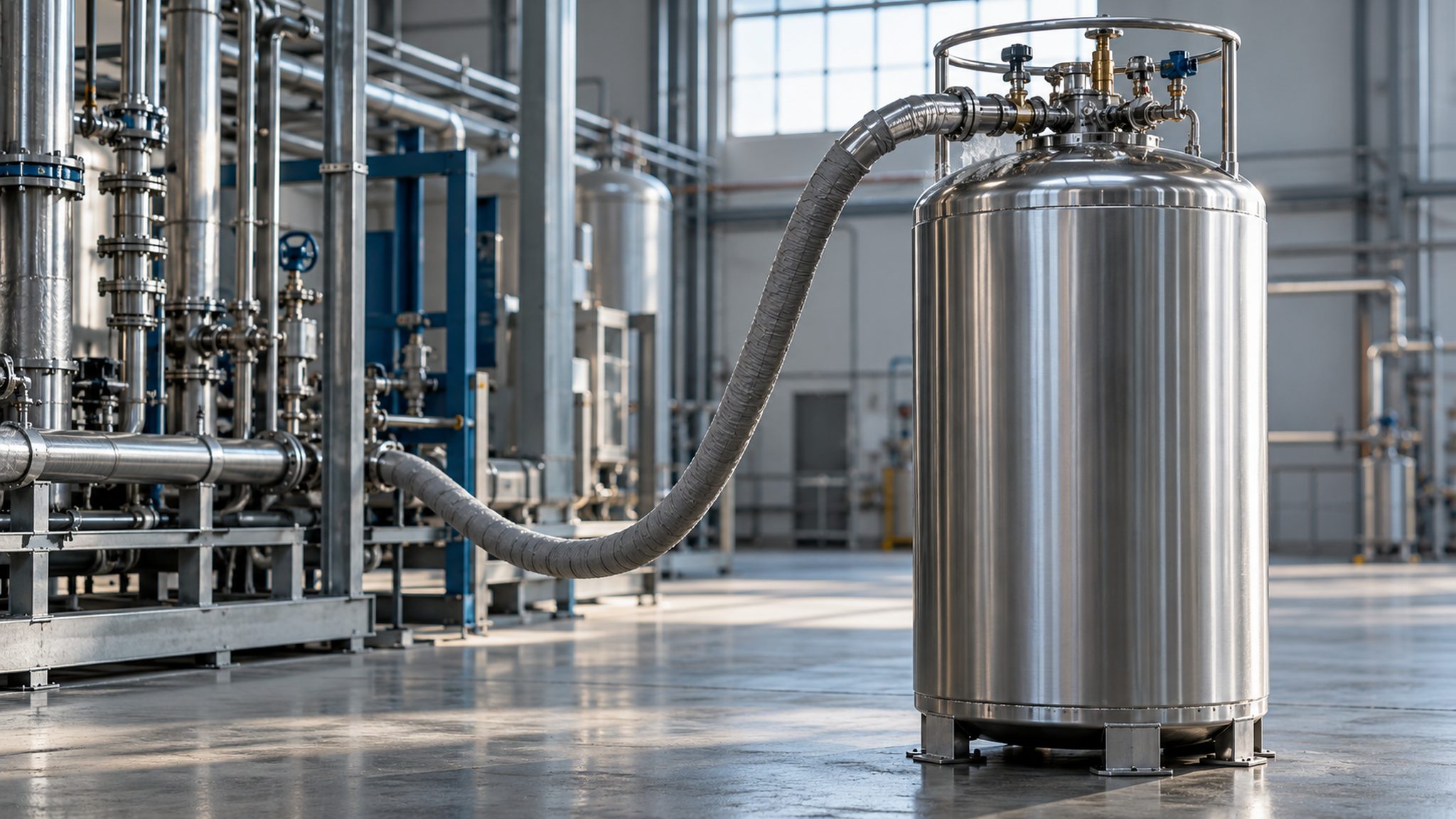
- Physical form also matters: NOAA describes helium as inert and nonflammable, and identifies liquid helium’s use in cryogenic research; suitable storage and handling accompany its use.
- Production concerns actual output rather than the size of the resource base; DOE reports that global demand is growing faster than production, creating pressure even where substantial deposits are already known.
- Refining capacity determines whether available material can become usable industrial supply; additional reserves cannot immediately compensate for a bottleneck in the facilities that perform this separate part of the chain.
- Permitting timelines are another constraint identified by DOE; a policy designation cannot instantly remove the interval between identifying a project, obtaining necessary permissions and bringing new capacity into productive operation.
- High-purity supply must be distinguished from helium merely present in natural gas; the announcement supports the importance of refining but provides no detailed process design or application-specific purity thresholds.
How to Read the Supply-Security Claim
The useful comparison is between possessing a resource and possessing the capability to supply industry reliably; the two require different evidence and interventions.
- Resource security asks whether an accessible source exists, while supply security asks whether users can obtain suitable material reliably; the US announcement illustrates why the first does not automatically establish the second.
- Designation identifies a policy priority; it should not be described as a completed refinery, an assured increase in output or proof that manufacturers have already gained dependable access to additional supplies.
- Implementation evidence would need to track actual capacity and availability after the decision; the announcement alone cannot establish that production constraints, industrial shortages or reliance on foreign sources have already declined.
- Substitution should be assessed for the particular industrial function involved; DOE’s qualified statement supports caution about critical applications, without justifying a blanket claim about every scientific, commercial or recreational use.
- For India, this is a comparative policy lesson, not a domestic notification: assess essential manufacturing inputs across extraction and processing, while checking Indian decisions separately before asserting any change in national classification.
Way Forward
Match the Intervention to the Bottleneck
- Assess production and refining constraints separately before treating new resource discoveries as a sufficient supply-security response.
- Improve permitting predictability while retaining applicable safeguards; measure progress through operational capacity rather than announcements alone.
- Evaluate substitutes by application and diversify reliable sources where feasible, instead of assuming a single response fits every industrial use.
Conclusion
- Helium criticality shows that an abundant resource can remain an insecure industrial input when production and refining cannot keep pace with demand.
- An answer on supply-chain resilience should connect resources, processing capability and implementation, while keeping the US designation distinct from Indian policy.
UPSC Practice Questions
Prelims MCQ 1
With reference to the US designation of helium as a critical material, consider the following statements:
- The Department of Energy cited the Energy Act of 2020.
- Substantial domestic resources necessarily eliminate refining constraints.
- The designation automatically changes India’s critical-material classification.
How many of the above statements are correct?
(a) Only one (b) Only two (c) All three (d) None
Answer: (a) Only one
Explanation:
Only statement 1 is correct. DOE identifies refining constraints despite abundant resources, and a US designation does not automatically alter Indian policy.
Prelims MCQ 2
Which best explains why helium-rich natural gas deposits may coexist with industrial supply insecurity?
(a) Resource availability automatically creates refining facilities. (b) Industrial supply also depends on production and refining capacity. (c) A policy designation immediately increases physical output. (d) Every helium application has an identical substitute.
Answer: (b) Industrial supply also depends on production and refining capacity.
Explanation:
Deposits are not equivalent to usable supply. DOE identifies limited refining capacity and permitting timelines as constraints on production.
UPSC Mains Questions
- Explain why domestic resource abundance may coexist with industrial supply insecurity, using the US helium designation as an example.
- Discuss how critical-material policies should distinguish resource discovery, processing capacity and implementation outcomes.
Sources: US Department of Energy and The Hindu.
Frequently Asked Questions
What did the United States announce about helium?
The US Department of Energy designated helium a critical material under the Energy Act of 2020, citing its importance to manufacturing and exposure to supply-chain risks.
Does this change India’s critical-material classification?
No. The announcement is a US policy decision under US legislation. Any claim about a change in India’s classification requires a separate Indian notification or other applicable official decision.
Why are helium reserves insufficient to ensure supply?
Resources must be translated into usable industrial output. DOE identifies limited refining capacity and lengthy permitting timelines as constraints, despite substantial US deposits of helium-rich natural gas.
Does helium have no substitutes in every application?
That is broader than the announcement supports. DOE says there are no viable substitutes in many critical applications; substitution should be assessed for the particular use rather than assumed universally.
Tell Google you want more of this.
Add Anantam IAS as a preferred sourceOne tap, and this site shows up more often in your own Top Stories, AI Overviews and AI Mode. Remove it any time.