Why in news?
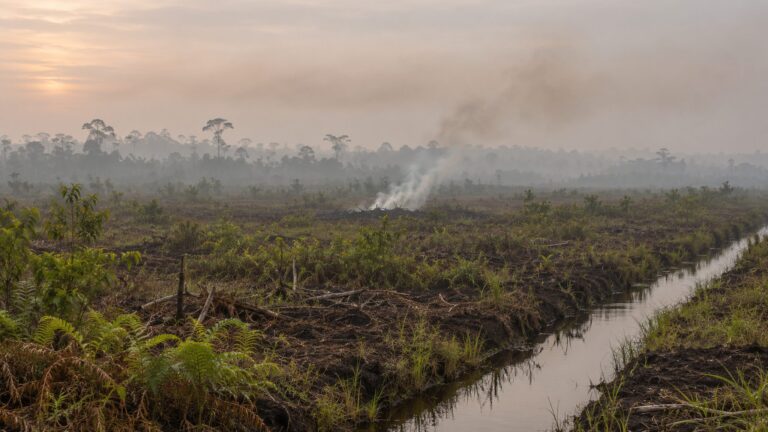
On November 19, the Public Accounts Committee (PAC) of Parliament pulled up the Environment Ministry for the near failure of the Green India Mission (GIM). The review was based on the CAG’s performance audit (Report No. 4 of 2026). The PAC also noted that implementation guidelines for the revised Mission (2021) have still not been issued.
UPSC Relevance
Prelims – Green India Mission.
Mains, GS2, Government Policies and Interventions.
GS3, Conservation, Environmental Pollution and Degradation.
About the Green India Mission
The National Mission for a Green India is one of the eight missions under the National Action Plan on Climate Change (NAPCC), released in 2008. It is implemented by the Ministry of Environment, Forest and Climate Change (MoEFCC). The Union Cabinet approved it in 2014.
The Mission looks at forests not just as carbon sinks but as providers of ecosystem services like biodiversity, water, biomass, mangroves and wetlands, along with livelihoods of forest-dependent people.
Original 10-year goals:
- Increase forest and tree cover on 5 million hectares (mha).
- Improve the quality of forest cover on another 5 mha.
- Improve forest-based livelihoods of about 3 million households.
- Sequester 50 to 60 million tonnes of CO2 a year by 2020.
Implementation was planned through Gram Sabhas and Joint Forest Management Committees (JFMCs) at village level, Forest Development Agencies at district level and State Forest Development Agencies at State level.
Why this matters for India’s climate commitments
- India’s NDC includes creating an additional carbon sink of 2.5 to 3 billion tonnes of CO2 equivalent through extra forest and tree cover by 2030.
- India has pledged to restore 26 mha of degraded land by 2030 (Bonn Challenge / UNCCD target).
- GIM is meant to be the main vehicle for both. Its failure puts these targets at risk and weakens India’s credibility in climate negotiations.
- Forests also support climate adaptation – water security, soil health and livelihoods of tribal and forest-dwelling communities.
How the Mission was designed and revised
| Phase | Key features |
| 2008 (announced) | Part of NAPCC; total outlay of ₹46,000 crore planned. Ministry of Rural Development objected to its financial design. |
| 2014 (Cabinet approval) | ₹13,000 crore for 1.4 mha each for the first two objectives by 2018. But 81.5% of the funds were to come from CAMPA, NAP and MGNREGS. |
| 2021 (revision) | Same funding model retained. National Afforestation Programme (NAP) merged into GIM in 2021-22. |
| Mid-2025 (revised version) | ₹12,190 crore; improve forest cover on 25 mha by 2030. But 24 mha to come through other schemes, leaving GIM itself responsible for only 1 mha. |
Key funding sources linked to GIM
| Source | About |
| CAMPA | Compensatory Afforestation Fund Act, 2016. Money paid by user agencies for diverting forest land. Kept in non-lapsable, interest-bearing funds in the Public Account of India and of States; 90% goes to States, 10% to the National Fund. |
| National Afforestation Programme (NAP) | Centrally sponsored scheme for regenerating degraded forests through JFMCs and Forest Development Agencies. Merged into GIM in 2021-22. |
| MGNREGS (now VB-G RAM G) | Rural employment scheme; afforestation, plantation and water conservation are permissible works. MGNREGS has been replaced by the Viksit Bharat – Guarantee for Rozgar and Ajeevika Mission (Gramin) Act, 2025. It moves away from the demand-driven funding model to a normative allocation and shifts more financial share to States. Since rural job schemes have been a major source of funds for tree planting and water works, this change can further weaken climate-related convergence at the ground level. |
What the CAG and PAC found
| Objective (2014 target) | Shortfall |
| Improving forest quality | 91.8% short |
| Improving forest cover (ecosystem restoration) | 97.5% short |
- Funds never came: The money expected from CAMPA, NAP and MGNREGS did not materialise. The Mission was built around resources the Ministry did not control.
- No convergence: Convergence was the core strategy, but there was no formal division of responsibilities or common accounting system across schemes.
- Weak financial controls: The CAG found under-utilisation of funds, and several States/UTs did not maintain or audit annual accounts.
- Poor monitoring: No guidelines for the revised Mission even five years after revision. Progress could not be tracked properly.
- Priority areas ignored: PAC members felt landscapes like the Aravalli range should have been a top priority, but work has not taken off.
The bigger problem – schemes built on other schemes’ money
The GIM is not an isolated case. Several new programmes rely heavily on funds of existing schemes:
- Jal Shakti Abhiyan (2019) – water conservation through convergence of MGNREGS and other funds.
- Dharti Aaba Janjatiya Gram Utkarsh Abhiyan (2024) – tribal village development through convergence of schemes of several Ministries.
This creates three problems:
- Parent schemes have their own targets and obligations, so ‘borrowed’ funds get diverted back.
- Accountability is diluted – no single Ministry owns the result.
- Headline targets look big, but the real budget behind them is small (as seen in GIM’s 25 mha vs 1 mha).
Way Forward
- Dedicated budget: Give the Mission its own adequate funds instead of depending on other schemes.
- Formal convergence framework: Clear sharing of roles, targets and a common accounting system between MoEFCC, Rural Development and States.
- Issue guidelines quickly with a time-bound implementation plan, not just a timetable on paper.
- Quality over numbers: Track survival of plantations and restoration of natural ecosystems using satellite monitoring, not just saplings planted.
- Community ownership: Empower Gram Sabhas under the Forest Rights Act, 2006 and JFMCs, with assured livelihood benefits.
- Landscape focus: Prioritise the Aravallis, Western Ghats, Himalayas and mangroves, as the revised Mission intends.
The GIM shows that climate action cannot be run on borrowed money and paper targets. Timely funds, clear ownership and regular monitoring are what turn a mission into results.
Practice MCQ
Q1. With reference to the Green India Mission, consider the following statements:
1. It is one of the eight missions under the National Action Plan on Climate Change.
2. Under the revised version unveiled in 2025, the Mission itself is directly responsible for improving forest cover on the entire 25 million hectares targeted by 2030.
3. Funds collected under the Compensatory Afforestation Fund Act, 2016 are kept in the Public Account.
Which of the statements given above are correct?
(a) 1 only
(b) 1 and 2 only
(c) 1 and 3 only
(d) 1, 2 and 3
Answer: (c). Statement 2 is incorrect: 24 mha is to be covered through other schemes, leaving the Mission responsible for only 1 mha.
Q2. Consider the following statements about the Public Accounts Committee:
1. Its Chairman is appointed by the Speaker, and by convention is from the Opposition.
2. Members of Rajya Sabha are not represented in the Committee.
3. A Minister cannot be elected as a member of the Committee.
How many of the above statements are correct?
(a) Only one
(b) Only two
(c) All three
(d) None
Answer: (b). Statement 2 is incorrect: the PAC has 7 members from Rajya Sabha along with 15 from Lok Sabha.
Practice Question
“The Green India Mission was built around resources that the Environment Ministry could not control.” In light of recent CAG and PAC findings, examine the reasons for the Mission’s poor performance and suggest measures to make convergence-based schemes effective. (15 Marks, 250 words)
Tell Google you want more of this.
Add Anantam IAS as a preferred sourceOne tap, and this site shows up more often in your own Top Stories, AI Overviews and AI Mode. Remove it any time.