Why in News?
A new study by an international team of researchers has said damage from non-native plants and animals expanding into new ecosystems has cost society more than $2.2 trillion worldwide.
UPSC Relevance:
GS 3, Conservation, Environmental Pollution and Degradation, Environmental Impact Assessment
Questions have been asked on various environmental threats.
PYQ:
2024
Industrial pollution of river water is a significant environmental issue in India. Discuss the various mitigation measures to deal with this problem and also the government’s initiatives in this regard.
2022
Explain the causes and effects of coastal erosion in India. What are the available coastal management techniques for combating the hazard?
Invasive Species
- Invasive Alien Species – An invasive alien species refers to an alien species whose introduction and/or spread threatens the biological diversity of the region/habitat (CBD, 2002).
- Following framework has been laid down by Government of India to identify and invasive alien species :

- Drivers of Invasion: Invasive species, such as Japanese knotweed and common lantana, primarily spread to new ecosystems through trade and travel, which are facilitated by globalization and bilateral agreements.
Read more about Invasive Species found in India
Threats of Invasive Species
- Threat to biodiversity as the invasive species reduce the chances of survival of other species in the ecosystem by modifying their habitats at times. This has a cascading effect as the species dependent on vulnerable species are also impacted.
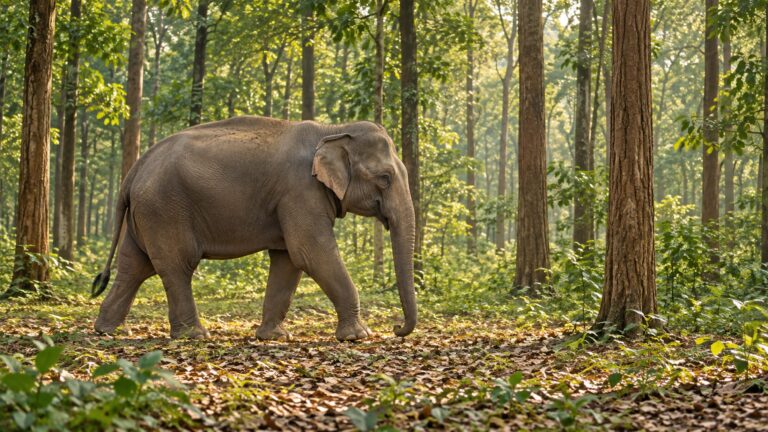
- Ludwigia peruviana, a fast-growing invasive aquatic weed, threatens elephants by destroying their food sources and displacing them from their natural habitats, leading to potential conflict with humans.
- Affects food security as agricultural production and soil fertility is affected.
- Invasive parthenium weed outcompetes crops by consuming water and nutrients, and by releasing allelopathic chemicals that inhibit crop growth, directly impacting agricultural output and food security and calling for more weedicides.
- Affects the livelihood of communities due to change in landscape.
- Prosopis juliflora has negatively impacted the Maldhari tribe by degrading native Banni grasslands essential for their traditional cattle and buffalo rearing, but it has also provided new income opportunities through the sale of fuelwood and charcoal, particularly during droughts.
- Maldharis are caught between the need for ecological sustainability and the economic necessity of utilizing this invasive species for survival.
- Impacts Hydrology of the region by affecting water table and quality of water.
- Eucalyptus trees can impact water tables by significantly increasing water consumption through high transpiration rates, leading to decreased groundwater recharge and lowered water levels.
- Spread diseases by acting as a reservoir and vector for pathogens.
- The invasive Asian ladybug Harmonia axyridis carries the microsporidia Nosema fungi, which can infect and kill native ladybugs.
- Forest Fires and risk of other disasters may increase.
- A large portion of Bandipur National Park is covered by the lantana weed, which is highly combustible when dry.
- Economic Impact – cost of eliminating them from ecosystem and management to avoid their harmful impacts.
- This recent study highlighted in the article has found out Japanese knotweed (Reynoutria japonica) and common lantana (Lantana camara) to be among the costliest to manage per square kilometre.
Economic Impact of Invasive Species – highlighted in article.
- Global Costs: A new study, published in Nature Ecology & Evolution and based on the InvaCost database, estimates that non-native plants and animals have cost the world more than $2.2 trillion since 1960. This figure is 16 times higher than previous estimates.
- Costliest Invaders:
- Plants are the most economically impactful group, costing $926.38 billion between 1960 and 2022.
- Arthropods are the second costliest, at $830.29 billion.
- Mammals follow with costs of $263.35 billion.
- Geographical Discrepancies:
- Europe has the highest total economic impact at $1.5 trillion, which is 71.45% of the global cost. Researchers speculate this is due to the higher value of goods and management costs in the region.
- North America is second with $226 billion, followed by Asia ($182 billion), Africa ($127 billion), and Australia and Oceania ($27 billion).
Unreported Costs and India’s Situation
- Underreported Management Costs: The study found a significant global discrepancy between the actual and reported costs of managing invasive species, with a median discrepancy of 3,241% among assessed countries.
- India’s “Hidden” Costs:
- India had the highest percentage discrepancy in management expenditure at 1.16 billion percent.
- This suggests a substantial amount of spending on invasive species management in India has been unrecorded or underreported.
- Researchers note this gap could be due to India’s limited resources or a recording bias in the InvaCost database, which may overlook reports in certain languages.
- According to S. Sandilyan, a former fellow on Invasive Alien Species, India is “falling short in documenting, reporting, and strategically funding” management efforts, which is made worse by a lack of centralized data and inter-agency coordination.
Management Strategies and Policies
- Control Measures: Management strategies for invasive species include prevention, eradication, control or suppression, biologically , chemically and mechanically and efforts to slow their spread. However,experts caution against a simple blanket eradication, as many agricultural products that are essential to global food systems are not native to the regions where they are grown.
- Dedicated Biosecurity Infrastructure : Scanning and regulation of trade and movement of organisms on ports, airports etc.
- Early Warning System must be developed to identify and respond to new sightings of invasive alien species.
- Creating a legal framework to hold people and organisations accountable for the impacts caused by these species.
- Creating awareness and promoting Research in invasive species across sectors.
- International Efforts: Several international policies are in place to address the issue:
- The Ballast Water Management Convention helps prevent the spread of harmful aquatic organisms via ships’ ballast water.
- The Convention on Biological Diversity urges member nations to prevent, control, or eradicate alien species that threaten ecosystems.
- Reconciling Goals: There is a complex challenge in balancing the need to mitigate economic losses from invasive species with the desire to foster globalization. According to researchers, efforts must simultaneously be made to curtail the spread of invaders while addressing other global issues like climate change by increasing vegetation.
Tell Google you want more of this.
Add Anantam IAS as a preferred sourceOne tap, and this site shows up more often in your own Top Stories, AI Overviews and AI Mode. Remove it any time.