Why in News?
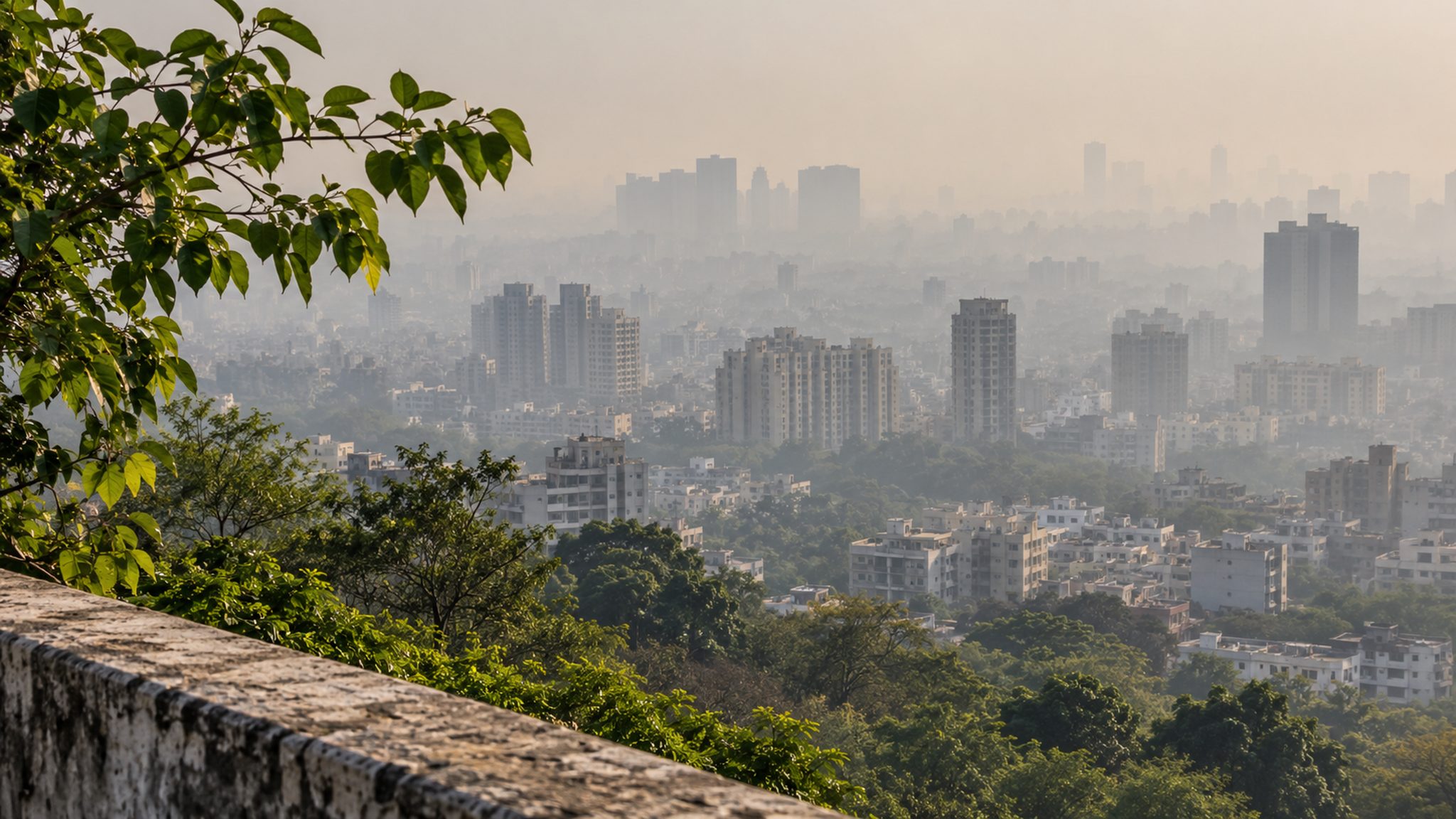
On 21 October 2026, CAQM invoked GRAP Stage I across the National Capital Region after Delhi’s daily average Air Quality Index reached the Poor category.
- Delhi’s daily average AQI reached 245 at 4 PM, within the Poor category of 201–300.
- The CAQM Sub-Committee activated all Stage I actions with immediate effect across the entire NCR.
- Its decision considered current air quality alongside IMD/IITM forecasts; further review will depend on observed conditions and forecasts.
- A common regional trigger helps neighbouring jurisdictions act together when pollution affects the shared urban region.
- The current decision strengthens early intervention; it should not be described as automatic activation of every higher-stage restriction.
UPSC Relevance
Prelims Relevance
- GRAP: Graded Response Action Plan.
- CAQM: Commission for Air Quality Management.
- Stage I corresponds to Delhi AQI in the Poor category, 201–300.
- CPCB supplies the AQI bulletin cited in the decision.
- IMD/IITM forecasts inform the Sub-Committee’s assessment.
Mains Relevance
GS Paper 3
- Ambient pollution indicators versus control of individual emission sources.
- Emergency response alongside sustained urban emission reduction.
GS Paper 2
- Regional coordination and accountability across implementing agencies.
Essay
- Environmental governance requires both timely warnings and institutions capable of acting on them.
Background and Context
How an AQI Warning Becomes a Regional Decision
GRAP connects a monitored environmental condition to a coordinated administrative response rather than leaving each agency to act separately.
- AQI is an ambient indicator: it describes the condition of the surrounding air. It does not identify which particular factory, vehicle or construction project caused the deterioration, or establish that source’s legal compliance.
- Stage I uses Delhi’s Poor AQI category as its trigger, while the response extends across NCR. The distinction matters: the reference indicator and the geographical area of implementation are not identical in scope.
- The CAQM Sub-Committee reviewed observed air quality together with weather and air-quality forecasts before invoking the measures. Forecast review helps authorities judge the risk of further deterioration instead of treating one reading in isolation.
- Implementing agencies must carry out, monitor and review the notified actions within their responsibilities. A common regional decision still depends on local inspections, municipal operations and transport management to produce practical changes on the ground.
- The official announcement provides for continued review using Delhi’s air quality and IMD/IITM forecasts. Activation is a decision to intensify response, not evidence that pollution has already fallen or that implementation is complete.
What Stage I Agencies Must Actually Do
The immediate response combines enforcement against polluting activities with practical services that make cleaner behaviour possible.
- Dust control requires covered storage and transport of construction materials, proper waste handling, road sweeping and sprinkling. These measures target dispersed sources that require routine field operations, rather than a single centralised intervention alone.
- Waste management links regular collection with enforcement against open burning and vigilance at landfill sites. Prohibiting burning without ensuring timely waste removal leaves a practical gap between the instruction and the conditions encouraging the activity.
- Transport action combines enforcement of vehicle pollution norms with traffic management at congested corridors. The objective is to address polluting vehicles and avoidable congestion through operational measures instead of relying entirely on citizen appeals.
- Public transport augmentation includes additional services and greater frequency for CNG or electric buses, metro and RRTS. This provides a usable alternative to private travel, supporting the request for commuters to change their behaviour.
- Industrial enforcement checks emission standards and approved fuels, including through inspections of non-compliant units. These source-level obligations remain distinct from the ambient AQI trigger: regional air quality cannot substitute for checking individual facilities’ compliance directly.
What the Activation Does Not Establish
The key comparison is between a graded response to deteriorating air and the sustained work needed to reduce emissions.
- Stage I is not every GRAP stage at once. Do not infer blanket construction shutdowns or school closures from this announcement. Read the particular measures invoked rather than transferring restrictions associated with more severe conditions.
- Construction enforcement is conditional: the announcement includes action against specified non-compliant projects alongside dust mitigation. Treating this as an indiscriminate halt to all construction erases the difference between enforcing existing requirements and imposing wider restrictions.
- Regional coordination matters because neighbouring jurisdictions share pollution exposure and connected transport networks. If one agency intensifies enforcement while another neglects comparable sources, the common response becomes uneven despite a shared decision at the top.
- Weather affects the observed outcome, which is why forecasts enter the review. A subsequent improvement in AQI alone cannot demonstrate which measure worked; assessment also needs evidence that agencies actually implemented their assigned actions.
- Emergency measures cannot replace year-round controls on waste, transport, construction and industrial emissions. A durable answer should connect the immediate response to reliable public services and compliance, rather than presenting seasonal activation as a complete solution.
Way Forward
Make Implementation Visible
- Publish agency-level completion reports for dust control, waste removal and transport augmentation, distinguishing instructions issued from work completed.
- Link citizen complaints to inspection outcomes so reporting a polluting activity produces an accountable response.
- Review AQI trends alongside implementation records and forecasts; avoid attributing every change in air quality to a single intervention.
Conclusion
- GRAP Stage I translates an ambient warning into regional action. Its usefulness depends on agencies delivering specific enforcement and service changes, with continuing review of observed air quality and forecasts.
- For a governance answer, distinguish the trigger, implementing responsibilities and outcomes. Then explain why a graded response must sit alongside sustained emission reduction rather than become the main pollution-control strategy.
UPSC Practice Questions
Prelims MCQ 1
With reference to the GRAP Stage I activation on 21 October 2026, consider the following statements:
- The Poor category covers Delhi AQI from 201 to 300.
- The activated measures apply across the entire National Capital Region.
- The activation automatically establishes that all construction activity must stop.
How many of the above statements are correct?
(a) Only one (b) Only two (c) All three (d) None
Answer: (b) Only two
Explanation:
Statements 1 and 2 are correct. The announcement invokes Stage I across NCR. It specifies dust-control obligations and action against certain non-compliant projects, not a blanket halt to all construction.
Prelims MCQ 2
Which best describes the distinction between ambient AQI and emission-source compliance?
(a) AQI directly certifies that every industrial unit complies with its emission limits. (b) Source compliance becomes unnecessary once regional AQI improves. (c) AQI indicates surrounding air conditions, while source compliance requires checks of applicable obligations. (d) AQI identifies the legal liability of each construction project.
Answer: (c) AQI indicates surrounding air conditions, while source compliance requires checks of applicable obligations.
Explanation:
An ambient indicator describes the air being monitored. Compliance with fuel, emission or dust-control requirements must be assessed at the relevant source; the regional indicator does not replace that assessment.
UPSC Mains Questions
- Explain how GRAP links an air-quality indicator to coordinated regional governance. What implementation gaps can weaken this approach? (150 words)
- Emergency air-pollution measures must complement sustained emission reduction. Discuss with reference to the enforcement and public-service components of GRAP Stage I. (250 words)
Source: PIB, Ministry of Environment, Forest and Climate Change.
Frequently Asked Questions
Why was GRAP Stage I invoked on 21 October 2026?
Delhi’s daily average AQI reached 245 at 4 PM, within the Poor category. CAQM reviewed air quality and forecasts before activating Stage I measures across the entire NCR.
Does Stage I apply only inside Delhi?
No. Delhi’s AQI is the reference indicator cited for the Stage I decision, but the announcement directs implementation across the entire National Capital Region by the agencies concerned.
Does Stage I automatically close schools and all construction?
No. This announcement invokes Stage I measures, including dust control and action against specified non-compliant construction projects. It does not justify attributing blanket construction shutdowns or school closures to this activation.
Why are forecasts considered alongside current AQI?
Forecasts help the Sub-Committee assess how weather and air quality may develop. The announcement provides for continuing review using Delhi’s air quality and IMD/IITM forecasts when considering further appropriate decisions.
Tell Google you want more of this.
Add Anantam IAS as a preferred sourceOne tap, and this site shows up more often in your own Top Stories, AI Overviews and AI Mode. Remove it any time.