Why in News?
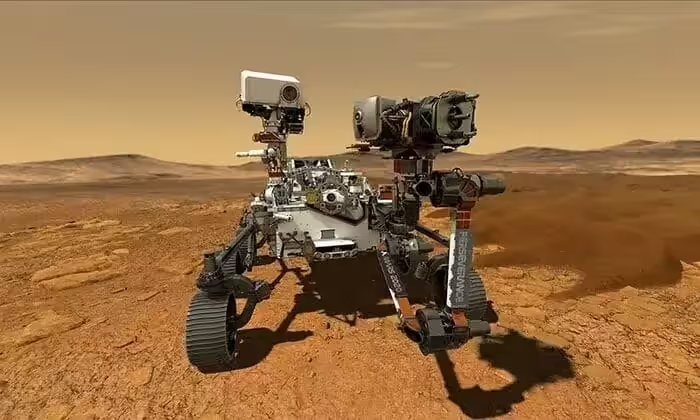
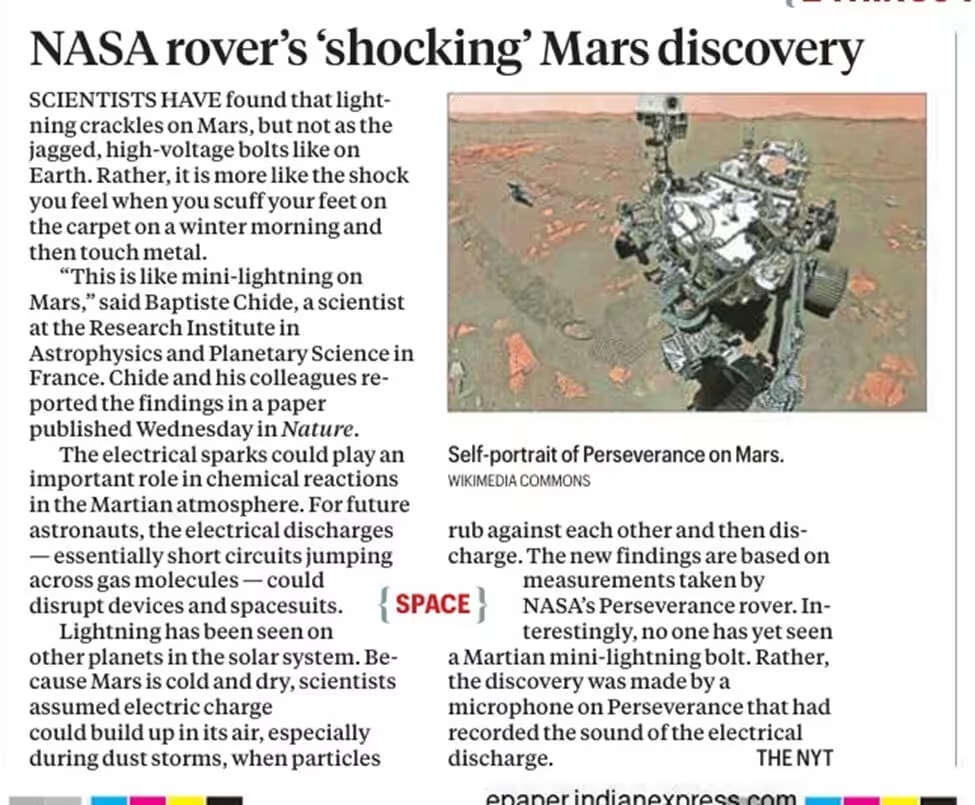
- NASA’s Perseverance Rover detected electric discharges in the Martian atmosphere.
- These discharges are mini-lightning events, smaller than the high-voltage lightning bolts we see on Earth, but still electrically significant.
- This discovery is important for understanding the electrical activity on Mars, and could have implications for future exploration.
Details of the Discovery:
- Mini-lightning Phenomenon:
- The lightning on Mars isn’t like the dramatic lightning seen on Earth (large, high-voltage, cloud-to-ground arcs). Instead, the discharges are more like the small shock you feel when you touch a metal doorknob after scuffing your feet on the carpet.
- These discharges occur on a centimeter-scale, much smaller than Earth’s lightning.
- How It Was Detected:
- The discovery was made using audio data from a microphone on Perseverance.
- The microphone captured the sound of these electrical discharges, which manifested as a pop of static, not the thunderous rumble we associate with lightning on Earth.
- The recording also captured sounds from other Martian phenomena like wind and dust devils (small tornado-like vortexes), along with pings of dust grains hitting the rover.
Scientific Impact:
- Role in Chemical Reactions:
- These mini-lightning discharges could play a significant role in the chemical processes in Mars’ thin atmosphere. Electrical sparks could affect the breakdown of gases, helping scientists understand the atmospheric chemistry of the planet.
- Future Implications for Mars Exploration:
- While the mini-lightning is not strong enough to harm astronauts, it could damage electronic equipment, such as spacesuits or rovers. Engineers designing equipment for Mars will need to account for this potential risk.
- Link to Mars’ Dust Storms:
- Scientists had long speculated that Mars’ dust storms could generate enough friction to cause electrical discharges (since particles rubbing together can build up an electric charge). This discovery provides direct evidence supporting this hypothesis.
Comparison with Other Planets:
- Lightning on Other Planets:
- Lightning has been observed on other planets in the solar system, like Jupiter and Saturn. However, Mars’ cold, dry environment made scientists initially skeptical about whether such phenomena could occur there.
Expert Opinions:
- The phenomenon as mini-lightning and highlighted its relevance for understanding Mars’ electrical activity.
- Some called the findings significant and the most direct observational evidence of electrical activity in Mars’ atmosphere.
Summary of the Findings:
- The discovery provides new insights into electrical activity in Mars’ atmosphere, especially in relation to dust storms.
- Mini-lightning exists on Mars, as detected by Perseverance’s microphone.
- These electrical discharges are small and not dangerous to humans but may affect Mars-bound technology.
How did the Perseverance rover detect the electrical discharges on Mars?
a) By measuring electromagnetic radiation
b) Through high-resolution imagery of the Martian surface
c) Using a microphone that recorded the sound of electrical discharges
d) By analyzing the chemical composition of dust storms
Tell Google you want more of this.
Add Anantam IAS as a preferred sourceOne tap, and this site shows up more often in your own Top Stories, AI Overviews and AI Mode. Remove it any time.