Why in News?
On 28 October 2026, India released guidelines for designating Other Effective Area-Based Conservation Measures (I-OECMs) at CBD COP17, supporting recognition of conservation outcomes beyond conventional protected areas.
- The PIB announcement describes recognition subject to appropriate criteria and governance across diverse landscapes and management systems.
- The release confirms publication of the Indian guidelines; it does not establish that particular sites have already received recognition.
- The CBD definition supplies the international basis for understanding OECMs: geographically defined areas with sustained biodiversity outcomes outside recognised protected areas.
- Conservation can depend on management across a wider landscape, including places whose original purpose was not establishing a protected area.
- Recognition needs evidence of ecological effectiveness and legitimate governance; a new label alone cannot show that habitats or species are secure.
UPSC Relevance
Prelims Relevance
- Meaning of OECM and its distinction from a protected area
- Meaning of in situ conservation
- Positive and sustained long-term biodiversity outcomes
- Governance, management and monitoring in area-based conservation
- Role of the Convention on Biological Diversity
Mains Relevance
GS Paper 3
- Assessing biodiversity outcomes beyond conventional protected areas
- Landscape connectivity and evidence-based conservation monitoring
GS Paper 2
- Legitimate governance, community participation and accountable recognition
Essay
- Conservation succeeds when institutions sustain ecological outcomes.
Background and Context
What Makes an Area an OECM?
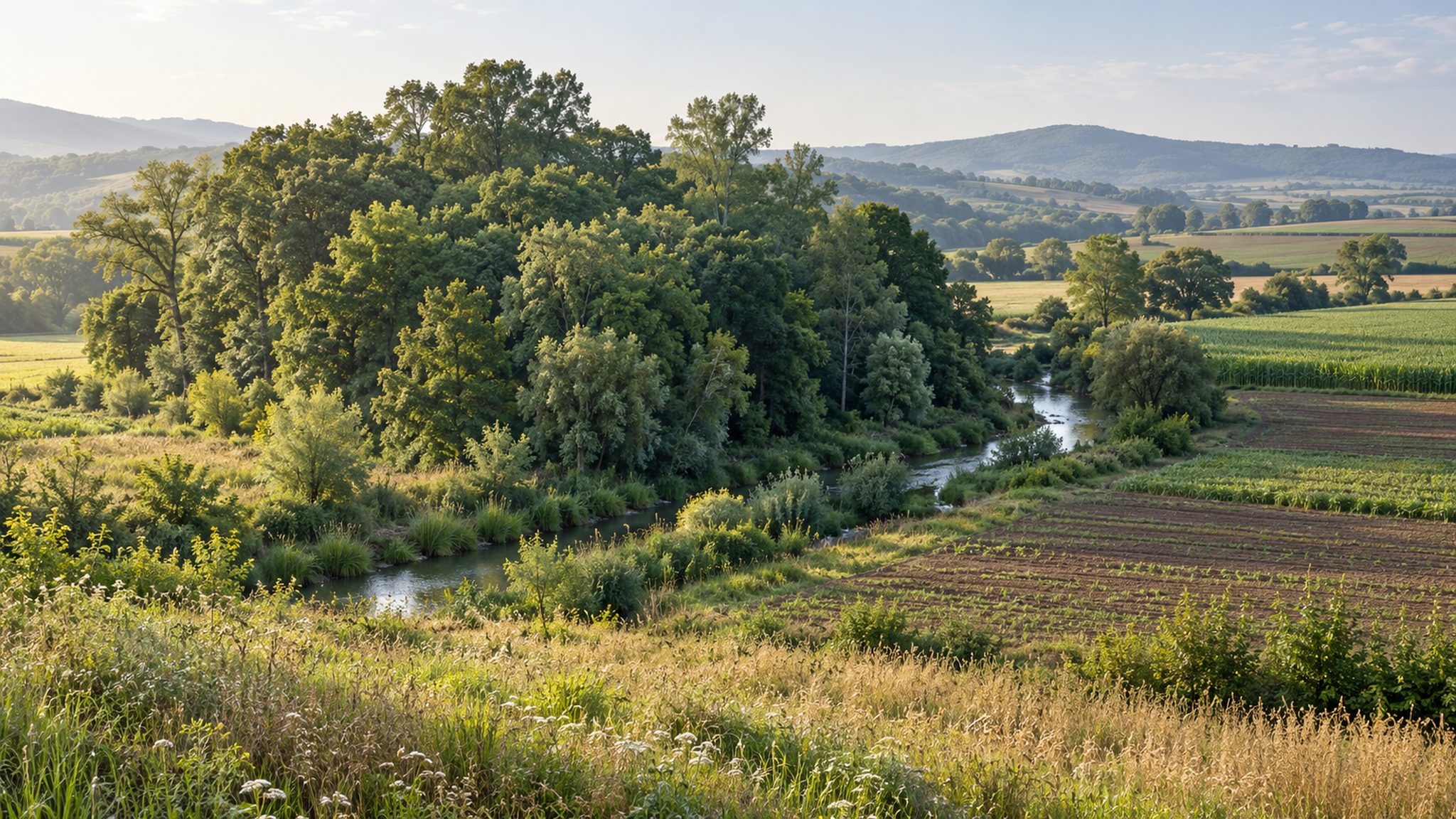
The international definition combines a defined place, effective governance and durable conservation outcomes; the landscape’s appearance alone cannot establish eligibility.
- An OECM is a geographically defined area outside a recognised protected area that is governed and managed to deliver positive, sustained outcomes for biodiversity conservation, alongside associated ecosystem functions and relevant local values.
- In situ conservation concerns biodiversity within its natural surroundings. The question is whether management sustains species, habitats and ecological functions in that place, rather than simply preserving specimens elsewhere or recording a boundary.
- A site may have been established for another function. The CBD framework allows conservation outcomes to arise alongside other purposes, but those purposes must remain compatible with sustaining biodiversity over the long term.
- Sustainable human activities can be compatible with the concept. Their presence does not automatically disqualify an area, just as the absence of people does not automatically prove effective conservation or qualify a site.
- The distinction from a protected area is substantive: CBD criteria exclude an area already recognised or reported as one. OECMs complement protected-area networks by recognising additional effective conservation rather than double-counting existing sites.
How Governance Produces Lasting Outcomes
A credible conservation claim links who can act, how threats are managed and what happens to biodiversity over time.
- Geographic boundaries identify the space being assessed, while legitimate governance identifies who can make and enforce decisions. A clearly drawn area without workable authority may offer little protection against changing pressures on biodiversity.
- Management must address existing and reasonably anticipated threats. The CBD guidance includes preventing, reducing or removing threats and restoring degraded ecosystems; designation cannot substitute for decisions that actually influence conditions within the area.
- Continuity matters because a brief improvement may disappear when funding or leadership changes. The international guidance connects sustained governance and management with long-term biodiversity outcomes, requiring arrangements capable of responding to new threats.
- Baseline information records important biodiversity attributes and existing management. Monitoring then asks whether measures remain effective, allowing decision-makers to detect deterioration and adjust action instead of assuming that recognition proves continuing ecological success.
- The COP17 implementation review illustrates the wider evidence problem: reporting an initiative is different from demonstrating its results. OECM assessment similarly needs information about conservation effectiveness beyond administrative completion or public announcements.
Why Recognition Needs Rights and Ecological Evidence
Recognition should strengthen conservation institutions while respecting the people and governance systems that already shape the area.
- Consultation with governance authorities, landowners, rights holders and other stakeholders is part of the CBD guidance. Recognition built without understanding legitimate interests can weaken cooperation and obscure who bears conservation costs or receives benefits.
- For indigenous and local-community territories, CBD guidance addresses self-identification and free, prior and informed consent, as appropriate and consistent with national frameworks and international obligations. These principles should not be misreported as newly enacted Indian provisions.
- Cultural and spiritual values may support conservation, but a cultural description alone does not establish an OECM. Assessment still needs to examine biodiversity attributes, management arrangements and the continuity of positive ecological outcomes.
- Connectivity can improve the contribution of conserved places to wider landscapes. The logic behind wildlife crossings is relevant: ecological movement depends on relationships between habitats, not only the condition of isolated patches.
- The new Indian announcement confirms a designation-guidance step. It does not itself identify recognised sites, quantify new conserved coverage or disclose every procedural requirement; such claims need the applicable guideline text and site-level decisions.
Way Forward
Make Recognition Verifiable
- Document biodiversity baselines, boundaries and management responsibilities before treating an area’s conservation contribution as established.
- Build monitoring around ecological condition and threat reduction, with a clear process for revising management when outcomes deteriorate.
- Support legitimate local governance through consultation, accessible information and transparent handling of costs, benefits and rights.
- Publish site-level evidence and applicable procedures so that recognition can be examined independently of promotional claims.
Conclusion
- OECMs widen the recognition of effective conservation beyond protected areas, but their value rests on sustained biodiversity outcomes, legitimate governance and management that responds to threats.
- For an exam answer, connect recognition, rights and monitoring. India’s guideline release is a policy step; proof of conservation effectiveness requires continuing evidence from the areas concerned.
UPSC Practice Questions
Prelims MCQ 1
With reference to the CBD framework for OECMs, consider the following statements:
- An OECM is an area other than a recognised protected area.
- The presence of any human activity necessarily disqualifies an area.
- Positive and sustained biodiversity outcomes are central to the concept.
How many of the above statements are correct?
(a) Only one (b) Only two (c) All three (d) None
Answer: (b) Only two
Explanation:
Statements 1 and 3 are correct. CBD guidance allows sustainable human activities where they remain compatible with clear conservation benefits.
Prelims MCQ 2
Which evidence would best support assessment of an OECM’s continuing effectiveness?
(a) The number of times the site appears in publicity material (b) A boundary map without information about management (c) A one-time announcement of recognition (d) Monitoring of biodiversity condition and the effectiveness of threat management
Answer: (d) Monitoring of biodiversity condition and the effectiveness of threat management
Explanation:
Monitoring connects management with ecological outcomes. Publicity, a boundary or an announcement alone cannot establish sustained conservation effectiveness.
UPSC Mains Questions
- Explain how OECMs can complement protected areas. Discuss the role of governance and monitoring in sustaining their conservation contribution.
- How can recognition of conserved landscapes protect community rights while producing verifiable biodiversity outcomes?
Sources: PIB, Ministry of Environment, Forest and Climate Change and Convention on Biological Diversity.
Frequently Asked Questions
What does OECM mean?
An Other Effective Area-Based Conservation Measure is a geographically defined area outside a recognised protected area whose governance and management produce positive, sustained biodiversity conservation outcomes, alongside associated ecosystem functions and relevant local values.
Can an OECM include human activities?
Yes. CBD guidance allows sustainable human activities where conservation benefits are maintained. Human use alone neither proves nor rules out eligibility; the management arrangements and long-term biodiversity outcomes must be assessed.
Are OECMs the same as protected areas?
No. CBD criteria exclude areas already recognised or reported as protected areas. OECMs complement those networks by recognising effective conservation elsewhere, including areas that may have originally served another function.
What did India announce on 28 October?
India released guidelines for designating I-OECMs. The official announcement describes their purpose but does not establish that particular sites have been designated or provide evidence of new conserved coverage.
Tell Google you want more of this.
Add Anantam IAS as a preferred sourceOne tap, and this site shows up more often in your own Top Stories, AI Overviews and AI Mode. Remove it any time.