Why in News?
India released a Minimum Standard Requirements document for BSL-3/4 laboratories at the Scientific Steering Committee on One Health meeting on 30 September 2026.
- The Advisory and Review Committee on BSL-3/4 laboratories developed the document released at the meeting.
- PIB said the document would shortly enter the public domain; the announcement does not disclose its detailed technical clauses.
- The meeting emphasised institutional ownership, follow-through and use of existing capacities across human, animal and environmental health.
- The One Health Dashboard remains under development; progress reviewed at the meeting should not be confused with a completed nationwide launch.
- A laboratory network needs safe operating capacity as well as testing equipment: scientific capability creates public value only when its risks are controlled.
- The central question is how minimum standards and case-specific risk assessment can support dependable containment across institutions with different resources.
UPSC Relevance
Prelims Relevance
- BSL: biosafety level
- Minimum Standard Requirements for BSL-3/4 laboratories
- WHO’s evidence- and risk-based biosafety approach
- Biological safety cabinets as primary containment devices
- One Health: human, animal and environmental health
Mains Relevance
GS Paper 2
- Public-health infrastructure, accountable institutions and laboratory governance.
GS Paper 3
- Scientific risk management and safe biological research.
Essay
- Scientific capacity and responsibility must develop together.
Background and Context
Containment is a system, not a laboratory label
Laboratory biosafety concerns preventing unintended exposure to biological agents and their accidental release; equipment is only one part of that task.
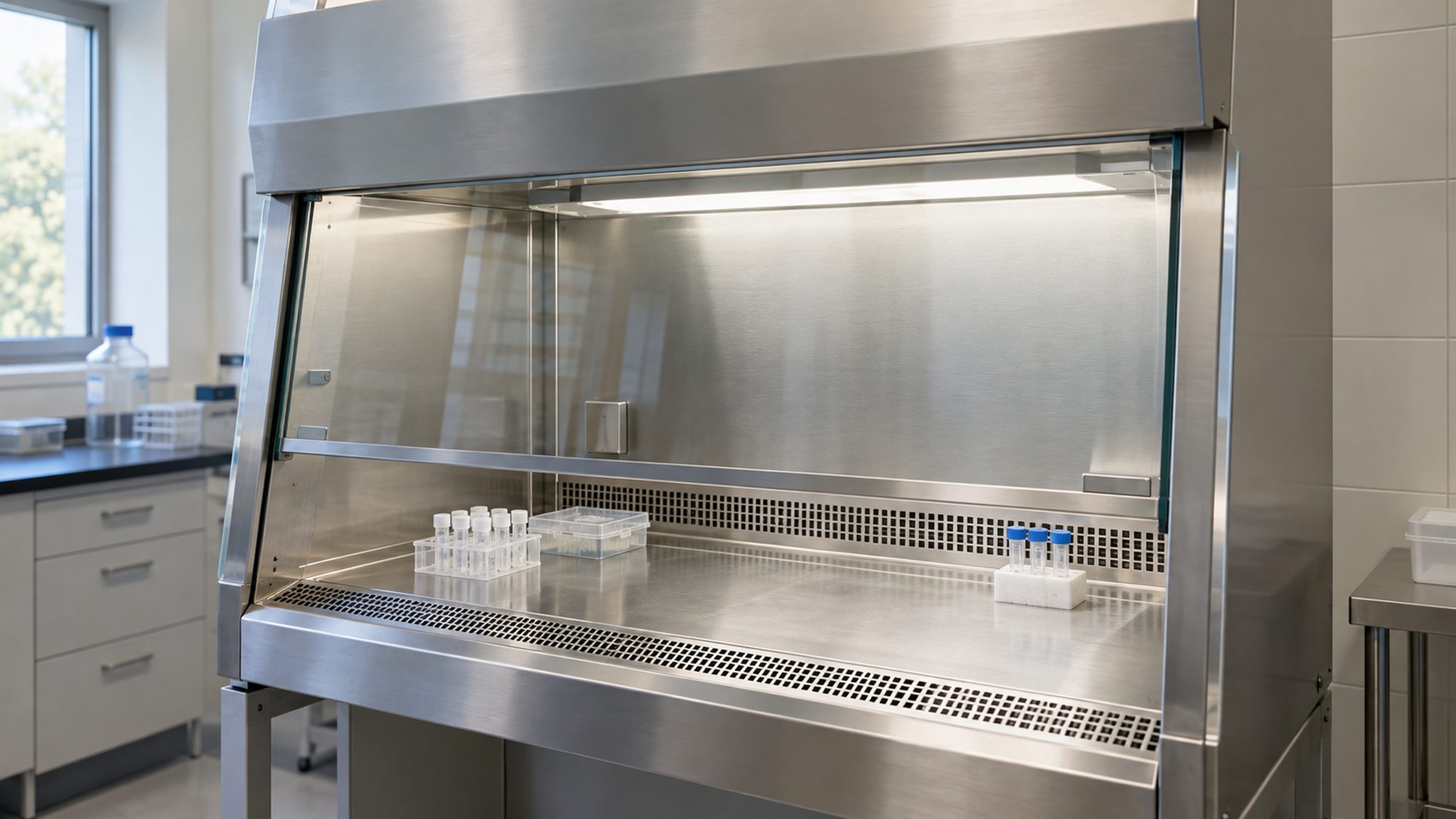
- A biological safety cabinet is a primary containment device at the work area. Its presence does not, by itself, establish that an entire facility meets a particular biosafety standard.
- WHO treats laboratory design and maintenance, protective equipment, waste management and programme management as connected subjects. Safe work depends on how these elements operate together, rather than how impressive one installation appears.
- Decontamination and waste management extend the safety question beyond the immediate experiment. An assessment must consider what happens to material after work ends, not only how staff handle it during testing.
- Maintenance matters because a safeguard must continue functioning throughout use. Buying equipment is a discrete event; keeping its protective function dependable is a recurring responsibility within a laboratory’s safety programme.
- BSL-3 and BSL-4 are biosafety-level designations, not certificates of scientific quality. The current announcement concerns minimum requirements for those laboratories; it does not certify every facility or report universal compliance.
Risk assessment determines the protective response
WHO’s manual provides general background for understanding biosafety; its principles should not be presented as undisclosed clauses of India’s new document.
- The WHO manual calls for thorough, evidence-based and transparent risk assessment. Safety measures should match the actual risk of work with biological agents on a case-by-case basis, rather than follow assumptions alone.
- Hazard describes the potential for harm; risk assessment examines that potential in the circumstances of the proposed activity. Naming an organism is a starting point, not a complete account of laboratory risk.
- WHO says assessment should occur before activities begin and inform risk controls. The logical sequence is to understand the work and its risks before deciding which safeguards are appropriate for it.
- A risk-based approach is not permission to remove safeguards merely to save money. WHO links efficient resource use with sustainable biosafety and access to laboratory services without compromising protection.
- Safe research access and containment should be evaluated together. As with shared research equipment, wider availability creates practical value only when institutions can support the conditions required for responsible use.
What minimum requirements can establish
Common requirements can create a reference for institutions, but their scope and implementation must be read from the actual document.
- The confirmed development is release of the MSR document at the meeting, with public dissemination promised shortly. The announcement does not provide a clause-by-clause account or establish an enforcement timetable.
- A document’s release, its public availability and its legally binding effect are different questions. Do not infer compulsory deadlines, penalties, certification procedures or specific engineering requirements from the press announcement alone.
- Implementation requires a link between written expectations and actual practice. In a policy answer, examine institutional responsibility, operating resources and verification rather than treating publication of a standard as proof of safer laboratories.
- A credible safety culture makes deviations visible and supports correction. The wider governance lesson resembles learning from near misses: systems need evidence about failures before those failures become serious harm.
- The useful One Health connection is shared preparedness across sectors. Laboratories serving different health domains need dependable safeguards; a dashboard can organise information but cannot substitute for the physical and organisational controls supporting safe work.
Way Forward
Make requirements assessable in practice
- Publish the complete MSR document with clear scope, institutional responsibilities and the basis for assessing conformity.
- Support risk assessment and staff competence alongside equipment procurement, maintenance and waste-management capacity.
- Evaluate implementation evidence against stated requirements; distinguish planned upgrades, completed installations and sustained safe operation.
Conclusion
- Laboratory biosafety depends on a functioning system of assessment, containment and management. A facility’s label or equipment list cannot answer every question about safe operation.
- For an exam answer, connect minimum requirements with institutional capacity and verification. Keep the confirmed Indian announcement separate from WHO background and from recommendations about future implementation.
UPSC Practice Questions
Prelims MCQ 1
With reference to laboratory biosafety, consider the following statements:
- WHO recommends risk assessment before laboratory activities are undertaken.
- The presence of a biological safety cabinet alone establishes an entire laboratory’s conformity with a biosafety standard.
- WHO’s risk-based approach seeks appropriate safeguards without compromising safety.
How many of the above statements are correct?
(a) Only one (b) Only two (c) All three (d) None
Answer: (b) Only two
Explanation:
Statements 1 and 3 are correct. A cabinet is a primary containment device; whole-laboratory safety also involves design, maintenance, procedures and management.
Prelims MCQ 2
Which conclusion is supported by the September 2026 announcement on Minimum Standard Requirements for BSL-3/4 laboratories?
(a) Every such laboratory has already received certification. (b) The One Health Dashboard has completed nationwide deployment. (c) The MSR document was released, with public dissemination to follow. (d) WHO’s manual has automatically become an Indian statutory rule.
Answer: (c) The MSR document was released, with public dissemination to follow.
Explanation:
PIB confirms release of the document and says it will shortly be available publicly. It does not establish the other claims.
UPSC Mains Questions
- How can minimum laboratory requirements and risk-based assessment together strengthen India’s public-health preparedness?
- Why is equipment procurement insufficient for laboratory biosafety? Discuss the institutional responsibilities needed for dependable containment.
Sources: PIB, Office of the Principal Scientific Adviser and WHO Laboratory biosafety manual, fourth edition: background.
Frequently Asked Questions
What are the new Minimum Standard Requirements about?
The document concerns BSL-3/4 laboratories and was released at the One Health steering committee meeting. PIB said public dissemination would follow; its detailed technical clauses were not provided in that announcement.
What does risk-based laboratory biosafety mean?
It means assessing the actual risks of proposed work before choosing controls. WHO recommends evidence-based, transparent assessment so that protective measures fit the activity and local circumstances without compromising safety.
Does a biological safety cabinet make a laboratory compliant?
A cabinet provides primary containment at the work area, but it is only one component. Whole-facility safety also involves design, maintenance, protective equipment, waste management and a functioning biosafety programme.
Is the MSR document already a binding statutory rule?
The cited announcement confirms release of a document, not its statutory effect. Its legal basis, detailed requirements and implementation arrangements must be established from the published document and any applicable official instruments.
Tell Google you want more of this.
Add Anantam IAS as a preferred sourceOne tap, and this site shows up more often in your own Top Stories, AI Overviews and AI Mode. Remove it any time.