Why in News?
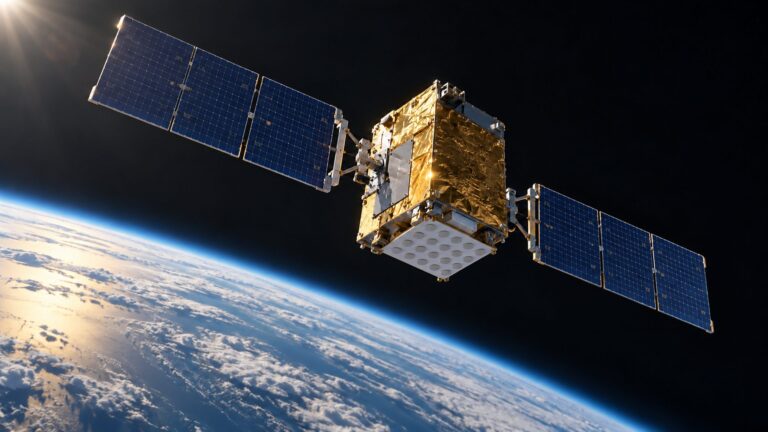
China’s rapid expansion of military and civilian space capabilities, including anti-satellite (ASAT) weapons, co-orbital systems, and large satellite constellations, has intensified concerns regarding the weaponisation of outer space.
These developments have significant implications for India’s national security, strategic autonomy, and space-based infrastructure.
| UPSC Relevance: GS-3 Science and Technology: Space Technology Mains: Advancement in Space technologies and National Security |
Outer Space has become a critical domain for communication, navigation, intelligence gathering, weather forecasting, financial transactions, and military operations.
Modern warfare increasingly depends on space-based assets for:
- Intelligence, Surveillance and Reconnaissance (ISR)
- Positioning, Navigation and Timing (PNT)
- Secure military communications
- Precision-guided weapons
Although no war has been fought in space, the growing militarisation of outer space raises concerns about future conflicts extending beyond Earth.
China’s Expanding Space Ambitions:
- Building Comprehensive Space Power:
- China has developed capabilities across the entire space ecosystem, including satellite manufacturing, launch vehicles, navigation systems, space stations, lunar exploration, deep-space missions and counter-space technologies.
- Major achievements include:
- Operational BeiDou Navigation Satellite System
- Permanent presence through the Tiangong Space Station
- Sample-return missions from the Moon
- Ambitious plans for lunar bases and deep-space exploration
2. Space Race Leadership:
- China seeks to reduce the gap with the United States in the number of satellites, launch capacity, space-based services and Military space capabilities.
- Its competition increasingly extends to Low Earth Orbit (LEO) satellite constellations, lunar exploration, space resource utilisation and commercial launch services.
- Chinese private firms such as LandSpace, iSpace, and OneSpace are emerging as competitors to American firms like SpaceX and Blue Origin.
3. Long-Term Strategic Goals:
China has articulated ambitious timelines:
- Human lunar landing before the late 2030s
- Development of advanced reusable launch systems
- Space-based solar power projects
- Expansion of lunar infrastructure
- Exploration of asteroid resources
These objectives reflect China’s intent to become a leading space power by mid-century.
China’s Counter-Space Capabilities:
A key concern is that China’s development of systems can threaten satellites and space infrastructure.
- Kinetic Anti-Satellite (ASAT) Weapons:
- 2007 ASAT Test: China destroyed one of its own weather satellites using a ground-launched missile. The test generated thousands of debris fragments and demonstrated China’s ability to destroy satellites in orbit.
- Analysts associate China with capabilities such as: SC-19 interceptor & DN-series missile systems. These are designed to target satellites in different orbital regimes.
- Co-Orbital Systems: Co-orbital satellites can approach another satellite, inspect it, interfere with its functioning and potentially move or disable it. E.g., China’s Shijian (SJ) and Shiyan satellite series. China’s Shijian-21 spacecraft has demonstrated the ability to dock with and move another satellite to a graveyard orbit.
- Orbital Dogfighting: In 2024, several Chinese satellites reportedly conducted coordinated proximity manoeuvres, resembling “dogfighting” in space. Such operations demonstrate sophisticated orbital manoeuvring capabilities that could have military applications.
- Directed-Energy Weapons: China is believed to be developing Laser dazzling systems and High-energy laser technologies. Potential effects include temporary blinding of sensors, degradation of imaging capabilities and disruption of communications. These systems can create reversible effects without generating orbital debris.
- Electronic and Cyber Warfare: China possesses capabilities for GPS jamming, communication interference, cyberattacks on space infrastructure and spoofing navigation signals.
Implications for India:
- Limited Satellite Redundancy: India operates a relatively modest satellite fleet compared to major powers. Critical Indian systems include:
- CARTOSAT series
- RISAT series
- GSAT communication satellites
- NavIC navigation satellites
Loss of even a few satellites could significantly affect military and civilian operations.
- Threat to ISR (Intelligence, Surveillance, and Reconnaissance) Capabilities: Chinese counter-space actions could reduce surveillance along the Line of Actual Control (LAC), affect tactical imagery, and create intelligence gaps during crises. This would hinder military planning and response.
- Vulnerability of NavIC: India’s indigenous navigation system, NavIC, supports Military navigation, Disaster management, transportation, and Timing services. Electronic warfare measures could degrade its effectiveness during conflict.
- Escalation Risks: A major concern is the Kessler Syndrome (cascading chain reaction of collisions in orbit), as destroyed satellites would generate debris. Debris causes further collisions. Entire orbital regions may become unusable. This creates a strong deterrent against large-scale, destructive ASAT attacks.
- Growing Strategic Asymmetry: China enjoys advantages in launch frequency, satellite manufacturing, counter-space capabilities and commercial space ecosystem. This asymmetry poses long-term challenges for India.
- Lack of advanced co-orbital capabilities: India’s counter-space strategy is heavily focused on deterrence and resilience rather than immediate co-orbital weaponisation. While the country successfully tested a direct-ascent kinetic ASAT (Mission Shakti), it currently lacks deployed co-orbital interceptors, space-based lasers, and offensive space robotics.
Strengthening India’s Defence Capabilities through Space:
- Space-Based Surveillance Expansion: India has approved the Space-Based Surveillance-III (SBS-III) programme, involving 52 surveillance satellites at an estimated cost of around 27,000 crore. The objective is to improve persistent monitoring of borders, the Indian Ocean Region and adversarial military movements.
- Shift towards Distributed Satellite Constellations: Recognising the vulnerability of operating a few large satellites, India is shifting towards distributed constellations in LEO and GEO, smaller satellites, shorter revisit times and greater redundancy. This would make India’s satellite architecture harder to disable and easier to replace.
- Closing the ISR Gap with China: India’s SBS-III programme seeks to reduce this gap by providing round-the-clock monitoring, including through synthetic aperture radar capabilities that can work at night and through cloud cover.
- Civil-Military Convergence: India’s civilian space ecosystem, led by ISRO, is increasingly being aligned with national security needs. The creation of the Defence Space Agency, the release of a Joint Military Space Doctrine, and the use of dual-use space assets indicate a gradual convergence between civilian, commercial and military space capabilities.
- Private Sector Participation: The Indian Space Policy 2023 promotes private participation across the space value chain, including satellite manufacturing, launch services, ground infrastructure and data services. IN-SPACe has been empowered to authorise and promote non-government entities, while NSIL commercialises ISRO technologies.
- Strategic Role of Space Start-ups: Indian start-ups such as Pixxel, Digantara, Agnikul and Skyroot are strengthening India’s commercial space ecosystem. E.g., Pixxel’s hyperspectral imaging constellation has applications in agriculture, mining, environment and defence.
India’s defence-space strategy must move from satellite possession to satellite resilience through distributed constellations, private-sector capacity, civil-military integration, secure ground infrastructure and a clear military space doctrine.
Tell Google you want more of this.
Add Anantam IAS as a preferred sourceOne tap, and this site shows up more often in your own Top Stories, AI Overviews and AI Mode. Remove it any time.