Why in News?
The Indian Express reported on 29 October 2026 that Haryana’s regulator had halted further action on a parallel electricity distribution licence after State government directions, reopening debate over competition and utility finances.
- The report describes the Haryana Electricity Regulatory Commission deciding on 28 October not to proceed further with the licensing process for Eleven Power after its earlier approval.
- The proposed entry concerned Gurugram and Nuh. Existing State distribution companies raised concerns about revenue, continuing costs and the financing of subsidised supply.
- The Centre’s shared-network approach remains a proposal; draft policy and legislative changes must not be treated as an already operational national framework.
- Consumer choice can encourage better service, but its effects depend on network access, cost recovery and the treatment of consumers who remain with the incumbent.
- Network capacity matters alongside electricity procurement, as the data-centre planning note explains through the link between demand, grid infrastructure and reliable connections.
- Generation choices, including the agrivoltaics debate, address electricity production. Distribution reform concerns the separate task of delivering and selling that electricity to consumers.
UPSC Relevance
Prelims Relevance
- Distribution licensee: an entity authorised to distribute electricity in a specified area.
- Parallel licensing: more than one distribution licensee operating in the same area under the applicable conditions.
- Wheeling charge: a regulated charge associated with using another entity’s electricity network.
- Cross-subsidy: tariff revenue from one consumer category helping support another category.
- Fixed costs: obligations that do not disappear immediately when sales or customer numbers decline.
Mains Relevance
GS Paper 3
- Infrastructure: balancing electricity competition with efficient network investment and financial sustainability.
- Inclusive growth: protecting affordable access while changing the distribution sector’s revenue model.
GS Paper 2
- Regulation: coordinating State policy, regulatory decisions and clearly assigned service responsibilities.
Essay
- Competition in essential services works through the institutions that allocate costs and protect access.
Background and Context
Who Supplies Power and Who Owns the Network
Electricity distribution combines physical infrastructure with a commercial relationship, and a reform can change one without transferring the other.
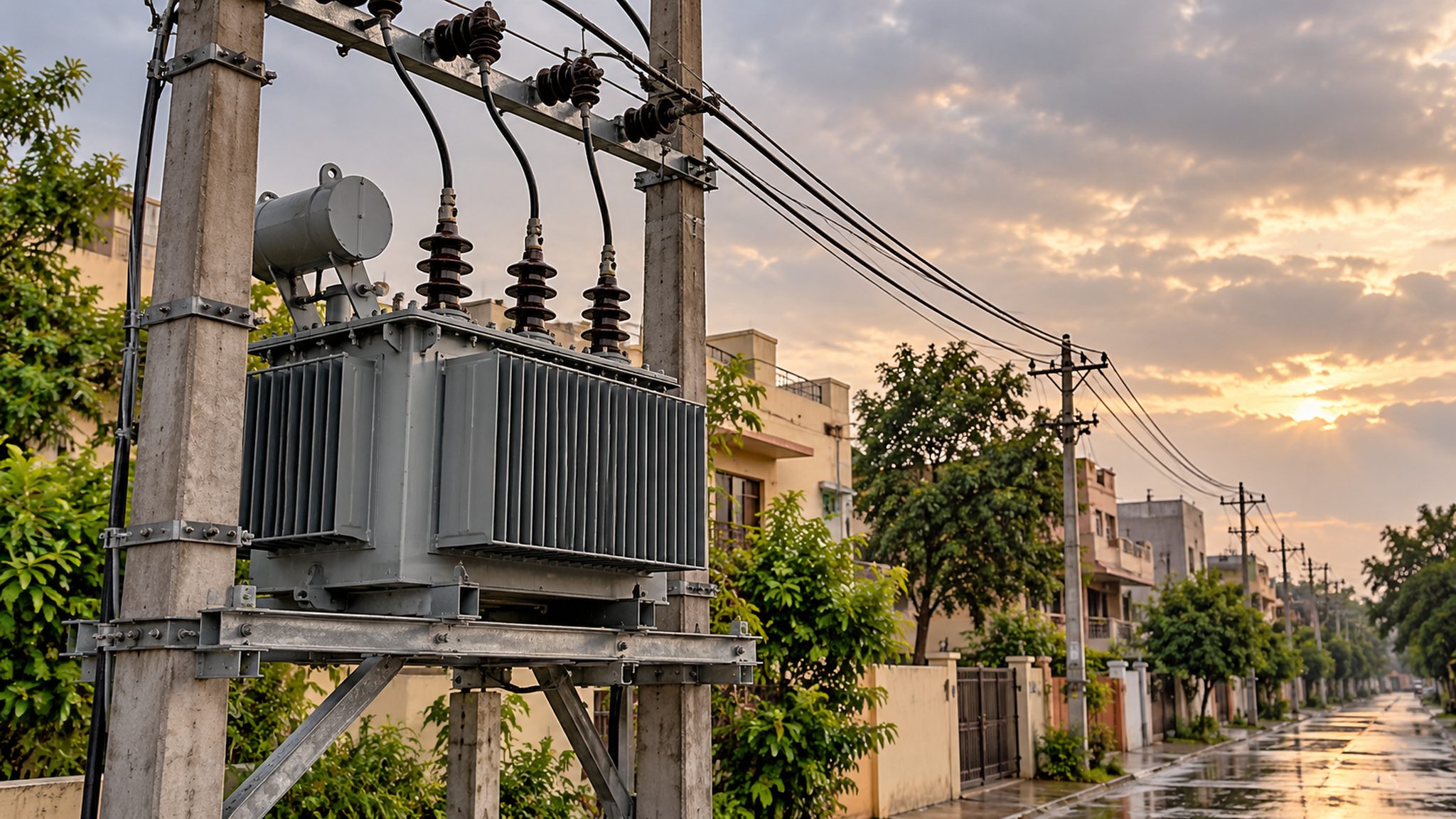
- The distribution network includes local lines, transformers and associated equipment that carry electricity towards consumers. These assets require investment and maintenance even when a customer changes the company responsible for the electricity bill.
- A distribution licence authorises an entity to operate within its specified area and conditions. It is different from ownership of every asset used to deliver electricity, which must be established through the applicable arrangements.
- Parallel licensing allows more than one licensee in an area. The Electricity Act’s existing framework discussed in the report includes distribution through each licensee’s own system, making infrastructure duplication an important concern for regulators.
- State policy directions formed the immediate context in Haryana. Section 108 concerns written directions on policy involving public interest; it should not be read as an unrestricted power to control every individual regulatory determination.
- The current procedural stage matters: the report describes a halt after an earlier approval. It does not establish that the entrant has begun supplying consumers or that the proposed national shared-network framework is already law.
How Shared-Network Competition Would Work
The proposed approach seeks to introduce additional suppliers while allowing them to use existing distribution infrastructure through regulated access arrangements.
- Network ownership would remain with the existing licensee under the approach described in the report. An incoming licensee could use that network against regulated charges, with the option of permitted investment in its own infrastructure.
- Wheeling charges would pay for network use. Their design matters because a charge set too low can weaken maintenance funding, while an excessive charge can obstruct entry and leave consumers with little effective choice.
- Avoiding duplicate assets can reduce unnecessary expenditure on additional poles, lines and substations. Savings are possible where existing capacity can serve demand, but new connections and congestion may still require additional investment in the system.
- Equal access conditions are necessary for meaningful competition when one business controls infrastructure used by another. Connection procedures, capacity information and treatment of network constraints should be clear enough to prevent discriminatory delays or unexplained refusals.
- Service responsibility needs an identifiable owner. Consumers must know who handles billing disputes, meter problems and outages, while suppliers and network operators need enforceable arrangements for maintenance and restoration when their respective responsibilities intersect.
Why Cross-Subsidies and Fixed Costs Matter
A supplier losing customers may retain costs and obligations, especially when the departing consumers contributed disproportionately to its revenue.
- Cross-subsidy allows revenue from some consumer categories to support others. In the Haryana dispute, existing utilities argued that losing higher-paying commercial or industrial consumers could weaken the revenue supporting household and agricultural supply.
- Cream-skimming describes the risk of an entrant concentrating on more profitable customers. Whether it occurs depends on licence conditions and market design; it is a regulatory concern to assess, not an inevitable result of private entry.
- Continuing fixed costs may include contracted capacity payments, staff and network maintenance. These obligations cannot always shrink as quickly as electricity sales, so migration can leave the incumbent recovering them from a smaller revenue base.
- Affordability pressures can then move elsewhere: remaining consumers may face higher charges, or government may need to provide greater budget support. Neither outcome is automatic; efficiency gains, financing rules and transition arrangements affect the result.
- The useful test is whether reform improves service and efficiency while sustaining access for less profitable consumers. Counting suppliers alone cannot establish success; tariff design, investment, complaint handling and reliable supply also need examination.
Way Forward
Set the Cost and Service Rules Before Entry
- Identify continuing costs: assess existing obligations and explain how an entrant, the network owner and remaining consumers would share the transition burden.
- Specify access and accountability: publish network-use conditions and assign responsibility for connection, metering, billing and outage restoration.
- Protect affordable service: make cross-subsidy and budget-support arrangements explicit, then assess performance through service quality and access across consumer groups.
Conclusion
- Electricity competition depends on more than permission for a second supplier. The network still needs maintenance, existing obligations need financing and consumers need an accountable route for reliable supply and correction of service failures.
- Haryana’s licensing halt highlights the transition problem. A workable reform must connect entry rules with network charges, continuing costs and affordable access, while preserving the distinction between proposals, regulatory decisions and actual supply.
UPSC Practice Questions
Prelims MCQ 1
With reference to electricity distribution, consider the following statements:
- Parallel licensing necessarily means that all competing suppliers jointly own the same distribution assets.
- A wheeling charge is associated with the use of an electricity network.
- Entry of another supplier automatically eliminates the need to address cross-subsidies.
How many of the above statements are correct?
(a) Only one (b) Only two (c) All three (d) None
Answer: (a) Only one
Explanation:
Only the second statement is correct. Licensing and asset ownership are distinct. Entry does not automatically resolve how cross-subsidies and continuing costs will be financed.
Prelims MCQ 2
Why can the departure of higher-paying consumers create financial pressure on an incumbent electricity distributor?
(a) Every network asset immediately becomes unusable (b) Revenue may fall while fixed obligations and support for other consumer categories remain (c) The regulator automatically cancels all existing supply contracts (d) Electricity generation must cease throughout the State
Answer: (b) Revenue may fall while fixed obligations and support for other consumer categories remain
Explanation:
Customer migration can reduce revenue faster than fixed costs decline. It can also reduce the revenue supporting cross-subsidised consumer categories, depending on the tariff and transition arrangements.
UPSC Mains Questions
- Explain the distinction between competition in electricity supply and ownership of distribution infrastructure. What regulatory conditions can make shared-network access effective? (150 words)
- Discuss the challenge of reconciling parallel electricity distribution licensing with cross-subsidies, continuing fixed costs and affordable access. (250 words)
Source: Indian Express Explained.
Frequently Asked Questions
What is parallel electricity distribution licensing?
It permits more than one distribution licensee in the same area under applicable conditions. The commercial permission to distribute electricity must be distinguished from the arrangements governing ownership and use of physical infrastructure.
Has the proposed national shared-network framework already taken effect?
The shared-network approach remains part of draft policy and legislative changes. It should not be treated as a uniform new framework already operational across India.
What would an incoming supplier pay for using an existing network?
The proposed approach uses regulated wheeling charges for network access. Such charges need to support efficient operation and maintenance while allowing fair entry and avoiding unjustified costs for consumers.
Why do existing distributors worry about cross-subsidies?
Higher-paying consumer categories can help finance supply to categories paying lower tariffs. If those customers leave while costs remain, the incumbent may face a funding gap unless the transition arrangements address it.
Does more competition necessarily lower electricity tariffs?
No. Outcomes depend on procurement, network charges, investment, efficiency gains and the allocation of existing obligations. Poorly designed entry or duplicated infrastructure can create additional costs instead of delivering lower bills.
Tell Google you want more of this.
Add Anantam IAS as a preferred sourceOne tap, and this site shows up more often in your own Top Stories, AI Overviews and AI Mode. Remove it any time.