PM Vishwakarma Haat 2026 brought artisan livelihoods, traditional skills and market access into the January current-affairs cycle. The event is linked to the larger PM Vishwakarma scheme for traditional craftspeople and informal skilled workers.
For UPSC, the topic matters because it connects social justice with the informal economy, skill recognition, credit, technology, dignity of labour and cultural continuity.
This article explains PM Vishwakarma Haat as a market-access intervention and evaluates the broader scheme through livelihood and inclusion lenses.
Quick Facts
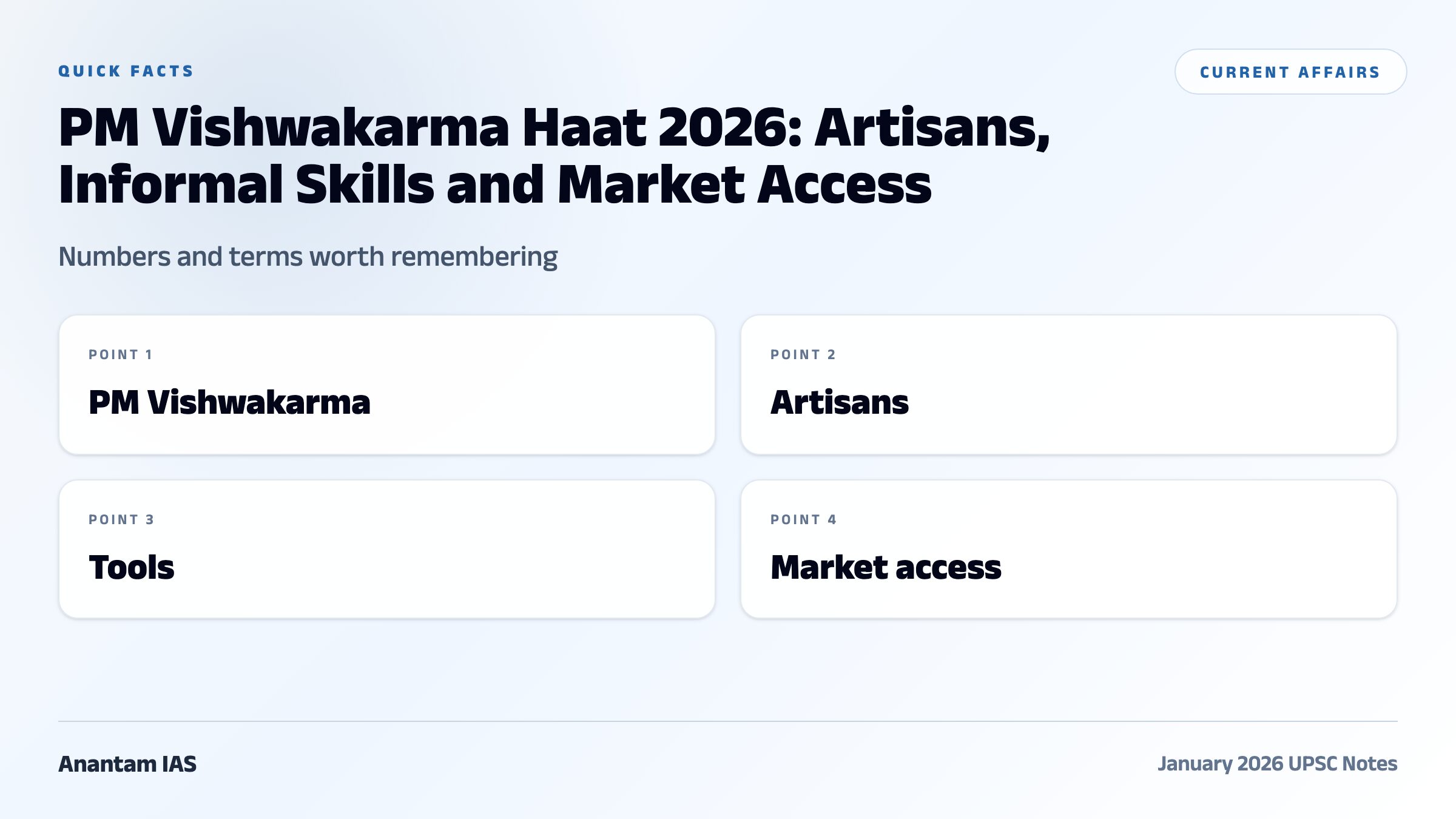
- PM Vishwakarma supports traditional artisans and craftspeople.
- The scheme covers skill training, toolkit support, credit linkage and market access.
- PM Vishwakarma Haat gives artisans a platform to sell and showcase products.
- Target groups include traditional occupations such as carpenters, blacksmiths, potters, weavers and other craftspeople.
- The topic is relevant for GS-II welfare and GS-III informal economy.
- Official source: PIB January 2026 backgrounder.
- Official source: PIB backgrounder.
What Just Happened
The official update highlighted PM Vishwakarma Haat as a platform for artisans linked to the PM Vishwakarma scheme.
The policy idea is to move beyond training alone and connect craftspeople with buyers, branding and formal support.
For aspirants, the topic is a strong example of welfare that tries to preserve skills while improving incomes.
Background and Historical Context
Traditional artisans often work in household enterprises with limited capital, weak branding and dependence on intermediaries.
India’s informal economy holds deep skills but suffers from low productivity, poor market access and limited social protection.
PM Vishwakarma attempts to formalise support without forcing artisans into a purely factory-style development model.
Key Features of Artisan Economy
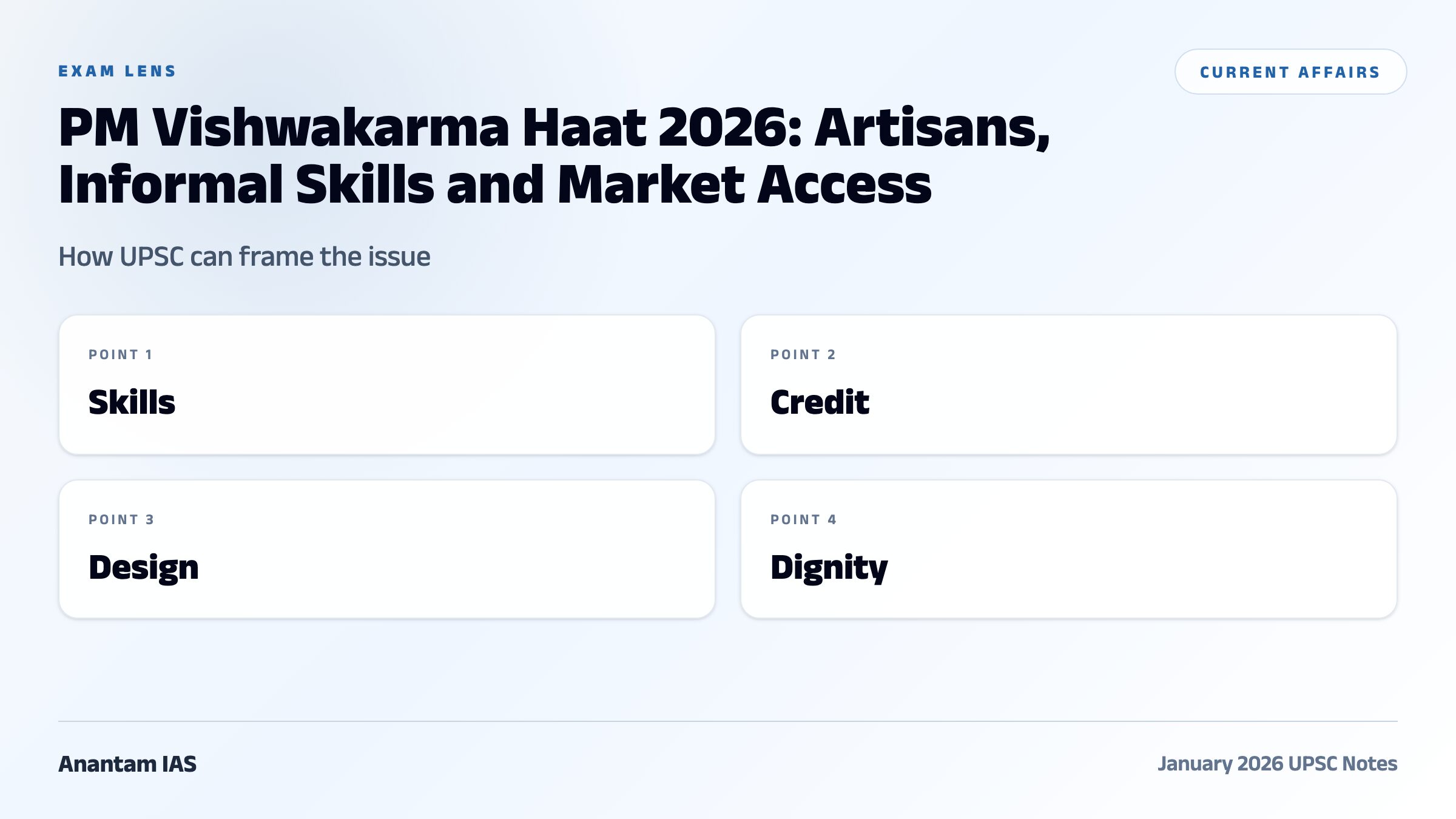
The core policy architecture can be read through these features.
- Skill recognition: traditional occupations are formally identified and supported.
- Training: artisans can access skill upgradation.
- Toolkit support: better tools can improve productivity and quality.
- Credit linkage: concessional loans support working capital.
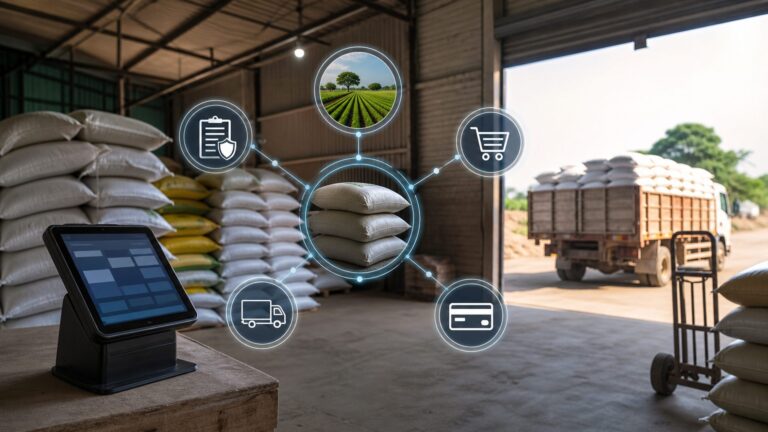
- Market access: haats and platforms connect producers with buyers.
- Dignity: the scheme recognises hereditary and traditional skills as economic assets.
Why It Matters
This is a high-yield UPSC topic because it joins current news with durable syllabus themes.
- It connects a January 2026 event with durable UPSC syllabus themes.
- It gives usable facts for Prelims and analytical hooks for Mains.
- It helps students move from news recall to policy reasoning.
- It can be linked with static concepts in polity, economy, governance, science, environment or society.
Detailed Analysis: Artisan Economy Lens
The market-access layer is crucial. Training artisans without buyers produces frustration, not livelihood improvement.
Credit must match cash-flow realities. Artisans need small, flexible and low-friction finance.
Cultural preservation and income cannot be separated. Crafts survive when the craftsperson earns enough to continue.
Comparative Perspective
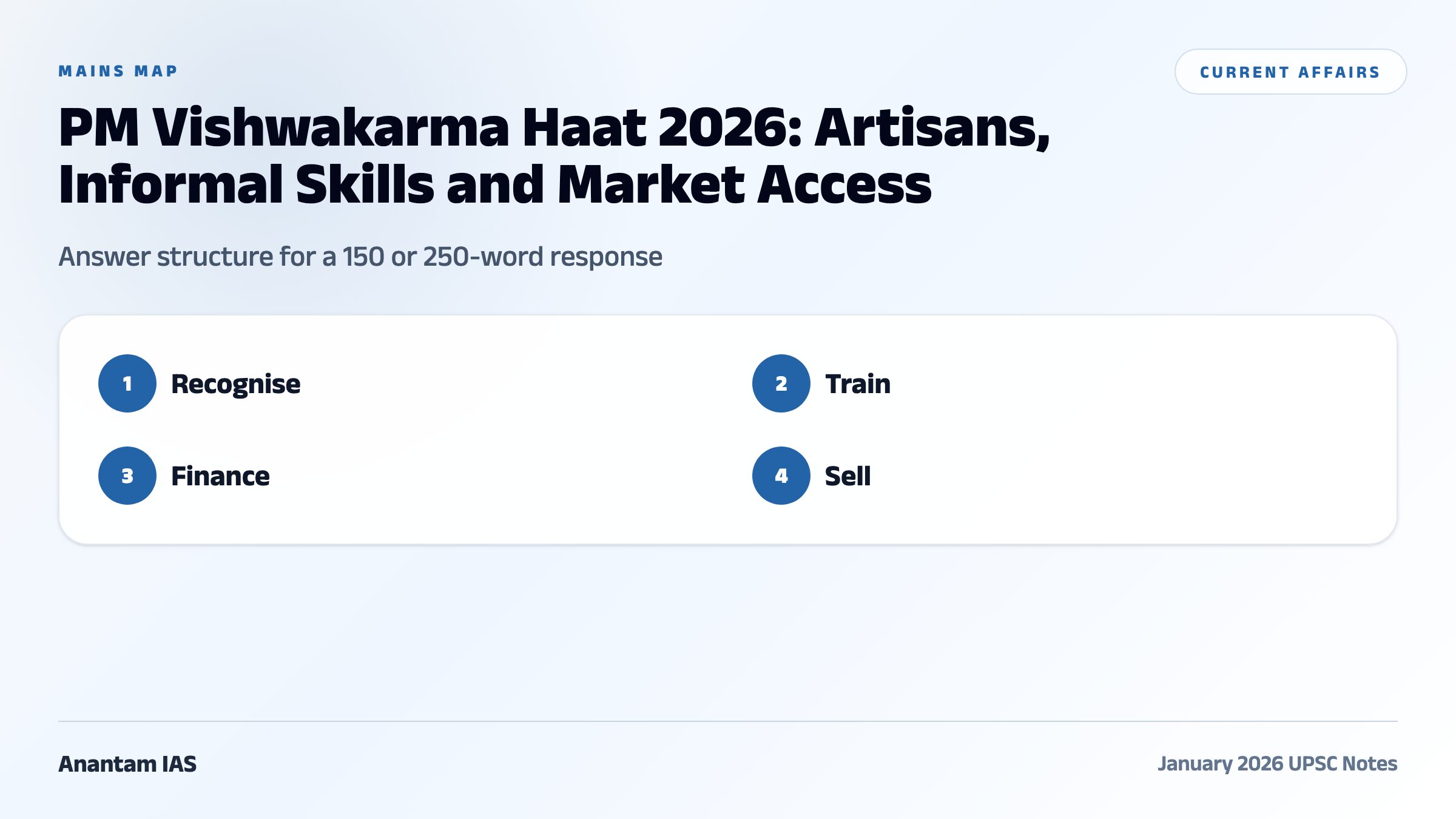
A comparison helps prevent the answer from becoming a one-dimensional news summary.
- PM Vishwakarma: targets traditional artisans and craftspeople.
- PMKVY: broader vocational skilling program.
- ODOP: district-product promotion and market identity.
- SFURTI: supports traditional-industry cluster development.
Challenges
The policy or institutional promise runs into recurring constraints.
- Artisans often depend on intermediaries for sales.
- Digital marketplaces can exclude those without literacy or logistics support.
- Credit uptake may be weak if paperwork is heavy.
- Younger generations may leave crafts if incomes remain low.
- Quality, design and packaging need continuous support.
Prelims Pointers
- PM Vishwakarma targets traditional artisans and craftspeople.
- Support includes training, toolkit, credit and market access.
- SFURTI supports traditional industry clusters.
- Informal workers often lack formal social security.
- Market access is a key livelihood constraint for artisans.
- Dignity of labour is a recurring welfare-governance theme.
Mains Questions
- Traditional skills need market access as much as welfare support. Discuss with reference to PM Vishwakarma. (GS Paper II/III, 250 words)
- How can India improve livelihoods in the informal artisan economy? (GS Paper III, 150 words)
- Skill preservation must be linked with income generation. Analyse. (GS Paper III, 250 words)
- Evaluate the role of credit, design and branding in artisan development. (GS Paper III, 250 words)
Way Forward
PM Vishwakarma should be integrated with ODOP, e-commerce, design schools, common facility centres and social-security programs.
Market events should track repeat orders and artisan income, not only footfall.
For UPSC, frame the scheme as livelihood policy plus cultural economy plus informal-sector formalisation.
The examiner is unlikely to reward a bare fact dump here. The better answer connects the January 2026 event to institutional design, implementation capacity and India’s long-term development priorities.
Frequently Asked Questions
What is PM Vishwakarma?
It is a scheme to support traditional artisans and craftspeople through training, tools, credit and market access.
What is PM Vishwakarma Haat?
It is a market-access and showcase platform for artisans.
Why is the scheme important?
It recognises traditional skills and tries to improve incomes in the informal economy.
Which GS papers are relevant?
GS-II welfare and GS-III economy.
What is the main challenge?
Sustained market access and income improvement.
How does ODOP connect?
ODOP can help brand and market district-level artisan and local products.
Tell Google you want more of this.
Add Anantam IAS as a preferred sourceOne tap, and this site shows up more often in your own Top Stories, AI Overviews and AI Mode. Remove it any time.