Personality Rights

- The Delhi High Court on Monday protected the personality rights of actor and Samajwadi Party’s Rajya Sabha member Jaya Bachchan.
- Personality Rights, also known as Publicity Rights, are not defined in a single, dedicated statute in India. Instead, they are a set of rights that have been developed and protected by the Indian judiciary through a combination of constitutional provisions and existing intellectual property laws.
- In essence, a personality right is an individual’s right to control and commercially benefit from the unauthorized use of their unique persona or identity.
- Rooted in Fundamental Rights:
- Right to Publicity (The Commercial Aspect) – This is the right of an individual, particularly a celebrity or public figure, to control the commercial exploitation of their unique identity. Derived from Right to Privacy under Article 21, by the Judiciary.
- Includes a person’s name, image, photograph, voice, signature, distinctive mannerisms, catchphrases (like Anil Kapoor’s “Jhakaas”), and dialogue delivery in Anil Kapoor v. Simply Life India & Ors. (2023).
- Primarily enforced under the common law tort of Passing Off and provisions of the Trademark Act, 1999 (e.g., registering a name or signature as a trademark).
- Right to Privacy (The Personal Aspect) – This protects the individual’s personal life from unwanted public intrusion or publicity.
- It is an intrinsic part of the Right to Life and Personal Liberty under Article 21 of the Constitution, as affirmed by the Supreme Court in the landmark Justice K.S. Puttaswamy v. Union of India case (2017).
- Enforced under Article 21 and the tort of Defamation.
- In R. Rajagopal v. State of Tamil Nadu (Auto Shankar Case, 1994), the Supreme Court first recognized the right to privacy as a “right to be let alone.”
- Right to Publicity (The Commercial Aspect) – This is the right of an individual, particularly a celebrity or public figure, to control the commercial exploitation of their unique identity. Derived from Right to Privacy under Article 21, by the Judiciary.
- Protection against Deepfakes: These recent judgements restrained the world at large from using their name, image, voice, and likeness, including through AI-generated deepfakes and malicious content.
- Balancing with Free Speech: Courts recognize the need to strike a balance. Satire, parody, lampooning, news reporting, and genuine criticism of a public figure are protected under the Right to Freedom of Speech and Expression (Article 19(1)(a)) and generally do not constitute an infringement of personality rights, as long as there is no unauthorized commercial exploitation or irreparable damage to reputation.
The 8th Pay Commission
- Pay Commissions (like the Central Pay Commission – CPC) are established by an executive order based on a Cabinet decision in India.
- No statutory Basis
- Primary Role: To examine salary structures, retirement benefits, and other service conditions of Central government employees, including defense personnel, and recommend necessary changes.
- First Commission: The First Central Pay Commission (CPC) was constituted in 1946.
- The 8th Central Pay Commission (CPC), is chaired by retired Justice Ranjana Prakash Desai.
- The Union Cabinet finalizes the Terms of Reference (TOR) for the CPC, which require it to consider several key factors:
- Fiscal Responsibility
- Resource Allocation
- Pension Costs
- Inter-State Impact
- Market Benchmarking
- Gaps in the TOR: The TOR currently does not include crucial intangibles like:
- Learning and development/training.
- Work environment (flexible working, health promotion).
Cold Desert Biosphere Reserve
- UNESCO officially announced the designation of India’s Cold Desert Biosphere Reserve into the World Network of Biosphere Reserves (WNBR).
- The announcement was made during the 5th World Congress of Biosphere Reserves in Hangzhou, China.
- This addition brings India’s total number of sites in the UNESCO WNBR to 13 biospheres.
- Global Network Size: The WNBR now includes 785 sites across 142 countries.
- It was first declared a national Biosphere Reserve in 2009
- Location: Situated in the trans-Himalayan region of northern India.
- Area: Spans approximately 7,770 sq. km. across the Lahaul-Spiti district of Himachal Pradesh.
- It is India’s first high-altitude cold desert biosphere reserve and is recognized as one of the coldest and driest ecosystems in the entire WNBR.
- Altitude Range: Altitudes within the reserve range from 3,300 to 6,600 meters. It is a rain-shadow zone (shielded from the Indian Monsoon by the main Himalayan range), resulting in a cold, arid (desert) climate.
- Core Areas: It covers the Pin Valley National Park and the Kibber and Chandratal Wildlife Sanctuaries.
- Flora: Harbors 732 species of vascular plants, including 30 endemics and 157 near-endemics of the Indian Himalayas. Notable flora includes Himalayan birch, Persian juniper, and rare stands of Willow-leaved sea-buckthorn.
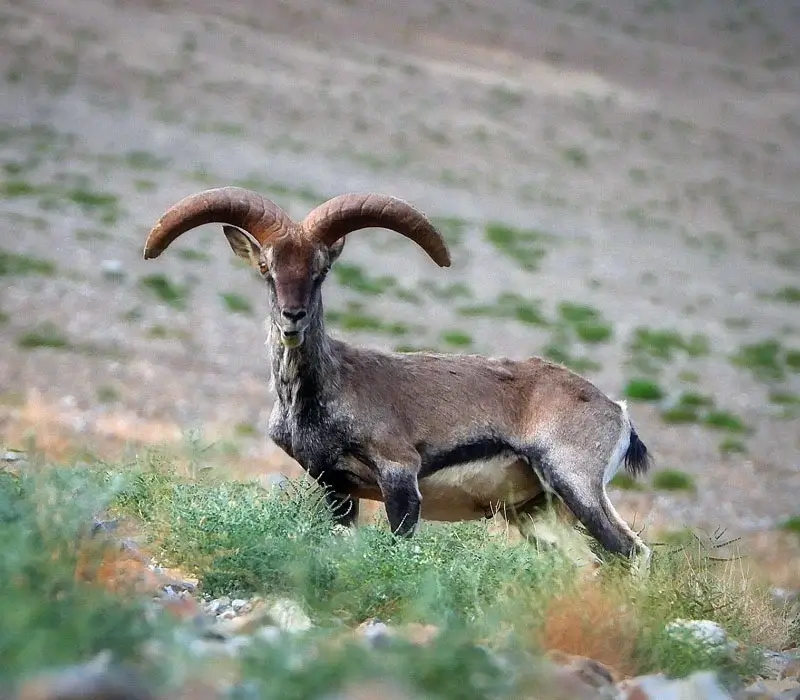
- Fauna: Supports iconic high-altitude animals such as the snow leopard, Himalayan ibex, blue sheep, Himalayan wolf, and a rich bird life like the Himalayan snowcock and golden eagle.
- Inhabitants: Around 12,000 inhabitants live in scattered villages.
- Communities practice traditional pastoralism, yak and goat herding, barley and pea farming, and Sowa Rigpa (Amchi) system of Tibetan herbal medicine.
Drug Controller General of India (DCGI)

- The DCGI has asked states to enforce good manufacturing practices (GMP) in line with global standards, even in smaller companies, and initiate planning to carry out inspections of manufacturing units to confirm strict compliance with revised Schedule M. This comes amidst growing concerns about quality standards of Indian drugs and pharmaceuticals.
- The DCGI is the head of the Central Drugs Standard Control Organisation (CDSCO), which is the national regulatory body.
- The CDSCO functions under the Ministry of Health and Family Welfare, Government of India.
- The DCGI and CDSCO derive their powers from the Drugs and Cosmetics Act, 1940, and Rules, 1945.
- Major Responsibilities
- Granting approval for new drugs, vaccines, biological products, and specified categories of products (like blood products and IV fluids) for sale and use in India.
- Regulating and granting permission for the conduct of clinical trials in the country.
- Laying down the standards for the manufacture, sale, import, and distribution of drugs.
- Approving licenses for certain categories of drugs (as a central authority) and coordinating regulatory enforcement with State Drug Control Organisations.
- Overseeing the safety of drugs and vaccines post-marketing through the Pharmacovigilance Programme of India (PvPI).
- Acting as the central licensing authority for certain classes of medical devices under the Medical Device Rules, 2017.
- Good Manufacturing Practices (GMP) Guidelines – The DCGI enforces GMP through Schedule M of the Drugs and Cosmetics Rules, 1945.
- The New and Stricter Norms (Revised Schedule M) – In light of global quality concerns, the DCGI has recently mandated the implementation of revised Schedule M requirements to align India’s manufacturing standards with global (WHO) GMP norms.
- Deadlines:
- Large Manufacturers (Turnover more than ₹250 Cr): Deadline was June 2024 (already effective).
- Small/MSME Manufacturers (Turnover less than or equal to ₹250 Cr): Final deadline for implementation is January 1, 2026.
Tell Google you want more of this.
Add Anantam IAS as a preferred sourceOne tap, and this site shows up more often in your own Top Stories, AI Overviews and AI Mode. Remove it any time.