
Why in News?
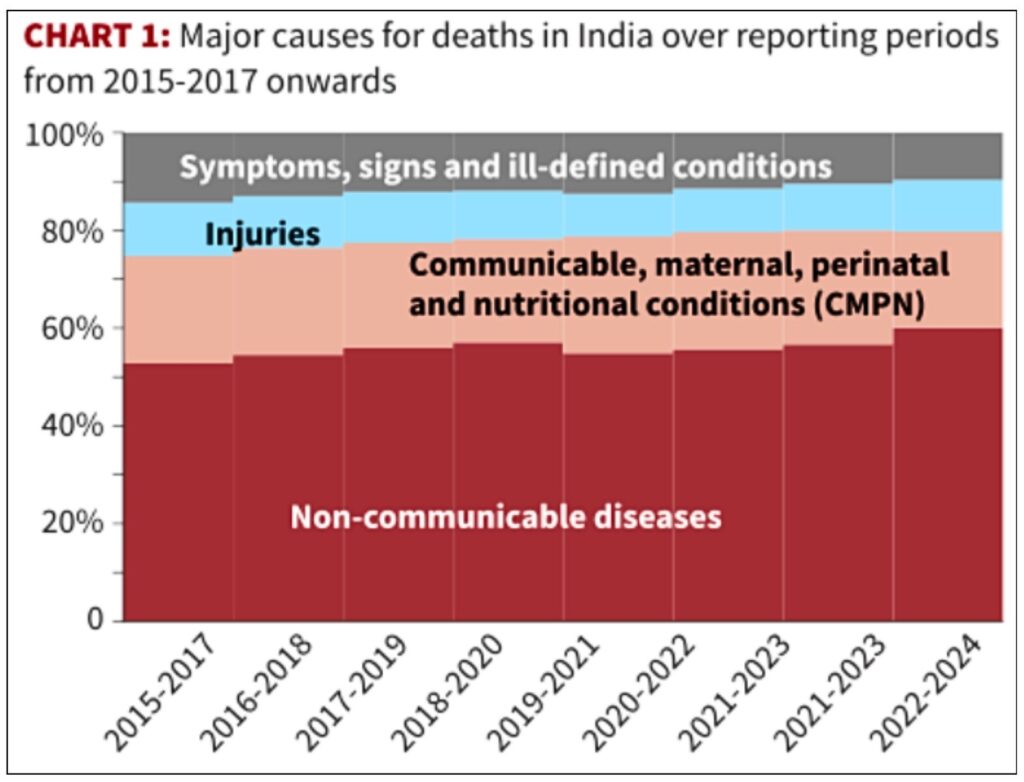
According to the Sample Registration System (SRS) Statistical Report 2024, Non-Communicable Diseases (NCDs) accounted for 60% of all deaths in India in 2022-2024.
| UPSC Relevance: GS-2 Social Justice: Heath; GS-3 Science and Technology: Biology and BioTechnology Mains: Rising burden of Non-Communicable Diseases: Factors, Impacts, Policies |
Major Highlights:
- Among the NCDs, cardiovascular diseases alone accounted for 32% of all deaths in 2022-2024. Heart-related illnesses are increasingly affecting adults in their 30s and 40s, which is a matter of concern as this age group forms a large part of the nation’s workforce.
- After cardiovascular diseases, the top causes of death in the period included cancer, respiratory diseases, digestive diseases and respiratory infections.
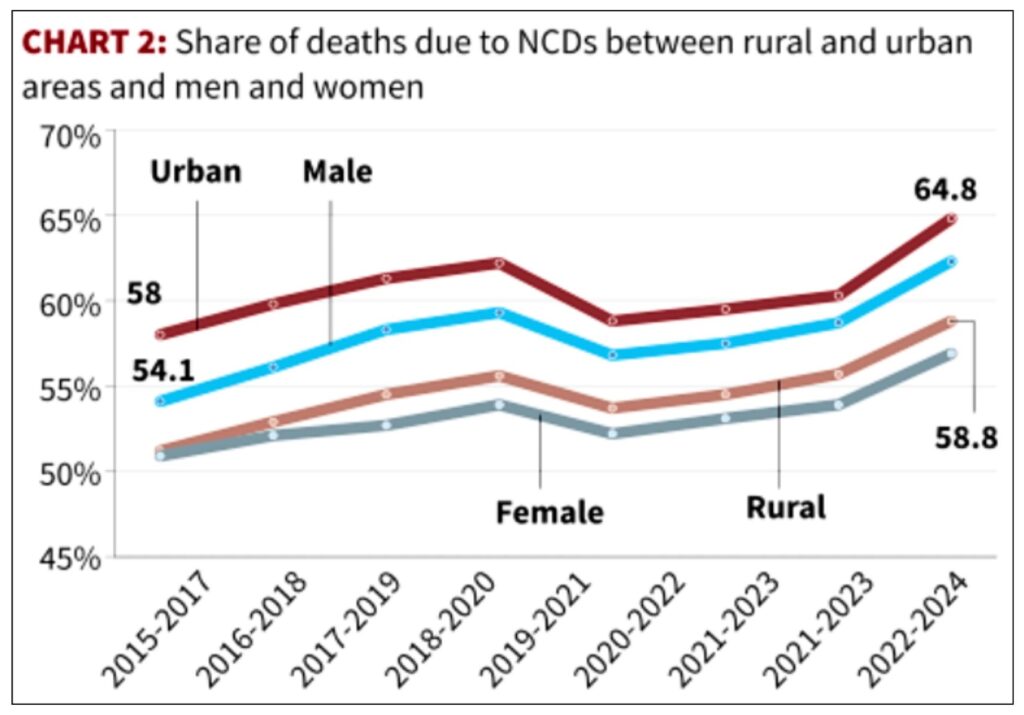
- Deaths due to NCDs are higher in urban areas than in rural areas. Men accounted for more deaths by NCDs than women.
What are Non-Communicable Diseases (NCDs)?
- Non-Communicable Diseases (NCDs) are chronic diseases that are not transmitted from person to person and generally develop over a long period.
- They result from a combination of genetic, physiological, environmental, and behavioural factors.
Major Types of NCDs:
- Cardiovascular Diseases (CVDs): Heart attacks, Strokes, and Hypertension.
- Cancers: various forms of malignant growths.
- Chronic Respiratory Diseases: Chronic Obstructive Pulmonary Disease (COPD), Asthma.
- Diabetes Mellitus
- Mental and Neurological Disorders: Depression, anxiety disorders, dementia, etc.
According to the World Health Organisation, NCDs account for approximately 74% of all deaths globally (around 41 million deaths annually). Cardiovascular diseases are the leading cause of NCD-related deaths worldwide.
Major Risk Factors for NCDs:
- Behavioural Risk Factors:
- Tobacco consumption
- Harmful use of alcohol
- Physical inactivity
- Unhealthy diets rich in sugar, salt, and trans-fats
- Metabolic Risk Factors
- Obesity and overweight
- Raised blood pressure
- High blood glucose levels
- Elevated cholesterol levels
- Environmental Risk Factors
- Air pollution
- Occupational hazards
- Exposure to harmful chemicals
- Climate change-related health impacts
- Social Determinants
- Poverty and inequality
- Limited access to healthcare
- Lack of health awareness
Socio-Economic Impact of NCDs:
- Health Consequences:
- Premature mortality
- Long-term disability
- Reduced quality of life
- Economic Costs:
- Increased healthcare expenditure
- Loss of workforce productivity
- Higher household out-of-pocket spending
- Increased burden on public health infrastructure
- Developmental Consequences: NCDs threaten India’s demographic dividend by affecting the productive-age population and slowing economic growth.
Government Initiatives for Prevention and Control of NCDs:
- National Programme for Prevention and Control of Non-Communicable Diseases (NP-NCD): It has been expanded to cover Hypertension, Diabetes, Cardiovascular diseases, Cancer, Stroke, and Chronic Kidney Disease (CKD), COPD and Asthma & Non-Alcoholic Fatty Liver Disease (NAFLD).
- Ayushman Bharat Pradhan Mantri Jan Arogya Yojana (PM-JAY): Provides financial protection for secondary and tertiary care, including treatment for many NCDs such as cancer and cardiac diseases.
- National Multisectoral Action Plan for NCDs (2017-2025): India adopted national targets aligned with WHO’s global NCD framework, including reducing premature mortality from NCDs through preventive and curative measures.
- Fit India Movement: Promotes Physical activity, Sports participation, Healthy lifestyles & Fitness awareness.
- National Mental Health Programme (NMHP): Strengthens Mental health services, Counselling facilities and Community mental healthcare. National Tele-Mental Health Programme (Tele-MANAS) provides 24×7 tele-counselling support, Accessible mental healthcare services across India.
- National Tobacco Control Programme (NTCP): Focuses on Tobacco cessation, Awareness campaigns, and enforcement of tobacco control laws.
As India undergoes rapid urbanisation, demographic ageing, and lifestyle transitions, the burden of NCDs is expected to rise further.
A comprehensive strategy centred on prevention, early detection, lifestyle modification, environmental improvement, and universal healthcare access is essential to achieve the SDG of reducing premature mortality from NCDs by one-third by 2030.
Tell Google you want more of this.
Add Anantam IAS as a preferred sourceOne tap, and this site shows up more often in your own Top Stories, AI Overviews and AI Mode. Remove it any time.