Why in News?
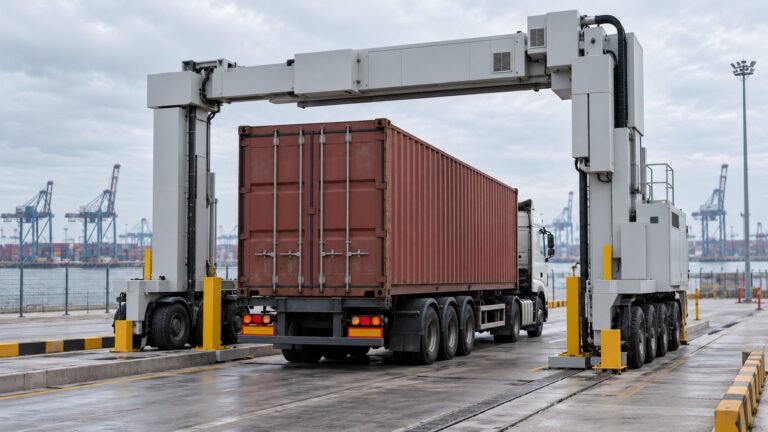
PIB reported on 1 November 2026 that work on the Sindi multimodal logistics park in Maharashtra had commenced, while its first automobile freight rake had already begun operations.
- The project links inland production in Vidarbha with wider freight networks and export gateways.
- Cold storage, warehouses and a customs office are planned facilities; the release does not establish that the entire park is operational.
- The release identifies JNPA as an export gateway and separately describes a route towards Bangladesh through Haldia.
- Projected transport savings are expectations in the announcement, rather than independently demonstrated outcomes from completed park operations.
- Freight integration connects production, collection, storage and long-distance transport; constructing one facility does not automatically coordinate these services.
- Small producers may benefit when consolidation makes larger transport services accessible, provided collection, handling and delivery remain reliable.
UPSC Relevance
Prelims Relevance
- Multimodal logistics involves integration of different transport modes.
- MMLPs can function as regional cargo aggregation and distribution hubs.
- A dry port is an inland logistics facility, distinct from a maritime seaport.
- Cold storage and warehousing perform different cargo-preservation functions.
- Sindi lies in Maharashtra; JNPA and Haldia are distinct maritime gateways.
Mains Relevance
GS Paper 3
- Integrated infrastructure, supply chains and agricultural market access.
- Modal transfers, freight consolidation and the conditions for lower logistics costs.
GS Paper 2
- Coordination among transport authorities, infrastructure developers and service operators.
Essay
- Infrastructure delivers value through connections and dependable services.
Background and Context
What a Multimodal Logistics Park Does
A logistics park is useful when its connections and services let cargo move through a coordinated chain, rather than merely occupying a large developed site.
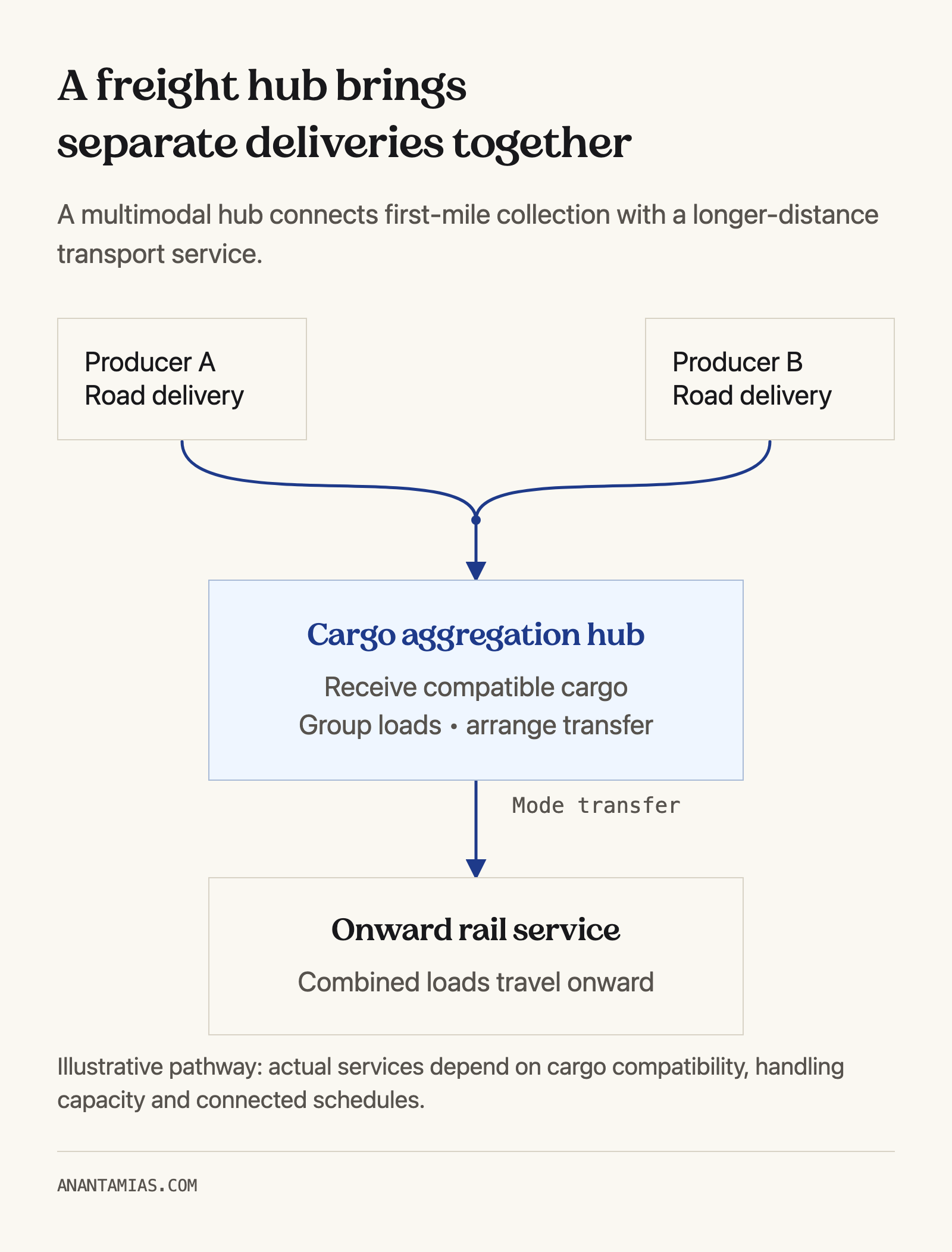
- Cargo aggregation brings consignments from different producers into a common hub. The transport system can then organise onward loads around shared destinations, while collection from farms and factories remains an essential part of the service.
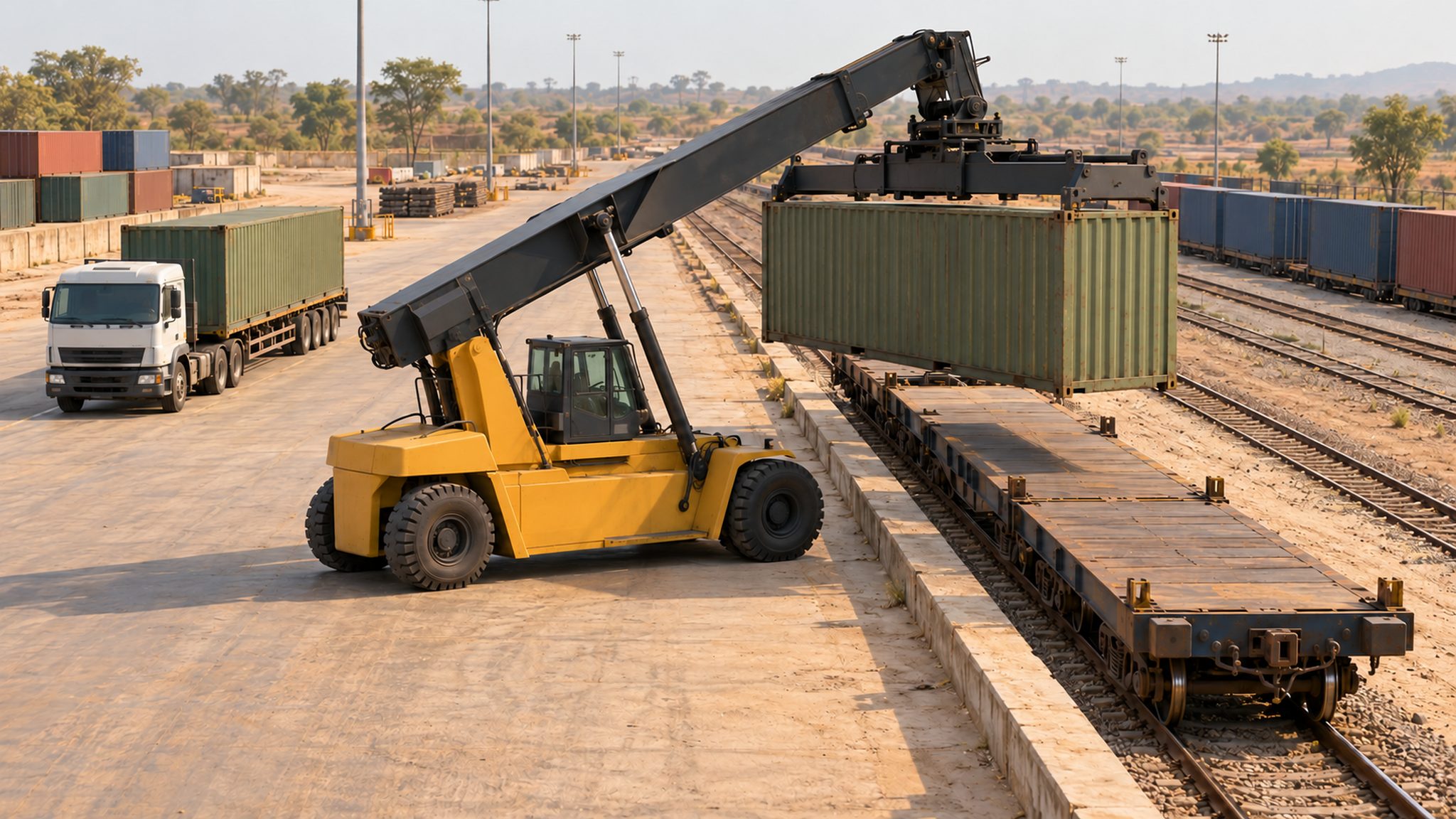
- Modal integration links transport modes suited to different legs of a journey. Trucks can serve dispersed collection points, while rail can carry consolidated freight over a longer route when connections and service demand support it.
- Supporting facilities handle cargo between movements. The official MMLP framework includes storage, freight handling and value-added services, so the park’s role extends beyond providing a place where vehicles arrive or containers are temporarily parked.
- A warehouse primarily provides storage; a multimodal park combines storage with transport connections and related services. A seaport handles maritime access, while an inland hub can feed cargo towards that gateway without becoming a seaport itself.
- The Sindi announcement illustrates this distinction between an early service and a completed network. An automobile rake beginning operations demonstrates freight activity, but cannot by itself establish that every planned facility is available to all users.
How Consolidation Connects Producers With Gateways
The central mechanism is aggregation followed by coordinated onward movement; each transfer must preserve the advantage gained by combining cargo.
- First-mile collection connects individual producers with the hub. Reliable access roads, suitable collection schedules and predictable handling matter because an efficient long-distance service offers limited benefit when goods cannot reach its departure point on time.
- Consolidation and dispatch combine compatible consignments into onward loads. This can help smaller shippers access a larger freight service, although waiting to assemble a load may offset benefits where volumes are irregular or delivery is urgent.
- Modal transfer requires equipment, operating space and coordinated schedules. A road-to-rail connection is useful only if handling and waiting remain manageable; a transfer adds an operational step whose costs must be included when judging the route.
- Storage requirements differ by cargo. Cotton and automobile freight do not face the same preservation needs as oranges or vegetables; planned cold storage should be assessed through the continuity of temperature-sensitive handling across the relevant journey.
- Gateway choice depends on the destination and the connected services. The release’s JNPA export connection and Haldia-linked Bangladesh route are separate routing propositions, not successive stops in one compulsory chain for every shipment leaving Sindi.
When a Hub Produces Real Logistics Gains
A working hub must improve the complete movement of goods, with benefits evaluated against handling costs, service reliability and cargo-specific needs.
- End-to-end cost includes collection, storage, transfer and onward transport. A cheaper long-distance leg may not lower the final bill if extra handling or waiting adds more expense elsewhere in the same supply chain.
- Service frequency affects usefulness alongside physical capacity. Producers need departures that fit their production and delivery commitments; a large terminal with infrequent services can leave cargo waiting and working capital tied up in undelivered goods.
- Operational readiness should be reported facility by facility. The Sindi release places warehouses, cold storage and the customs office in the planned category, so their expected contribution must remain separate from the already-started automobile rake.
- Producer access depends on practical booking and collection arrangements. An evaluation should examine whether smaller consignments can join services on usable terms, rather than assuming that proximity to a major park automatically delivers access.
- Measured performance could include transfer waiting, missed departures and cargo damage. These are proposed assessment measures, not reported Sindi results; comparisons should use similar cargo and routes before attributing savings to the new logistics arrangement.
Way Forward
Evaluate the Complete Freight Service
- Publish facility-specific operating status so users can distinguish available services from planned infrastructure.
- Coordinate collection, terminal handling and train schedules to reduce avoidable waits at transfers.
- Design small-consignment access and appropriate preservation services around the needs of actual producers.
- Measure total journey cost and reliability before presenting projected savings as achieved outcomes.
Conclusion
- Multimodal logistics joins cargo aggregation, transport connections and supporting services. Sindi provides a current example, but the first operational freight rake and the complete planned park represent different stages of delivery.
- For a Mains answer, explain how the links work together and where transfers can create costs. Judge a hub through dependable end-to-end freight movement, rather than treating construction or capacity as sufficient evidence of success.
UPSC Practice Questions
Prelims MCQ 1
With reference to multimodal logistics parks, consider the following statements:
- They can aggregate cargo from multiple production centres.
- An inland logistics hub necessarily provides direct maritime berthing facilities.
- Warehousing and modal-transfer services can form part of their functions.
How many of the above statements are correct?
(a) Only one (b) Only two (c) All three (d) None
Answer: (b) Only two
Explanation:
Statements 1 and 3 are correct. An inland logistics hub can connect cargo with a seaport but does not necessarily provide maritime berthing facilities.
Prelims MCQ 2
Which is the most useful measure for assessing whether a new multimodal connection benefits a producer?
(a) The developed area of the park alone (b) The number of facilities announced for future construction (c) Total journey cost and delivery reliability, including transfers (d) The assumption that every rail movement eliminates handling costs
Answer: (c) Total journey cost and delivery reliability, including transfers
Explanation:
Benefits depend on the complete supply chain. Collection, handling, waiting and onward transport must be considered together; a lower cost on one leg is insufficient evidence.
UPSC Mains Questions
- Explain how multimodal logistics parks can connect inland producers with export gateways. Examine the operational conditions needed for smaller producers to benefit.
- A transport connection is only one part of a functioning supply chain. Discuss with reference to cargo consolidation and modal transfers.
Sources: PIB, Ministry of Road Transport and Highways and PIB, Ministry of Ports, Shipping and Waterways.
Frequently Asked Questions
What is a multimodal logistics park?
A multimodal logistics park integrates transport connections with cargo aggregation, handling and supporting services such as storage. It can connect regional production centres with distribution networks and export gateways.
Is the entire Sindi logistics park operational?
The November release says the first automobile rake had begun operations, while facilities including warehouses, cold storage and a customs office were planned. It does not establish that the entire park was operational.
How does a dry port differ from a seaport?
A dry port is an inland logistics facility that connects cargo with wider transport and trade services. A seaport provides maritime access; an inland hub can feed that gateway without becoming one.
Does shifting freight to rail always reduce total costs?
Not automatically. Collection, transfer, storage and waiting costs also matter. A lower cost on the long-distance leg benefits the shipper only when the complete journey remains economical and sufficiently reliable.
Tell Google you want more of this.
Add Anantam IAS as a preferred sourceOne tap, and this site shows up more often in your own Top Stories, AI Overviews and AI Mode. Remove it any time.