UPSC CSE 2026 Essay Paper Discussion

Daily Digest · Wednesday

3 December 2025 Current Affairs for UPSC

3 current affairs published on Wednesday, 3 December 2025

3 December 2025 Current Affairs for UPSC — every Why-in-News article AnantamIAS published on Wednesday, 3 December 2025, broken down with Why in News?, the exact GS paper it feeds, sub-topic mapping, MCQ-ready facts and a UPSC-style practice question. 3 articles in total, covering Polity, Economy, Environment, S&T, IR, Geography, History, Society and Internal Security — the same Why-in-News + GS-paper-mapping + practice-question format the Compass uses across every daily digest on the site.

Daily current affairs for UPSC is where new material enters your prep stream. Read this 3 December 2025 digest end-to-end in 25–35 minutes, attempt the practice question at the foot of each article (it's MCQ for some, 10/15-marker for others), then bookmark the entries that fall inside your active revision window. Everything stays cross-linked: tap any subject pill to jump to that subject's hub, or use the table of contents above to skip straight to a specific story.

Use this page three ways. Read sequentially for a one-sitting scan of everything that mattered on 3 December 2025. Download the 3 December 2025 PDF below for offline study or print revision. Or use the December 2025 Current Affairs compilation to see this day in the month's full context. For the previous day's reading, see 2 December 2025 Current Affairs; the next day's is 4 December 2025 Current Affairs.

Why we publish daily current affairs separately from the monthly compilation: daily is learning, monthly is revision. Use the daily page to add fresh material to your notes the day it breaks; come back to the December 2025 compilation 60 days before Prelims when the noise has settled and only the lasting takeaway is worth re-reading.

Hornbill Festival

Open article →Download PDF

Why in News:

Nagaland’s flagship cultural event, the Hornbill Festival, hass began on 1st December.

UPSC Relevance:

Art and Culture

UPSC PYQ:

Q. Which one of the following was the latest inclusion in the Intangible Cultural Heritage List of UNESCO?

[A] Chhau dance

[B] Durga puja.

[C] Garba dance

[D] Kumbh mela

About Hornbill Festival:

  • The Hornbill Festival was first organised in the year 2000.
  • The festival aims to promote inter-tribal interaction and preserve the rich cultural heritage of Nagaland by blending traditional and contemporary elements in a harmonious spirit of unity.
  • It is popularly known as the “Festival of Festivals” and is held annually.
  • The festival is organised by the State Tourism and the Art & Culture Departments of the Government of Nagaland.
  • The venue of the festival is Naga Heritage Village, Kisama, located about 12 km from Kohima.
  • Over the years, it has evolved into a grand celebration showcasing the diverse, vibrant cultural and traditional heritage of the various Naga tribes.
  • The festival is named after the Hornbill bird, which holds significant socio-cultural importance in Naga society.
  • Theme of the Hornbill Festival 2025: Cultural Connect.
  • For Hornbill Festival 2025, Nagaland has officially designated Switzerland and Ireland as the partner countries.

About Hornbill:
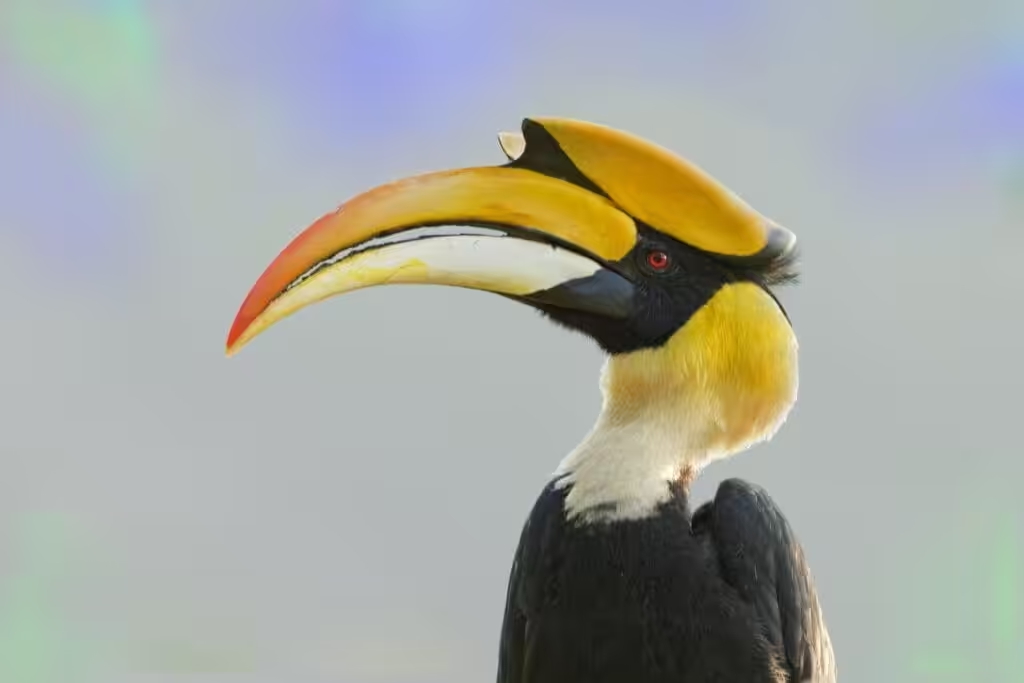
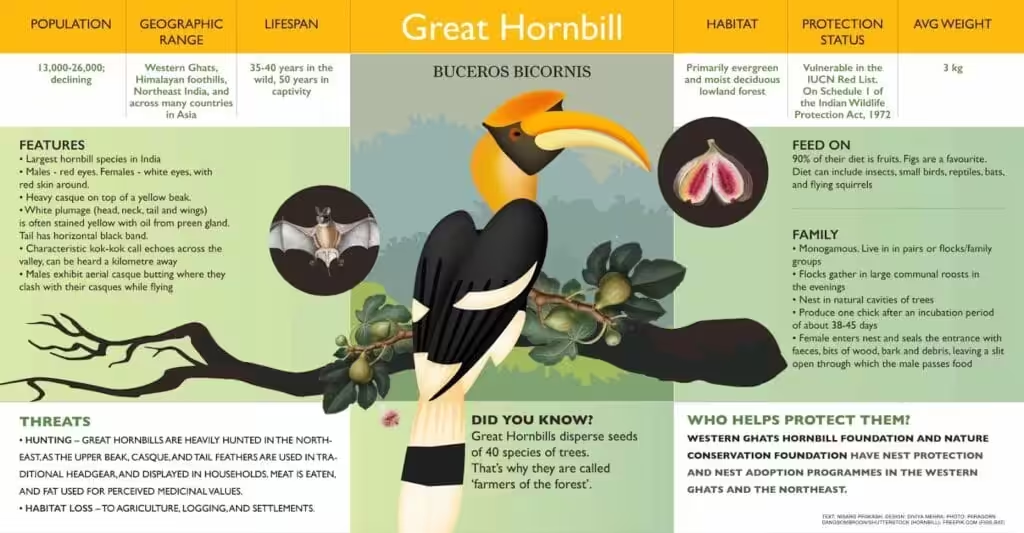
  • Hornbills are giants among the forest birds: bizarre, spectacular, awe-inspiring. They also play essential roles in forest ecosystems as dispersers of seeds of forest plants.
  • Hornbills are large and wide-ranging birds and most species are dependent on tropical forest habitats that contain large and tall trees. 
  • Habitat: Found in Africa and Southeast Asia, hornbills live in forests, rainforests, or savannas, depending on species.
  • India: 
    • In India, it is found in the Western Ghats, Eastern Himalayas, Northeast, and parts of Central India.
    • It serves as the official State Bird of both Kerala and Arunachal Pradesh.
    • The Hornbill festival celebrated in Nagaland is named after this, which is the most revered and admired bird for the Nagas.
  • Diet: Most hornbills are omnivorous and eat a combination of fruit, insects, and other small wildlife. 

India has nine hornbill species, of which four are found in the Western Ghats: Indian Grey Hornbill (endemic to India), the Malabar Grey Hornbill (endemic to the Western Ghats), Malabar Pied Hornbill (endemic to India and Sri Lanka) and the widely distributed but endangered Great Hornbill. India also has one species that has one of the smallest ranges of any hornbill: the Narcondam Hornbill, found only on the island of Narcondam.

IUCN Status: Vulnerable
Bioterrorism

Open article →Download PDF

Why in news:

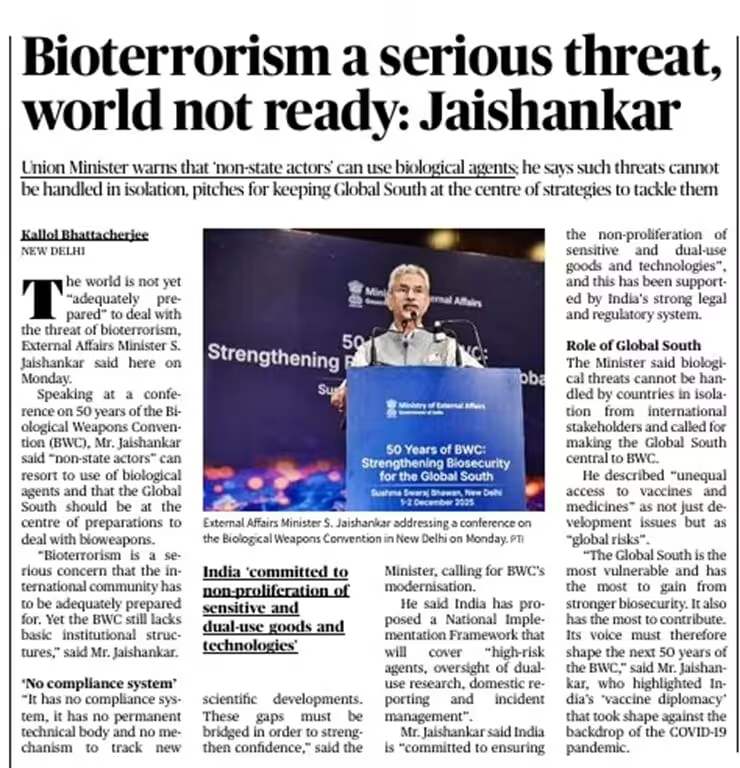
Statement by External Affairs Minister S. Jaishankar at a conference marking 50 years of the Biological Weapons Convention (BWC) in New Delhi (1 December 2025). Focus on global preparedness against bioterrorism and the need to strengthen the BWC.

UPSC Relevance:

International Relation, Science and Tech.

UPSC PYQ:

With reference to ‘Organization for the Prohibition of Chemical Weapons (OPCW)’, consider the following statements: (2016)

  1. It is an organization of the European Union in working relation with NATO and WHO.
  2. It monitors the chemical industry to prevent new weapons from emerging.
  3. It provides assistance and protection to States (Parties) against chemical weapons threats.

Which of the statements given above is/are correct?

(a) 1 only
(b) 2 and 3 only
(c) 1 and 3 only
(d) 1, 2 and 3

What is Bioterrorism?

Bioterrorism is the deliberate release of biological agents—such as viruses, bacteria, toxins—to cause illness, death, fear, economic disruption, or political instability.

These agents may be:

  • Naturally occurring (e.g., anthrax, plague)
  • Engineered in labs (dual-use research misuse)
  • Genetically modified (e.g., enhanced spread, resistance)

Why Bioweapon is dangerous?

  • Invisible, hard to detect
  • Rapid spread
  • Difficult attribution (who did it?)
  • Cheap and easy to develop (small labs with minimal equipment)
  • Can cause global pandemics
  • Societal disruption
  • Economic instability

Key Points from Jaishankar’s Speech:

At the 50th anniversary conference of the Biological Weapons Convention (BWC), EAM S. Jaishankar highlighted systemic global weaknesses:

A. World Not Adequately Prepared

  • The Minister warned that global preparedness against bioterrorism is insufficient.
  • Non-state actors (e.g., terrorist groups) pose increasing risks.

B. Gaps in the Biological Weapons Convention BWC

Jaishankar pointed out that the BWC:

  • Has no compliance verification system
    (No inspectors like the IAEA for nuclear weapons)
  • Has no permanent technical body
    (No expert institution to monitor labs, research, outbreaks)
  • No mechanism to track new scientific biological developments
    (Emerging tech like gene editing, synthetic biology, AI-driven bioengineering)

This means:

  • No country can be held accountable for violations.
  • No global authority can inspect suspicious labs.
  • No system exists to check dual-use research (research that can be used for good or harm).

BWC vs Nuclear Treaties:

TreatyHas verification?Institution?
NPT (Nuclear)YesIAEA
CWC (Chemical)YesOPCW
BWC (Biological)❌ No verification❌ No institution

India’s Position and Proposed Actions:

A. Modernisation of BWC

  • India calls for strengthening and updating the BWC to match modern biological threats.

B. India’s Proposed National Implementation Framework

Countries should adopt systems covering:

  1. High-risk agent regulation: Setting strict rules to control who can access, store, handle, or research dangerous biological agents (like deadly viruses or bacteria) so they don’t fall into the wrong hands
  2. Oversight of dual-use research: Monitoring and regulating research that can be used both for good and for harm — for example, genetic engineering that can help medicine but can also be misused to create harmful pathogens.
  3. Domestic reporting systems: Creating a system inside the country where laboratories, hospitals, or research institutions can quickly report unusual biological events, safety breaches, or suspicious activities to the government.
  4. Incident management mechanisms: Prepared plans and systems to respond quickly to biological emergencies — including detection, containment, public communication, and coordination between agencies.

C. India’s Commitment

  • Strong legal and regulatory frameworks for preventing proliferation of dual-use goods and technologies.
  • India supports global non-proliferation norms.

4. Need for Global Cooperation

A. Biological threats cannot be tackled in isolation

  • Cross-border nature of pandemics and engineered pathogens requires:
    • International cooperation
    • Information sharing
    • Equitable access to technologies

B. Role of the Global South

Jaishankar emphasized:

  • Global South is most vulnerable to biothreats.
  • It must be central to shaping BWC’s future.

Why?

  1. Unequal access to vaccines and medicines → a global risk, not just a development issue.
  2. Greater impact of pandemics on developing nations.
  3. Emerging scientific capabilities in Global South countries (India, Brazil, South Africa, etc.).

5. India’s Soft Power Example: Vaccine Diplomacy

  • India provided vaccines during COVID-19 under Vaccine Maitri.
  • Demonstrates:
    • Importance of inclusive access to medicine
    • Capacity to support global health security
    • Leadership in South–South cooperation

Sanchar Saathi App Concerns

Open article →Download PDF

Why in news:

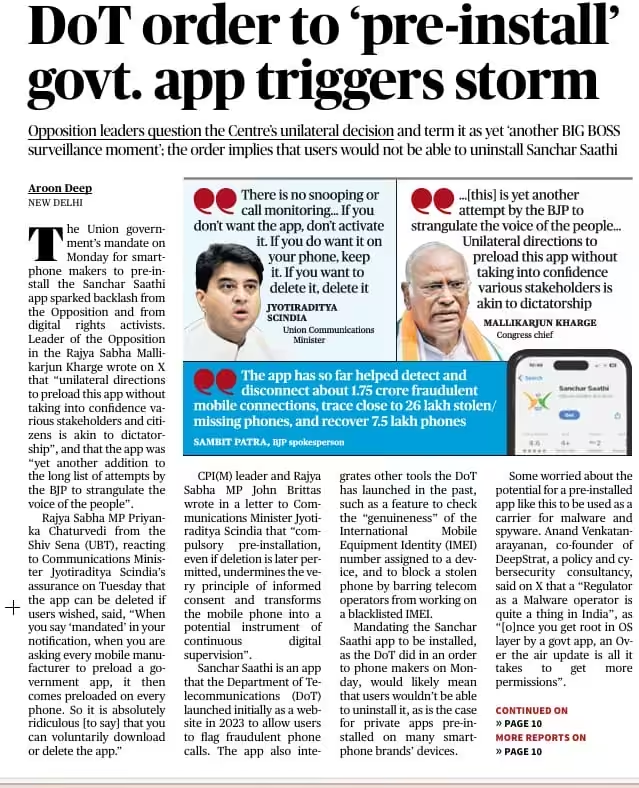
DoT issues directions for pre-installation of Sanchar Saathi App in mobile handsets to verify the genuineness of mobile handsets.

UPSC Relevance:

Govt. Schemes and Polity & Governance

Sanchar Saathi App:

In order to safeguard the citizens from buying the non-genuine handsets, enabling easy reporting of suspected misuse of telecom resources and to increase effectiveness of the Sanchar Saathi initiative, the DoT has issued Directions dated 28.11.2025. 

Sanchar Saathi Initiative Purpose:

  • The Department of Telecommunications (DoT) is undertaking Sanchar Saathi initiative for curbing misuse of telecom resources for cyber frauds and ensuring telecom cyber security. 
  • DoT has developed Sanchar Saathi portal & App which enables citizens to check genuineness of a mobile handset through the IMEI number along with other facilities like reporting suspected fraud communications, lost/ stolen mobile handsets, check mobile connections in their name, trusted contact details of banks/ financial institutions.
  • The app is intended to verify the authenticity of IMEIs used in mobile devices to safeguard citizens from purchasing non-genuine handsets.
  • It allows easy reporting of suspected misuse of telecom resources, enhancing the initiative’s effectiveness.
  • The app’s dashboard reports 2.48 lakh complaints and 2.9 crore requests to check mobile connections associated with users.

Key Features of the Sanchaar Saathi App:

  • Report fraudulent calls and messages
  • Block suspicious mobile numbers
  • Check mobile connections issued in your name
  • Trace and block lost or stolen mobile phones
  • Verify mobile handset authenticity (IMEI verification)
  • Detect SIM cards obtained using fake documents
  • Request disconnection of unused numbers

Note:- Right to Privacy(Justice K.S. Puttaswamy vs Union of India (2017))recognised as a Fundamental Right.

Core Concerns:

  • Surveillance & Privacy Risks
    • App allows tracking, verification and reporting of users’ telecom data
    • Raises fear of:
      • Mass surveillance
      • Profiling of individuals
      • State over-reach
    • Citizens fear function creep (data used beyond original intent)
  • Data Protection Vacuum:
    • Data breaches
    • Unauthorized access
    • Commercial misuse of sensitive personal data
  • Transparency & Accountability Deficit:
    • Data retention period
    • Who can access the data
    • Whether data is shared with law-enforcement automatically
    • No clear judicial or parliamentary oversight mechanism
  • Consent & Digital Literacy Issues:
    • Poor citizens and first-time smartphone users are more vulnerable

GOI Stand:

  • It strengthens India’s telecom security ecosystem
  • Government claims:
    • The app is voluntary
    • Designed only for consumer protection
    • Data is used strictly for fraud prevention