UPSC CSE 2026 Essay Paper Discussion

Daily Digest · Monday

30 March 2026 Current Affairs for UPSC

3 current affairs published on Monday, 30 March 2026

30 March 2026 Current Affairs for UPSC — every Why-in-News article AnantamIAS published on Monday, 30 March 2026, broken down with Why in News?, the exact GS paper it feeds, sub-topic mapping, MCQ-ready facts and a UPSC-style practice question. 3 articles in total, covering Polity, Economy, Environment, S&T, IR, Geography, History, Society and Internal Security — the same Why-in-News + GS-paper-mapping + practice-question format the Compass uses across every daily digest on the site.

Daily current affairs for UPSC is where new material enters your prep stream. Read this 30 March 2026 digest end-to-end in 25–35 minutes, attempt the practice question at the foot of each article (it's MCQ for some, 10/15-marker for others), then bookmark the entries that fall inside your active revision window. Everything stays cross-linked: tap any subject pill to jump to that subject's hub, or use the table of contents above to skip straight to a specific story.

Use this page three ways. Read sequentially for a one-sitting scan of everything that mattered on 30 March 2026. Download the 30 March 2026 PDF below for offline study or print revision. Or use the March 2026 Current Affairs compilation to see this day in the month's full context. For the previous day's reading, see 29 March 2026 Current Affairs; the next day's is 31 March 2026 Current Affairs.

Why we publish daily current affairs separately from the monthly compilation: daily is learning, monthly is revision. Use the daily page to add fresh material to your notes the day it breaks; come back to the March 2026 compilation 60 days before Prelims when the noise has settled and only the lasting takeaway is worth re-reading.

World Buddhist Peace Conference 2026

Open article →Download PDF

Why in News?

  • Recently, the World Buddhist Peace Conference 2026 was hosted in Hyderabad, Telangana.
UPSC Relevance: (GS-1 History: Ancient India/ Religion)

Prelims: World Buddhist Peace Conference 2026 (Basic idea); Buddhavanam (Location); Key Buddhist sites. 

World Buddhist Peace Conference 2026:

  • Inaugural International Buddhist Summit on World Peace.
  • Organised by: Buddhavanam and Telangana Tourism Development Corporation, in association with Vietnam Buddhist Sangha.
  • It brought together ministers, monks, scholars and delegates from over 20 countries to advance dialogue on peace, reconciliation and ethical leadership.
  • Aim: To promote Buddhavanam as a global Buddhist heritage destination and strengthen international Buddhist ties.
  • The conference is part of a larger global initiative to position Telangana as a centre for Buddhist heritage diplomacy and peace-building.
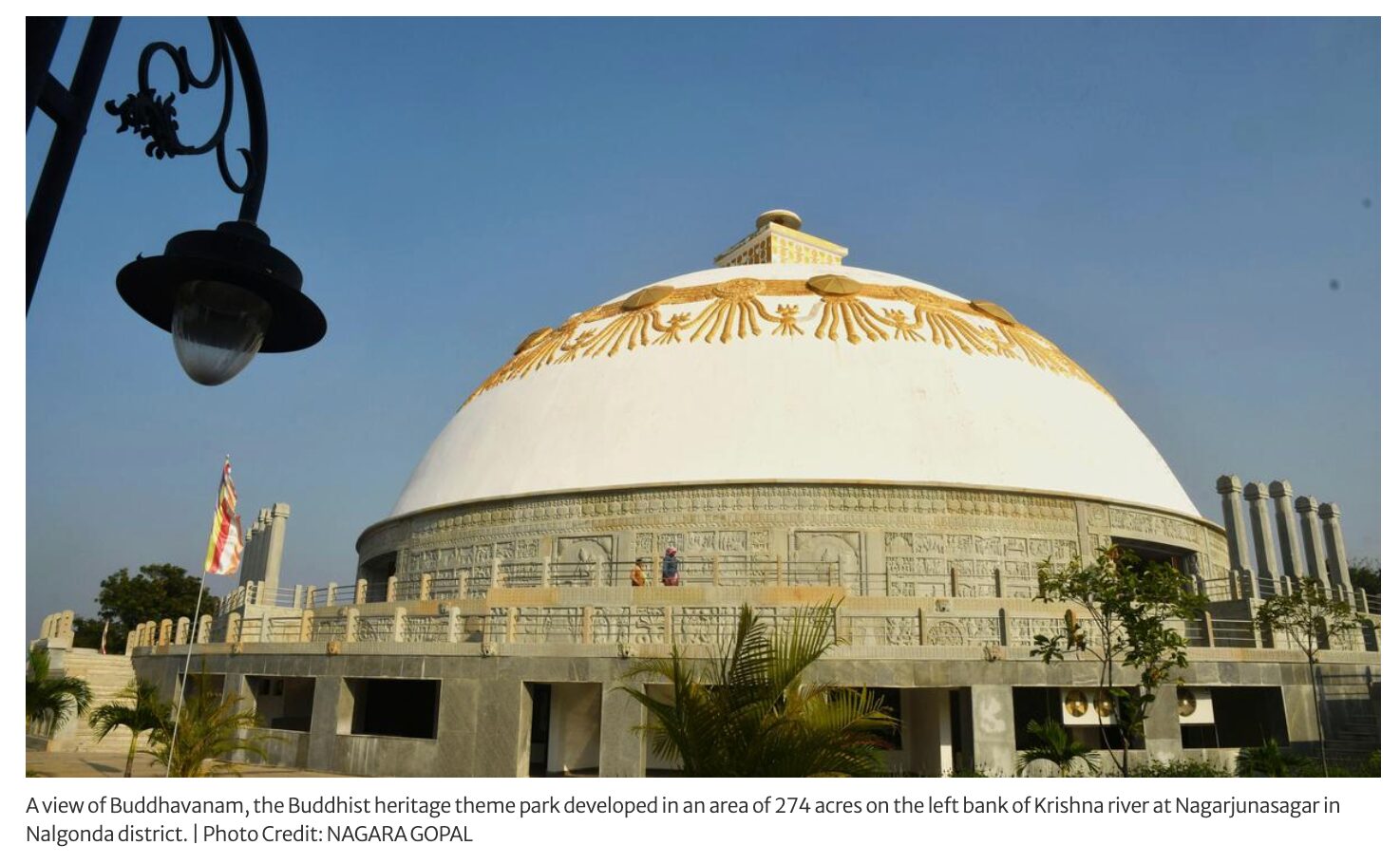
Buddhavanam

Telangana and Buddhist Heritage:

Acharya Nagarjuna, Dhiganaga, and Buddhaghosha propounded various schools of Buddhist thought in vast monastic settlements on the banks of the rivers Krishna and Godavari, and along the coastal belt of the Bay of Bengal between the 3rd century BC and the 12th century AD. Buddhism disappeared (weakened) in the region after the 14th century CE, as in other parts of India.

A tourism circuit is being developed to connect historically important sites in Telangana, such as:

  • Buddhavanam: 
    • It is a Buddhist Heritage Theme Park designed to reflect the life, teachings, and legacy of Gautama Buddha. 
    • Situated along the northern bank of the Krishna River in Telangana. 
    • Supported by the Government of India as part of an integrated Buddhist Circuit project to boost both domestic and international tourism.
  • Phanigiri (snake hood hill):
    • A major 2100-year-old Buddhist heritage site in Telangana.
    • Dating back to the 1st century BCE–4th century CE, the site features a massive Mahastupa, apsidal halls, viharas (monastic cells), unique Buddha footprints, and exquisite limestone carvings.
    • The site reflects a blend of Mahayana and Hinayana sects.
    • Recent finds: coins dating back to the Ikshvaku period (300 CE-400 CE).
  • Nelakondapalli:
    • Significant 3rd-4th century CE Buddhist site.
    • One of the largest excavated stupa sites in the Deccan region.
  • Dhulikatta: 
    • Buddhist site dating back to the 3rd century BC.
  • Kotilingala:
    • An ancient submerged site (situated on the banks of the Godavari) in today’s Karimnagar, Telangana. 
    • Dating back to the 4th century BC, it is one of the earliest Buddhist sites in the region.
    • One of the capitals of the Satavahana dynasty.
India’s Cotton Production Faces Prolonged Decline

Open article →Download PDF

Why in News?

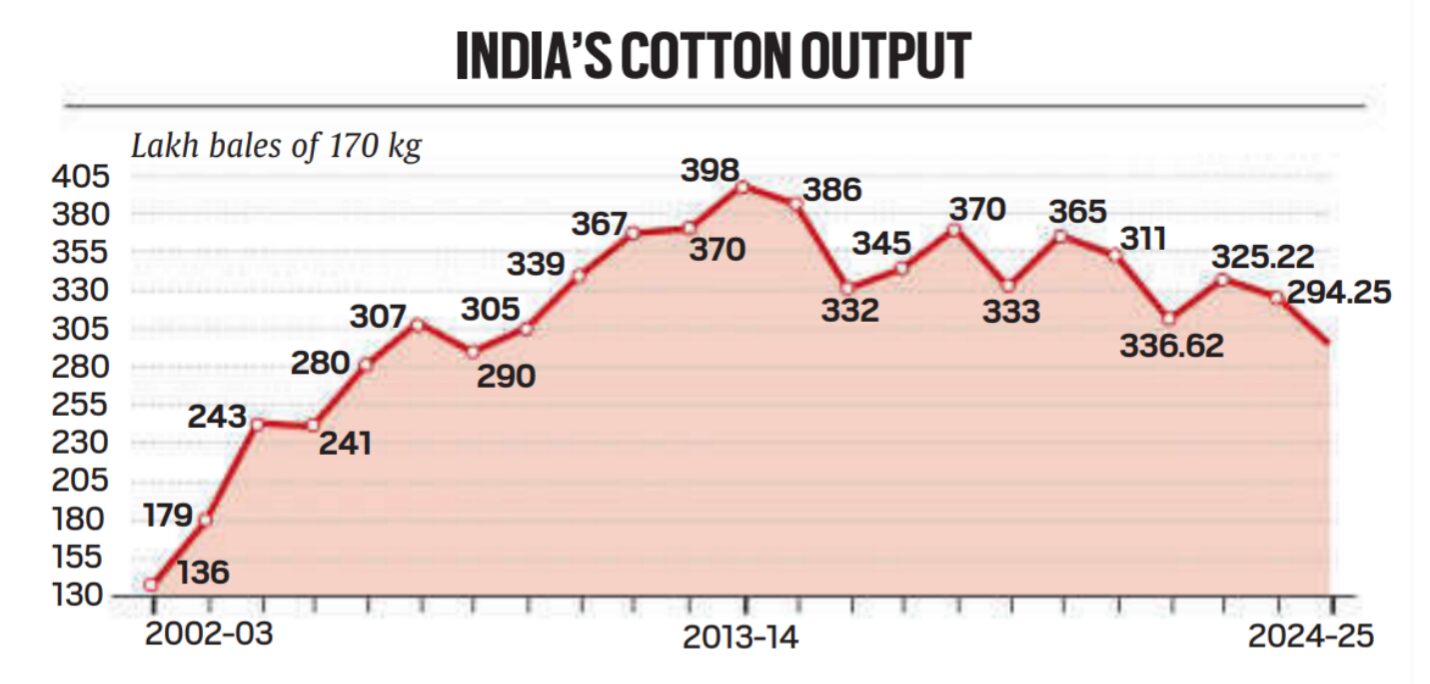
India’s cotton production has been declining since the peak of 398 lb (lakh bales) in 2013-14. A combination of factors, including adverse climatic conditions and the resurgence of major pests like pink bollworm and whitefly, along with increased incidence of diseases such as cotton leaf curl virus, boll rot, Tobacco Streak Virus have affected cotton production and yield in recent years.

    UPSC Relevance:  GS-3 Economy: Major crops & Cropping pattern; GS-3 Science and Technology: Biotechnology (GM Crops)

    Prelims & Mains: Cotton (facts, production trends, challenges, govt. schemes); Bt Cotton/ GM crops

    Key Facts about Cotton:

    • Nature: Tropical fibre Kharif crop.  
    • Cash crop known as White Gold
    • Soil: Grows best in well-drained black soil (Regur), which retains moisture.
    • Climate: Tropical/subtropical crop that requires a warm climate (21-30°C). 
    • Rainfall: Thrives in areas with 50-100 cm of rainfall, often in drier parts of the black cotton soil region.
    • Frost-free days: Requires at least 210 frost-free days and bright sunshine for its bolls to mature.
    • Challenges: Prone to pests such as pink bollworm and whitefly. Impacted by sudden changes in weather conditions.
    • India is a dominant global player in cotton production, contributing roughly 23-25% of global output.
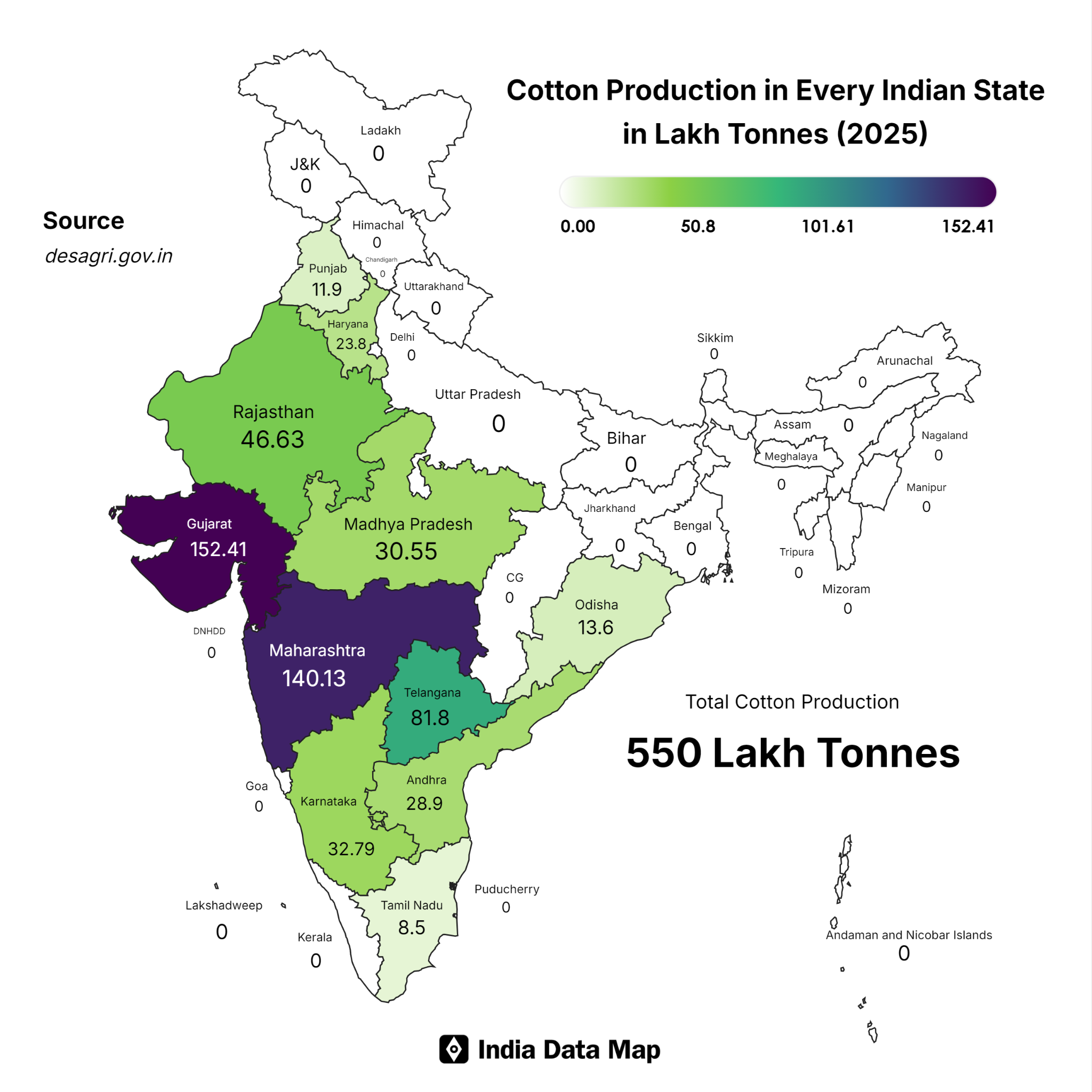
    • Key Regions: The central zone (Gujarat, Maharashtra, and Madhya Pradesh) is the largest producer, often referred to as the “Cotton Basket of India”.

    What is Bt Cotton?

    Genetically Modified (GM) crops have their DNA modified (altered) through genetic engineering. It involves inserting new DNA into the genome of the plant. 

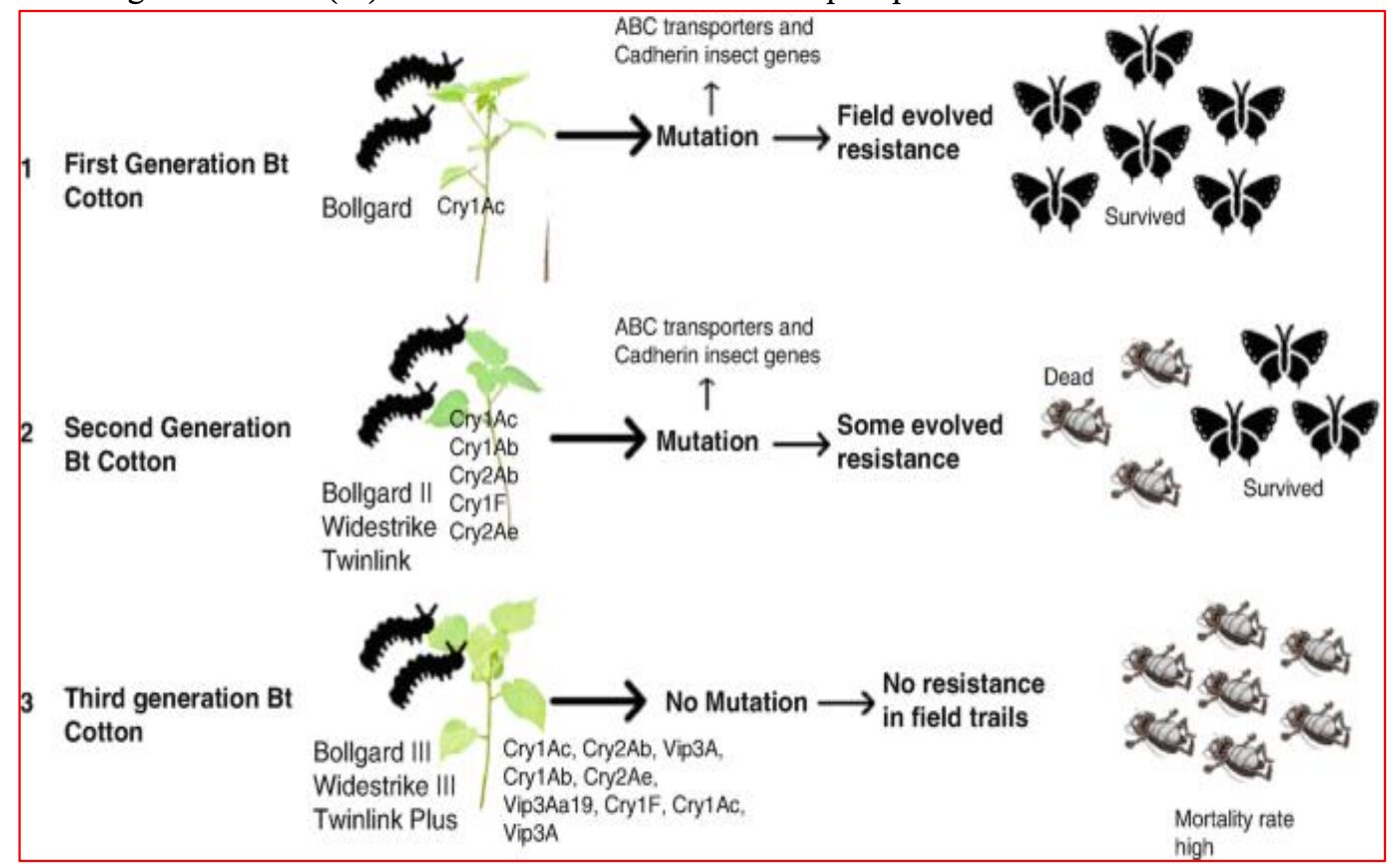
    • Bt cotton is a genetically modified pest-resistant variety of cotton. It was genetically modified by the insertion of one or more genes (Cry1 Ac) from the soil bacterium Bacillus thuringiensis.
      • Strains of the bacterium Bacillus thuringiensis produce toxins harmful to a variety of insects (like American bollworm) that commonly attack cotton crops.
    • Bt cotton is India’s first transgenic crop formally approved for commercial cultivation in 2002.
    • Aim: To reduce the amount of insecticide needed in farming cotton.

    What is Pink Bollworm?

    • Pink Bollworm is one of the most destructive pests infesting cotton. It is native to India but is now found worldwide.
    • Description: The larvae have distinctive pink bands. They are most destructive at the larval stage. The larvae burrow into the developing fruits (bolls) of cotton plants, eat the seeds and damage cotton fibres. 

    Resistance to GM Bt Cotton: 

    • Historically, cotton faced threats from pests like spotted bollworm, American bollworm, and pink bollworm. The introduction of GM Bt cotton seeds initially mitigated the pink bollworm menace. However, the pest developed significant resistance by 2014, leading to devastating yield losses.
    • Pink Bollworm adapted faster as its exclusive diet (cotton only) allowed faster genetic resistance. A short life cycle (25-35 days) enabled 3-4 generations per crop season, thus speeding up resistance evolution.

    Crisis in Cotton Production & Associated Challenges:

    • Decline in total area under cotton cultivation: The area under cotton cultivation across India has decreased by 14.84% between 2019-20 and 2024-25. The production is down from 36.07 million bales (170 kg in each bale) to 29.72 million bales.
    • Pink bollworm infestation: The resurgence of Pink Bollworm since 2014 has reduced the effectiveness of Bt cotton in some regions due to pest resistance. Long-duration hybrid varieties increase the exposure window for pest infestation.
    • Low productivity: Pre-pink bollworm, crop yields ranged from 10-12 quintals per acre; now they range around 3-4 quintals per acre. 
    • Lower return on investment: High average cost of growing cotton per acre, factoring in the costs of seeds, fertilisers, diesel, and harvesting. This has reduced profitability, particularly for small farmers.
    • MSP procurement constraints: Although Minimum Support Price provides price assurance, farmers often face quality-based procurement rejection, limited procurement centres and delayed payments. This leads to distress sales to private traders.
    • Net negative Exports: Once a major exporter, India’s cotton imports (30 lb) now exceed exports (17 lb). This shift raises concerns for India’s textile and spinning industries.
    • Socio-economic challenges: Decline in cotton production has reduced the demand for seasonal labour over the years, particularly for women who drive much of the cotton-picking process. This eventually drives migration of workers towards urban areas and strains urban infrastructure.

    Way Forward: 

    • Emphasising local cotton variety development: Local varieties require significantly less water, are resilient to climate challenges and have an average yield per hectare that remains at par. However, they face challenges like lower prices compared to Bt cotton and have inconsistent market demand.
    • Planting rainfed short-season high-density (SS-HD) cotton: The early maturation of SS-HD cotton (150–160 days) reduces the pest exposure window. This would reduce the usage of insecticides and has the potential to increase yields.
    • Expediting development of New GM Hybrids: Indian seed companies are developing hybrids using new Bt genes to combat bollworm resistance. E.g., cry8Ea1 gene hybrids; synthetic cry1c gene; chimeric Bt protein, etc. The challenges include bureaucratic delays in regulatory clearances and opposition from environmental groups.
    • Government Mission for Cotton Productivity: The Union Budget 2025-26 launched a dedicated “Mission for Cotton Productivity” under the Ministry of Textiles. This Rs 500 crore five-year program aims to improve cotton productivity, sustainability, and promote Extra-Long Staple (ELS) cotton.

    The crisis needs urgent, coordinated action to revive the crop’s viability, and requires stakeholders to work in close-coordination to tackle pest pressures and restore cotton’s profitability.

    ​​UPSC PYQ (2021)

    Q. Bollgard I and Bollgard II technologies are mentioned in the context of: 

    (a) clonal propagation of crop plants

    (b) developing genetically modified crop plants

    (c) production of plant growth substances

    (d) production of biofertilizers

    Answer: (b)

    ​​UPSC PYQ (2020)

    Q. “The crop is subtropical in nature. A hard frost is injurious to it. It requires at least 210 frost-free days and 50 to 100 centimetres of rainfall for its growth. A light, well-drained soil capable of retaining moisture is ideally suited for the cultivation of the crop.” Which one of the following is that crop?

    (a)     Cotton

    (b)     Jute 

    (c)    Sugarcane

    (d)    Tea

    Answer: (a) 

    ​​UPSC PYQ (2013)

    Q. Consider the following crops: 

        1.   Cotton

        2.     Groundnut

        3.     Rice

        4.     Wheat

        Which of these are Kharif crops?

        (a)     1 and 4

        (b)     2 and 3 only

        (c)    1, 2 and 3 

        (d)     2, 3 and 4

    Answer: (c) 

    What is Extracellular RNA? 

    Open article →Download PDF

    Why in News? 

    • Scientists reported that extracellular RNA (exRNA) from bacteria can persist in disinfected drinking water. This makes exRNA a valuable source to figure out which survival strategies worked for the bacteria. This information can be used to make better disinfectants and design more efficient antimicrobial agents. 
    UPSC Relevance: (GS-3 Science and Technology: Biology & Biotechnology)

    Prelims: Role of extracellular RNA (exRNA); RNA & Types of RNA. 

    What is RNA?

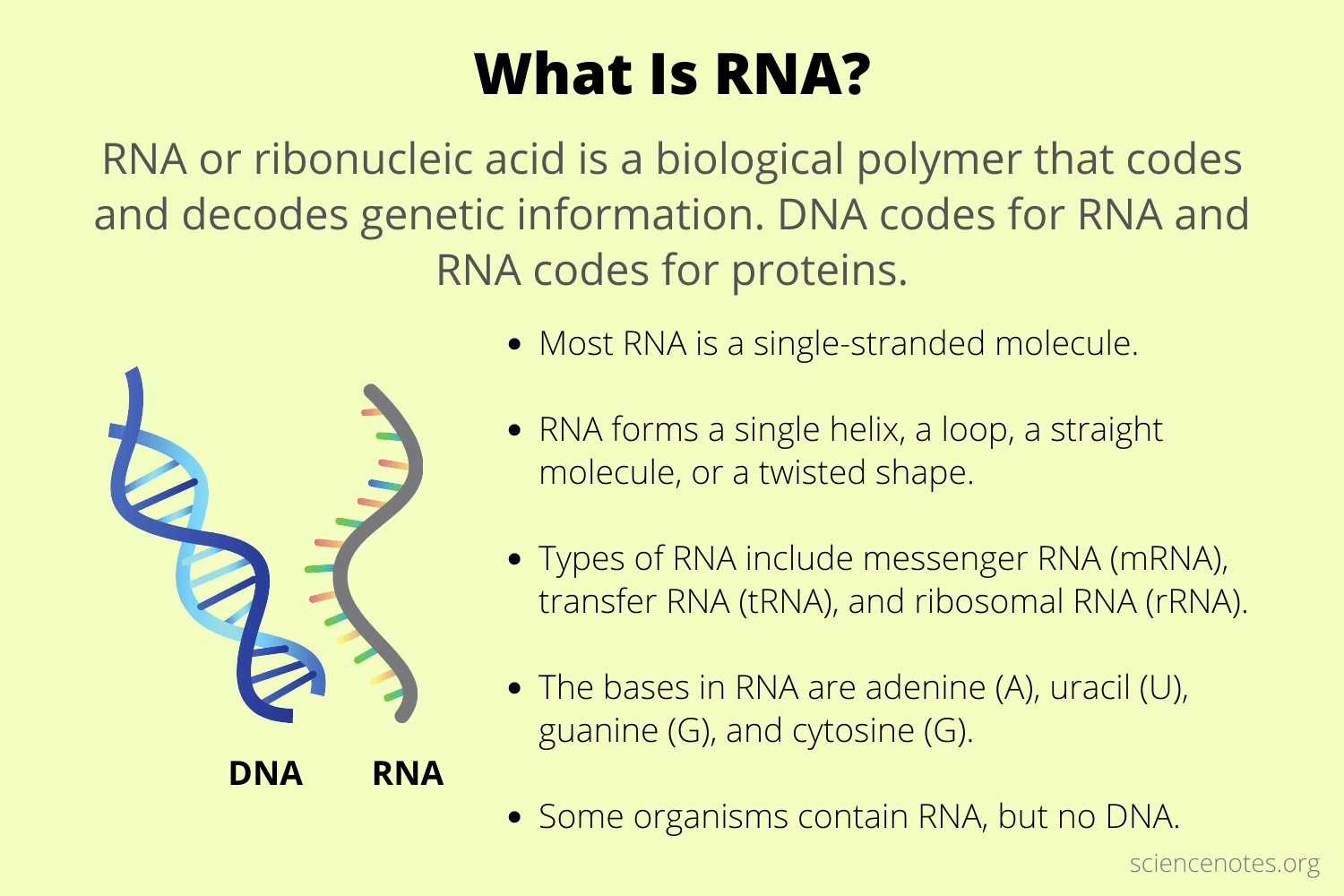
    • Ribonucleic acid or RNA is a single-stranded nucleic acid. It is composed of ribose sugar, phosphate groups, and nitrogenous bases (adenine, uracil, guanine, cytosine). 
    • Role: RNA’s main role is to convert genetic information stored in DNA into proteins (protein synthesis). RNA helps in gene expression and can also act as an enzyme to speed up chemical reactions. 
    • Location: RNA is found in both the nucleus and cytoplasm of a cell, depending on its type and function. Inside the nucleus, RNA is synthesised from DNA through transcription.
    • Key types of RNA include mRNA (messenger), tRNA (transfer), and rRNA (ribosomal). 

    For decades, scientists believed that RNA functioned only inside the cell and that any RNA released outside would be rapidly degraded by enzymes present in body fluids. 

    What is extracellular RNA? 

    • exRNA (extracellular RNA) is RNA that exists outside cells in body fluids such as blood, saliva, urine, and cerebrospinal fluid. exRNA may be released into the extracellular environment:
      • either passively during programmed cell death or unplanned cell death due to injury or disease.
      • actively secreted by living cells as part of a regulated biological process.
    • To survive outside the cell, exRNA travels in its own molecular containers (lipoproteins, protein complexes, etc.) that prevent enzymes from breaking it down before it reaches its destination.
    • Many exRNA molecules remain biologically active and can carry specific information from their cells of origin, influencing gene expression and cellular behaviour in recipient cells. This makes exRNA a valuable source for various medical applications, as exRNA patterns in blood or saliva can indicate certain diseases.

    Role of extracellular RNA:

    • Medical diagnostics: As exRNA circulates in easily accessible body fluids, it can serve as a non-invasive biomarker for diseases. Doctors can detect disease-associated exRNA patterns through blood tests, saliva samples and urine tests. exRNA-based diagnostics are being explored for cancer detection, cardiovascular disease, neurological disorders, etc. 
    • Monitoring treatment response & public health applications: Recently, scientists reported that extracellular RNA (exRNA) from bacteria can persist in disinfected drinking water. By studying the exRNA, they could figure out which survival strategies worked for the bacteria. This can be used to make better disinfectants and design more efficient antimicrobial agents. 

    Practice MCQ

    Q. Consider the following statements:

    1. RNA is primarily found in the nucleus and cytoplasm in humans.

    2. Extracellular DNA can be found either inside or outside the nucleus of a cell.

    3. It is always a degraded and non-functional cellular waste.

    Which of the statements given above is/are correct?

    (a) 1 only

    (b) 2 only

    (c) 1 and 2 only 

    (d) 2 and 3 only 

    Answer: (a)

    UPSC PYQ 2019

    Q. ‘RNA interference (RNAi)’ technology has gained popularity in the last few years. Why?

    (1) It is used in developing gene silencing therapies.

    (2) It can be used in developing therapies for the treatment of cancer.

    (3) It can be used to develop hormone replacement therapies.

    (4) It can be used to produce crop plants that are resistant to viral pathogens.

    Select the correct answer using the code given below.

    (a) 1, 2 and 4

    (b) 2 and 3

    (c) 1 and 3

    (d) 1 and 4 only

    Answer: (a)

    UPSC PYQ 2016

    Q. In the context of the developments in Bioinformatics, the term ‘transcriptome’, sometimes seen in the news, refers to:

    (a) a range of enzymes used in genome editing

    (b) the full range of mRNA molecules expressed by an organism

    (c) the description of the mechanism of gene expression

    (d) a mechanism of genetic mutations taking place in cells

    Answer: (b)