Join Anantam IAS Channel on Telegram

Daily Digest · Friday

24 April 2026 Current Affairs for UPSC

5 current affairs published on Friday, 24 April 2026

24 April 2026 Current Affairs for UPSC — every Why-in-News article AnantamIAS published on Friday, 24 April 2026, broken down with Why in News?, the exact GS paper it feeds, sub-topic mapping, MCQ-ready facts and a UPSC-style practice question. 5 articles in total, covering Polity, Economy, Environment, S&T, IR, Geography, History, Society and Internal Security — the same Why-in-News + GS-paper-mapping + practice-question format the Compass uses across every daily digest on the site.

Daily current affairs for UPSC is where new material enters your prep stream. Read this 24 April 2026 digest end-to-end in 25–35 minutes, attempt the practice question at the foot of each article (it's MCQ for some, 10/15-marker for others), then bookmark the entries that fall inside your active revision window. Everything stays cross-linked: tap any subject pill to jump to that subject's hub, or use the table of contents above to skip straight to a specific story.

Use this page three ways. Read sequentially for a one-sitting scan of everything that mattered on 24 April 2026. Download the 24 April 2026 PDF below for offline study or print revision. Or use the April 2026 Current Affairs compilation to see this day in the month's full context. For the previous day's reading, see 23 April 2026 Current Affairs; the next day's is 25 April 2026 Current Affairs.

Why we publish daily current affairs separately from the monthly compilation: daily is learning, monthly is revision. Use the daily page to add fresh material to your notes the day it breaks; come back to the April 2026 compilation 60 days before Prelims when the noise has settled and only the lasting takeaway is worth re-reading.

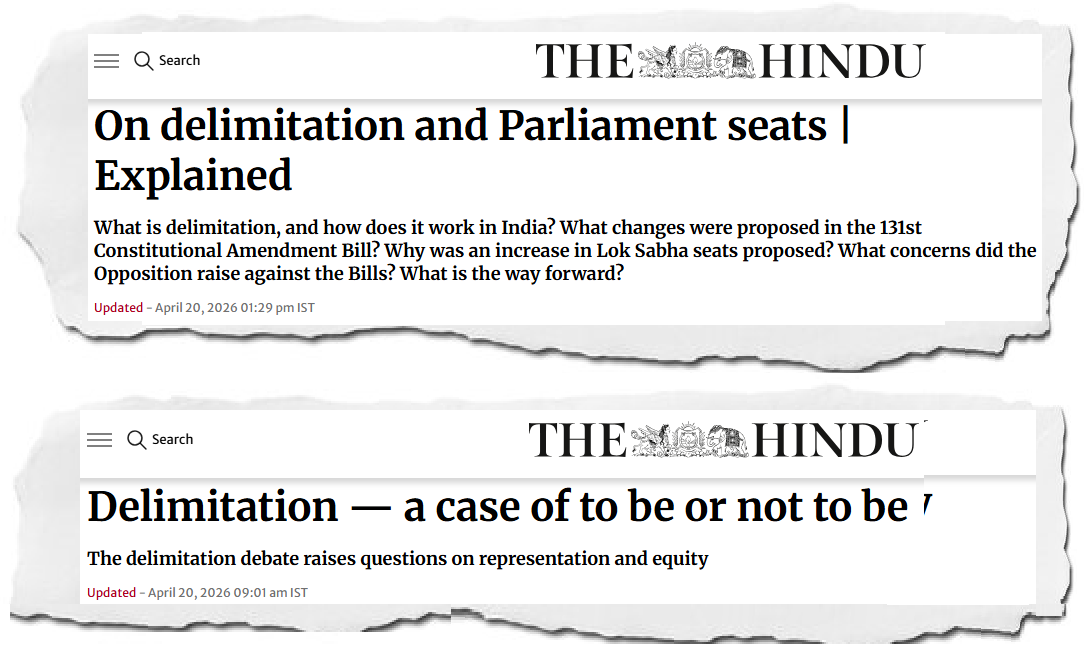
Redrawing Representation: Delimitation and the Politics of Federalism

Open article →Download PDF

Why in News?

The Government introduced a delimitation-linked legislative package, including the Constitution (131st Amendment) Bill, 2026, to redistribute Lok Sabha seats and enable women’s reservation before the 2029 elections. However, the Bill was defeated in Parliament, leading to the withdrawal of the entire package.

UPSC Relevance

GS-II: Parliament, Federalism, Representation, Delimitation, Constitutional Amendments, Women’s Reservation

Background: Delimitation & Current Context

Delimitation refers to the readjustment of Lok Sabha and Assembly constituencies based on population data.

  • The number of Lok Sabha seats has been frozen since 1976 (42nd Amendment), later extended till post-2026 Census (84th Amendment).
  • India’s population has increased from ~55 crore (1971) to ~140 crore (2026), creating huge disparities in constituency size.
  • Example: Some constituencies like Malkajgiri (Telangana) have extremely large electorates (~48 lakh voters), raising concerns about representation quality.

What Did the Government Propose?

1. Increase in Lok Sabha Seats

  • Proposal to increase Lok Sabha strength by ~50% (from ~550 to ~850 seats).
  • Government’s assurance:
    • All States will get a 50% increase in seats.
    • Existing proportional representation of States will be maintained.

 Example:

  • Tamil Nadu: 39 → ~58 seats
  • Kerala: 20 → ~30 seats

2. Link with Women’s Reservation

  • Delimitation was linked to the implementation of women’s reservation.
  • Objective: Ensure fresh seat allocation and reservation structure before the 2029 elections.

3. Principle Behind Delimitation

Government justified delimitation using the principle of:
 “One Person, One Vote, One Value”

  • Current freeze leads to unequal representation across constituencies.
  • Larger population States currently have under-representation per capita.

Why Did the Bill Fail?

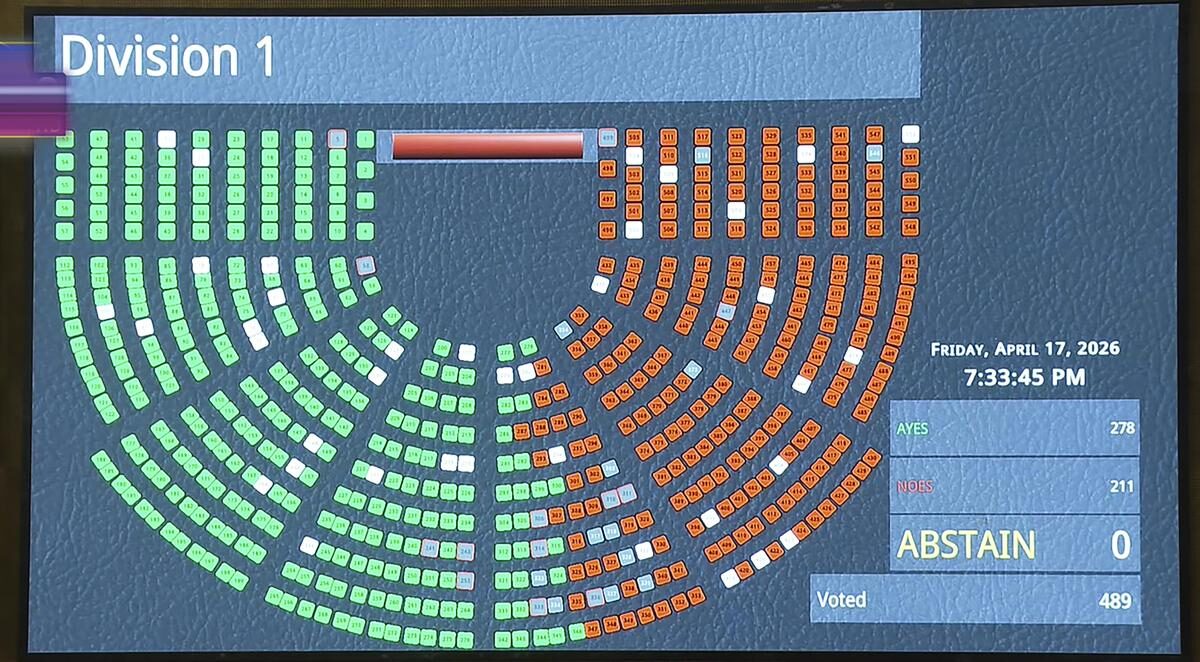
The Constitution Amendment Bill failed because it did not secure the required two-thirds majority.

AspectDetails
Votes in favour298
Votes against230
Required majority352 (2/3rd)
OutcomeBill defeated

As a result Government withdrew:

  • Delimitation Bill, 2026
    • Union Territories Laws (Amendment) Bill, 2026
What are the Core Issues involved?

1. Lack of Clarity on Seat Distribution

  • Government gave verbal assurance of uniform 50% increase.
  • But Bills did not explicitly guarantee this.
  • Opposition demanded written provision, which became a key sticking point.

2. Fear of North-South Imbalance

  • Concern: Population-based redistribution may:
    • Benefit high-growth northern States
    • Reduce relative share of southern States

 Government response:

  • Denied any reduction in southern representation.
  • Called it a “manufactured narrative”.

3. Linking Women’s Reservation with Delimitation

This became the most contentious issue.

Opposition’s argument:

  • Women’s reservation should be implemented independently.
  • Linking it with delimitation may delay or politicise implementation.

Government’s stance:

  • Both are structurally linked (seat reallocation needed).
  • Refused to delink, calling Opposition demand a “trap”.

4. Federalism Concerns

  • States that controlled population fear penalisation.
  • Raises question:
    Should representation be based purely on population, or also governance performance?

5. Political Dimension

  • Government accused Opposition of:
    • Blocking women’s reservation
    • Creating regional divide
  • Opposition accused Government of:
    • Using women’s reservation as a political tool
    • Attempting to redraw electoral map strategically

Key Constitutional Principles

PrincipleExplanation
One person, one vote, one valueEnsures equal weight of each vote
FederalismProtects balance between States
Representative democracyFair distribution of political power
Social justiceIncludes women, SC/ST representation

Important Observations

  • Delimitation is no longer just a technical exercise, but a deep political and federal issue.
  • The debate reflects a clash between:
    • Demographic reality (population-based fairness)
    • Federal equity (state-wise balance)
  • The linkage with women’s reservation adds a new constitutional layer to the debate.

Way Forward

A balanced approach is required:

  • Provide explicit constitutional guarantees to prevent regional imbalance.
  • Consider hybrid models (population + performance criteria).
  • Decouple or carefully sequence women’s reservation implementation.
  • Ensure consensus-based reform, as delimitation affects the core of democracy.

Conclusion

The failure of the Constitution (131st Amendment) Bill highlights the complex intersection of representation, federalism, and electoral reform in India. While delimitation is necessary to uphold democratic equality, its design must ensure that it does not undermine federal balance or become a source of political distrust. A transparent, consensus-driven approach will be crucial to implementing reforms that strengthen both democracy and unity.

Practice Questions

  1.  “Delimitation in India is no longer a mere administrative exercise but a deeply political issue.” Examine.
  2. Discuss the challenges in linking women’s reservation with delimitation of constituencies.
  3. “One person, one vote, one value must be balanced with federal principles.” Analyse in the context of delimitation.
Govt allows Ethanol Blending in Aviation Turbine Fuel

Open article →Download PDF

Why in News?

India’s Ministry of Petroleum and Natural Gas has officially permitted ethanol blending in Aviation Turbine Fuel (ATF). The step aims to promote Sustainable Aviation Fuel (SAF) and reduce India’s dependence on imported oil.

UPSC Relevance: GS-3 Economy: Energy; GS-3 Science and Technology: Energy Technology

Prelims: Aviation Turbine Fuel (ATF); Sustainable Aviation Fuel (SAF); ICAO; CORSIA framework. 
Mains: SAF: About, advantages and challenges. 

Key aspects of the Regulatory Change:

  • Definition shift: It expanded the definition of ATF to allow blending with synthetic or man-made hydrocarbons, thereby opening the door to ethanol-based fuels such as Sustainable Aviation Fuel (SAF).
    • The notification states that ATF is no longer restricted to conventional hydrocarbon fuels under the IS 1571 (Indian Standard for ATF) standards but now also includes blends incorporating synthetic hydrocarbons. This means that aviation fuel in India is no longer purely fossil-based.
  • Rationale: 
    • To reduce dependence on imported crude oil. India currently imports around 87% of its oil needs. 
    • To cut carbon emissions. The policy supports India’s plan to start mandatory SAF blending for international flights by 2027.

This shift aligns India with global standards, aiming to reach 5% SAF blending by 2030.

Aviation Turbine Fuel (ATF):ATF is a highly refined kerosene-based complex hydrocarbon mixture. It typically consists of a blend of paraffinic, cycloparaffinic, and aromatic hydrocarbons. It also includes additives for stability, anti-icing, and corrosion prevention.  

What is Sustainable Aviation Fuel?

  • SAF is a biofuel produced from sustainable, non-petroleum feedstocks. It shares similar chemical properties and energy density with conventional ATF, but has a significantly lower carbon footprint. 
  • Feedstocks:
    • Used Cooking Oil (UCO)
    • Agricultural residues, Stubble waste & Forestry residues.
    • Non-edible oils: Jatropha, Karanja, and Algae oil 
    • Industrial/Municipal Solid Waste 
    • Power-to-Liquid (PtL): Combines green hydrogen (from water electrolysis) with captured CO2 to form syngas, which is then converted into synthetic kerosene (SAF).
    • Alcohol-to-Jet (AtJ): Converts sugarcane-derived ethanol (produced from molasses and syrup) into SAF.

Key Criteria: To qualify as sustainable, SAF must demonstrate- reduced lifecycle carbon emissions, limited freshwater usage, no competition with food crops, and no contribution to deforestation.

Advantages of Sustainable Aviation Fuel: 

  • Engine compatibility: SAF is a “drop-in fuel”, i.e., it can be used in existing aircraft engines. No engine modification needed for up to 50% blend with conventional ATF. 
  • Lower carbon emissions: SAF can reduce lifecycle GHG emissions by up to ~80% compared to conventional ATF. Actual reduction varies (~50-80%) depending on feedstock and pathway. SAF is expected to contribute ~60-65% of total aviation decarbonisation by 2050.
    • Lower Sulphur: SAF has negligible sulphur content. This leads to a near 100% reduction in SO2 emissions compared to ATF (~3,000 ppm).
    • Fewer Particulates: SAF has virtually zero aromatic compounds (the main producers of soot particles). SAF can reduce particulate matter (PM) emissions by up to 90% and soot particles by up to 55%-90%.
  • Multiple production pathways: Multiple production pathways offer supply flexibility, including:
    • HEFA (Hydroprocessed Esters & Fatty Acids) pathway: Used to convert waste oils and fats into fuel. It is the most mature, efficient, and currently dominant method, accounting for almost all operational SAF production.
    • Other pathways: Alcohol-to-Jet; Fischer-Tropsch; Power-to-Liquid (e-fuels)
  • Non-food feedstock advantage: Can utilise non-food and waste-based feedstocks, reducing pressure on food systems. 
  • Reduces India’s crude oil import bill and improves energy security. 
  • Supports rural economy: Feedstock sourcing (crop residue, biomass) generates additional farmer income & promotes bio-economy. 
  • Aligns with circular economy principles. Creates a value chain from waste (UCO) to high-value fuel. 

Challenges facing Sustainable Aviation Fuel:  

  • Expensive: SAF costs 2-5 times more than conventional jet fuel. Most projections suggest it will remain ~2-3× costlier till 2030 due to limited scale.
  • Feedstock Constraints: As of 2026, the overwhelming majority of SAF production is derived from waste fats, oils, and greases (FOGs) as the primary feedstock. Over-reliance on a single pathway (e.g., HEFA) creates scalability risks. Need to utilise diverse feedstocks and production pathways. 
  • Feedstock Collection & Logistics: Collection of dispersed feedstocks (agricultural waste, used oils) is fragmented, costly and thus is a logistical challenge. Supply chain infrastructure (storage, blending, delivery to bowsers) needs investment. 
  • Scale-up Challenge & Ambitious Targets: SAF accounted for ~0.3-0.5% of global jet fuel consumption in 2024. SAF production remained very small (~1 million tonnes in 2024). Scaling production quickly enough to meet 5% by 2030 is ambitious. 

Global Target to Reduce Carbon Emissions from Civil Aviation: 

  • International Civil Aviation Organisation (ICAO), a specialised United Nations agency, is dedicated to reducing carbon emissions from international civil aviation. Key goals of ICAO:
    • 2% annual fuel efficiency improvement through 2050.
    • Carbon Neutral Growth via the CORSIA mechanism.
    • Net zero CO2 emissions from international aviation by 2050 (Long-Term Aspirational Goal).
  • ICAO has adopted CORSIA (Carbon Offsetting Reduction Scheme for International Aviation) to reduce carbon emissions from international aviation.
    • CORSIA is the primary market-based mechanism that requires airlines to buy carbon credits for emissions that exceed the 2019 levels. It ensures that any growth in international aviation emissions is compensated through carbon credits.
    • The CORSIA scheme is applicable to international flights only. 

India, being a Member State of the ICAO, is under an obligation to comply with the mandatory phase of CORSIA from 2027. The government has approved indicative SAF blending targets in ATF: 1% by 2027, 2% by 2028 and 5% by 2030, initially for international flights. 

Key Fact: Indian Oil Corporation (IOC) has become the first Indian company to receive ISCC CORSIA certification for SAF production at its Panipat refinery, Haryana. The production of commercial-scale SAF commenced in December 2025.

 UPSC PYQ 2024:

Q.  Consider the following materials:

1. Agricultural residues

2. Corn grain 

3. Wastewater treatment sludge

4. Wood mill waste

Which of the above can be used as feedstock for producing Sustainable Aviation Fuel?

(a) 1 and 2 only

(b) 3 and 4 only

(c) 1, 2, 3 and 4

(d) 1, 3 and 4 only

Answer: (d) 

Women’s Reservation & Delimitation: Structural Issues and Democratic Imperatives

Open article →Download PDF

Why in News?

The Constitution (131st Amendment) Bill, 2026 and the Delimitation Bill, 2026 sought to operationalise one-third reservation for women in legislatures, but linked its implementation with delimitation and Census, raising concerns about delays and structural implications.

UPSC Relevance

GS-II: Parliament, Representation, Women’s Reservation, Delimitation, Constitutional Amendments, Social Justice

Background: Women’s Representation in India

Women’s political participation has increased significantly, but representation remains low.

LevelWomen Representation
Parliament~14–15%
State Assemblies~9%
Population Share~50%

This reflects a gap between participation and representation.

What is the Current Proposal?

The recent legislative framework links women’s reservation with three conditions:

  1. Delimitation exercise must be completed
  2. Latest Census data must be available
  3. Increase in total seats (Lok Sabha expansion)

This makes implementation conditional, not immediate.

Core Issue: Should Women’s Reservation be Linked to Delimitation?

Nature of the Linkage

  • Reservation will be implemented only after delimitation.
  • Delimitation itself depends on Census completion and seat redistribution.

This creates a multi-layer dependency, delaying implementation.

Problems with Linking Reservation to Delimitation

1. Delay in Implementation

  • Census delays and delimitation complexity can postpone reservation indefinitely.
  • Women’s representation remains stagnant in the meantime.

2. Complexity of Delimitation Process

  • Delimitation is a time-consuming and sensitive exercise.
  • Example: Previous delimitation (2002–2008) took ~6 years.

Linking a social reform to such a process increases uncertainty.

3. Impact on SC/ST Representation

  • Reservation of SC/ST seats depends on population proportions.
  • Using outdated Census data may:
    • Distort representation
    • Affect sub-reservation for SC/ST women

Raises concerns of equity within reservation.

4. Federal and Regional Concerns

  • Delimitation may alter state-wise seat distribution.
  • States with lower population growth fear relative disadvantage.

Linking both issues complicates consensus.

5. Administrative Overload

  • Combining:
    • Census
    • Delimitation
    • Reservation

Creates a policy bottleneck, instead of phased reform.

Why Women’s Reservation is Necessary (Independent of Delimitation)

1. Structural Barriers in Politics

Women face systemic constraints:

  • Limited access to resources and networks
  • Lower representation in party nominations
  • Social and cultural barriers

This makes voluntary reforms ineffective.

2. Evidence from Local Governance

  • Panchayati Raj institutions with reservation show:
    • Higher participation of women
    • Focus on health, education, sanitation

Demonstrates positive governance outcomes.

3. Democratic Legitimacy

  • High female voter participation is not matched by representation.
  • A representative democracy must reflect social diversity.

4. Developmental Impact

  • Gender-inclusive governance leads to:
    • Better social indicators
    • More inclusive policymaking

5. Time Sensitivity

  • Women’s socio-economic participation is increasing rapidly.
  • Delay in representation creates a democratic lag.

Participation vs Representation Gap

India has achieved: High female electoral participation

But lacks: Proportionate legislative representation

Bridging this gap is the next stage of democratic deepening.

Way Forward

1. Delink Reservation from Delimitation

  • Implement reservation through a stand-alone law.
  • Avoid dependency on long administrative processes.

2. Phased Reform Strategy

  • Step 1: Implement women’s reservation immediately
  • Step 2: Conduct Census and delimitation separately
  • Step 3: Adjust reservation framework post-delimitation

3. Use Updated and Reliable Data

  • Ensure delimitation is based on latest Census figures.
  • Maintain fairness in SC/ST and women’s representation.

4. Build Political Consensus

  • Delimitation and reservation both require broad agreement.
  • Avoid combining multiple sensitive reforms simultaneously.

Conclusion

Women’s reservation is a critical step toward inclusive democracy, but its effectiveness depends on timely implementation. Linking it with delimitation and Census introduces delays and complexities that may undermine its purpose. A phased and independent approach can ensure both equitable representation and institutional stability, thereby strengthening India’s democratic framework.

Practice Questions

  1.  “Women’s political participation in India has not translated into adequate representation.” Examine the reasons and suggest measures.
  2. Discuss the implications of linking women’s reservation with delimitation in India.
  3. “Reservation is a structural solution to structural inequalities.” Analyse in the context of women’s representation in legislatures.

Delimitation in India: Constitutional Mandate, Challenges and Emerging Issues

Open article →Download PDF

Why in News?

The Constitution (131st Amendment) Bill, 2026 and the Delimitation Bill, 2026 proposed to increase Lok Sabha seats and undertake fresh delimitation, but were withdrawn after failing to secure parliamentary approval. This has revived debates on timing, methodology, and principles of delimitation.

UPSC Relevance

GS-II: Parliament, Delimitation, Federalism, Representation, Constitutional Amendments

What is Delimitation?

Delimitation refers to:

  • Fixing the number of seats in Lok Sabha and State Assemblies
  • Redrawing constituency boundaries based on population

Objective: Ensure equal representation (one vote, one value).

Constitutional Framework

ProvisionExplanation
Article 81(2)Ratio of seats to population should be uniform across States (as far as practicable)
Article 82Readjustment of Lok Sabha seats after every Census
Article 170(3)Similar provision for State Assemblies

Historical Evolution of Delimitation

Census BaseKey Development
1951First delimitation after independence
1961, 1971Periodic readjustment
1976 (42nd Amendment)Freeze on seat redistribution to promote population control
2001 (84th Amendment)Freeze extended till post-2026; only boundary readjustment allowed
Post-2026Fresh delimitation expected based on new Census

Objective of freeze:
Prevent penalising States that successfully controlled population growth.

What Did the Recent Bills Propose?

1. Increase in Lok Sabha Seats

  • From ~550 to ~850 seats (around 50% increase)

2. Use of Census Data

  • Proposed delimitation based on 2011 Census (latest published data at the time)

3. Delimitation Commission

  • To be set up to:
    • Allocate seats among States/UTs
    • Redraw constituency boundaries

4. Link with Women’s Reservation

  • Reservation to be implemented after delimitation exercise

Key Issues in the Proposed Delimitation

1. Use of Outdated Census Data

  • 2011 Census would be 15+ years old at time of implementation.
  • Population dynamics (growth, migration) may have changed significantly.

Risk: Constituencies may not reflect current demographic realities.

2. Population vs Federal Balance

  • Article 81 emphasises population-based representation.
  • However:
    • States have unequal population growth rates
    • Strict population criteria may disturb federal balance

Core tension: Democratic equality vs Federal equity

3. Impact of Migration

  • Large-scale rural-to-urban migration has altered population distribution.
  • Leads to:
    • Overcrowded constituencies in urban areas
    • Uneven voter representation

Delimitation must address dynamic population shifts, not static data.

4. Continuation of Delimitation Freeze Logic

  • Original rationale (1976 & 2001):
    • Encourage population stabilisation
  • However:
    • Population trends remain uneven across States

Question: Should past incentives continue to shape current representation?

5. Scale of Expansion

  • Increase to ~850 seats is significantly larger than past changes.
  • Raises concerns:
    • Functioning of Parliament
    • Quality of deliberation

6. Timing and Preparedness

  • Delimitation is a complex and time-consuming process.
  • Past exercise (2002–2008) took ~6 years.

Using outdated data and rushing implementation may reduce effectiveness.

Important Constitutional Principle

“One Person, One Vote, One Value”

  • Ensures equal weight of each vote
  • Currently diluted due to:
    • Population changes since 1971
    • Unequal constituency sizes

Delimitation aims to restore this principle.

Balancing Competing Objectives

ObjectiveConcern
Democratic EqualityRequires population-based seat allocation
FederalismProtects State-wise representation balance
Administrative FeasibilityNeeds updated and reliable data
Political StabilityRequires consensus among States

Delimitation is not merely a technical exercise. It involves:

  • Representation of citizens (democratic principle)
  • Balance among States (federal principle)
  • Adaptation to demographic changes (administrative reality)

Any reform must reconcile all three.

Way Forward

1. Use Updated Census Data

Delimitation should ideally be based on the latest Census, because population distribution changes rapidly due to birth rates and migration. Using old data (like 2011) can create unequal constituencies, defeating the purpose of fair representation.

2. Explore Hybrid Criteria (Population + Other Factors)

While population should remain the main basis, additional factors like demographic performance (population control efforts) can be included. This ensures that States which controlled population are not unfairly penalised, maintaining federal balance.

3. Ensure Federal Safeguards

There should be mechanisms to ensure that no State suddenly loses its relative political importance in Parliament. For example, minimum guaranteed seat share or proportional increase for all States can protect federal stability.

4. Phased Implementation of Reforms

Instead of combining multiple complex reforms (like delimitation + women’s reservation), they should be implemented step-by-step. This reduces administrative confusion and ensures each reform is properly executed.

5. Wider Consultation and Consensus

Since delimitation affects all States and political representation, it should be discussed through parliamentary committees and inter-state consultations. A consensus-based approach will make the reform more acceptable and less controversial.

Conclusion

Delimitation is essential to restore the principle of equal representation in a rapidly changing demographic landscape. However, its design must carefully balance population-based fairness with federal stability. A transparent, data-driven, and consensus-based approach is crucial to ensure that delimitation strengthens, rather than disrupts, India’s democratic framework.

Practice Questions

  1. Discuss the constitutional and practical challenges associated with delimitation in India.
  2. “Delimitation involves a tension between democratic equality and federal balance.” Examine.
  3. Analyse the implications of using outdated Census data for delimitation in India.

How India Slid to the 6th Largest Economy?

Open article →Download PDF

Why in News?

According to the latest World Economic Outlook (WEO) released by the International Monetary Fund (IMF), India is no longer the 4th largest economy in the world. 

India has slipped to the 6th largest economy, with a nominal GDP of approximately $3.9-$4.15 trillion. India falls behind the US, China, Germany, Japan, and the UK. 

UPSC Relevance: GS-3 Economy: Growth & Development; External Sector

Prelims: Gross Domestic Product: Nominal GDP, Real GDP, GDP at PPP; Drivers of Rupee Depreciation. 

Gross Domestic Product: Key Concepts

  • Gross Domestic Product (GDP): Total market value of all final goods and services produced within a country’s geographical boundaries in a given period.
  • Nominal GDP measures output at current market prices without inflation adjustment. IMF uses nominal GDP (in USD) for global rankings.
  • Real GDP adjusts for inflation and reflects true growth in productive capacity. It is a better indicator of structural economic health.
  • GDP at PPP (Purchasing Power Parity) adjusts for differences in price levels across countries, making it a more accurate comparator of real living standards and domestic economic size.

Why did India’s ranking fall? 

1. Indian Rupee Depreciation:

  • IMF’s data on the size of a country’s nominal GDP is denominated in US dollars. Global rankings based on dollar‑denominated GDP are highly sensitive to exchange rate movements. 
  • In FY 2025-26, the rupee depreciated by approximately 10-11% against the US dollar, reaching ₹93.88 per USD. A weaker rupee reduces the dollar-denominated value of India’s economy. India’s nominal GDP in dollar terms fell from ~$4.1 trillion (old estimates) to ~$3.92 trillion in 2025.

Key drivers of Rupee Depreciation:

  • Persistent current account deficit: High import costs for fuel and gold continue to cause massive deficits.
  • The US Federal Reserve’s elevated interest rate is sustaining dollar strength globally. 
  • Outflow of FII: Tensions in West Asia (Middle East/Red Sea) have caused safe-haven flows to the US dollar, causing outflows from emerging markets like India. 
  • Uncertainty surrounding the India-US trade deal, alongside US tariffs, has created concern over the competitiveness of Indian exports (e.g., textiles, gems) and reduced investor confidence.
  • Surging gold and crude oil imports (gold imports rose ~200% in Oct 2025). 

2. Base-Year Revision in GDP Calculation: 

  • In February 2026, the Ministry of Statistics and Programme Implementation (MoSPI) revised India’s GDP base year from 2011-12 to 2022-23. 
  • The shift to a new GDP base year has revised India’s projected nominal GDP for FY26 downward by approximately 3.3% to 4%, from an earlier estimate of ₹357 lakh crore to ₹345.5 lakh crore

3. Relatively Stronger Competitor Currencies: 

  • The British pound and Japanese yen performed relatively better against the dollar, allowing the UK to overtake India in the rankings. 

Core indicators reflecting the strength of India’s Economy:

IMF’s broader assessment does not point to any weakening in India’s economic momentum. India continues to be one of the fastest-growing major economies, with growth projected in the 6.4-6.5% range over the next two years. 

Key indicators point to a fundamentally strong economy: 

  • Real GDP growth rate: India is projected to grow at 6.5% in 2026, the fastest among all major economies, significantly ahead of the US, China, Germany, and Japan.
  • Forex reserves: India’s foreign exchange reserves rose to USD 709.8 billion (as of March 2026), providing over 11 months of import cover.
  • Macroeconomic stability: Consumer price inflation averaged just 1.9% during 2025-26 (April-February), remaining at a multi-year low.
  • Strong Consumption Demand: Private consumption contributes over 61% to GDP, fueled by low inflation and rising disposable income.
  • PPP ranking: India remains the 3rd largest economy by purchasing power parity, a measure unaffected by exchange rate volatility.

The ranking underscores the methodological limitations of nominal GDP rankings as a measure of economic progress, rather than a structural weakness in the economy.  

UPSC PYQ 2019

Q. In the context of India, which of the following factors is/are contributor/ contributors to reducing the risk of a currency crisis?

1.    The foreign currency earnings of India’s IT sector

2.     Increasing the government expenditure

3.     Remittances from Indians abroad

Select the correct answer using the code given below.

(a)     1 only

(b)     1 and 3 only

(c)     2 only

(d)     1, 2 and 3

Answer: (b) 

UPSC PYQ 2019

Q. Consider the following statements :

1.     Purchasing Power Parity (PPP) exchange rates are calculated by comparing the prices of the same basket of goods and services in different countries.

2.    In terms of PPP dollars, India is the sixth-largest economy in the world.

Which of the statements given above is /are correct?

(a)     1 only

(b)     2 only

(c)     Both 1 and 2

(d)    Neither 1 nor 2

Answer: (a) 

UPSC PYQ 2019

Q. Which one of the following is not the most likely measure the Government/ RBI takes to stop the slide of Indian rupee?

(a)     Curbing imports of non-essential goods and promoting exports

(b)    Encouraging Indian borrowers to issue rupee-denominated Masala Bonds

(c)     Easing conditions relating to external commercial borrowing

(d)     Following an expansionary monetary policy

Answer: (d)