Disclosure: this guide contains Amazon affiliate links. As an Amazon Associate, Anantam IAS earns from qualifying purchases — at no extra cost to you.
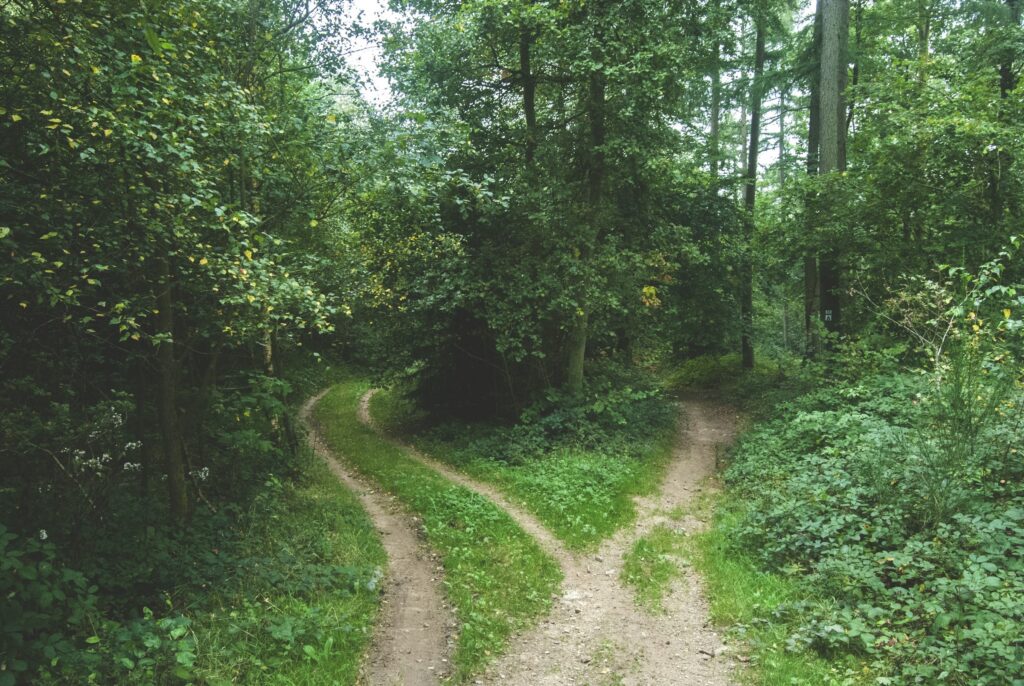
A traveller stands where the road forks. Both paths are open; nothing bars either one. Yet the moment he steps onto one, he has given up the other — and it is only by giving up the other that he can be said to have chosen at all. This is the quiet paradox the topic “Freedom is the discipline of choosing what to refuse” places before you. It looks like a sentence about saying no, but it is really a sentence about what saying yes costs. This guide breaks it down the way it should be tackled in the hall — meaning first, then the angles, the time map, the paragraph plan, and finally a complete model essay you can study and adapt.
Why UPSC could set this in 2026 — and what it would really test
This is a predicted topic for the UPSC CSE Mains 2026 Essay paper, the kind that fits Section A, where the philosophical-abstract prompts have clustered since 2020. Three hours, two essays, roughly 1,000 to 1,200 words each, 125 marks per essay. A line like “Freedom is the discipline of choosing what to refuse” carries no policy hook and no current-affairs anchor. The page is yours to fill, and that openness is exactly the test.
UPSC would be checking four things at once. One, can you read a counter-intuitive claim — that freedom is discipline, not its opposite — without flattening it into a slogan about willpower. Two, can you organise unfamiliar material around a single thesis instead of listing everything you know about liberty. Three, can you move across philosophy, history, law, economics and personal life without sounding like a textbook. Four, can you write 1,100 disciplined words that examine the paradox rather than 1,500 loose words that celebrate freedom. The aspirant who handles all four scores in the 130s. The one who only writes well — fine prose, no spine — scores in the 90s.
Five angles that unlock “Freedom is the discipline of choosing what to refuse”
The trap with a paradoxical quote is to pick the obvious reading — “self-control makes you free” — and ride it for 1,100 words. The mark-pulling answer instead names several lenses and weaves them. Here are the five most defensible readings of the line. You do not need all five; three, treated well, is the sweet spot. But know all five so your choice is conscious.
- Freedom and the self — the literal reading. To be free is not to do whatever one wants but to govern what one wants. The drunkard who cannot refuse the next drink is not free; the person who can is. This opens the Gita’s nishkama karma, Gandhian self-restraint, and the Stoic distinction between liberty and licence.
- Freedom and commitment — every meaningful choice closes other doors. The vow, the vocation, the marriage, the cause — each is a refusal of all the alternatives. Freedom that refuses nothing commits to nothing, and a life that commits to nothing is not richer but emptier.
- Freedom and law — political liberty is freedom under rules, not freedom from them. Article 19 grants free speech and then, in the same breath, accepts reasonable restrictions. The Constitution treats freedom as something disciplined by duty to others, not as an unlimited licence.
- Freedom and attention — the modern reading. In an economy built to capture the mind, the refusal of the trivial is the precondition of the meaningful. The free person in the age of the feed is the one who can decline the next notification, not the one who consumes everything on offer.
- Freedom and the collective — a society is free to the degree that it can refuse — corruption, mob sentiment, the easy lie. Institutional freedom is a structured capacity to say no: the judge to the powerful, the auditor to the minister, the voter to the demagogue.
A strong essay takes angles 1, 2 and 3 as its backbone (self, commitment, law), uses 4 as the contemporary tension (the attention economy) and 5 to widen the lens from the person to the republic. That gives the essay rhythm — definition, complication, resolution — instead of a single straight line.
A time map for the 1,500-second window
One essay deserves about 75 to 90 minutes inside the three-hour paper. Spending more on Essay 1 starves Essay 2. The single biggest source of below-100 essay scores is poor time discipline — beautiful introductions, panicked conclusions. Use a rough breakdown like this:
| Minutes | Activity | What it earns you |
|---|---|---|
| 0 — 10 | Decode the paradox. Write the thesis in one line. List 4 to 5 angles. Pick 3. | Direction. The single most important investment of the 90 minutes. |
| 10 — 18 | Brainstorm examples, quotes, scholars, episodes, a personal hook. | The substance the body paragraphs will run on. |
| 18 — 22 | Draft a paragraph-level outline — 12 to 15 bullets, in sequence. | Prevents the mid-essay drift that kills most attempts. |
| 22 — 80 | Write the essay — opening, body, conclusion — without re-planning. | The actual marks come from this window. Protect it. |
| 80 — 85 | Read the conclusion. Tighten the last two sentences. Fix factual slips. | Conclusions are over-weighted by examiners. A clean ending saves 5 marks. |
Notice what is not on the list: rewriting the introduction halfway, hunting for the perfect quote, decorative underlining. None of that earns marks. Discipline does — which, fittingly, is the topic itself.
What to add — and what to avoid at all costs
The essay paper rewards what most aspirants under-do and punishes what most aspirants over-do. Memorise this list before you walk into the hall.
Add liberally
- One precise thesis, stated by the end of paragraph two and never abandoned. “Freedom is not the absence of limits but the power to set one’s own; it is realised not in the doors we open but in the ones we deliberately close.”
- Concrete examples across three or four domains — one philosophical (the Gita’s nishkama karma, the Stoics), one historical or Indian (Gandhi’s vows, the Constitution’s Article 19), one institutional (an independent auditor refusing to sign), and one personal or literary (the addict, the artist who discards a draft).
- Two or three short, named quotes — Gandhi on self-rule, Tagore on freedom, Viktor Frankl on the space between stimulus and response. One per major section is enough.
- One Indian philosophical anchor used substantively — Gandhian swaraj as self-mastery, the Gita’s discipline of desireless action, Article 19’s freedom-with-reasonable-restrictions. Examiners read 300 essays a day; a working Indian anchor stands out.
- A counter-argument handled briefly. “It might be said that discipline is the enemy of freedom, not its form…” — then resolved in two lines. Acknowledging the other side earns more marks than ignoring it.
- A clean conclusion that returns to the opening image — not a fresh argument, not a new example.
Avoid — even when tempted
- Restating the topic in the first sentence. “Freedom is the discipline of choosing what to refuse is a profound statement…” signals you have nothing to add. Open with an image or a paradox.
- Turning it into a self-help sermon. “We must all control ourselves and refuse bad habits” reads like a school speech. The paper rewards examination, not exhortation.
- Unsourced statistics. “Screen time has risen 70%” — if you cannot name the source, do not write the number. Examiners cross-mark this.
- Hot-button political examples. The paper is graded across the ideological spectrum. Naming current parties or leaders introduces avoidable risk. Use the institution, not the personality.
- Decorative scholar-dropping. Citing Berlin, Sartre and Sen in one paragraph to look serious. One thinker, used well, beats four named in passing.
- Collapsing freedom into mere willpower. The topic is richer than “say no to temptation.” It is about how refusal creates the space in which a free life is built.
A paragraph-by-paragraph blueprint
Twelve paragraphs at roughly 90 words each gets you to 1,080. Thirteen at 85 each gets you to 1,105. What follows is a 13-paragraph plan that maps cleanly onto the model essay below. Each line is what that paragraph is doing, not what it is saying.
- Opening image — a traveller at a forking road, or a sculptor before a block of marble. A scene that embodies choice as refusal. No mention of the topic yet.
- The pivot to thesis — name the topic, then state the thesis in one sentence.
- Define the terms — what “freedom” means (negative versus positive liberty), and why “discipline” and “refuse” are doing the real work.
- Angle 1 — the self — the addict versus the self-governed person; freedom as mastery over one’s own wants.
- Indian anchor — Gandhian swaraj as self-rule; the Gita’s nishkama karma as disciplined, desire-free action.
- Angle 2 — commitment — the vow, the vocation, the cause; how refusing alternatives is what makes a choice real.
- Angle 3 — law — Article 19’s freedoms and their reasonable restrictions; liberty as structured, not unlimited.
- The contemporary tension — attention — the feed, the notification, the infinite scroll; refusal as the new precondition of a free mind.
- Widen to the collective — the auditor, the judge, the voter; a free society as one that can refuse the easy and the corrupt.
- Counter-argument handled — yes, discipline can harden into repression. No, that does not make undisciplined freedom free.
- Way forward — individual — the cultivated habit of the considered no; choosing one’s limits rather than inheriting them.
- Way forward — institutional — schools that teach judgement, institutions designed to refuse pressure.
- Closing image — return to the traveller or the sculptor; close with one resonant line.
How to make an examiner stop and read
An essay examiner reads several hundred scripts in a sitting. The first paragraph decides whether they read the second with attention or with autopilot. Four small habits separate the essays that get read from the ones that get skimmed.
- Open with a scene, not a statement. A traveller at a fork, a sculptor cutting away stone, a monk taking a vow, a hand putting down the phone. Concrete images cost no marks and earn attention.
- Use the topic phrase itself two or three times across the essay. Once in the thesis, once at the turn, once at the close. It signals discipline and prevents drift.
- Vary sentence length. A short sentence after three long ones lands. Examiners feel rhythm before they parse meaning.
- End paragraphs with the takeaway, not with examples. Place the example mid-paragraph. Let the last sentence carry the thought into the next.
The complete essay — “Freedom is the discipline of choosing what to refuse”
What follows is a model essay of about 1,200 words built on the blueprint above. Read it twice — once for the argument, once for the moves. The moves are what you can carry into your own essay; the argument is one of many you could make.
A sculptor stands before an unworked block of marble. Inside it, he is told, every possible figure already waits — the dancer, the saint, the horse, the king. He is at his most free in that first moment, when nothing has been decided and everything remains possible. Yet he will create nothing until he lifts the chisel and begins to refuse: this curve of stone, then that one, then a hundred more, until what is left is the single form he meant all along. His freedom did not lie in the untouched block. It lay in the discipline of cutting away.
“Freedom is the discipline of choosing what to refuse” begins from that image. The phrase is deliberately counter-intuitive, because we are taught to think of freedom as the widening of options and of discipline as their narrowing. The proposition reverses this: freedom is not the absence of limits but the power to set one’s own, and it is realised not in the doors we leave open but in the ones we deliberately close. To choose is always, quietly, to refuse — and a freedom that refuses nothing has, in truth, chosen nothing at all.
Some care with the words helps. Philosophers distinguish negative liberty — freedom from external interference — from positive liberty, the freedom to become the author of one’s own life. The maxim lives in the second. “Discipline” is not punishment imposed from outside but the structure a free agent gives himself; “refuse” is the act by which scattered possibility becomes a single, chosen path. To be fully free, one must learn to say no.
Consider first the self. The person who cannot decline the next drink, the next bet, the next impulse is not living a life of expanded freedom; he is driven by an appetite he no longer governs. The free person is not the one with the most desires satisfied but the one who decides which desires to obey. The Stoics held that liberty begins where craving ends, and that the man enslaved to his wants wears chains no jailer forged. Freedom, on this reading, is first a victory won at home, against oneself.
India gave this idea its most political form. Gandhi’s swaraj meant self-rule in two senses at once — a nation free of foreign control and a person in command of his own passions — and he insisted the first was impossible without the second. His vows of simplicity and of silence one day a week were not denials of freedom but its instruments; each refusal cleared room for a chosen purpose. The Bhagavad Gita reaches the same place by another road. Its teaching of nishkama karma — action performed without grasping at its fruit — is a discipline of refusal: the agent acts fully yet refuses the bondage of craving the result. To master desire, the Gita suggests, is not to lose freedom but finally to possess it.
The same logic governs commitment. Every meaningful choice — a vocation, a marriage, a cause — is built on the refusal of the alternatives it forecloses. The doctor who commits to medicine refuses the thousand other lives she might have led; the refusal is what gives her choice its weight. A person who will commit to nothing, who keeps every option open forever, is not maximally free. He is paralysed, and his unspent freedom curdles into emptiness. To choose what to refuse is how a life acquires a shape.
Law makes the principle public. The Constitution of India, in Article 19, guarantees the freedoms of speech, assembly, movement and association — and then, in the same article, accepts that each may be subject to reasonable restrictions in the interest of public order, decency, and the rights of others. This is not a grudging exception to freedom; it is freedom’s mature form. My liberty to swing my arm, the old maxim runs, ends where your nose begins. A republic that refused all limits would not be free; it would be a place where the strongest appetite always won. Liberty under law is liberty that has learned to refuse its own excess.
If the principle is so old, why does it feel so urgent now? Because we live inside an economy engineered to make refusal difficult. The feed is infinite, the notification insistent, the next recommendation already loading. Platforms profit precisely from our inability to say no. In such a world the free mind is not the one that consumes everything on offer; it is the one that can decline. The discipline of refusal, once a private virtue, has become the precondition of an undivided attention — and attention is the ground on which every other freedom is built.
Widen the lens from the person to the republic and the pattern holds. A society is free to the degree that its institutions can refuse — the auditor declining to sign the dishonest account, the judge declining to favour the powerful, the voter declining the demagogue’s bargain. Each is a structured capacity to say no, built so that pressure can be withstood. Where institutions lose the power of refusal, the language of freedom may survive but its substance drains away.
It might be objected that discipline is the enemy of freedom, not its form — that talk of “choosing what to refuse” is how every authority from the schoolmaster to the censor has dressed control in the robes of virtue. The objection carries a real warning: discipline imposed from without, in the name of someone else’s good, can indeed harden into repression. But that is precisely why the maxim insists on choosing. The refusal must be the agent’s own. A limit one sets for oneself is the signature of freedom; a limit set by another, and merely obeyed, is not.
For the individual, then, the task is to cultivate the considered no — to choose one’s limits rather than drift into them, to ask of each option not merely “may I?” but “should I, given what I have chosen to become?” Viktor Frankl located human freedom in the small space between stimulus and response; the art is to widen that space and use it well. For institutions, the task is to design for refusal: schools that teach judgement rather than compliance, and offices where the honest no is protected rather than punished. Neither task is ever finished. The temptation to drift, like the temptation to dominate, is permanent.
Return, at the end, to the sculptor and his marble. He could have left the block untouched and called its infinite possibility a kind of freedom. Instead he chose the harder and truer thing: he refused, cut by deliberate cut, until a single form stood free of the stone. That is the freedom worth wanting — not the empty openness of the unworked block, but the realised shape that only discipline can release. Freedom, rightly understood, is indeed the discipline of choosing what to refuse, and the figure it sets free is a human life that has decided, at last, what it means to be.
Word count: approximately 1,200.
How to use this model essay
Do not memorise it. Memorised essays read like memorised essays, and examiners spot them within two paragraphs. Use the model the way a chess student uses a master game: study the opening move, the pivot to thesis, the placement of the Indian anchor, the way the counter-argument is raised and then closed, the return to the opening image. Then take a related abstract topic — try “Discipline is the bridge between goals and accomplishment” or “There is no freedom without responsibility” — and write your own essay on the same blueprint. Repeat the exercise eight to ten times and the structure becomes muscle memory. On exam day, the only thing left to think about is the topic itself.
Books quoted in this essay
The Bhagavad Gita, Eknath Easwaran’s translation. The plain-English edition most essay readers start with.
Tell Google you want more of this.
Add Anantam IAS as a preferred sourceOne tap, and this site shows up more often in your own Top Stories, AI Overviews and AI Mode. Remove it any time.